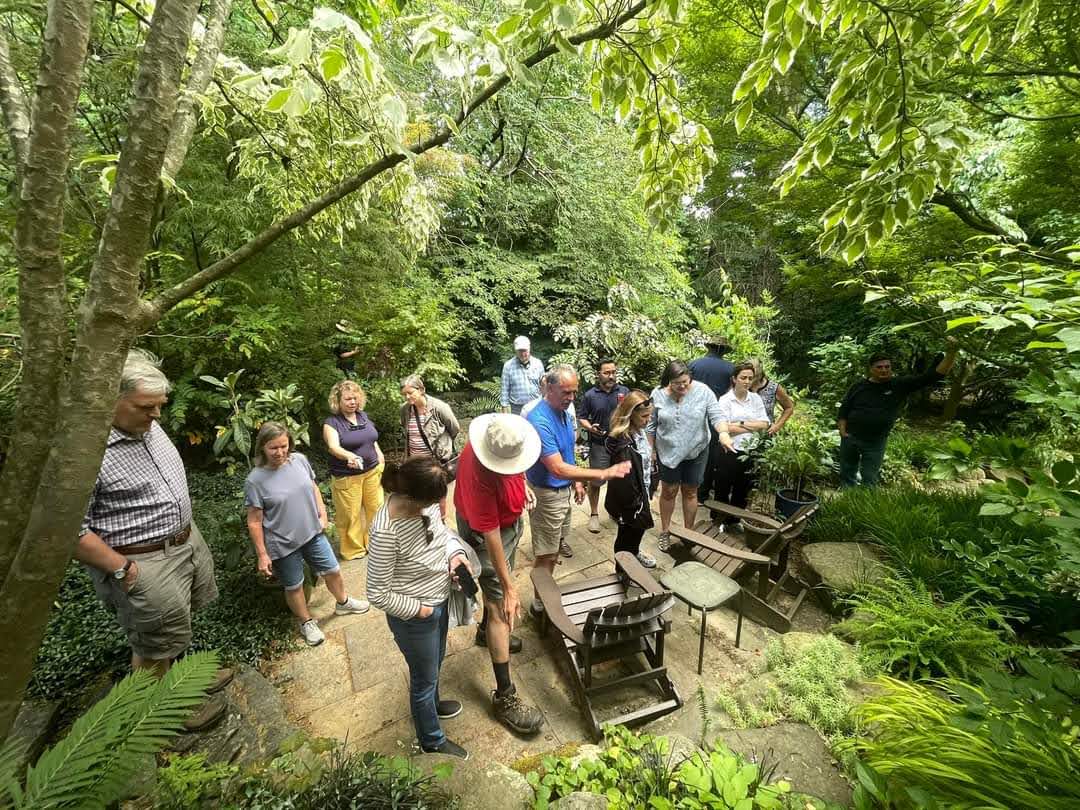
I think the garden’s looking good, not as good as a month ago with hardly a drop of rain until a few days ago, but still pretty good. Of course, I’m prejudiced, but still I was somewhat wary of having a group of landscape designers here to visit the garden last week. Do they expect more or less than I do? Do they see what I see (a jumbled mess)?
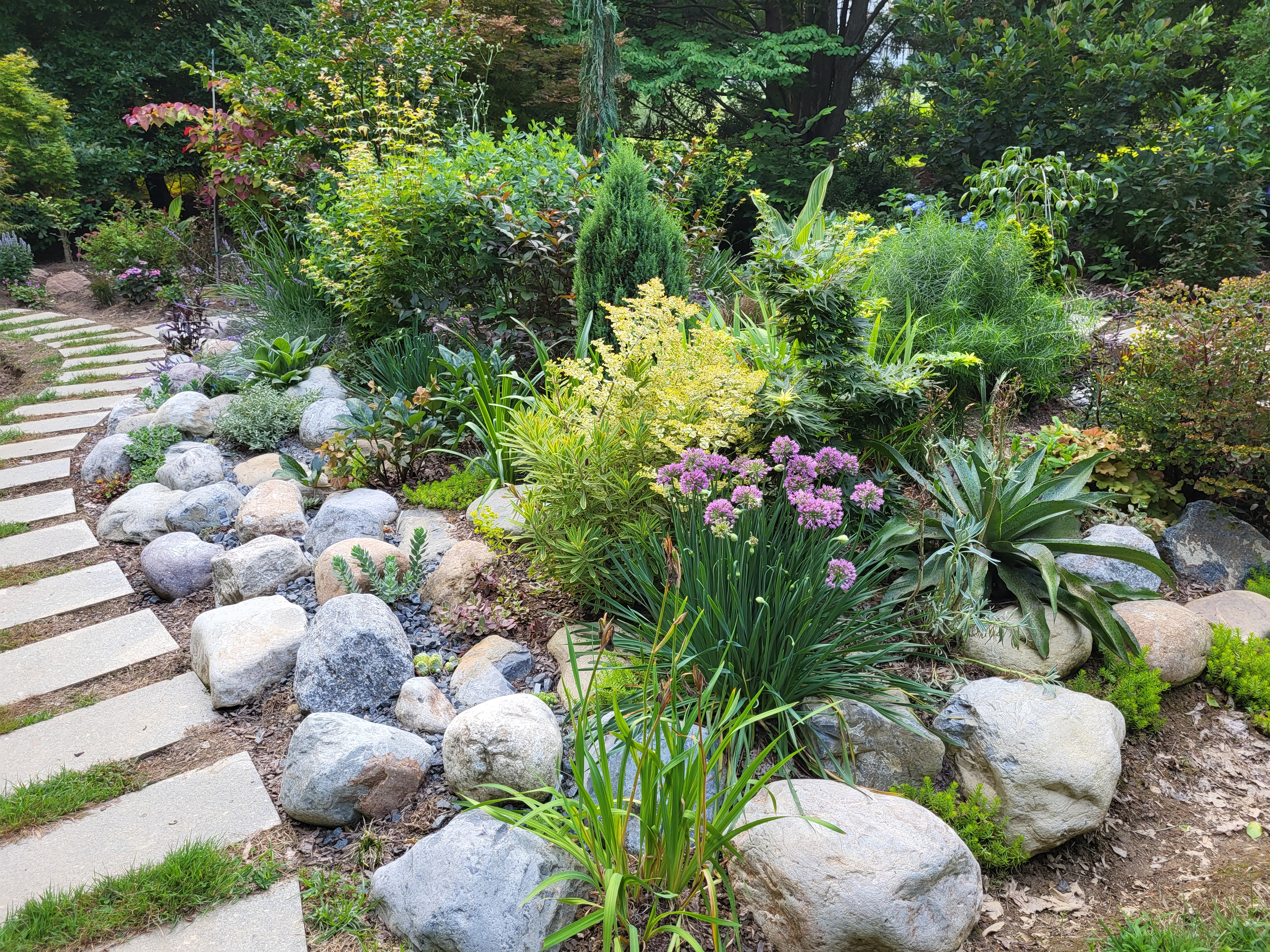
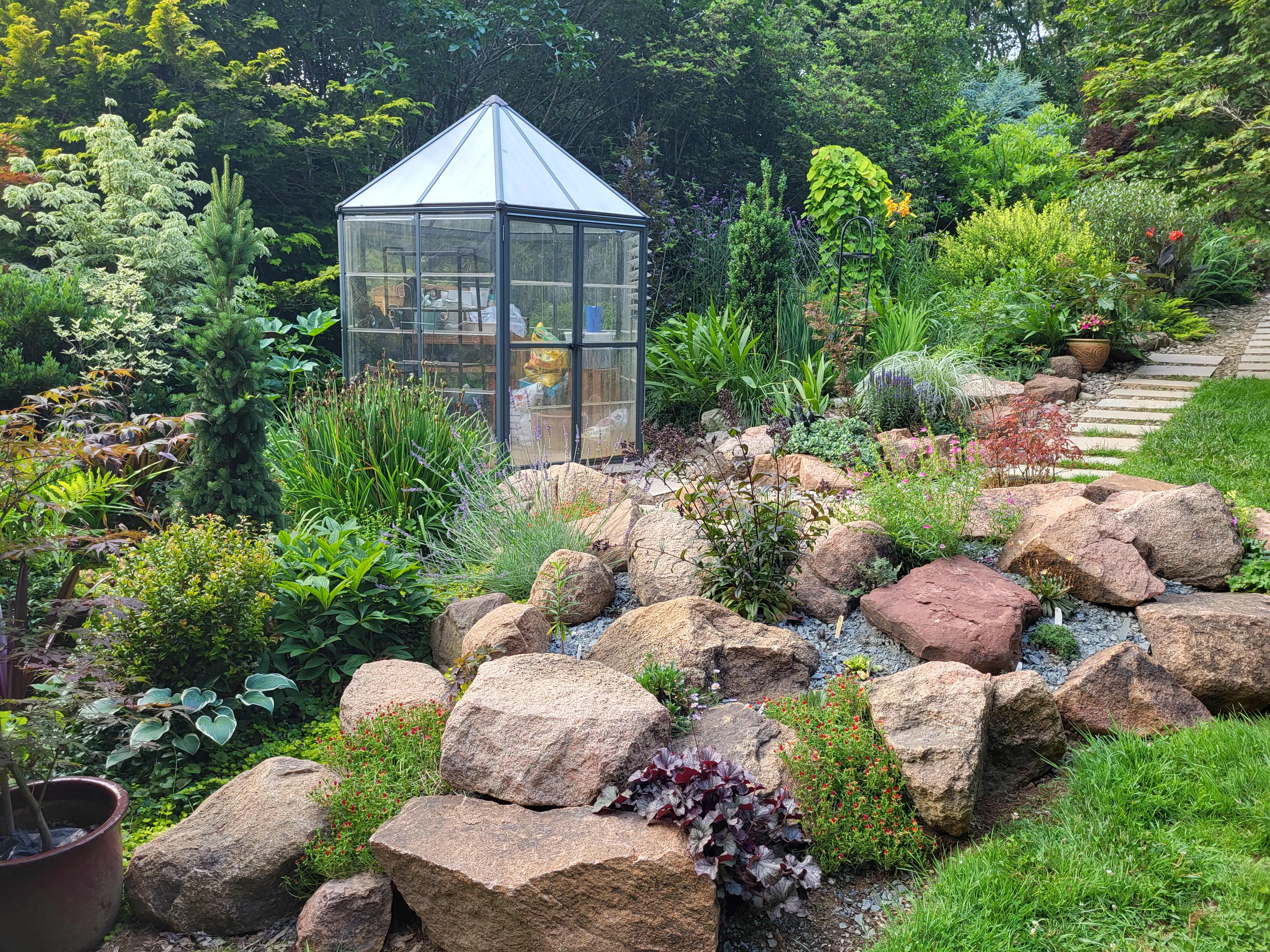
An area that I planted the past few years has filled in beyond my expectations, partially because I added bluestar (Amsonia) and Blue False indigo (Baptisia) as fast growing fillers, though the canna lily that consumed a huge space a year ago was dug and divided and it hasn’t grown much in the dryness this spring. It’ll get there, but it didn’t before the group visited. Still, everything else has grown wonderfully in this well drained, raised soil, so I’m well pleased and hardly have to make the excuse that it’s relatively new (below).
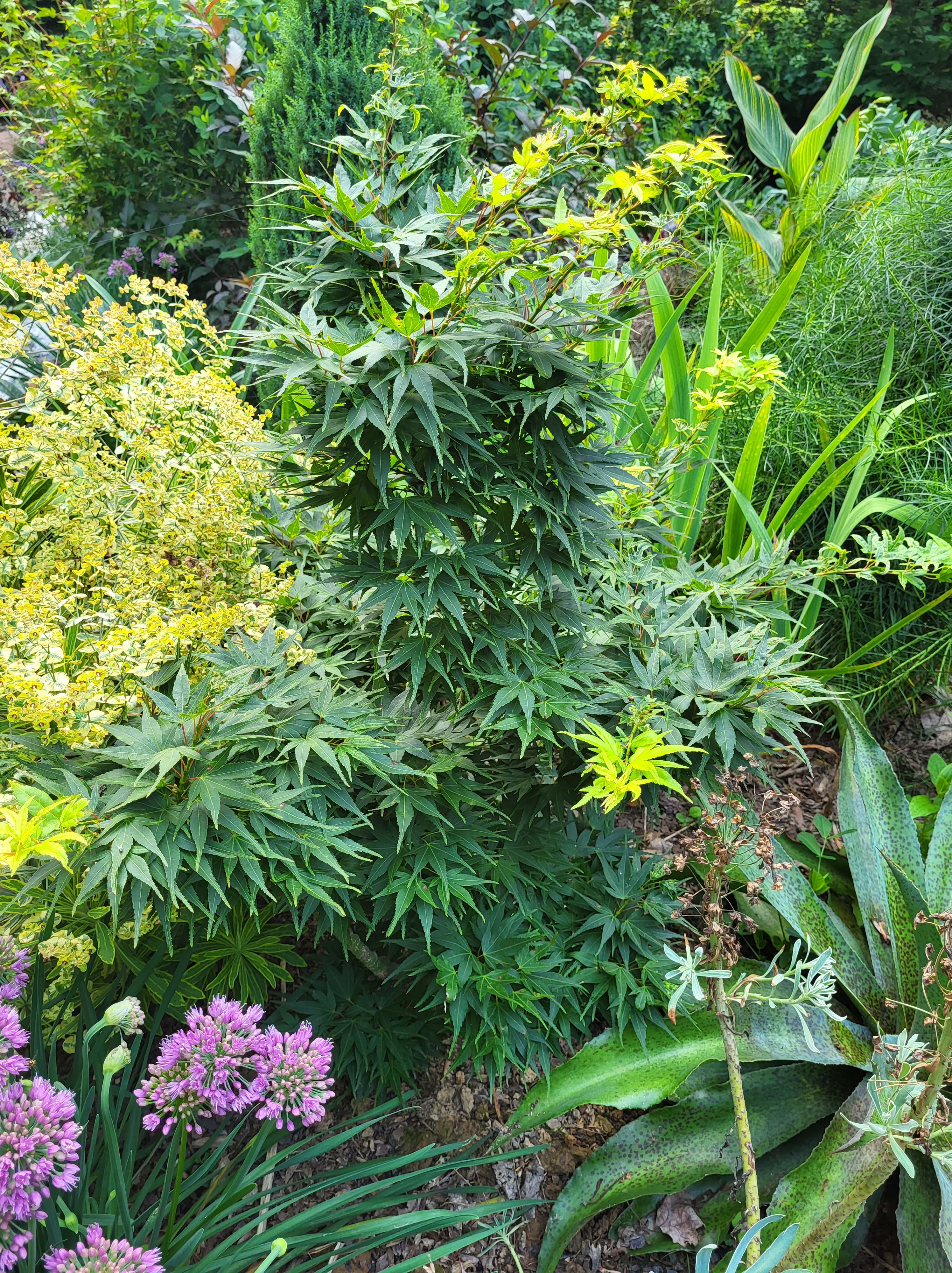
It will be a few years before several Japanese maples in this area grow up to show up, but there’s enough other stuff that the planting looks like my typical jumble of shrubs with perennials jammed into the margins.
Of course, my standards are questionable. I prefer chaos and a bit of shabbiness and don’t mind showing it off to make the point that a garden need not be manicured. There will always be at least a few weeds despite my pulling approximately 6.2 million maple seedlings in the past month. What do you expect, the garden is bordered by a forest with dozens of swamp maples (Acer rubrum). Some of the Japanese maple seedlings, of which there are dozens, maybe hundreds, are left to grow on to see if they turn into anything unique. Probably none will, but they’ll get pulled later. Besides, they kind of show that plants are happy here.
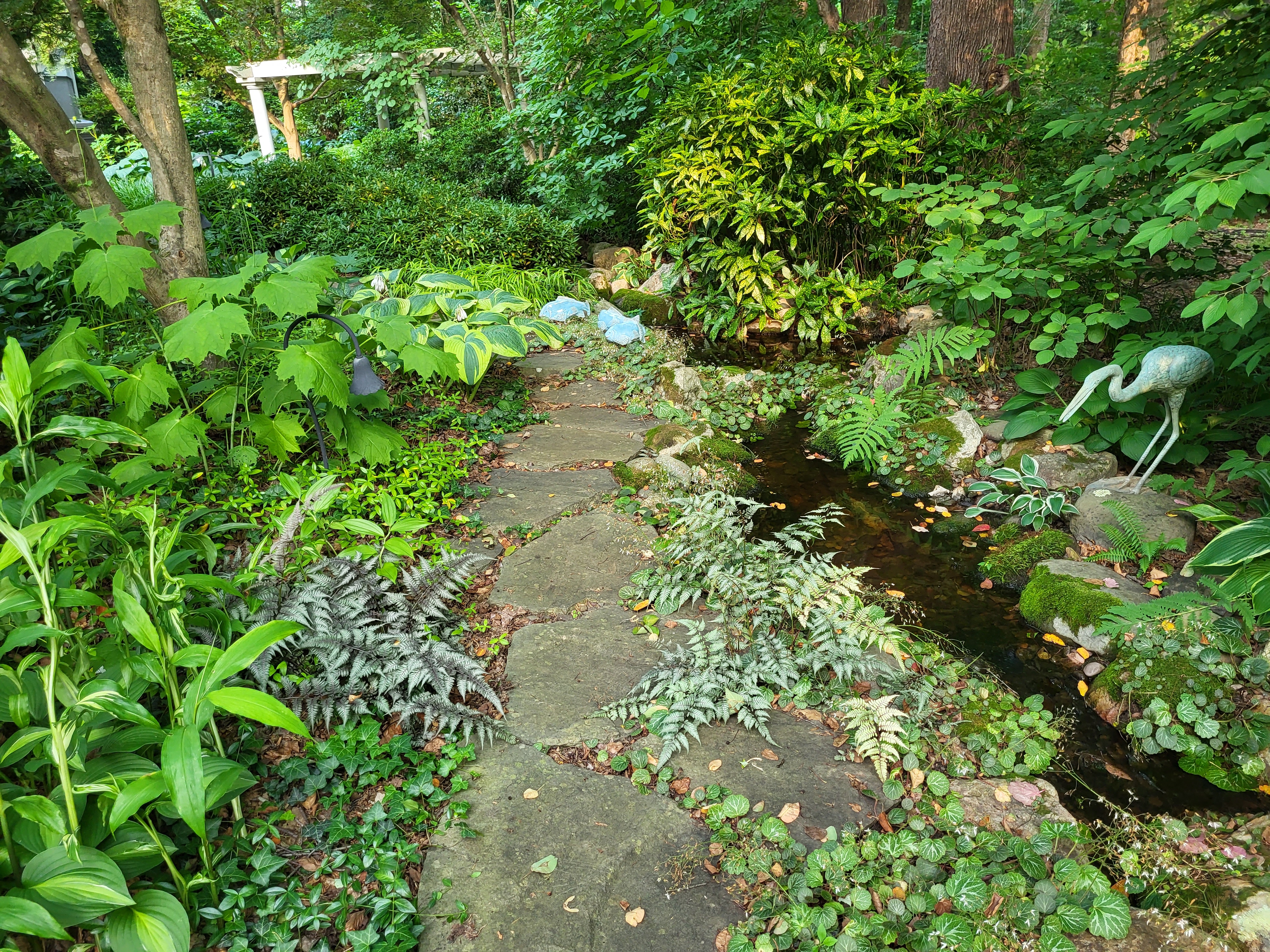
There are piles of leaves here and there. None are raked or bagged or hauled to the compost heap. These are the only mulch and as they decay, the fertilizer, so I readily point this out to visitors. I did break out the rechargeable blower to clean the paths, at least so they could be seen. The stones in parts of the path are quite wobbly, balancing on roots from the maples. I know where to tread carefully, but visitors won’t despite my warnings, so it’s best if they can see the stones they’re tripping over.
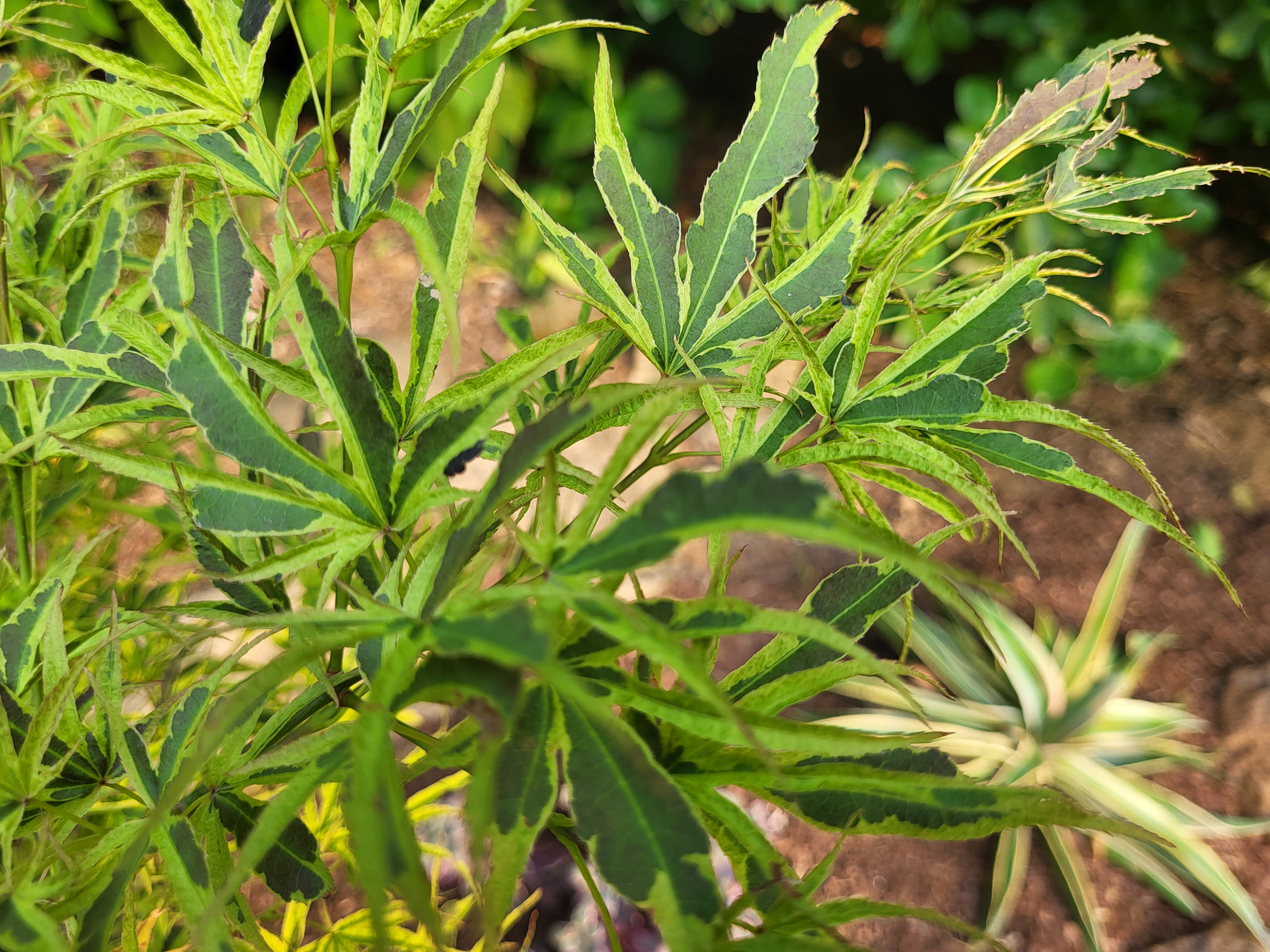
There will always be areas that are works in progress. What garden isn’t? A delivery of tiny plants arrived the day after the visit, but none were large enough to see anyway. I added a few Japanese maples this week (above), and yes, they would have added to the visit, but I can say that about every other week from March through November. The garden’s full, but I’m still planting.
I often ask visitors to cut the chatter for a moment so they can hear the frogs (and toads) and birds that croak and tweet endlessly. It is surprising how the sounds of nature often slip by without notice. The visitor must not only appreciate the beauty of a garden, but also that it is a haven for wildlife.
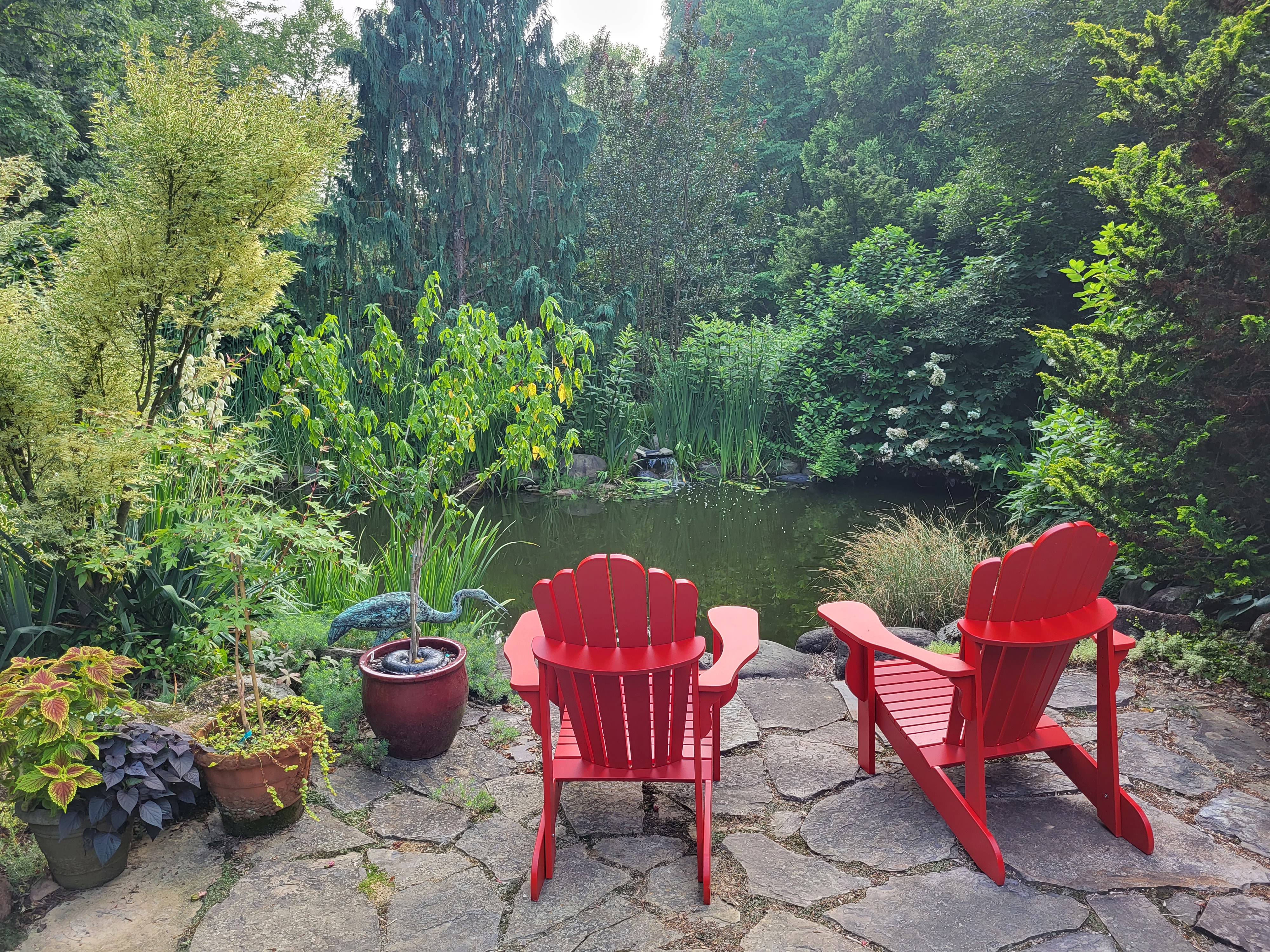
The freshwater otter did not make an appearance for our visitors, but the koi surfaced to grab some chow. There are more than I figured. The otter didn’t make much of a dent in the population, I guess. In recent years, the koi pond (above) has clouded with a layer of debris at the bottom so that it looks very natural. It’s bordered by cattails that have blown in from nearby wetlands, but also with irises and variegated sweetflag (Acorus) that I planted years ago. The four, smaller ponds are crystal clear.
Besides wondering why someone would include five ponds and countless tons of boulders in a garden, visitors often are surprised that one thing and another has grown so large. After thirty-four years, most everything has grown larger than the mature size stated by references. Who would guess that a spruce most consider to be a dwarf (Picea glauca ‘Globosa’) could grow to ten feet in height and width? And a gold threadbranch cypress (Chamaecyparis pisifera ‘Filifera Aurea’) thirty feet tall? Visitors are likely to second guess much of their garden after seeing this. I’ve learned from visiting other gardens, and a visitor to this one might learn a thing or two.
 Ramblin' through Dave's Garden
I enjoy your photos and posts. Question, what is the name of the evergreen in the photo with the two red chairs. It is directly above (in photo) the red pot? It has “drooping” needles (kind of).
Would enjoy seeing a video tour of your yard.
The evergreen on the far side of the pond is a weeping Alaskan cedar (Callitropsis nootkatensis, recently changed from Chamaecyparis nootkatensis). I’ve done a few videos of the garden in the past, so perhaps it’s time for another.
I enjoy seeing your daily post. Do you have tours of your garden and where are you located?
The garden is in Warrenton, Virginia, about 47 miles west of Washington, DC. I enjoy hosting garden clubs and individuals on occasion when we can work out a time between my work and hiking schedules.
I am thrilled with every post. I returned to southern Maryland after 2 decades in the Denver area. I am assiduously planting (not when compared to you) and finding many challenges. Your blog reminds me that I am planting for me and future generations. Thank you!
I sometimes wonder what will become of the garden when I’m gone. While landscaping should improve the value of a property, I’m certain the garden would scare off many potential buyers.