Just prior to this wave of summer heat, Barbara and I left to hike in the French Alps. This was my first vacation since retiring, and soon, I’ll follow up with photos of the glorious alpine meadows and rocky slopes and perhaps a picture of snow-covered trails that are horticulturally relevant since many plants are experiencing their early spring in late June as they emerge from the melting snow.

Of course, I was aware of the severity of the heat and the lack of rainfall back home since the entire planet is connected, even at high altitudes where I checked radar for precipitation that passed through on a few afternoons. We were slightly below the snow line, but it was a chilly rain.
The weeks before we left were quite dry, and while I watered the potted plants before leaving, I didn’t think it necessary to bring someone in to water while we were gone. So, I was at least slightly concerned that we’d return to heat stricken plants, though I was just as concerned by my transition from the chilly mountains to hundred degree heat.
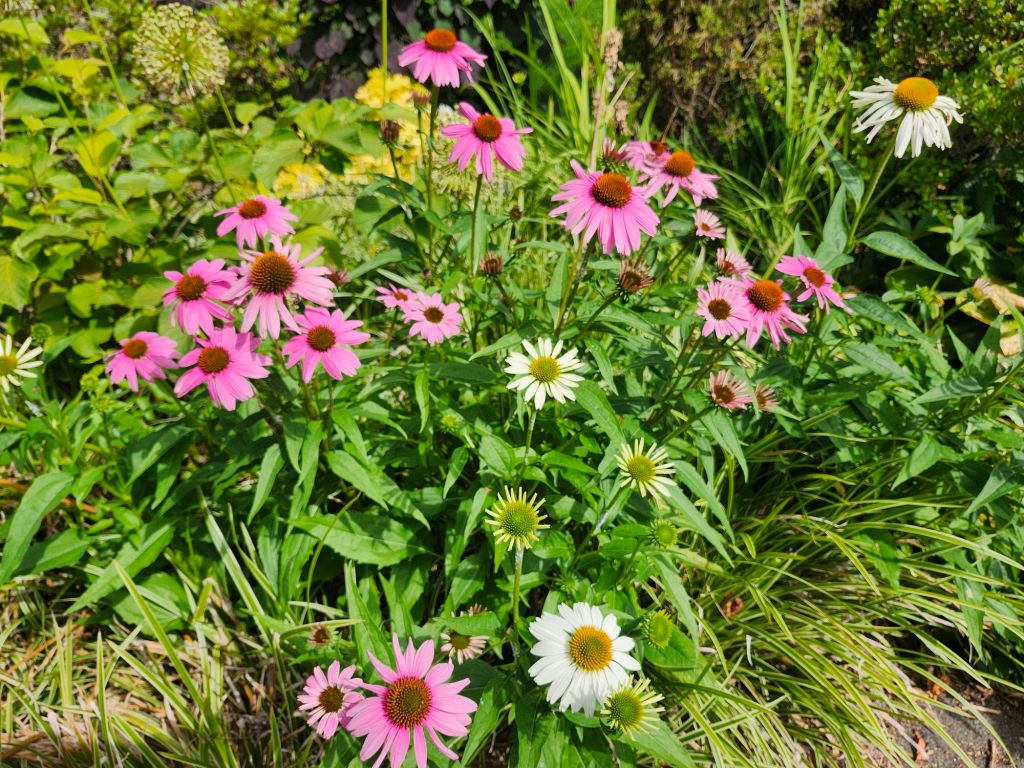
Predictably, a few bellflowers (Campanula) planted a few weeks earlier are badly wilted, and container plantings in half sun look pretty sad. But, after a drink, I think all will recover, so not too bad and probably not much different than if we weren’t traveling. I’ll carry a jug around to give the pots a sip of water, and I probably would have done the same for the bellflowers, but I wouldn’t have watered anything else.
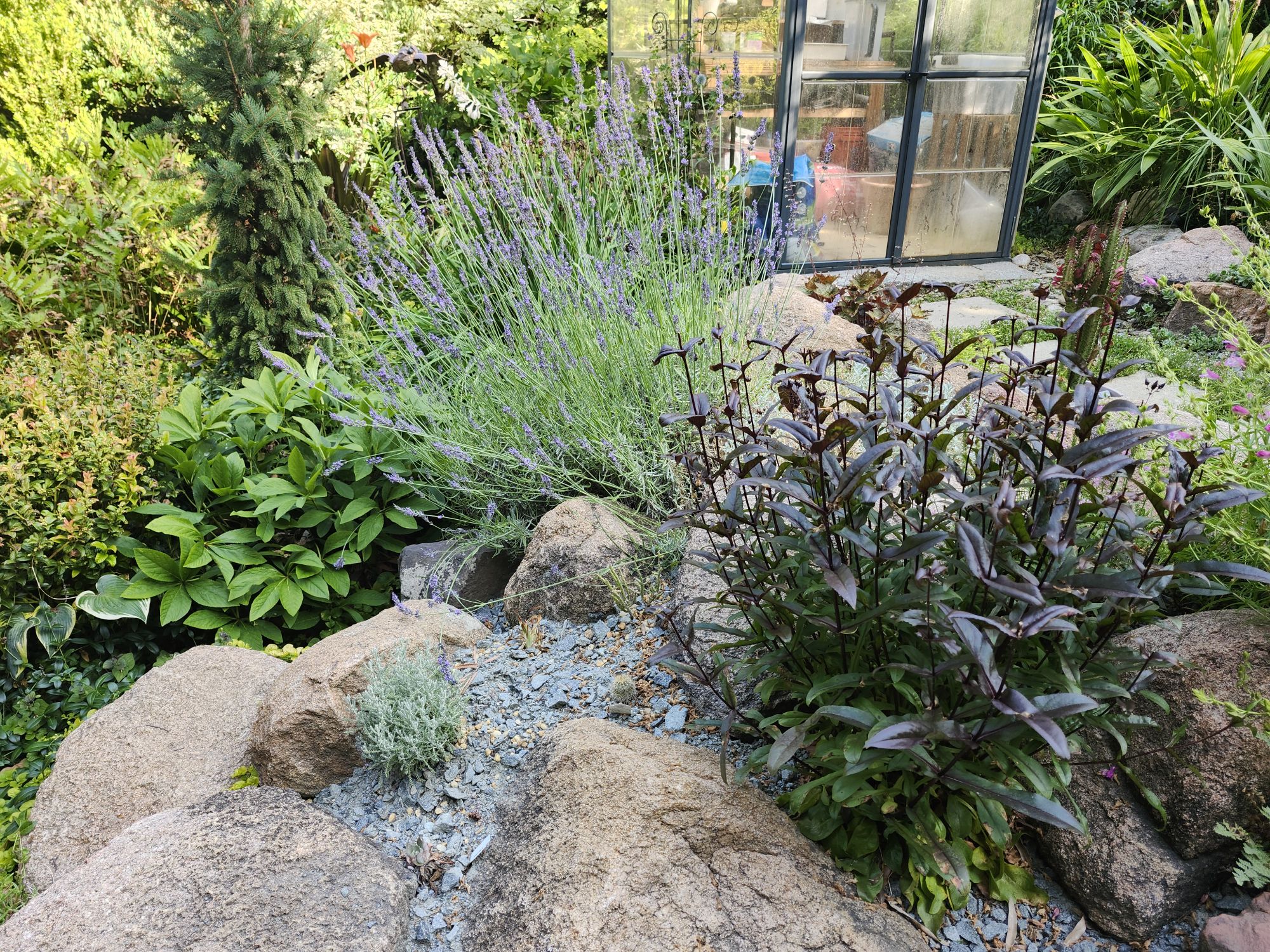
Much of the garden has been established for decades, and most of it has thrived without irrigation. A good portion is now shaded by the many dogwoods and redbuds and dozens of large Japanese maples and various other trees, so except for some root competition, the shade conserves soil moisture. But sun or shade, all parts of the garden are parched, so I hope for an afternoon thunderstorm on one of the next few scorching days.

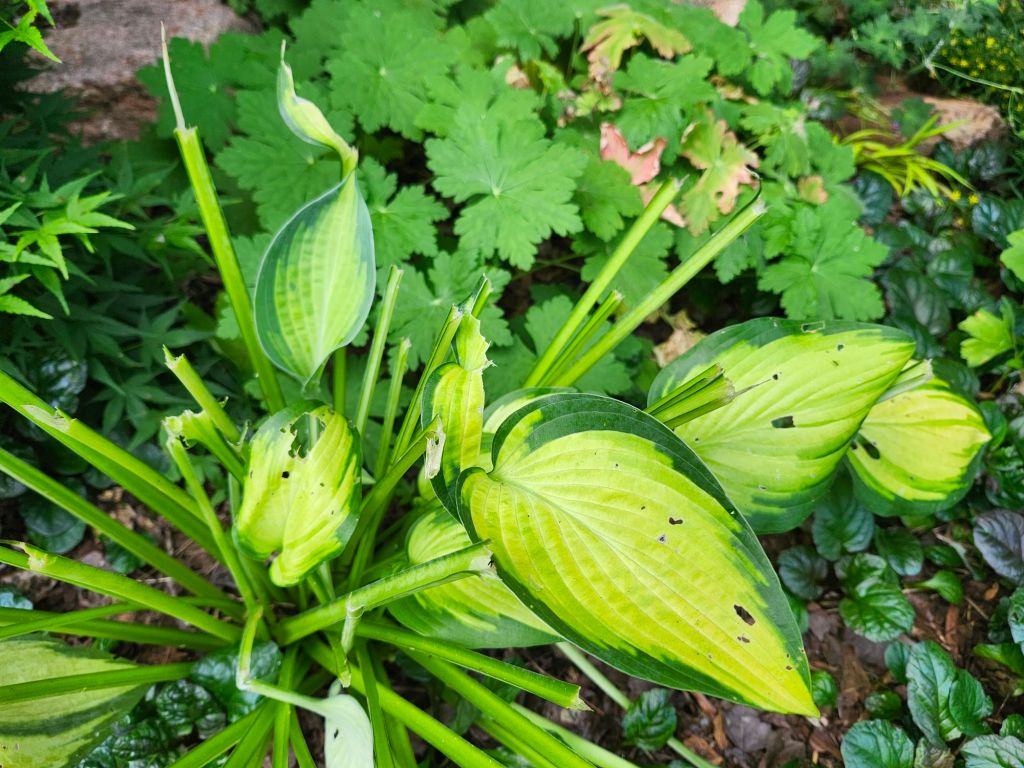
I did screw up. I should have sprayed the deer repellent the week before we left when it was due. I often delay spraying until I see the first nibbled hosta, but I can’t do that thousands of miles from home, so a few hostas took a hit (below). Nothing too bad, and between the deer damage and a few wilted plants, the garden survived better than expected.
But ….. this is a clear case where you should not follow my lead. In this garden, there is enough shade and naturally good soil, so I’m able to cut a few corners. Plants need water, particularly ones recently planted, so you should give the garden a good soaking before your summer travels. If your travel is longer than a week without recent soaking rains, hiring a neighborhood kid to water is a good idea. This garden would be impossible to water by hose, and I was confident everything would survive. Fortunately, I believe that all will be fine.
 Ramblin' through Dave's Garden