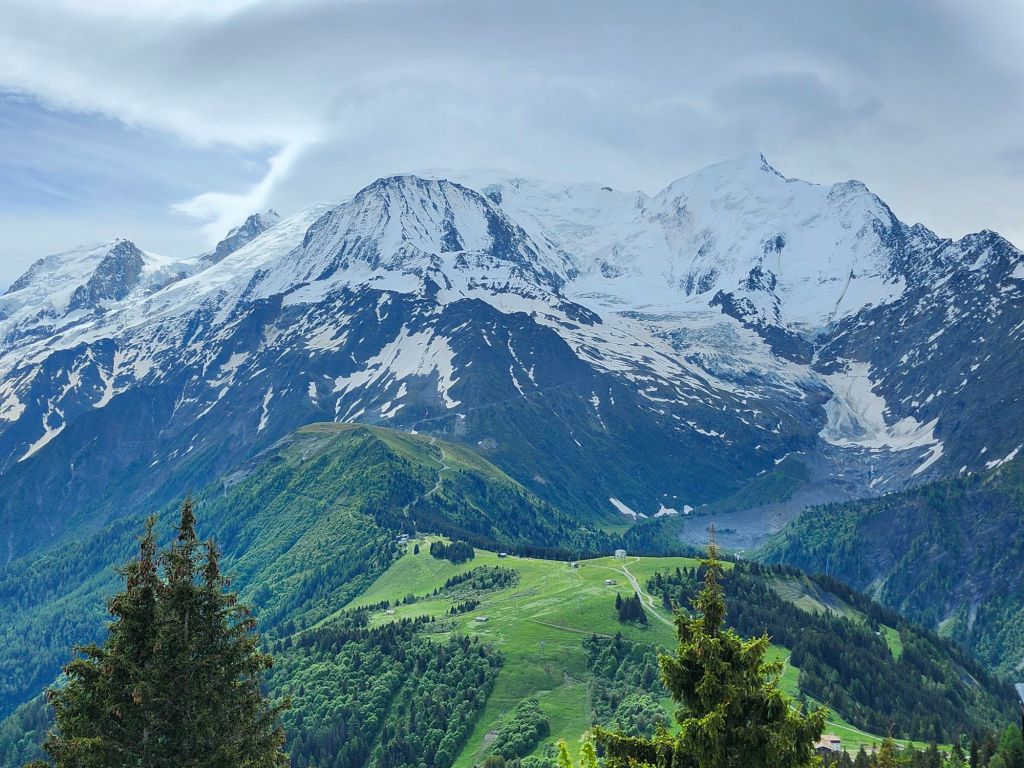
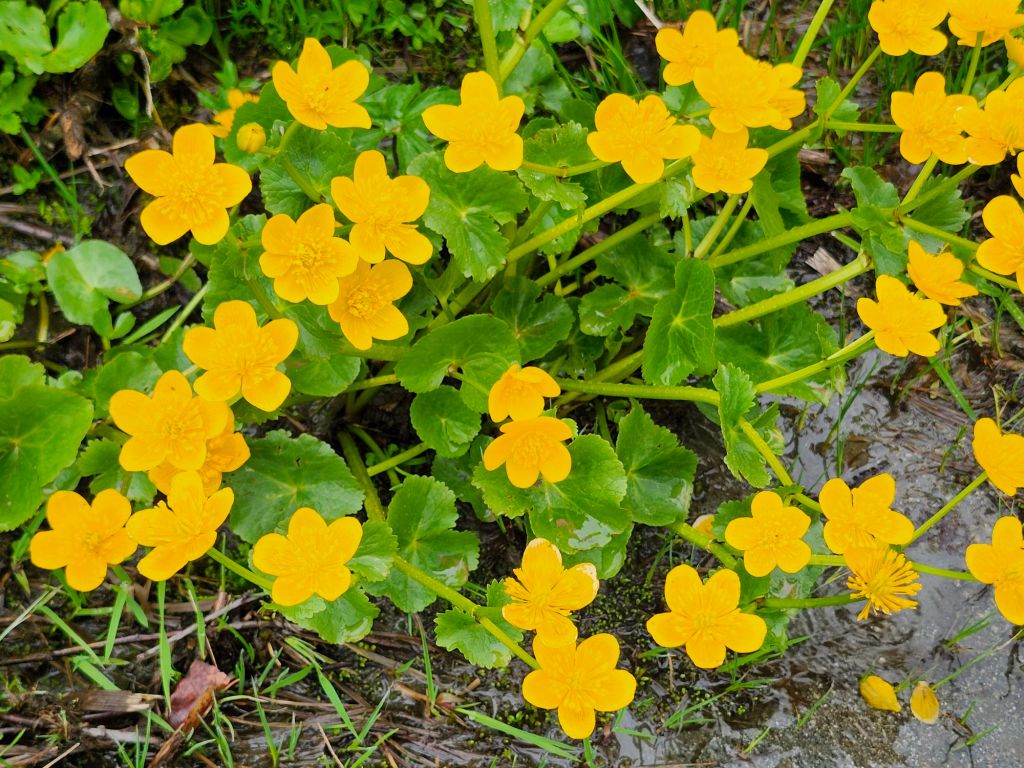
At 5900 feet elevation, this alpine meadow in the French Alps is in glorious bloom. From a distance, the flowers appear scattered and the meadow green, but as we stroll along this mountain ridge, there are countless blooms. Several hundred feet up slope are pockets of snow with water crashing down the mountain sides. Tomorrow, we hike higher.
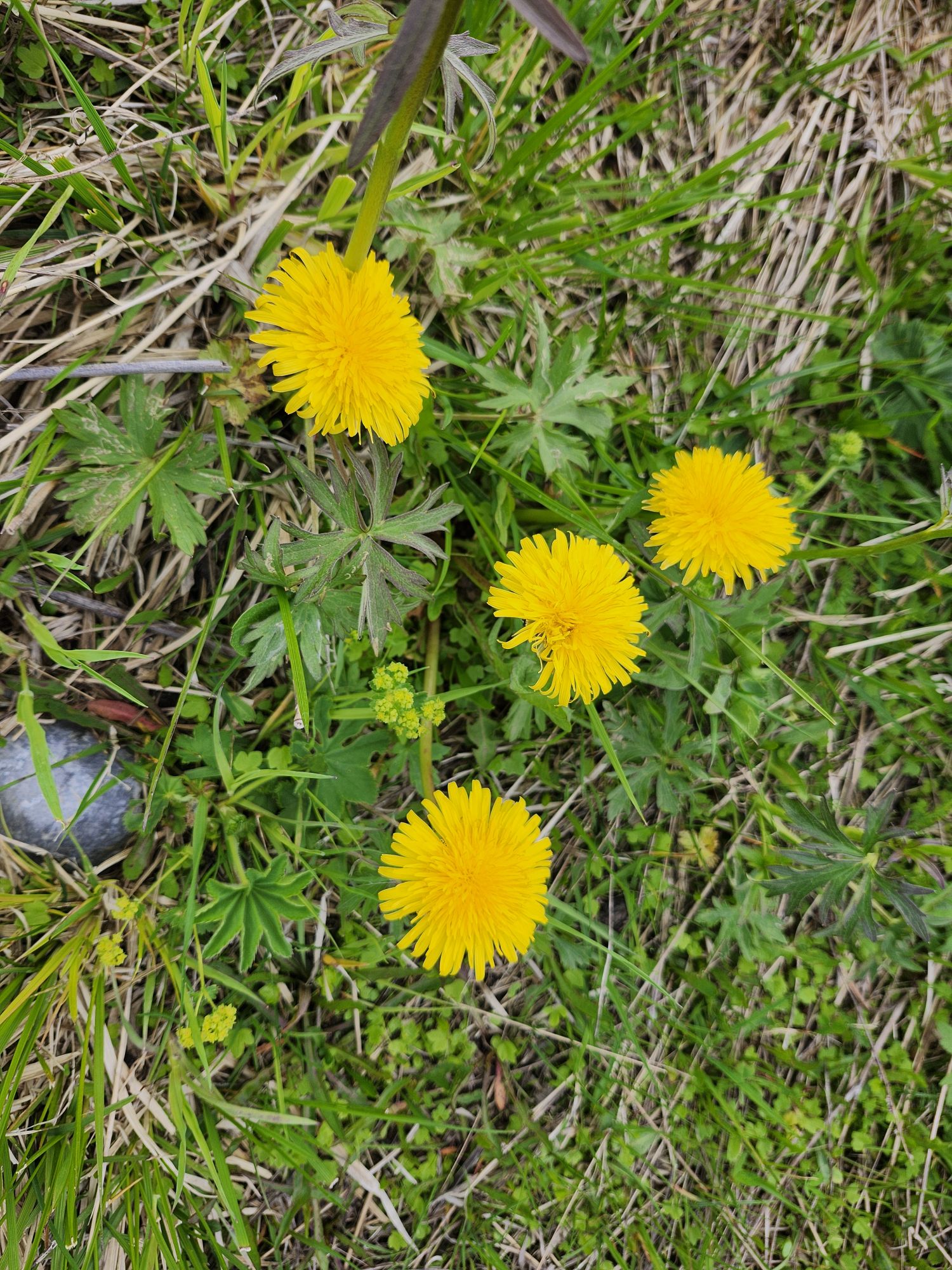
I am somewhat surprised by the abundant dandelions in this high meadow. Here, they do not invade a pristine lawn, so they can not be termed as weeds. (In my garden, ample quantities of dandelions, clover, and mazus grow in the small, scruffy areas of lawn. It is mowed every few weeks, so all are often in bloom and never considered weeds.)
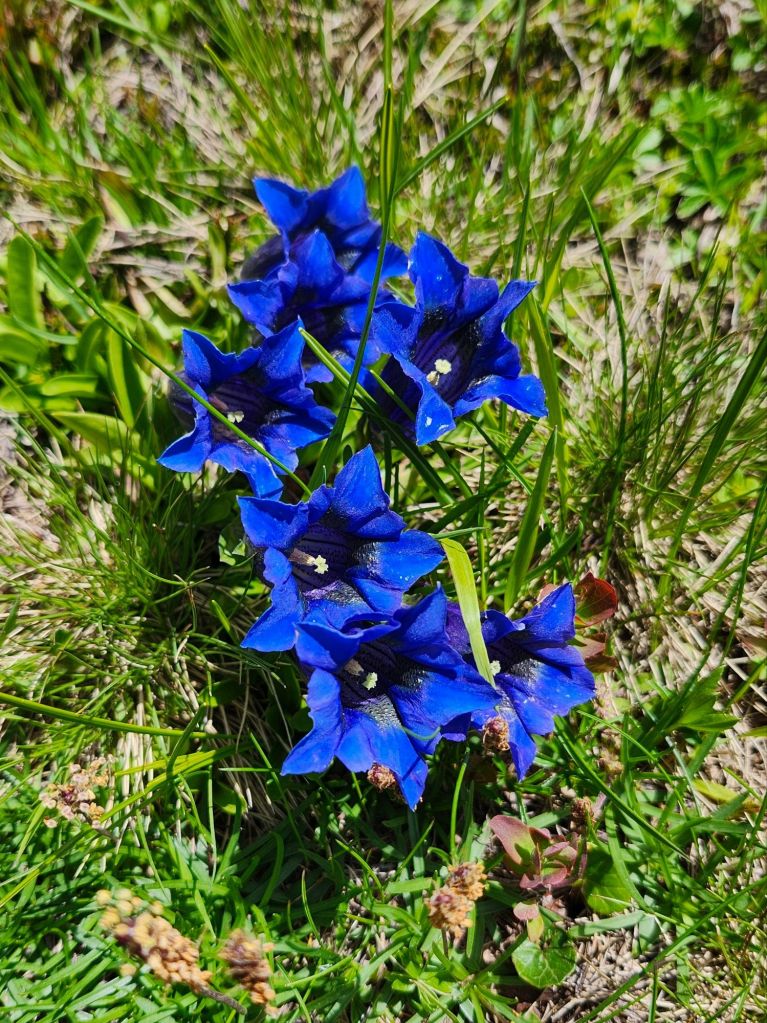
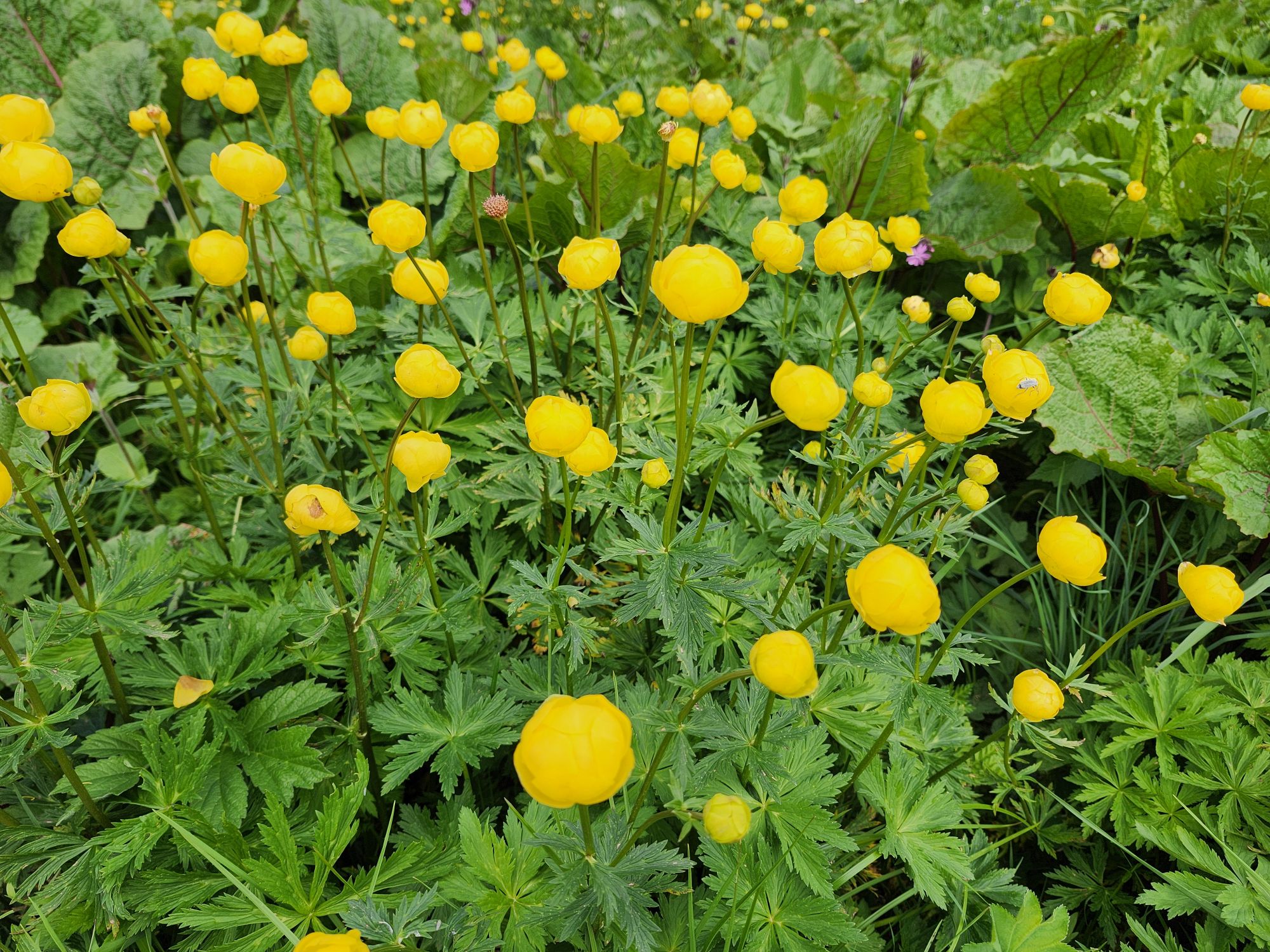
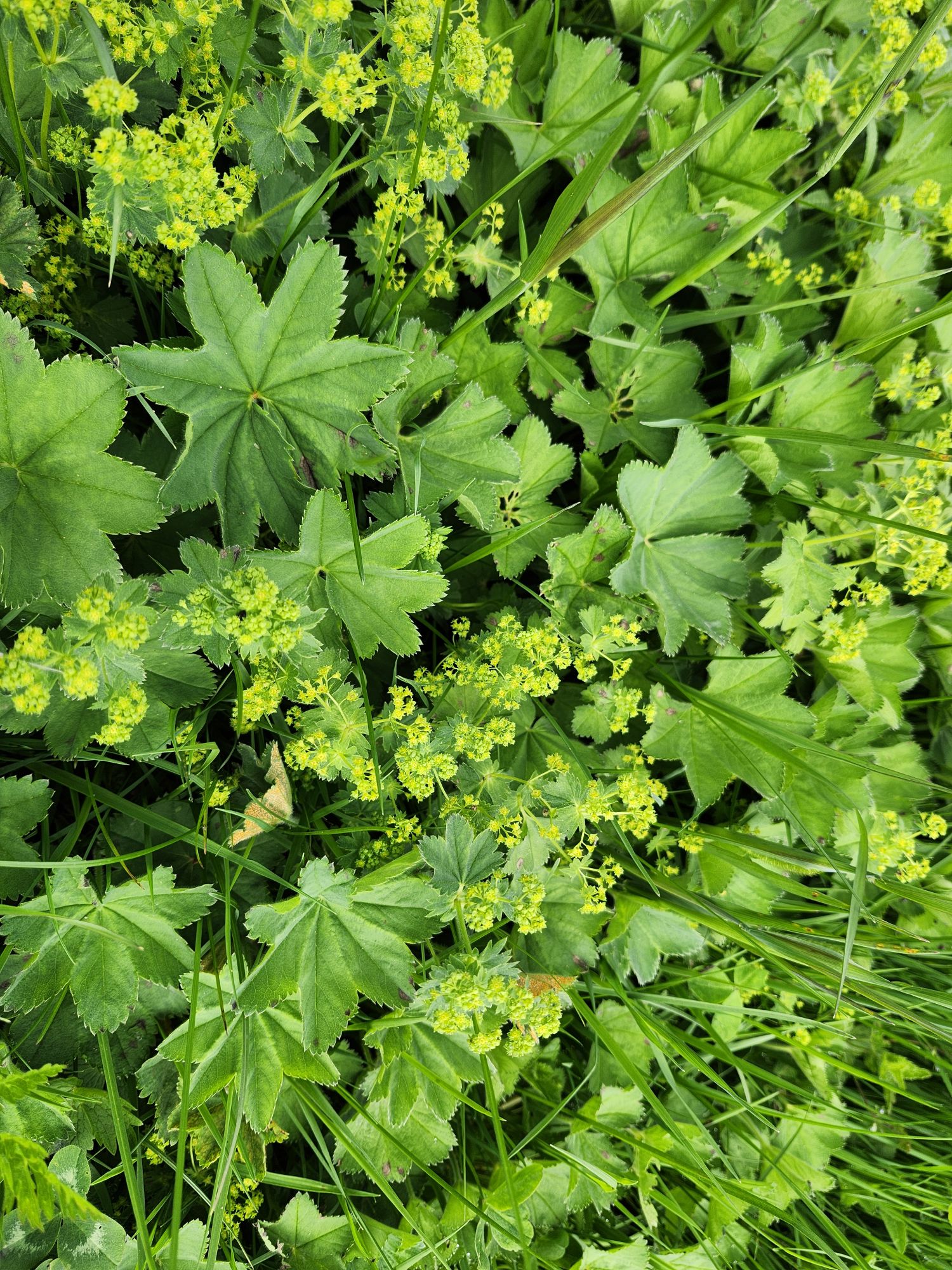
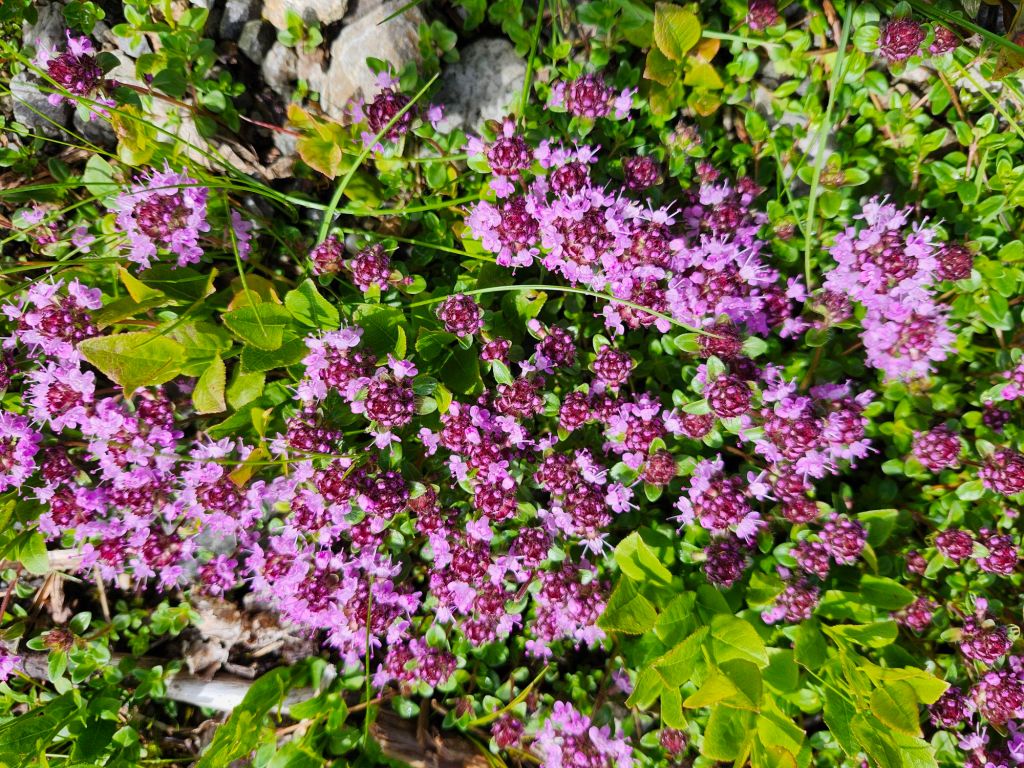
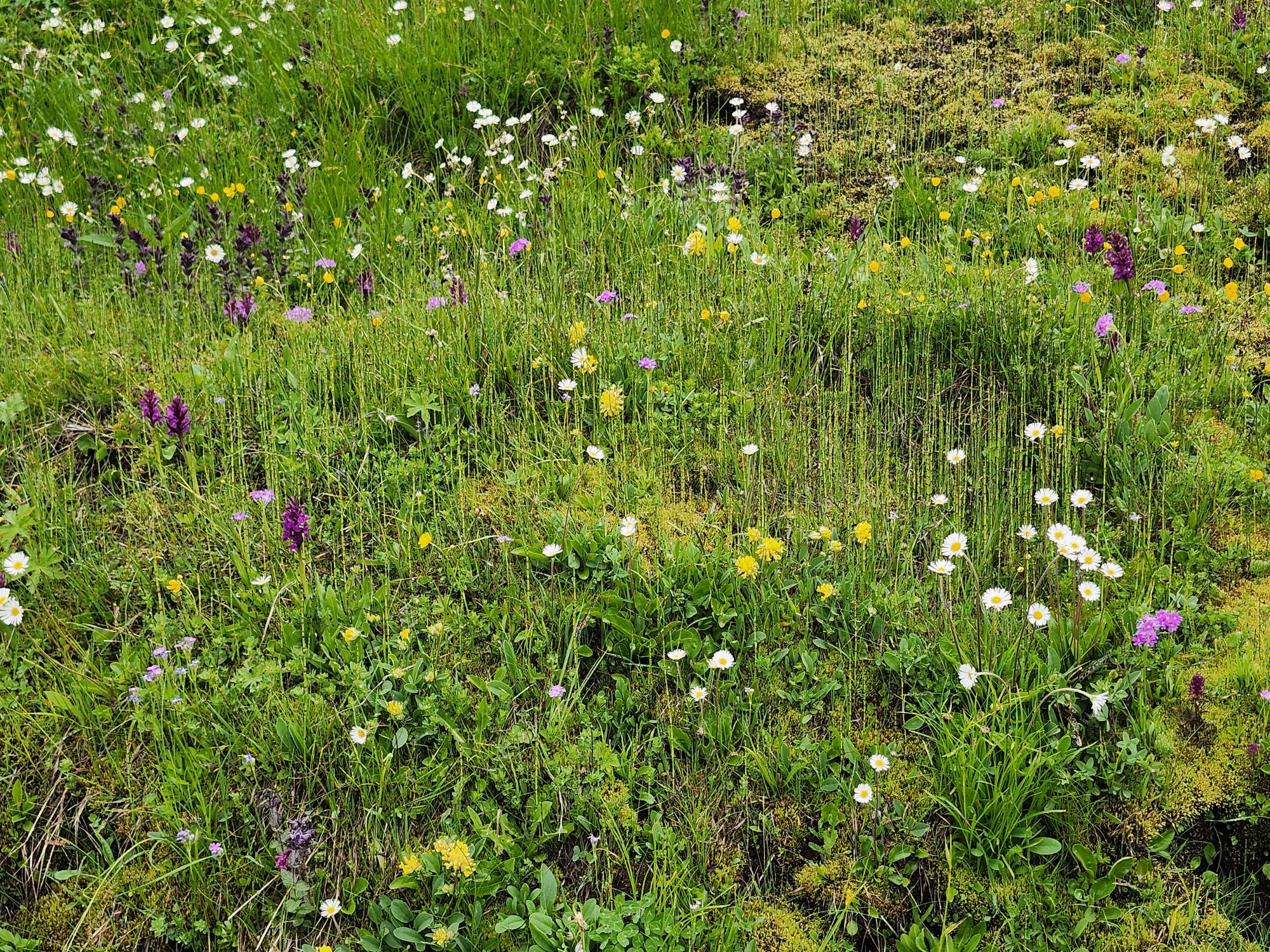
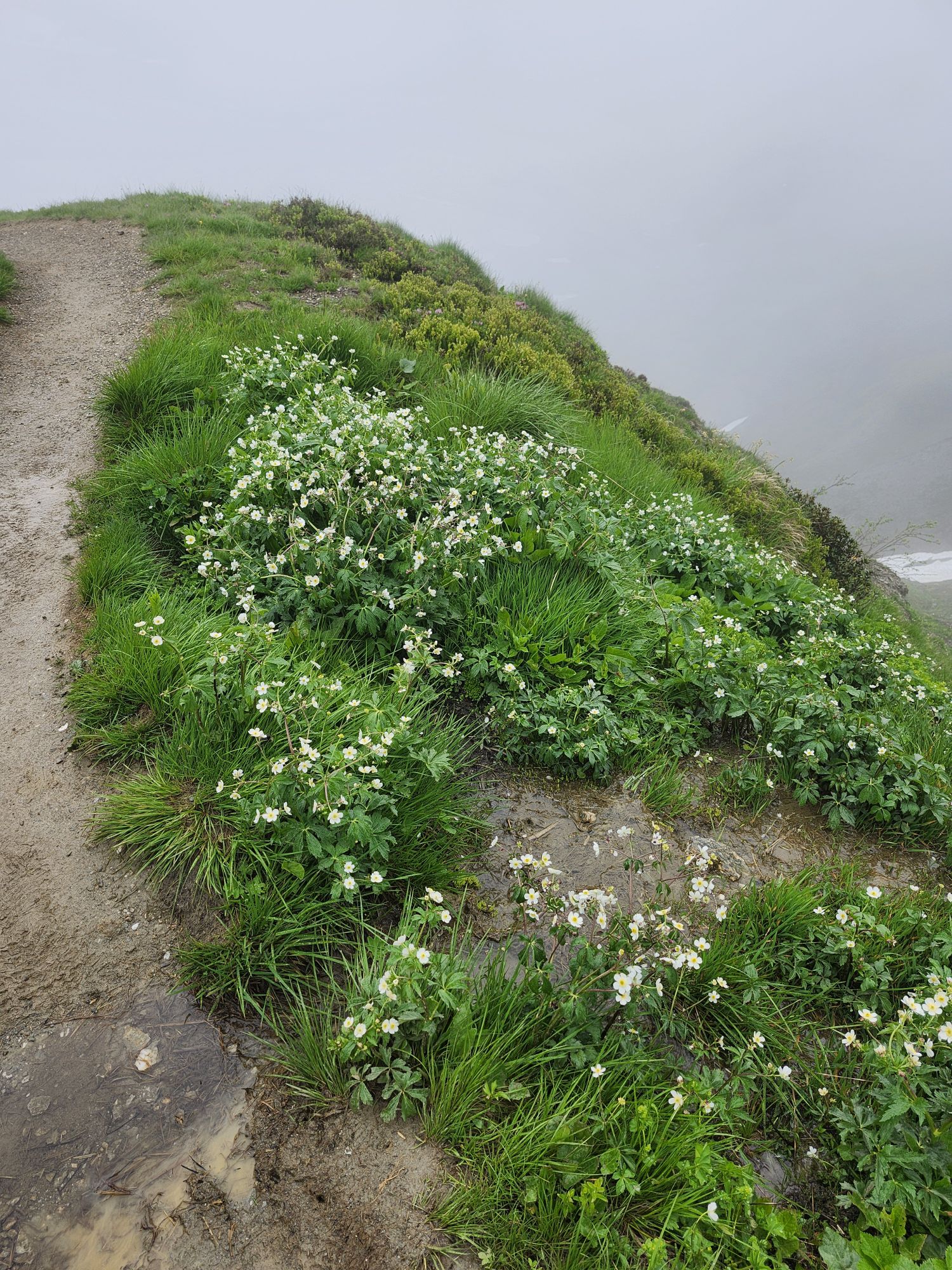
Shrubs and many flowers in this meadow are familiar, others vaguely so, and some are identified only upon our return in the evening. A few remain mysteries.
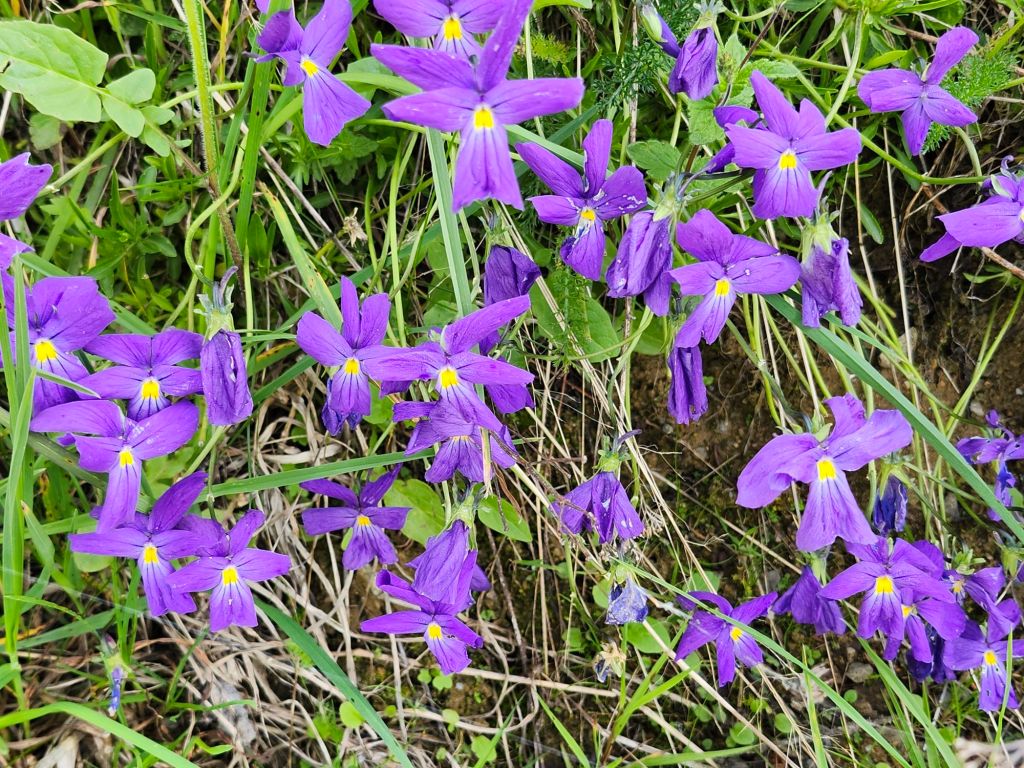
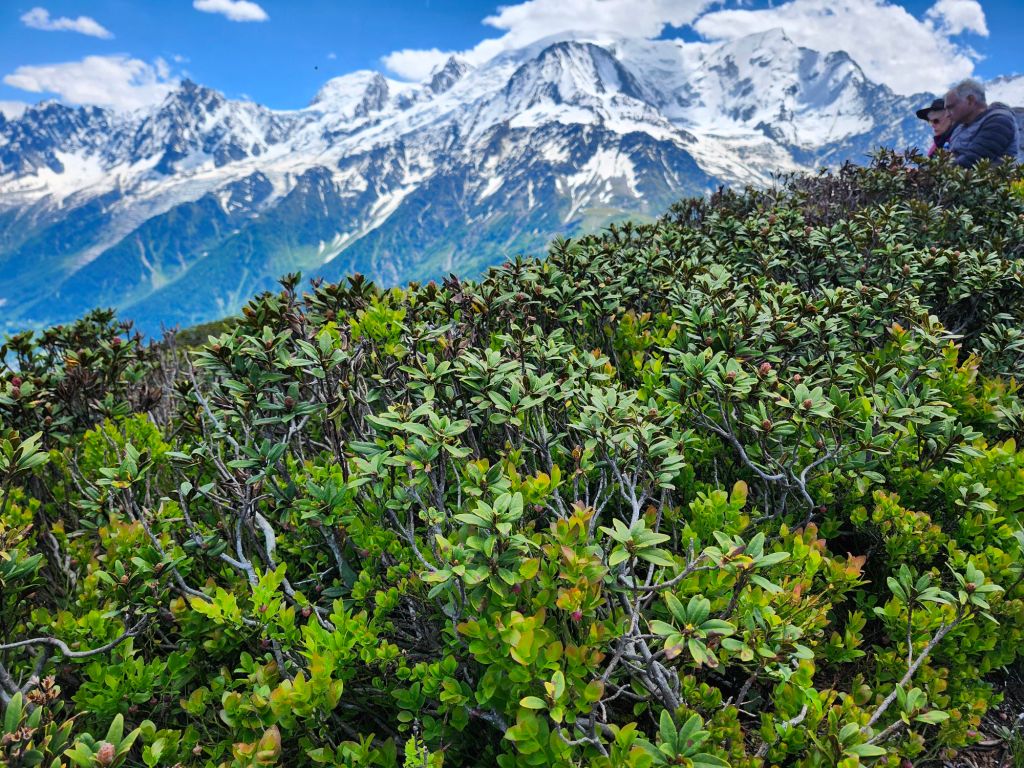
I often lag behind our hiking group as I climb an off trail slope to view and photograph a plant, and occasionally, one of the English gardeners calls out for me to help with identification. Often enough, my answers are satisfactory, though I feel nearly clueless in this unfamiliar landscape, but they continue to ask.
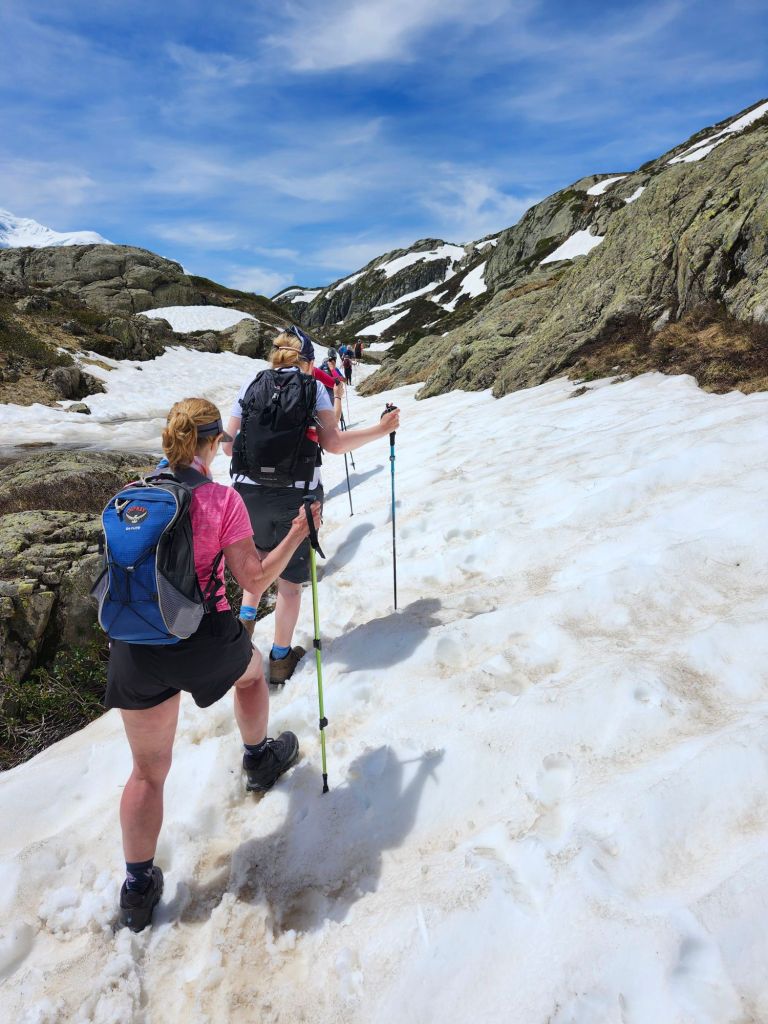
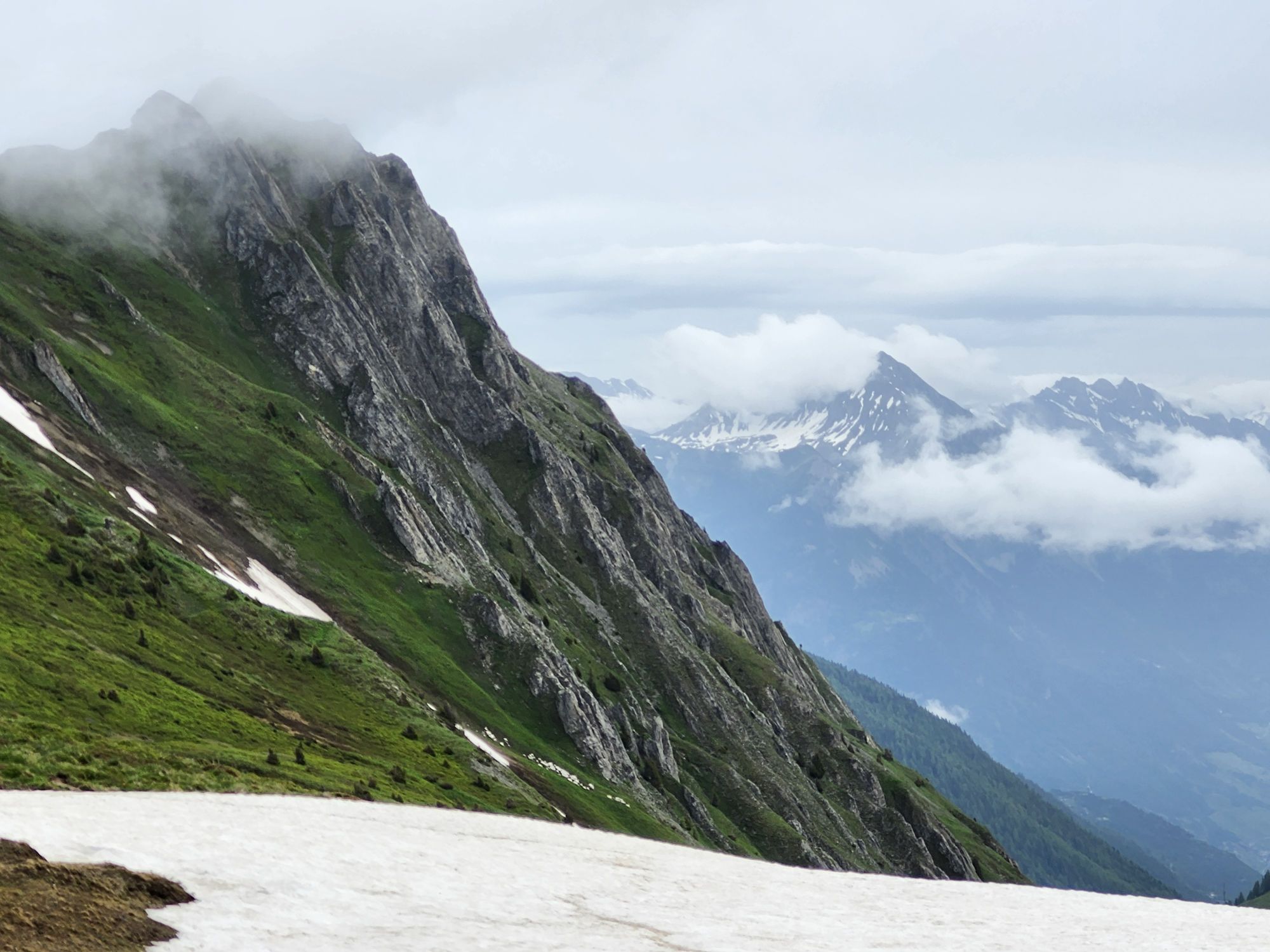
The third day, we ascend to a higher elevation (7500 feet) with broad areas of snow, sometimes perilously undercut by the spring melt. There are numerous flows of rushing snow melt, some easily crossed but others more treacherous. Most in the group balance on hiking poles, but I dislike poles that remain in my backpack, so I must leap from one boulder to the next.
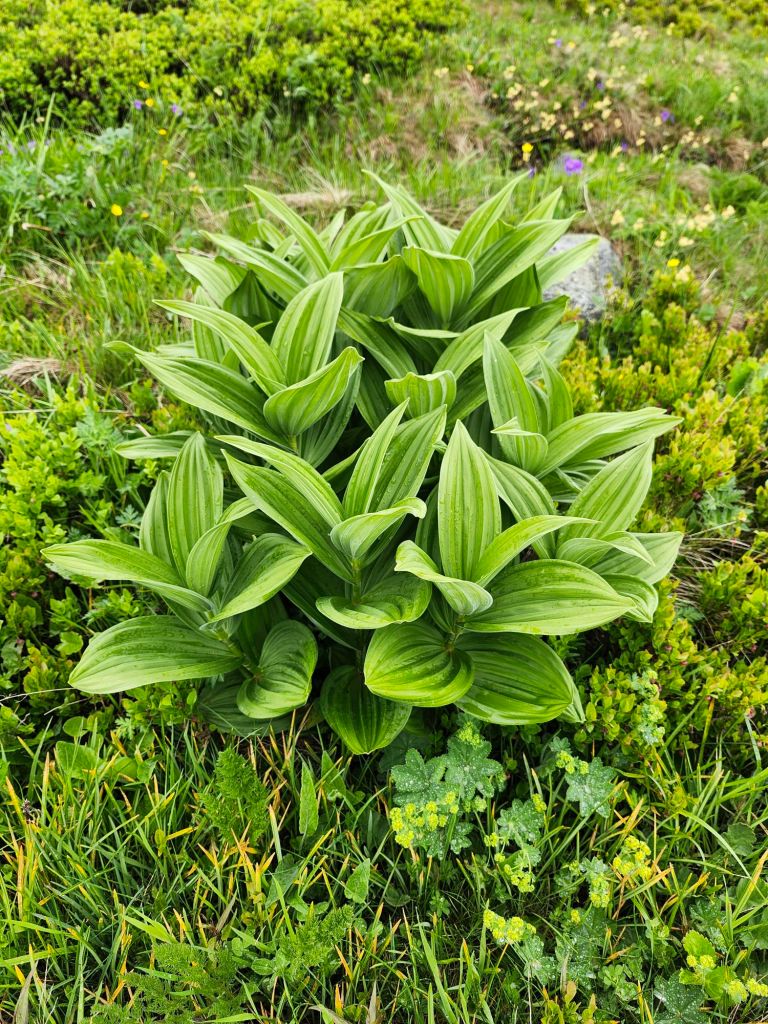
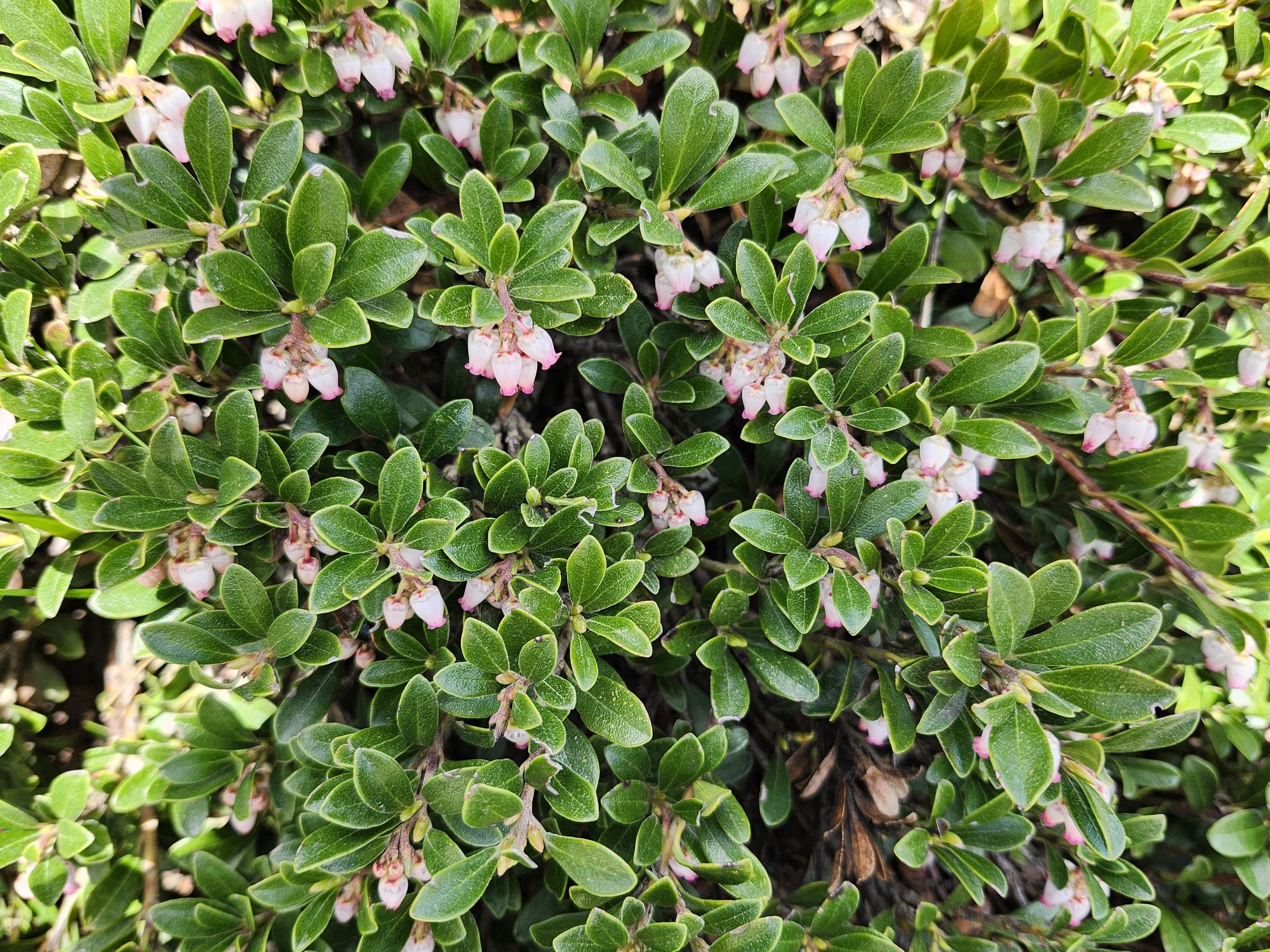
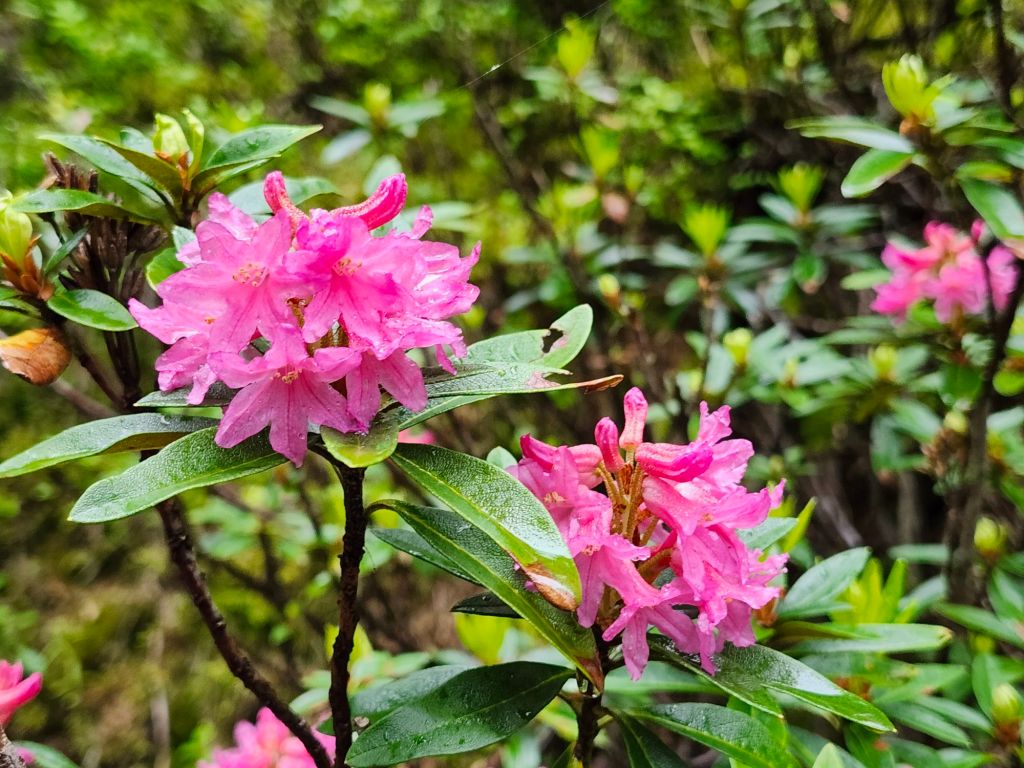
Beside rushing streams, false hellebores (Veratrum nigrum, above) emerge in their spring thaw while blueberries and rhododendron, dwarfed by their extreme exposure, bud over wide expanses. Ones a thousand feet below and in evergreen forests are in brilliant bloom (below), and the large leafed false hellebores rise to several feet.
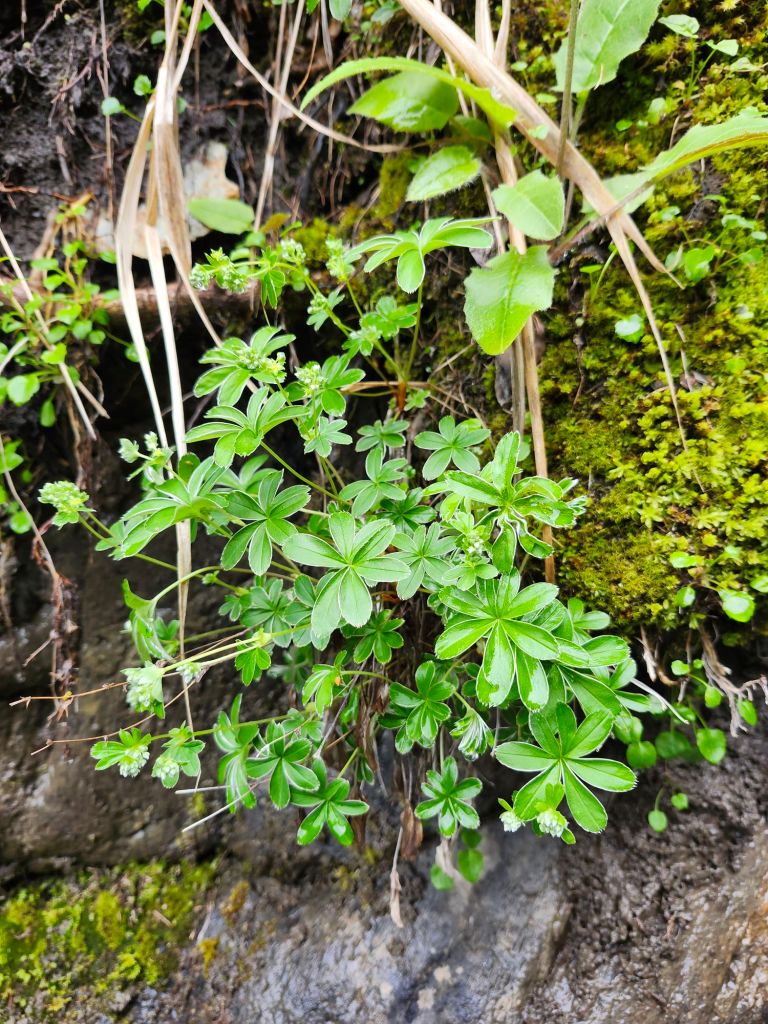
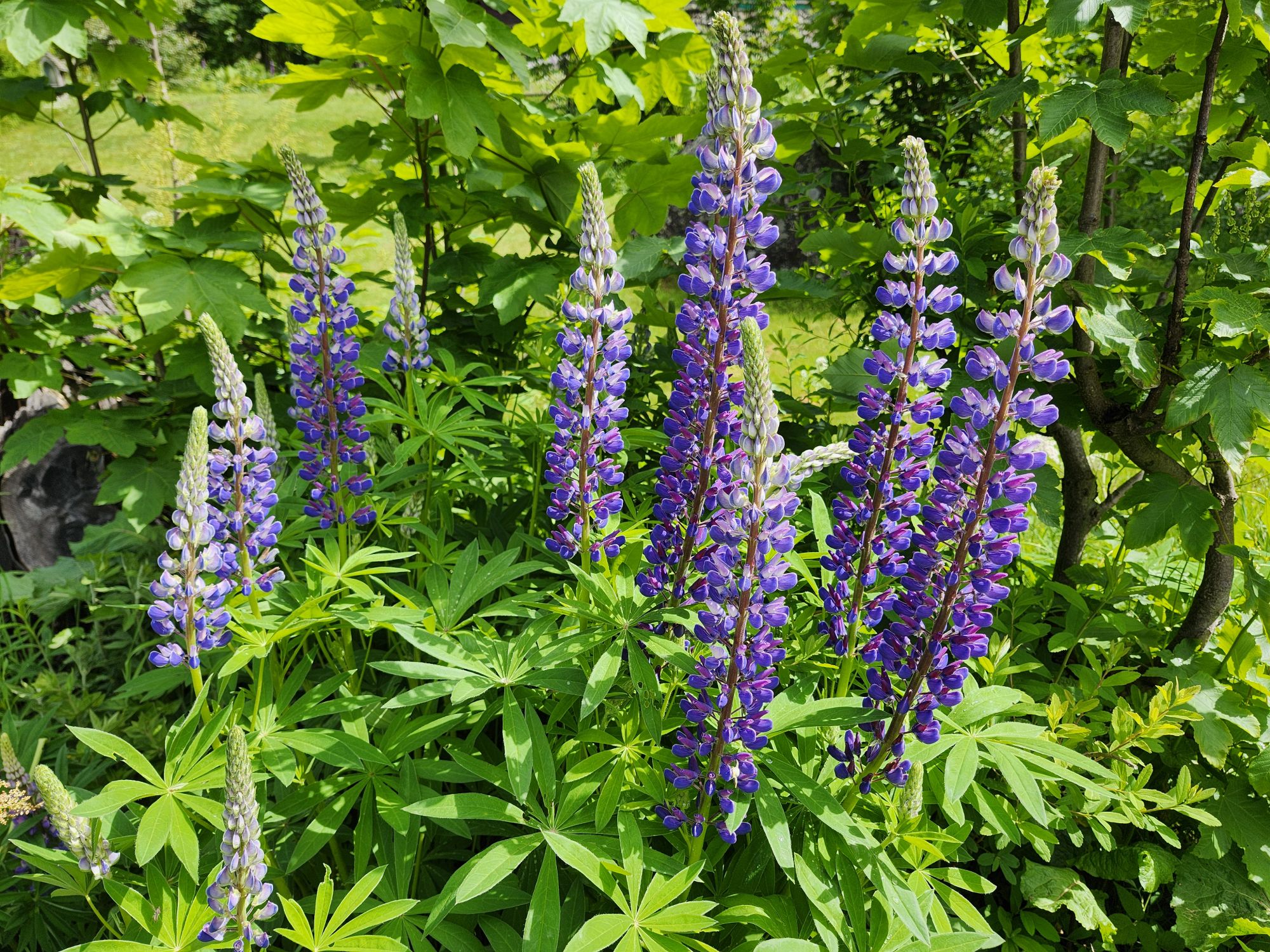
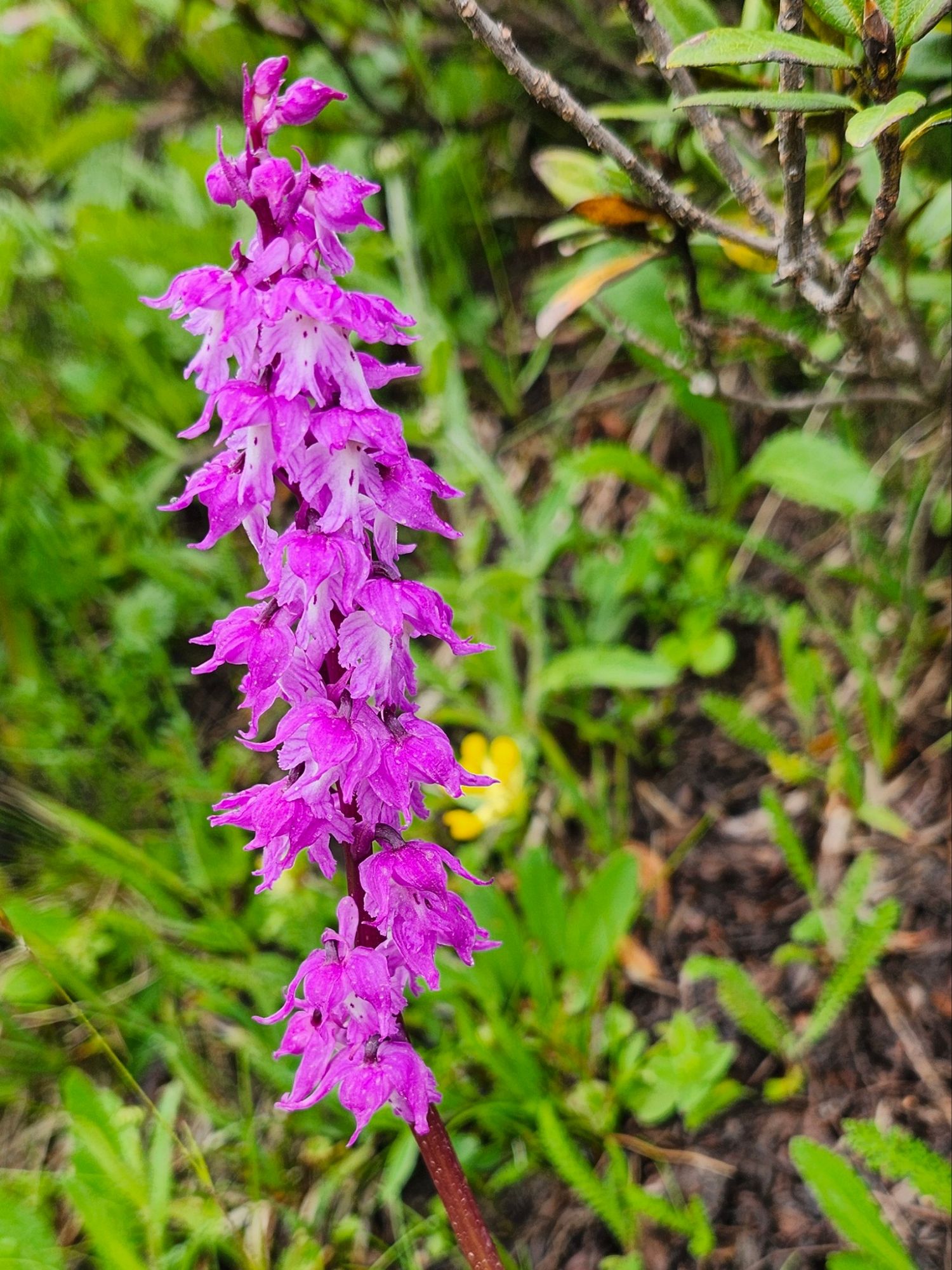
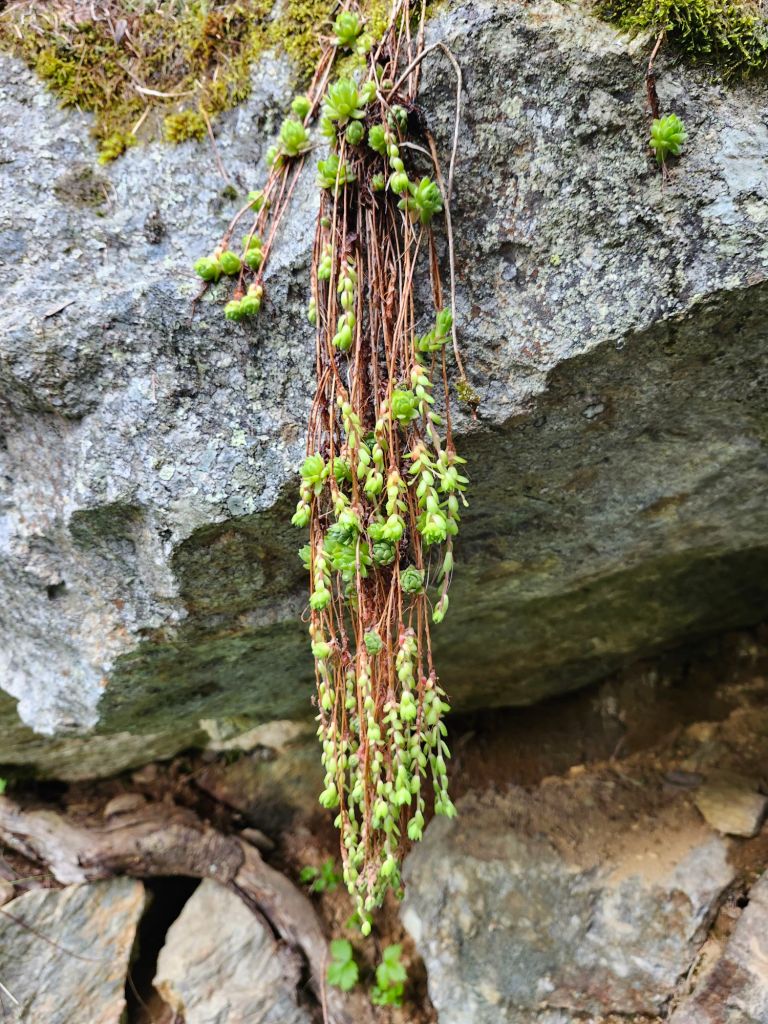
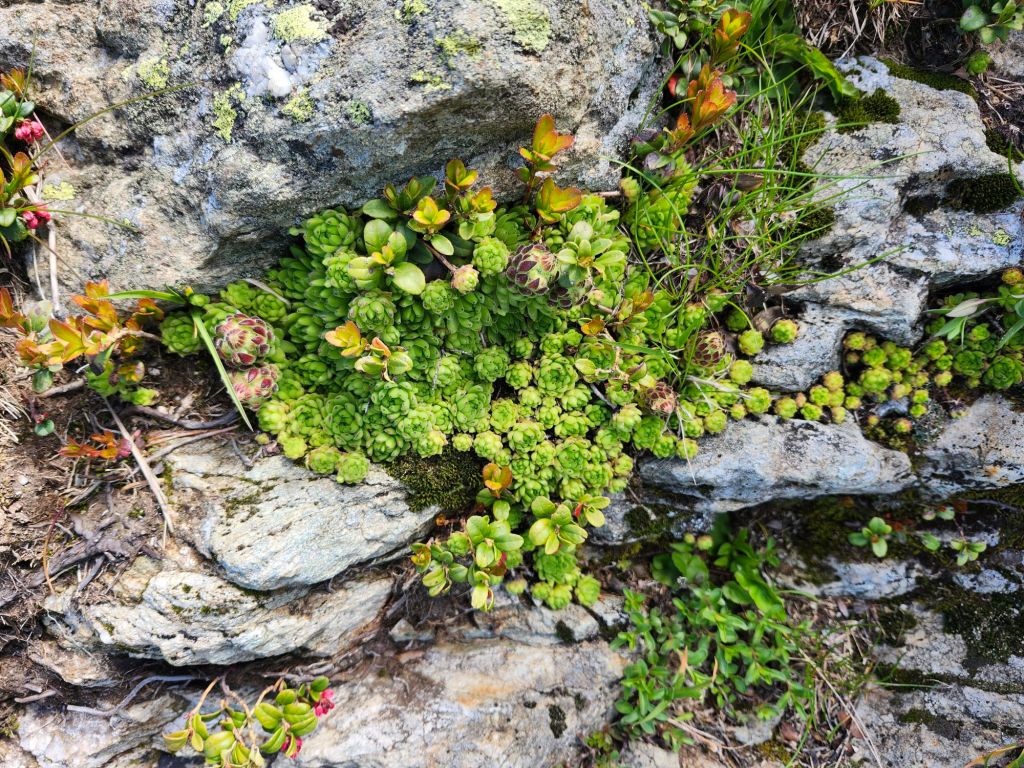
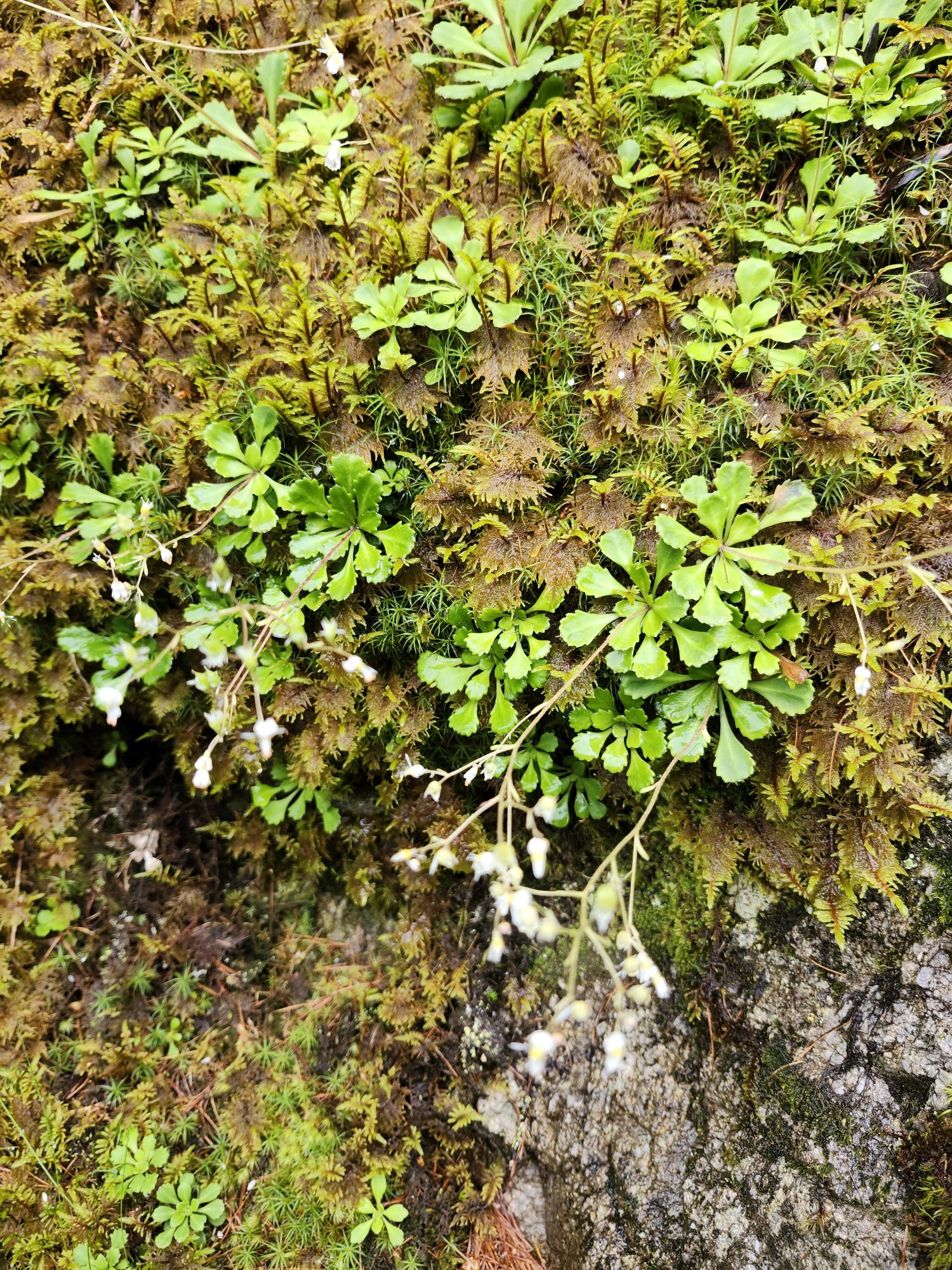
Further up the slope are walls of stone not suitable for an aged hiker, but off trail again, I see succulents growing in the crevices. I suspect most are sedums (above), and some I positively identify as saxifraga (below). I enjoy the hike, but just like strolls in our nearby Blue Ridge, my eyes focus on flora as I sometimes stumble over stone outcroppings. In a few areas, I must focus on the trail ahead or risk tumbling a thousand feet.
The long flight home returns us to one hundred degree temperatures and a garden begging for rain. Evaporation and a lack of rainfall have drained inches from the garden’s five ponds, so today, it is back to work. My first high mountain experience was joyous, and now I anxiously await the next.
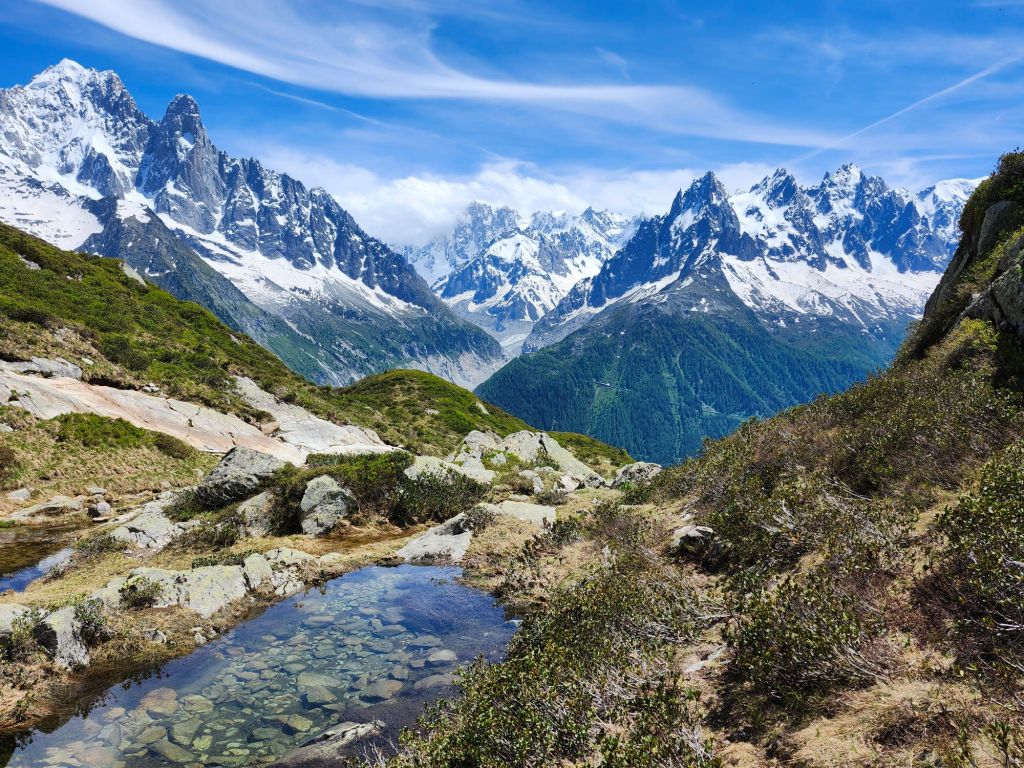
But, did I learn anything? I am notoriously slow, but despite the constant distraction of jagged, snow-covered peaks in every direction, I was overwhelmed by the beauty and abundant flowers. I want to plant them all, but some won’t work. Sunny spots are limited in this garden, and there are fewer that are well drained. But despite doubts, I’m sure I’ll try a few. Were there any disappointments? The trip was too short.
 Ramblin' through Dave's Garden
thank you, Dave for pictures of your beautiful adventure and for the promise of the next visit!
Like it or not, planning is in the works for the next trip. I’ll be happy to get out of this heat.