While thirty or forty varying ferns have been planted in the garden (I have no clue how many survive, but most), nature provided the most common. Sensitive fern (Onoclea sensibilis) is not found in the forested area bordering the garden where Christmas and Ostrich ferns are seen in scattered colonies, but the native somehow found a home where vigorous new sporelings appear each spring to join established clumps.
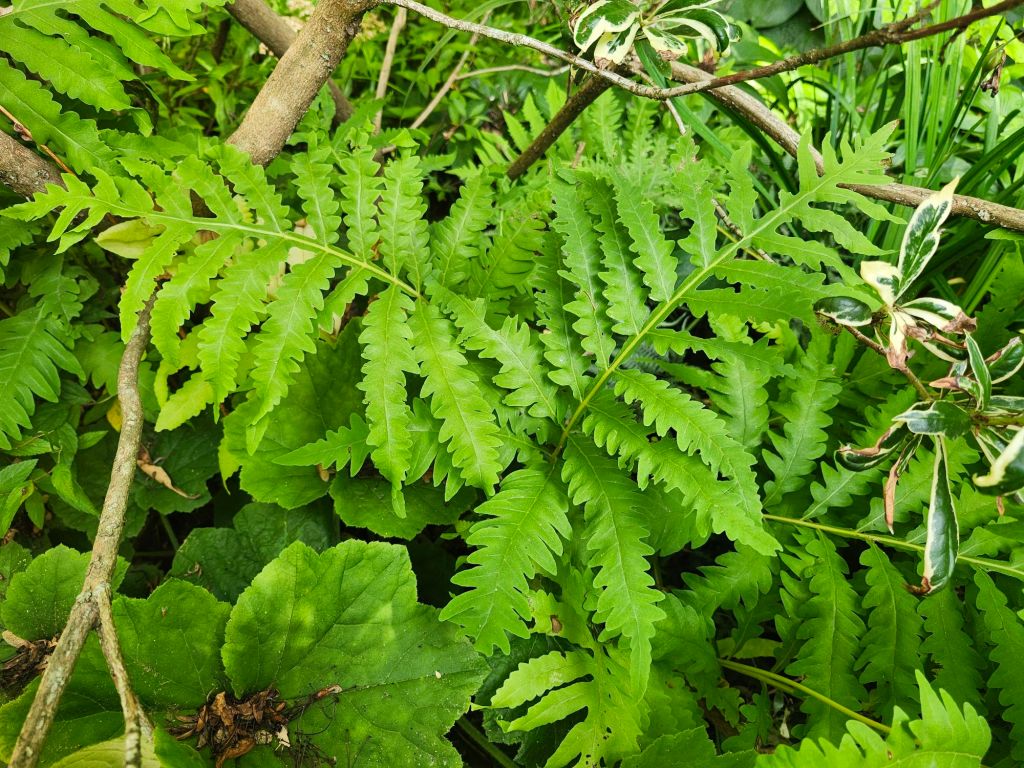
Sporelings of Sensitive fern avoid the sunniest areas, though several long established clumps burn in part sun by early summer. Given adequate moisture, new fronds replace ones withered and brown as they are removed, but not in the recent dry spell. Why not dig out clumps that brown in the summer sun? I suspect all are hopelessly intertwined with toad lilies (Tricyrtis) that partially obscure brown fronds by late summer, with the ferns’ removal possibly resulting in more damage than gain.
Soil in the garden, improved only by decades of decaying leaves fallen from trees in the forest and dozens that have been planted, must be ideal for the abundant sporelings and seedlings. The gardener must occasionally edit, but mostly, he enjoys the naturally provided additions that immeasurably improve his design.
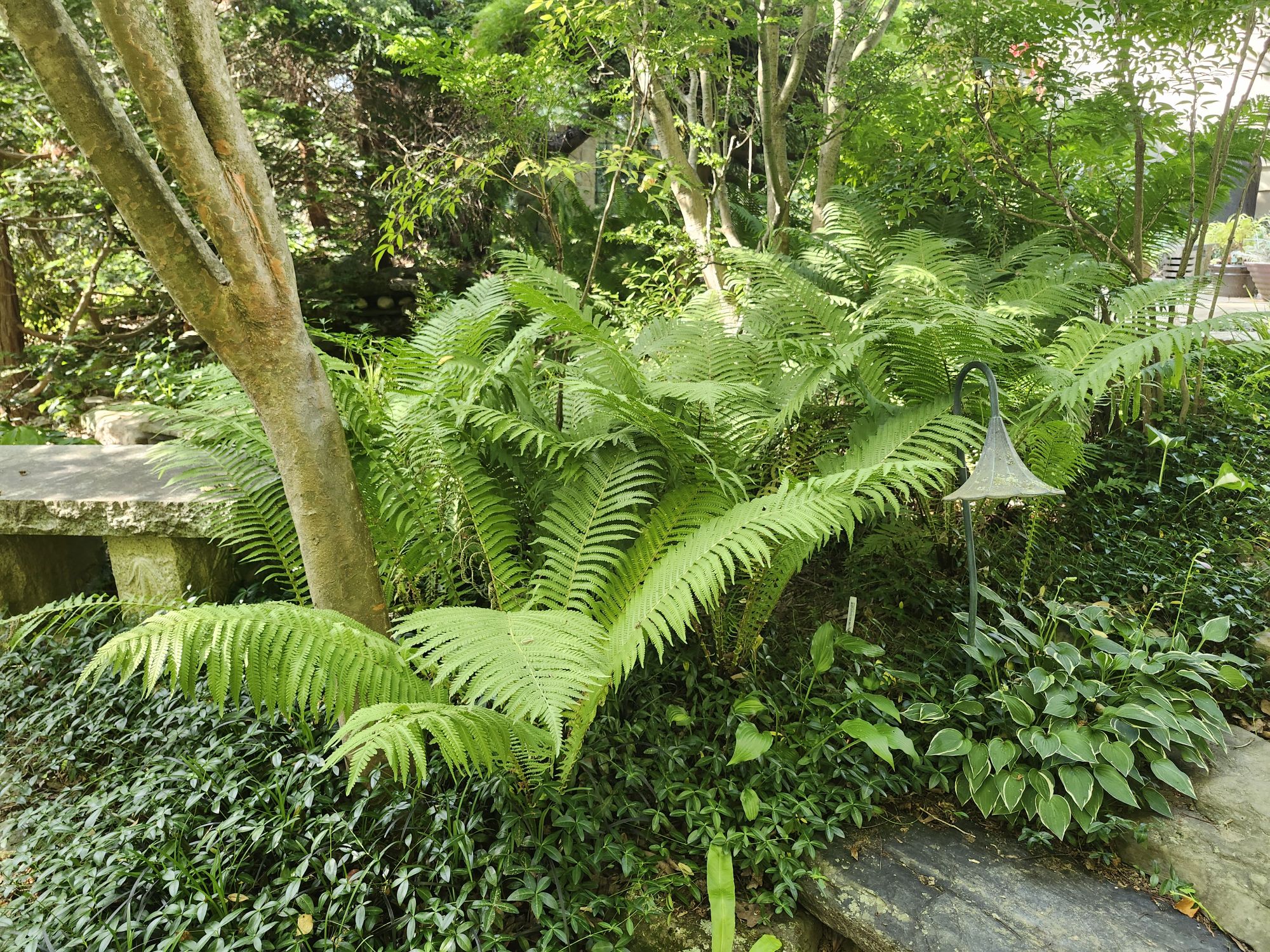
In early spring, a large area of Ostrich fern (Matteuccia struthiopteris) was removed in a renovation of the garden bordering the newly constructed sunroom. Removal was not difficult, but I knew that some roots would be missed and that others would grow into the new garden from the half of the colony left behind. Sure enough, weeding of the vigorous fern has become a regular chore, though I expect the labor will decrease in subsequent years.
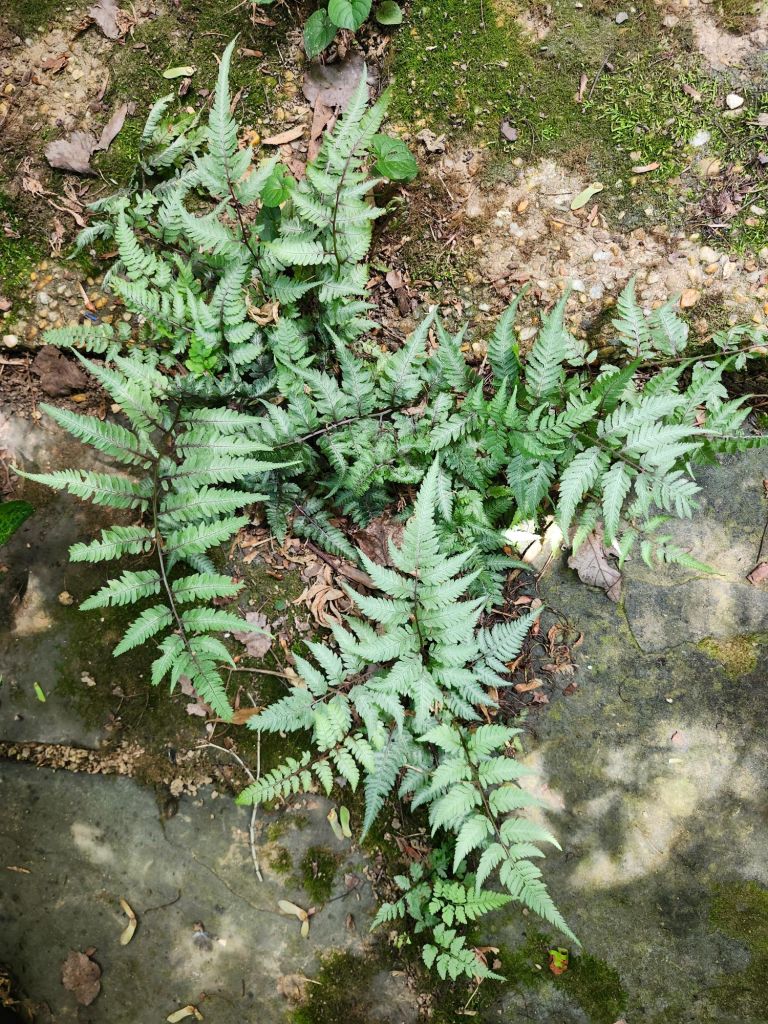
I welcome sporelings of Japanese Painted ferns (Athyrium niponicum var. pictum) that appear in joints between paving stones and in areas with damp soils. Occasionally, one must be relocated from a regularly traveled path, but more often, sporelings remain where nature intended.
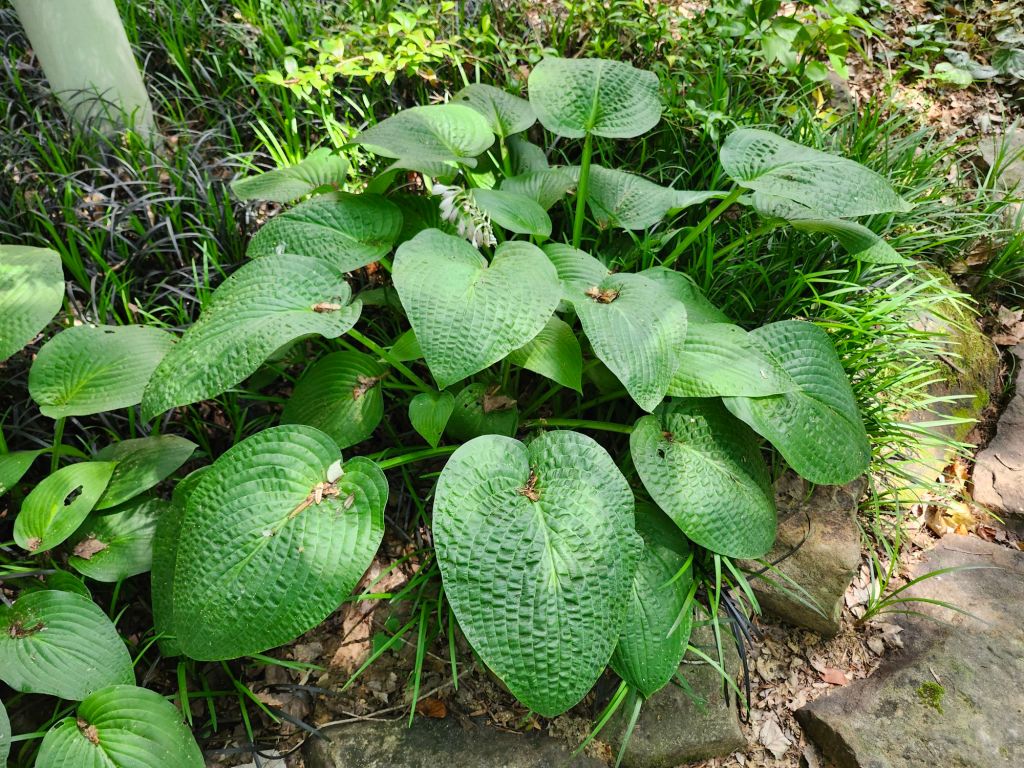
A dull, yellow leafed hosta seedling thrived for years before fading, then vanishing in deep shade. This narrow leafed hosta was the exception. All other abundant hosta seedlings are large leafed, either green or blue-green, and most leaves are corrugated, appearing to descend from Hosta sieboldiana ‘Elegans’. Some of the wide spreading hostas must be weeded out, but scattered clumps remain.
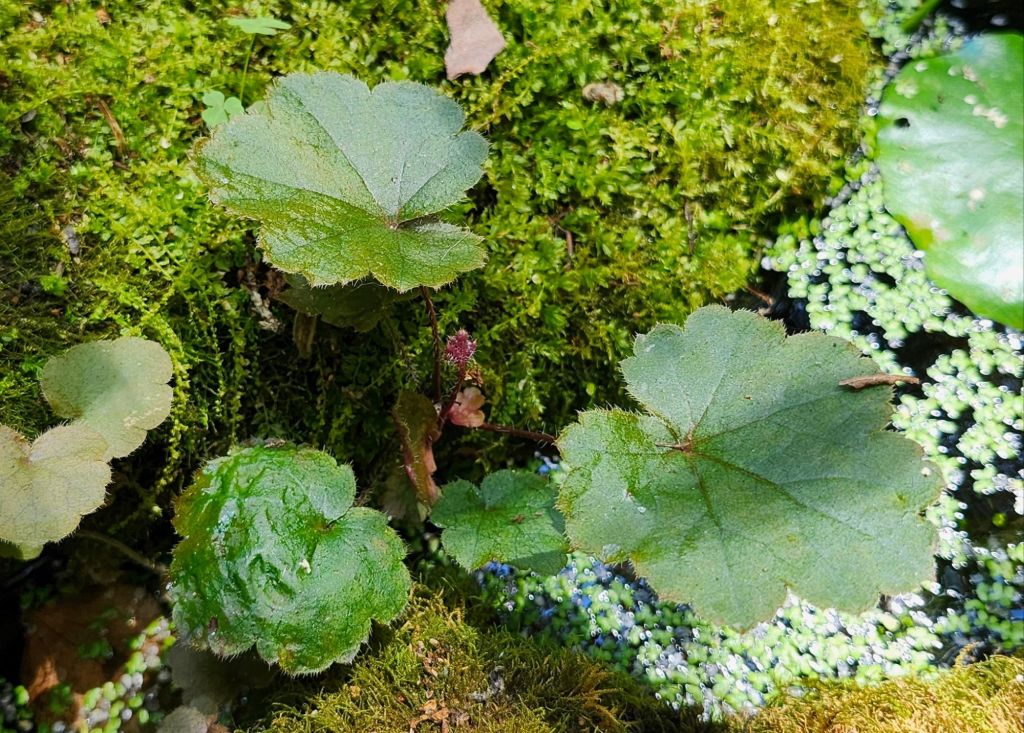
Happy plants are greatly appreciated and typically are indicators of ideal growing conditions. Thus, I am perplexed by the quantities of coral bell (Heuchera) seedlings that grow on moist, moss covered stones at the pond’s edge, but also in dry soils and in sun baked gaps between stones. Long-established plants thrive in the dryness of the rock garden in full sun but also in constant dampness in shade.
Through many years of study and experience, there is much left to learn.
 Ramblin' through Dave's Garden