The wide spreading mountain mint (Pycnanthemum muticum, below) is aptly described as a colony in this garden rather than a clump, covering an area of damp ground to host hundreds, perhaps thousands of pollinating insects while the sun is shining. While it spreads vigorously, I have little doubt in recommending mountain mint since spreading growth is easily controlled.
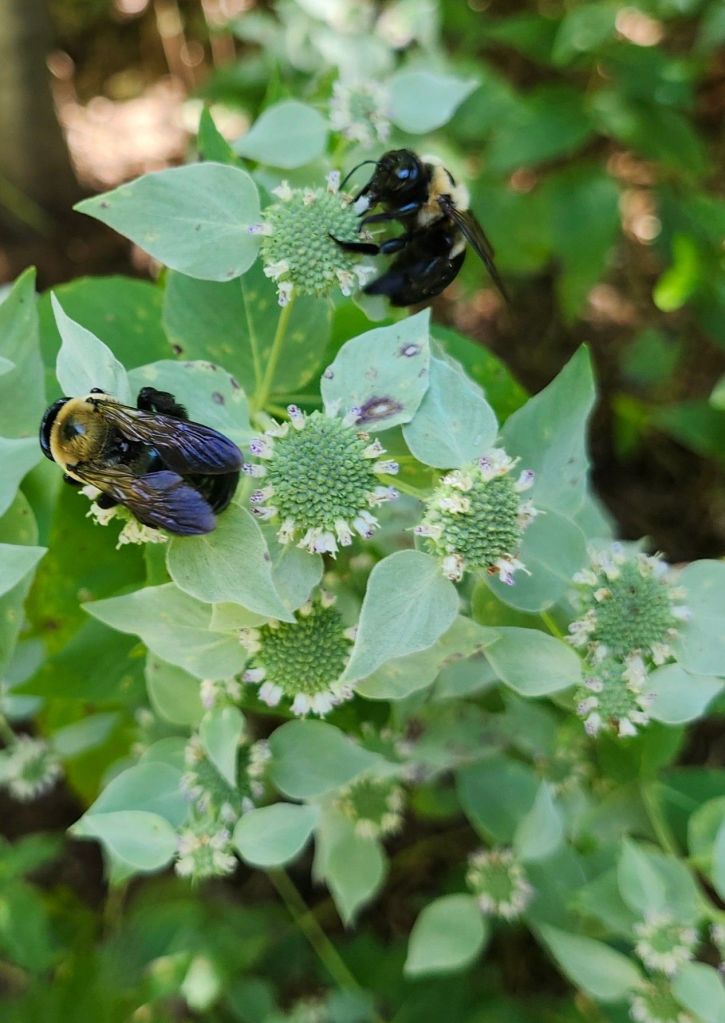
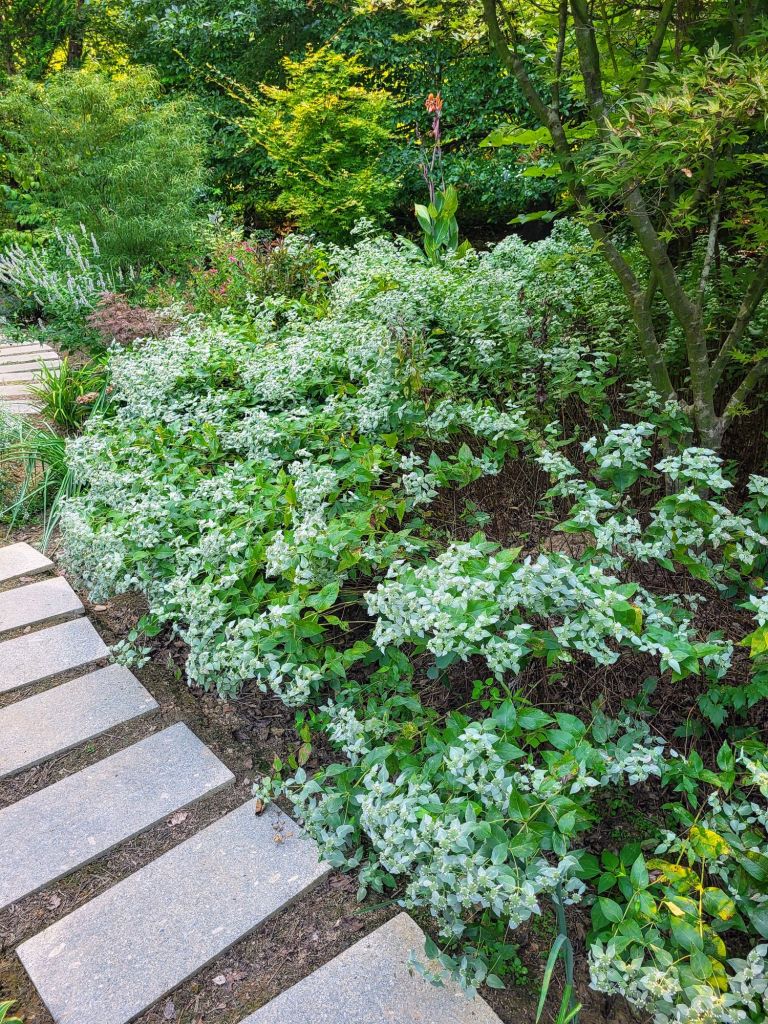
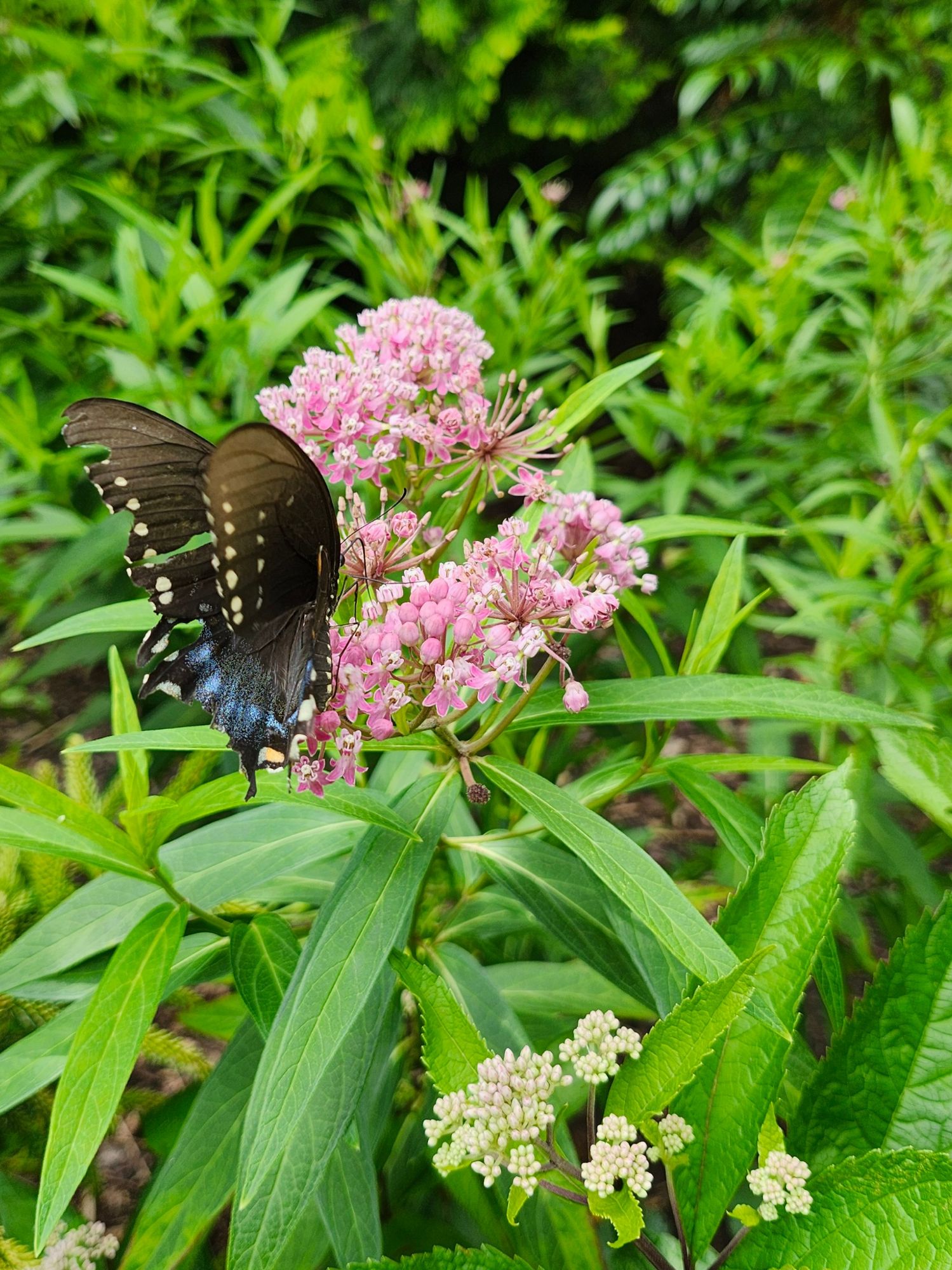
With a sampling of native and non-native flowers in the garden, there is no doubt that mountain mint is the favorite of pollinators, though butterflies steer clear of the frenzy, preferring the calmer blooms of Joe Pye weed (Eutrochium fistulosum and E. dubium, below) and bottlebrush buckeyes. Other flowers are favored by the gardener in midsummer but largely ignored except by a few scattered pollinators.
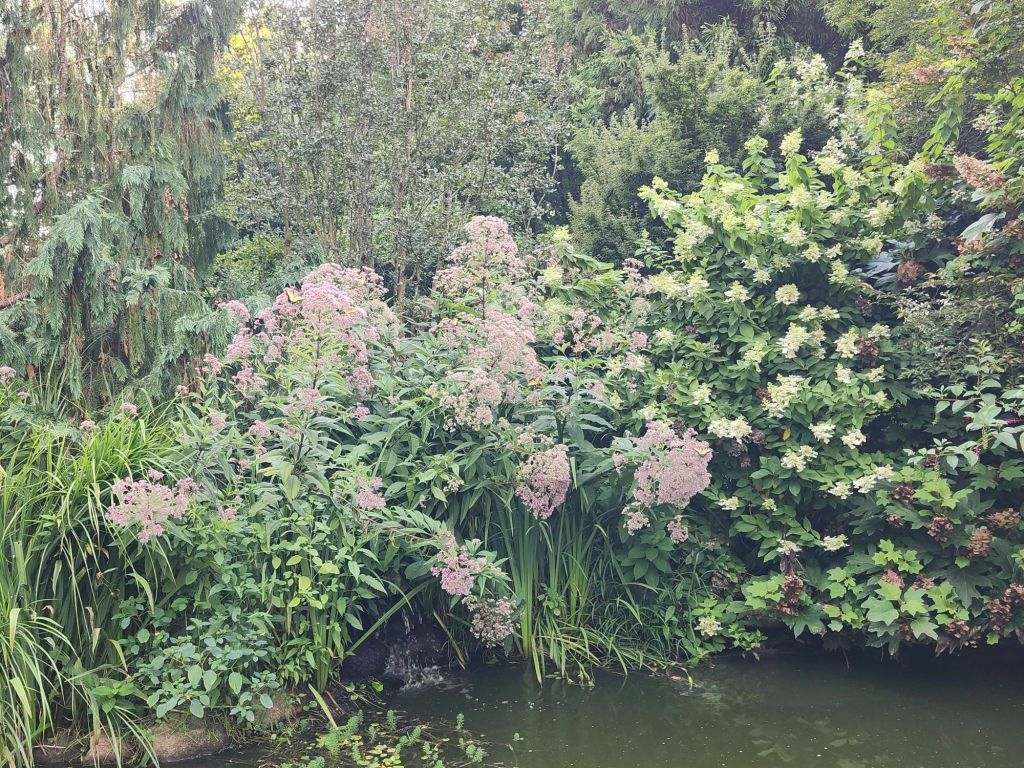
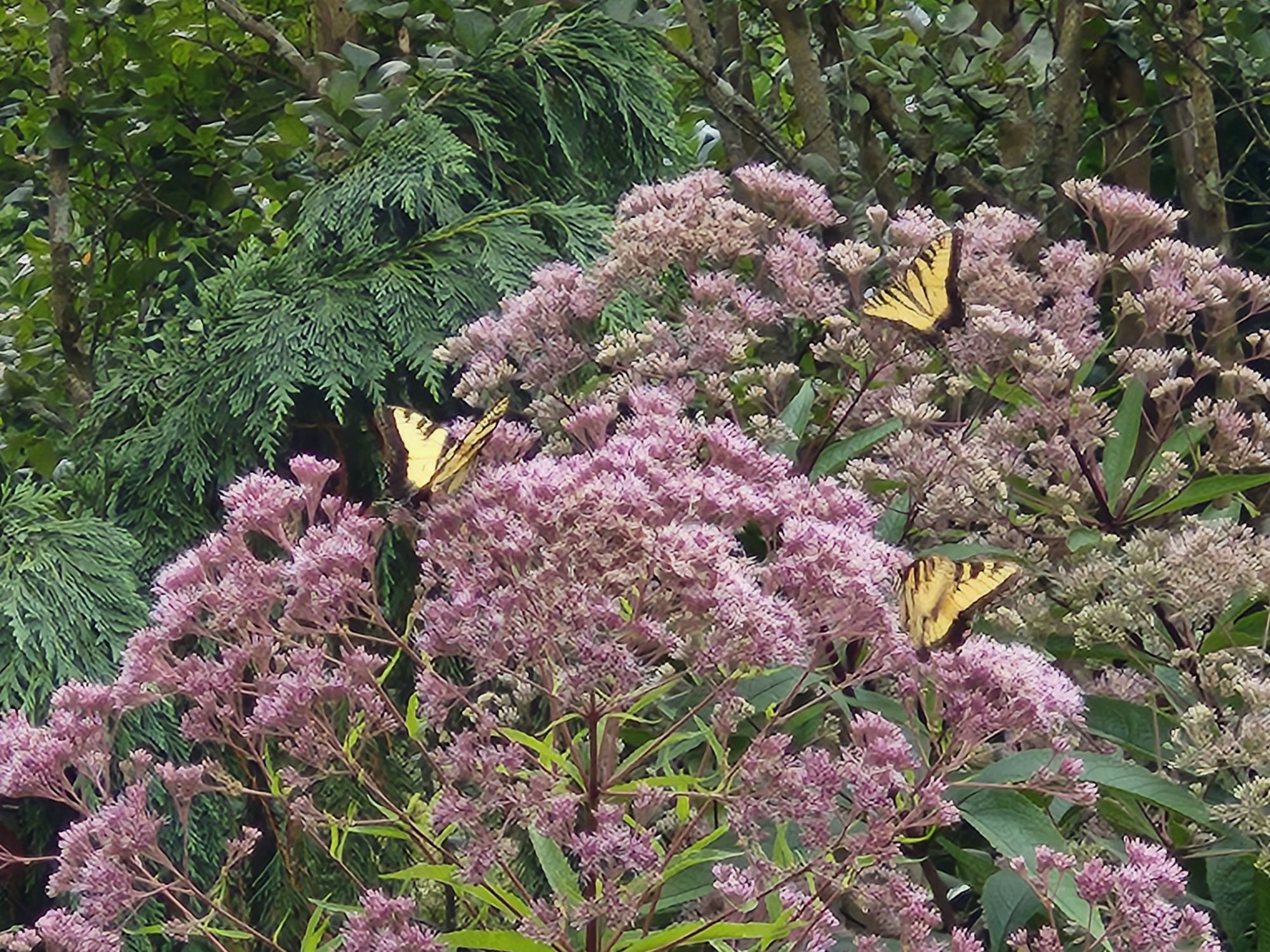
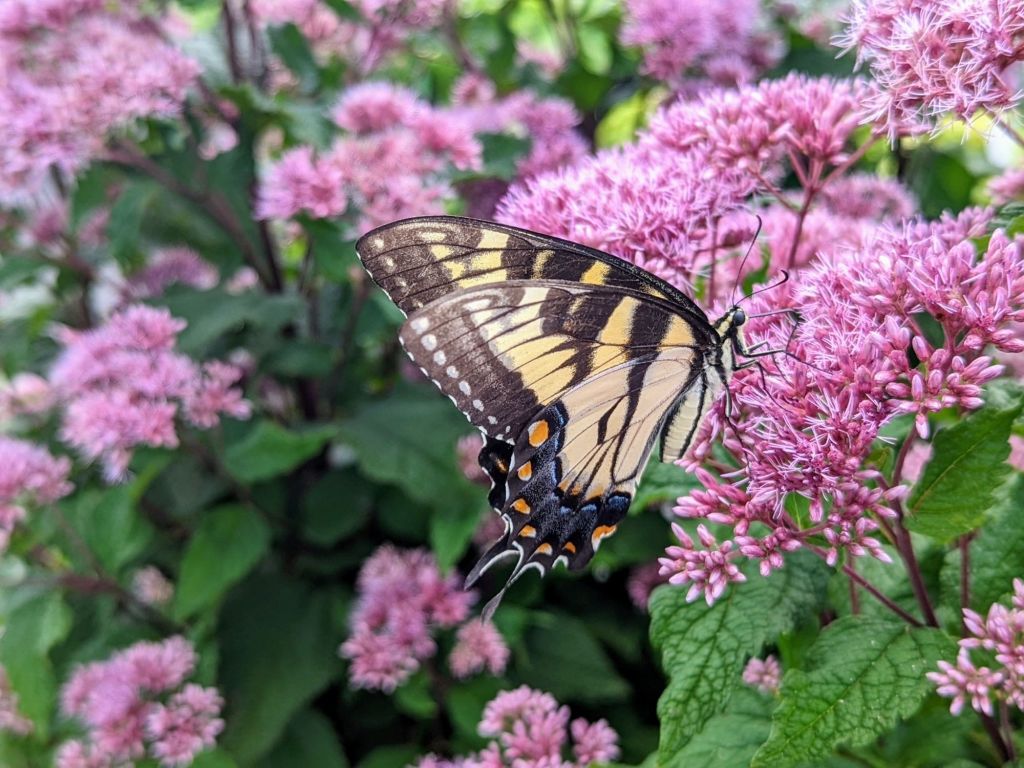
While Joe Pye seedlings must often be discarded, I see that taller seedlings of the native now mass behind irises on the far side of the koi pond. Bees are occupied elsewhere, so dozens of Tiger swallowtails take advantage of the calmer setting.
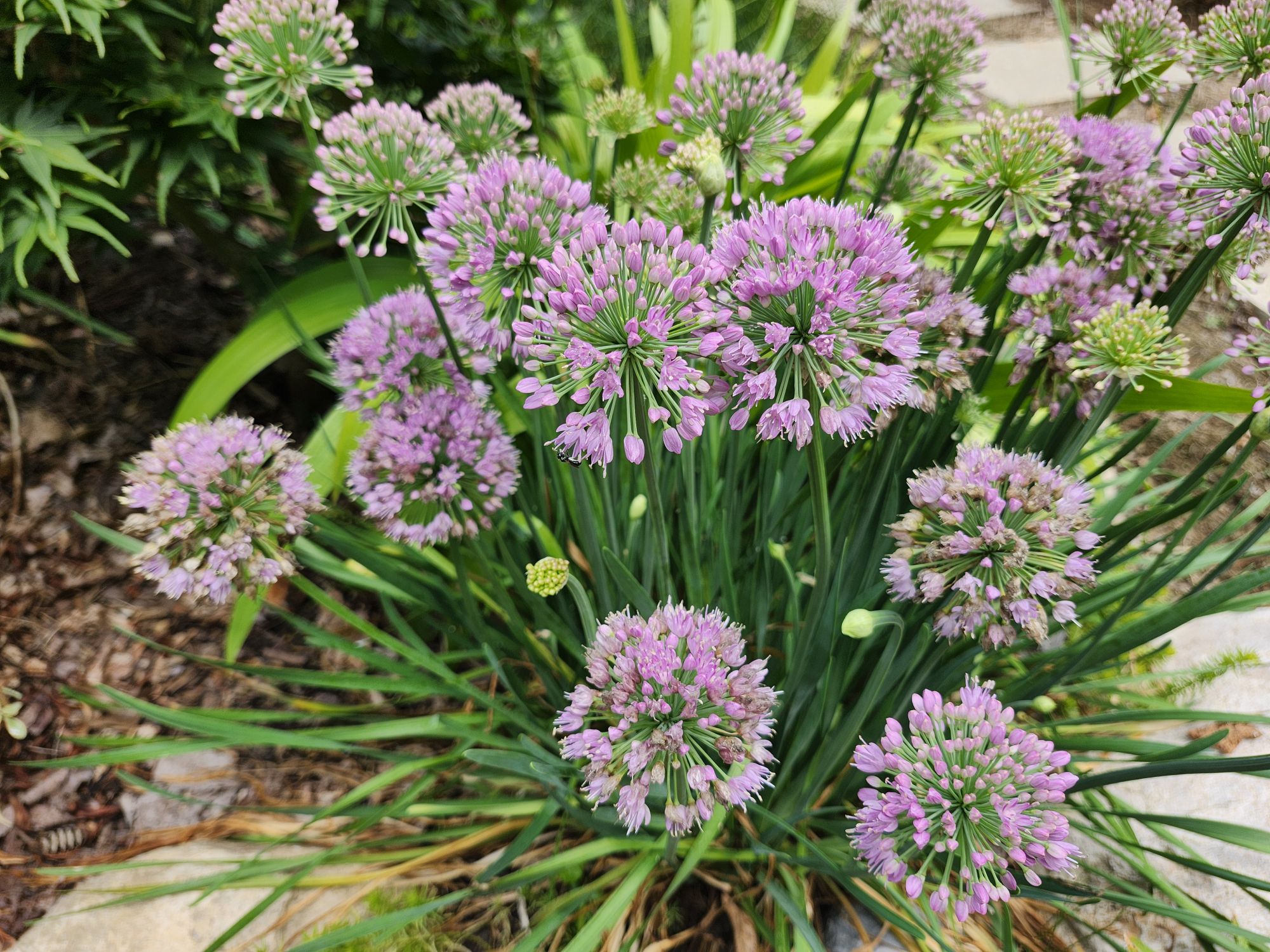
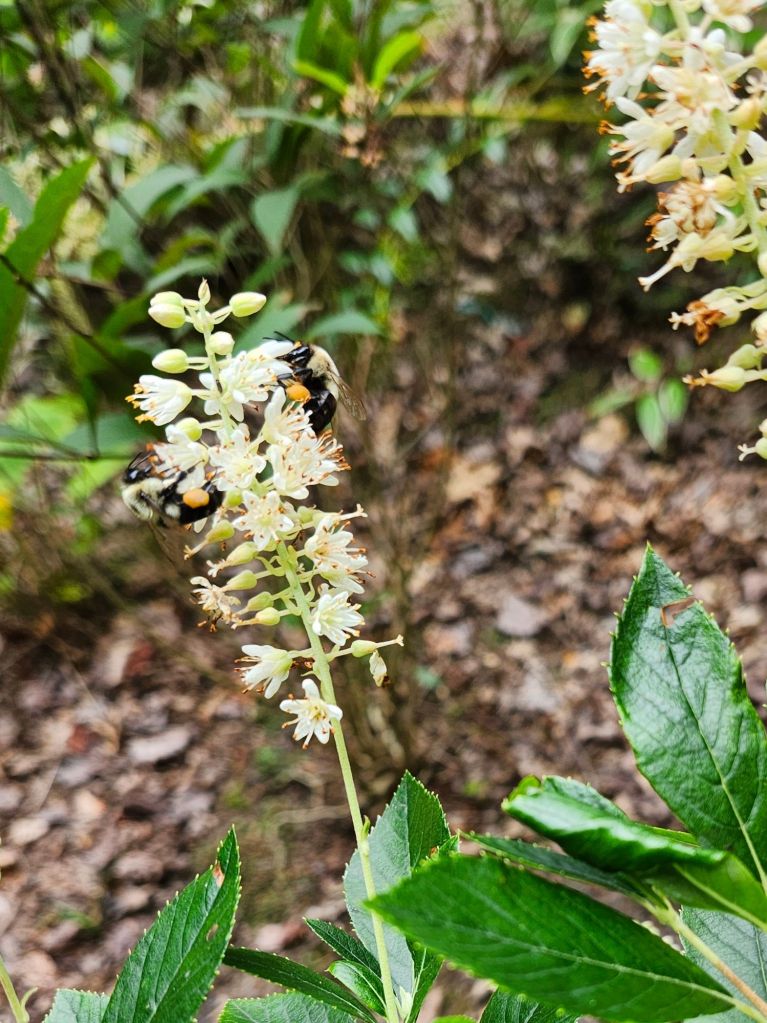
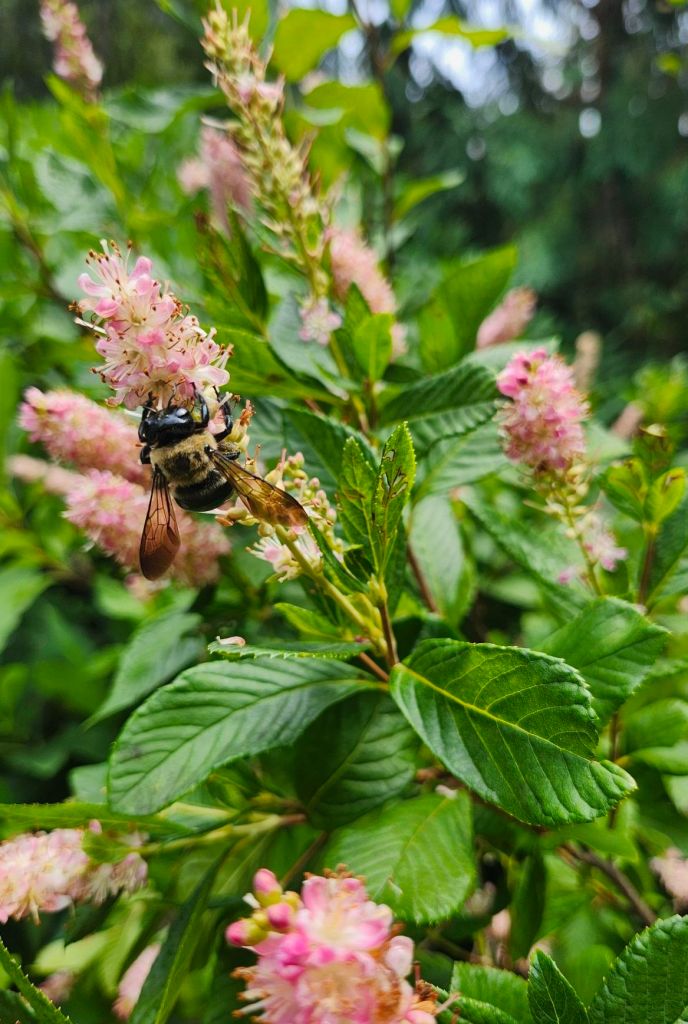
The garden is more about foliage and texture, but there are enough flowers to keep pollinators occupied through the summer.
 Ramblin' through Dave's Garden