Years ago, a mint was planted in damp ground in the lower rear garden. I pledged to carefully monitor its spread, but this was not necessary as the mint soon disappeared. Today, I’m surprised to see two clumps of mint spreading on small areas of bare soil. It seems impossible that this is the mint that disappeared a decade earlier, but how did it get here? Or, how did it escape my notice for so long? And, what to do about it?
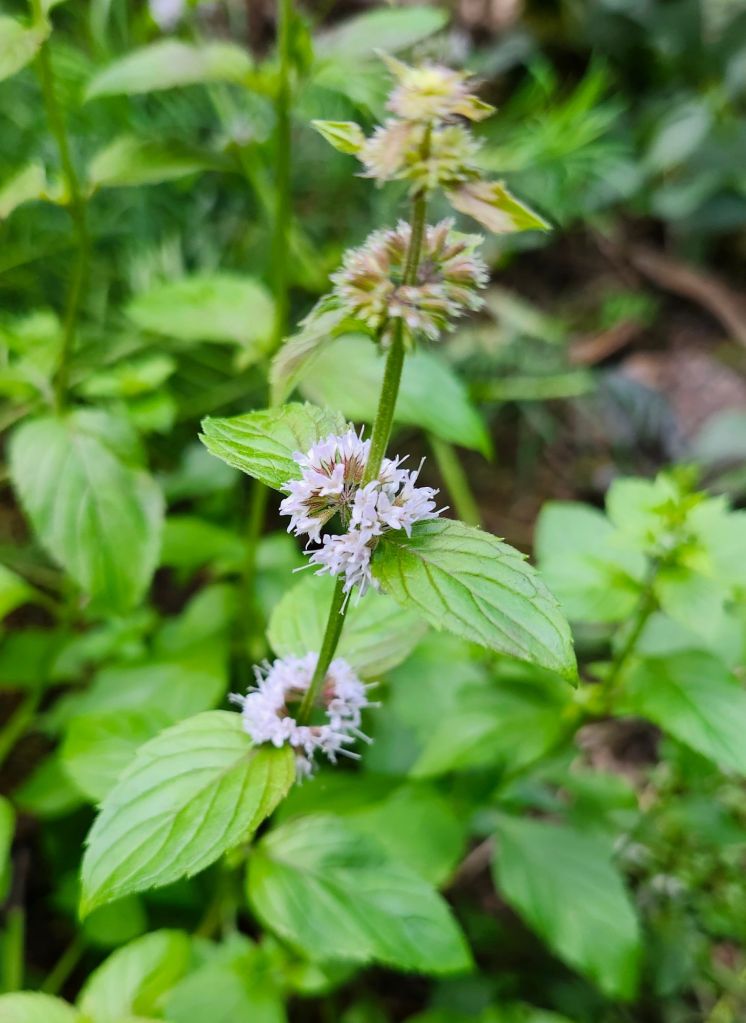
Fortunately, the decision must not be made immediately. The mint is growing in gaps between well established baptisias and larger shrubs, so I don’t expect a problem. At least, there’s not an imminent threat. So, for now, I’ll keep an eye on it.
I’ve planted a number of ground covers over the years that are described as overly vigorous, all with good results as plants do battle for space in the garden. I don’t recommend this, but when I plant, I’m aware that neighbors must be substantial enough to withstand the nearby aggressor.
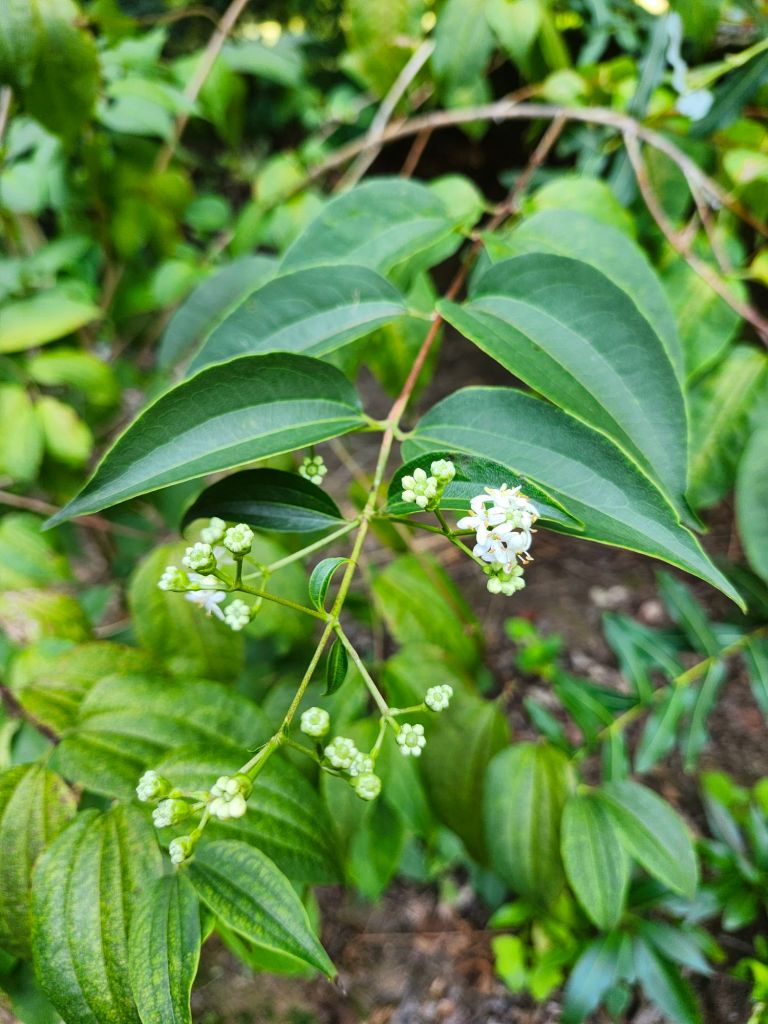
A few years ago, two small Seven Son trees (Heptacodium miconioides, above) were planted at far ends of the garden to replace a longtime favorite that was severed in a storm. At the time that it fell, I could not find another Seven Son, so in its place, a red horse chestnut (Aesculus pavia) was planted. This has worked for the best since the garden now has two favorites. The taller of the two Seven Son was planted in a prominent position, though slightly shaded, while the lesser of the two was planted in half sun on a slight mound beside swampy ground.
I did not expect the smaller tree to flourish, but in a sunnier spot, it is outperforming the larger tree. Both have grown with exceptional vigor, but the one in damp ground will flower heavily while the other will flower only on the few branches exposed to the sun. But, if a single low branch of the neighboring ‘Okushimo’ Japanese maple is removed, the problem will be solved, I think.
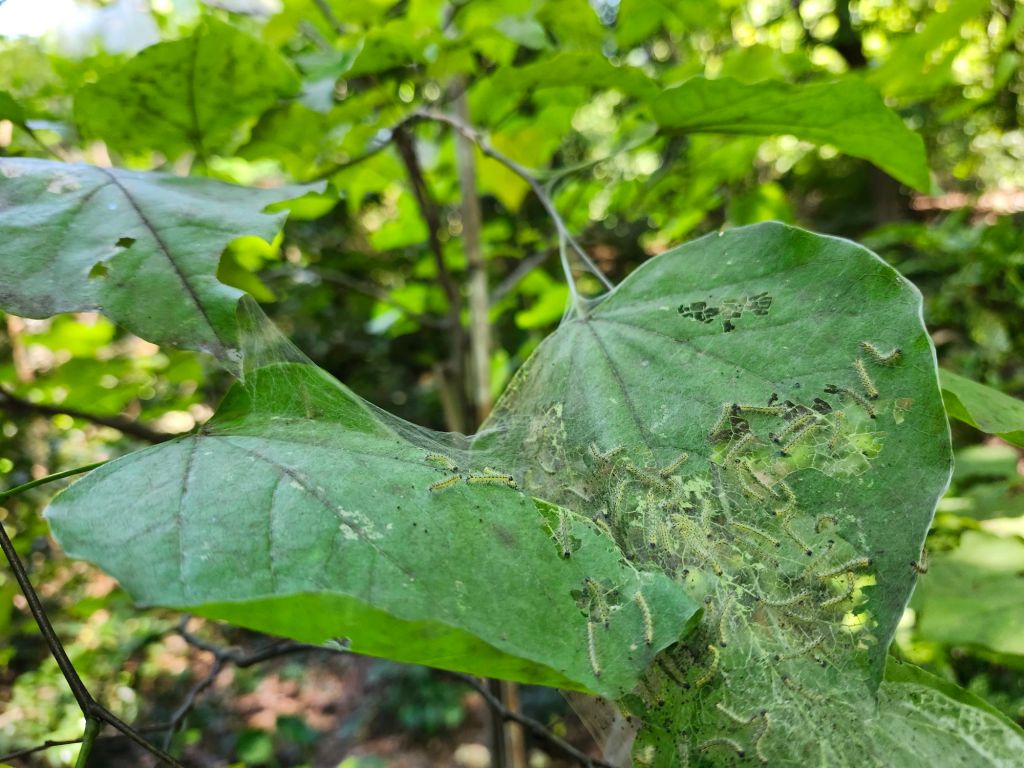
I notice today that webworms are infesting a redbud in the shady side garden. I’ve seen this before, but on other redbuds, and while I expect substantial defoliation, nothing much comes of it except seeing the unsightly skeltonized leaves for the next two months. After no evidence of webworms in recent years, I’m happy to see them again to know that natural systems are at work. The garden is not a sterile environment. Weeds and bugs must be a part of it, no matter that these are the cause of much annoying labor.
 Ramblin' through Dave's Garden