Despite countless delights, every garden stroll reminds that there are concerns (most minor) that must be addressed. Eventually, if not today.
When I note that parts of the garden are overcrowded, plans must be made for shuffling plants around or pruning where areas are not easily accessed as shrubs and trees have merged. The often cited paperbushes (Edgeworthia chrysantha, below) are prime evidence that chopping must commence or paths will be obstructed.
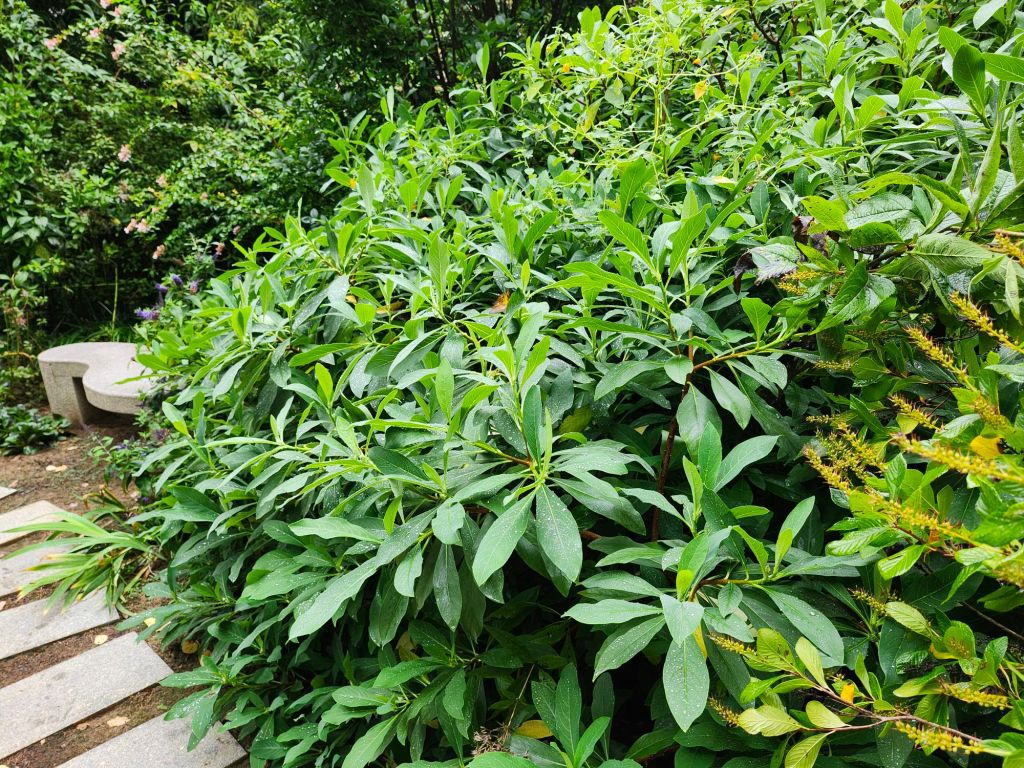
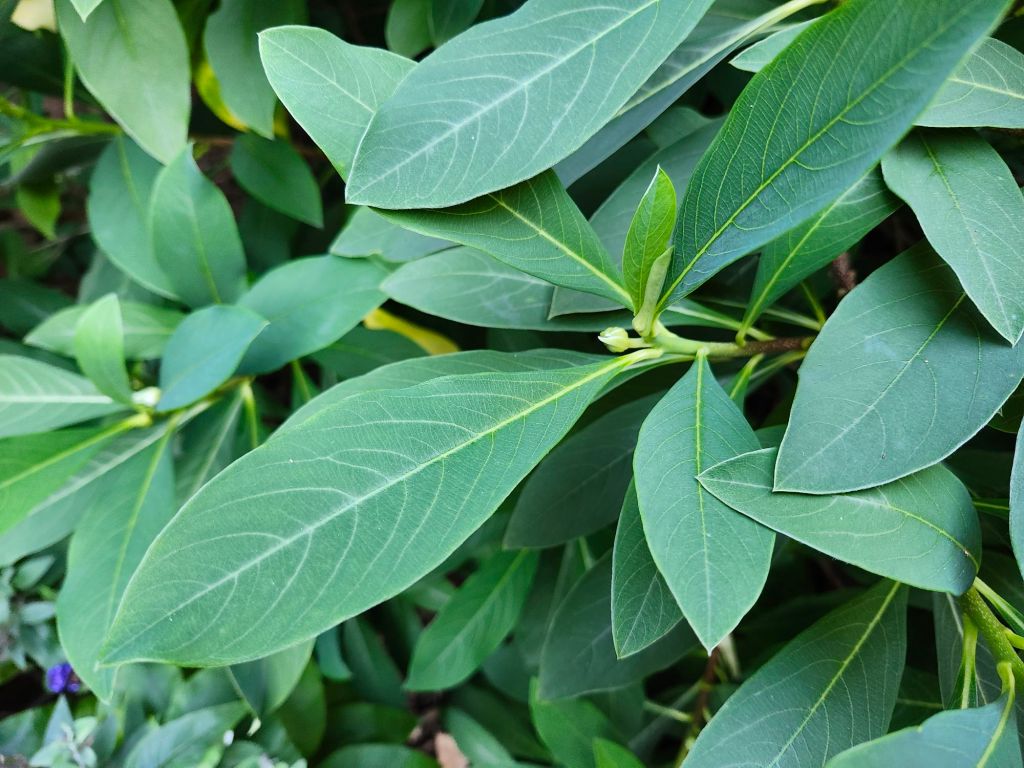
While misbegotten plantings are routine and rarely regretted, the paperbushes have spread far beyond the width listed by references, so here I claim no responsibility. Happily, there are other examples of overly vigorous growth that can not be attributed to my care. No matter the claims of references, decades old plants will continue to grow in this fertile clay soil.
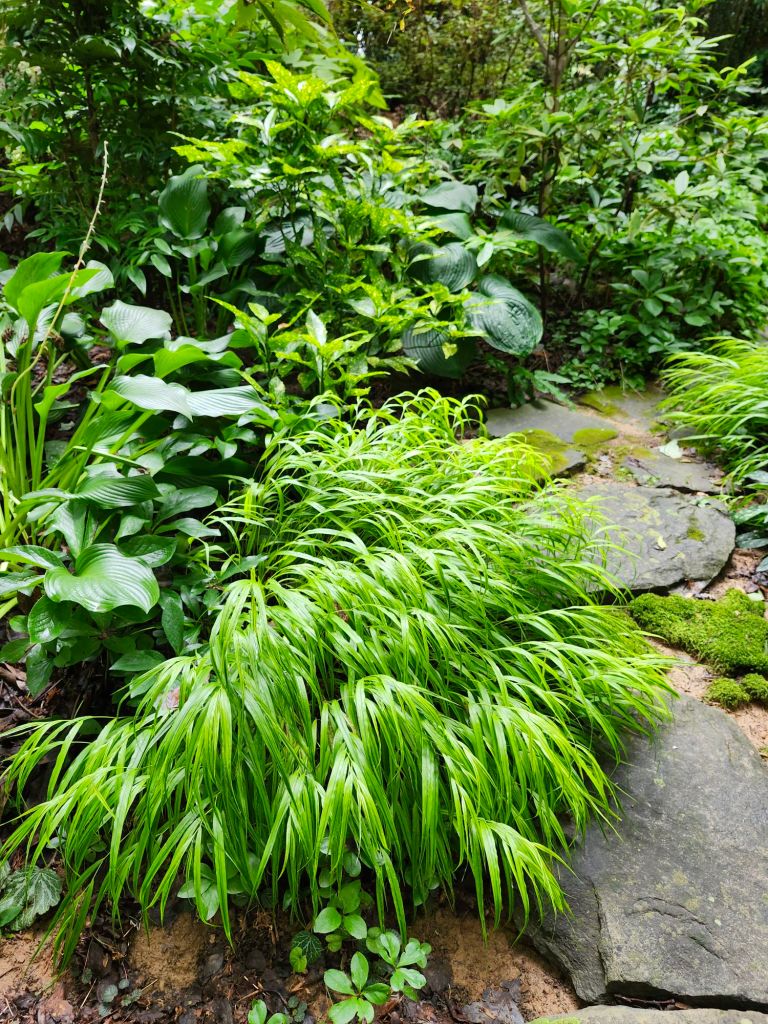
After a phase planting miscanthus, pennisetems, panicums, and other grasses in previous decades, very few remain as shade encroached, though I continue my adoration of Japanese Forest grasses (Hakonechloa macra ‘Aureola’, above) and now sedges (Carex). These are often more colorful, tolerant of a range of conditions, and typically smaller in stature. But, a favorite planted a year ago has exceeded expectations, and something must be done.
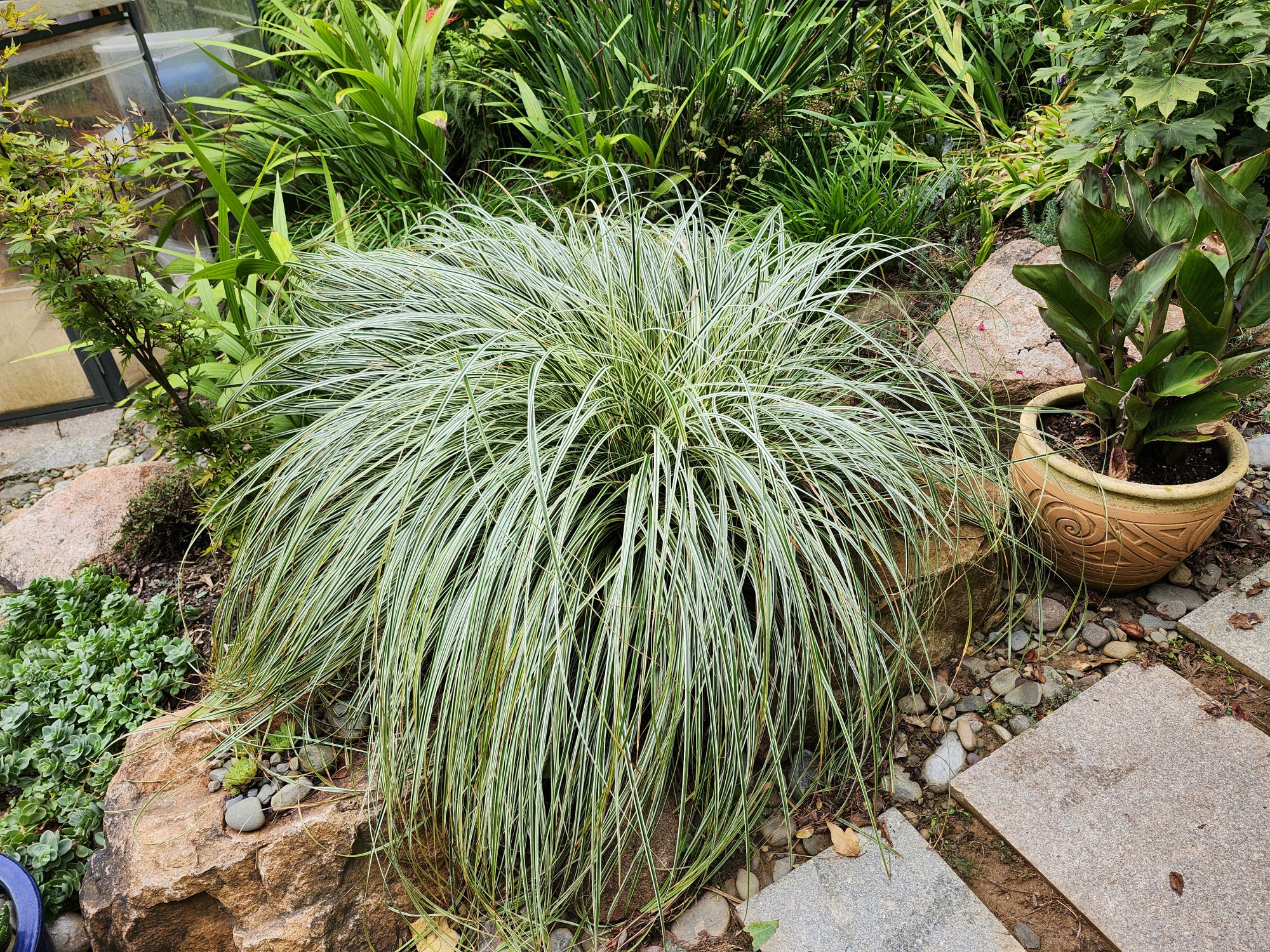
‘Feather Falls’ (above) was planted with sufficient space, I presumed, but it quickly displayed unusual vigor. Today, it is clear that dividing and reducing its size is too temporary. I must dig the entire clump, divide it, and plant something else in this space. The transplants will fill gaps in part sun and more shaded areas of the borders where it will hopefully grow with somewhat reduced vigor.
Another sedge, ‘Blue Zinger’ (Carex flacca ‘Blue Zinger’), is now questionable in its current location. Planted in spring, it has spread a bit too far. Perhaps a yearly cutback will keep it in bounds. It’s an easy one to move if that time comes, and of course, there are other issues that can butt to the front of the line.
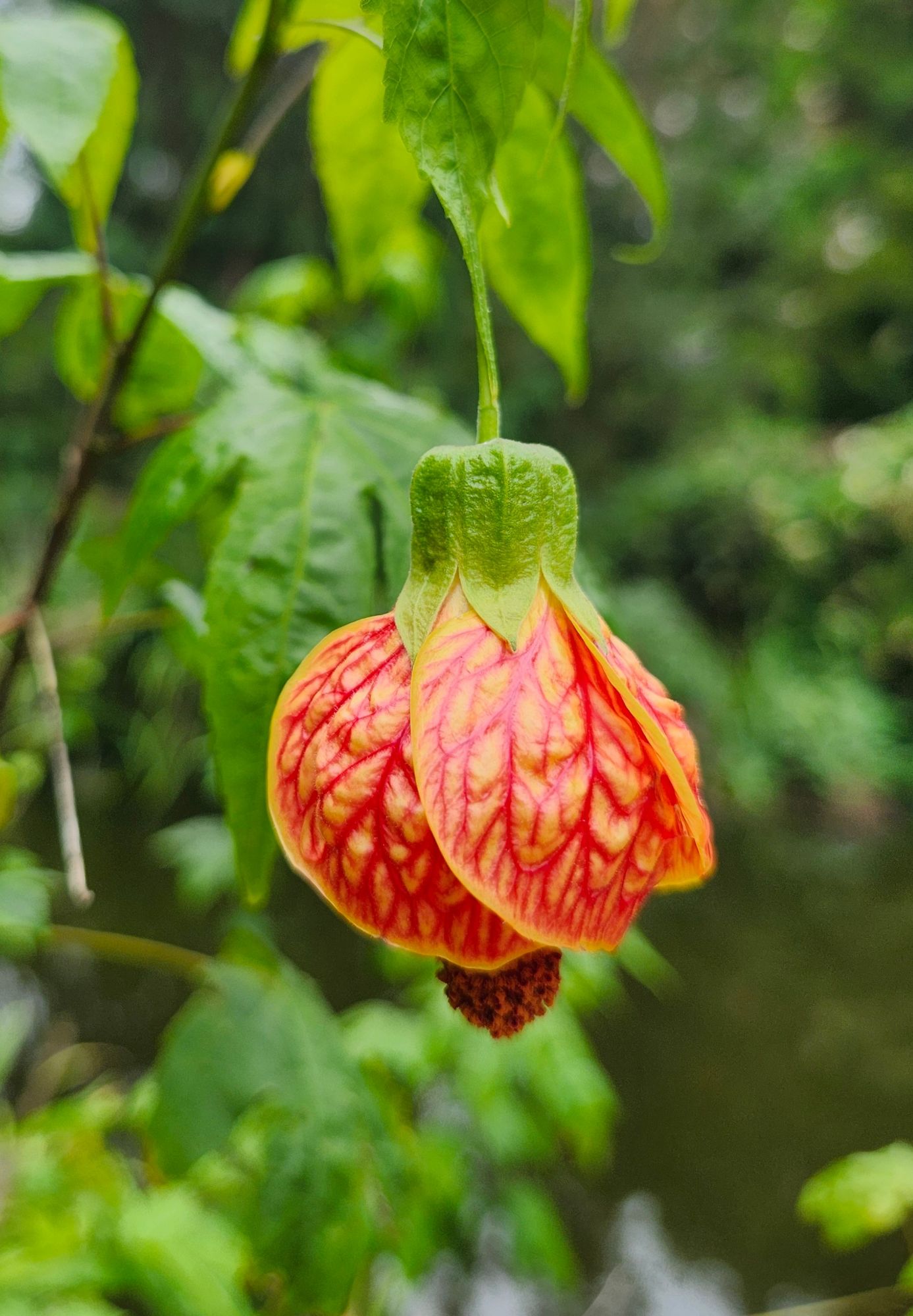
Flowers on the ‘Tiger Eye’ flowering maple (Abutilon x ‘Tiger Eye’, above) have been scattered and few this summer after non-stop flowering a year ago. I’ve little doubt that the lack of rainfall is to blame, though this could easily be resolved by more regular attention to watering.
‘Tiger Eye’ is moved indoors for the winter where it flowers regularly despite my infrequent watering. While flowering on the patio beside the koi pond, it is a favorite of hummingbirds.
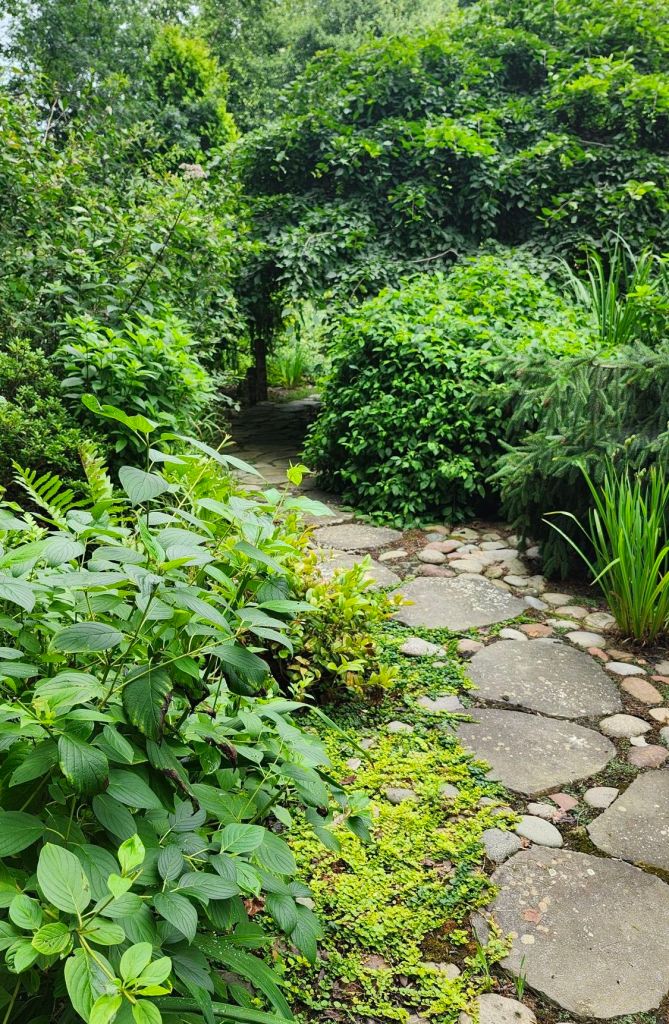
Barbara reminds me (again) that she prefers wide paths through the garden and that the path beside the koi pond that intersects the rear garden is becoming narrower by the day (above). Undoubtedly, this is true. With a dwarf dogwood to one side and a surprisingly vigorous beautyberry (Callicarpa) to the other, the path is a fraction of its width when access was required for a mower.
Now that the lawn has been removed in the lower rear garden, only a walking path is needed. Perhaps the dogwood and beautyberry will get chopped back by late winter. Berries and then red stems must be enjoyed before widening the path.
 Ramblin' through Dave's Garden