I rejoice in the cooler autumn temperatures, but more, the return to regular rainfall after a particularly dry summer. The garden survived the drought without irrigation except a few containers that demanded an occasional sip, and of course, the few new plantings from June and later required a drink or two. As I recall, nothing was lost due to my inattention, though as usual, the small rear lawn declined enough to give me second thoughts that perhaps it must be given at least minimal care.

Cooling temperatures remind me that frosts, freezes, and winter are approaching, and while I must be mindful to dig tropicals for winter storage and haul containers to the basement and greenhouse, I must also enjoy the shortening period when the garden is lush with flowers and foliage.

The yellow leafed Chinese fleece vine (Fallopia baldschuanica ‘Lemon Lace’, above) requires regular trimming to allow entrance to the koi pond patio (below). The vigorous vine drapes from wire supports on two sides of the summerhouse, and besides clipping an opening onto the patio, I also snip any stems that veer into neighboring evergreens. While fleece vines are notorious for their rapid growth, the yellow leafed version must be considerably slower since I prune only occasionally. Believe it or not, given my often impulsive plant selection, this was planned, and despite my preference for the least possible labor, the fleece vine has clothed the bare structure splendidly.
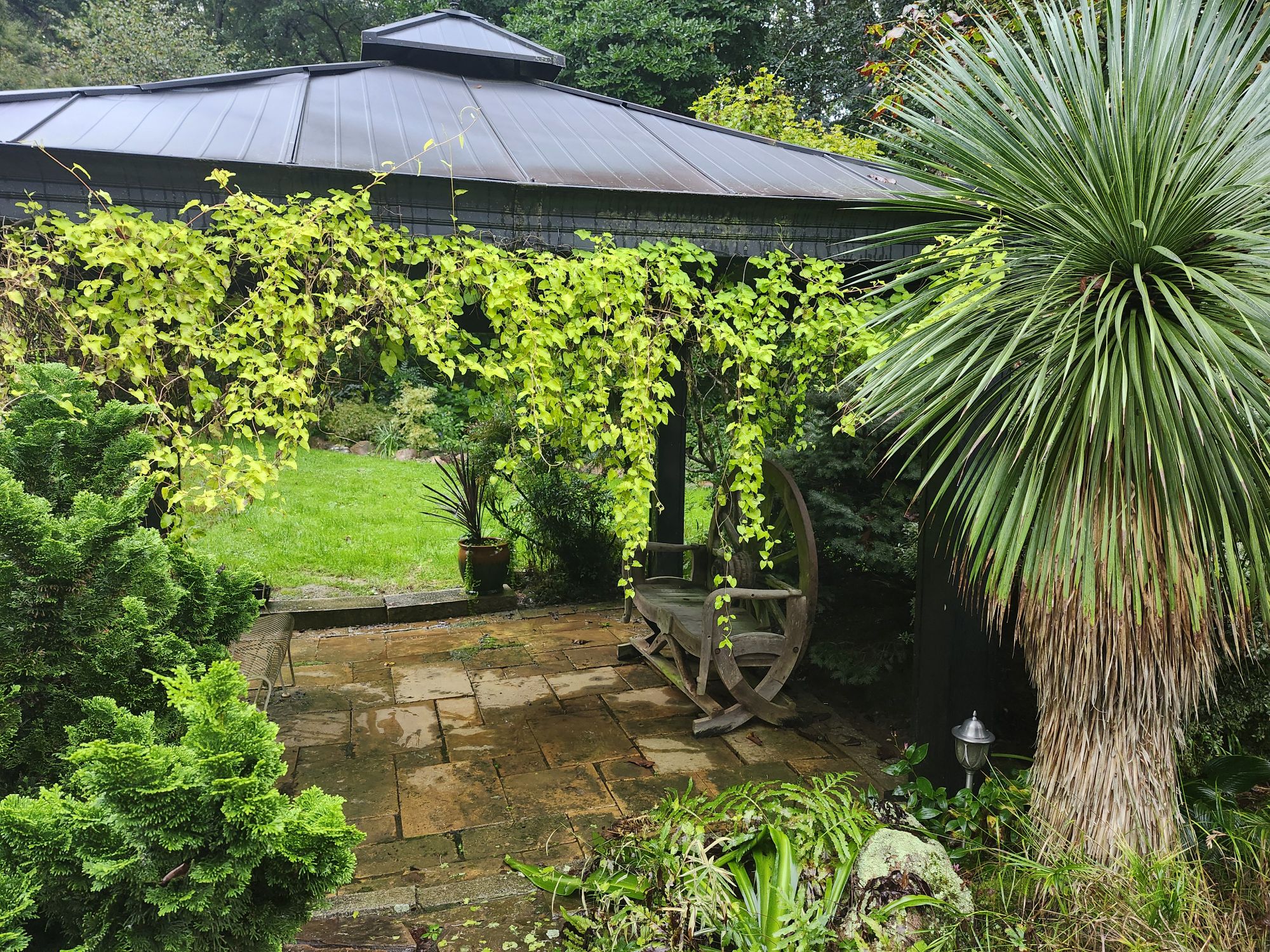
While the yellow foliage is reason enough to ornament the eaves of the summerhouse, the clusters of white flowers are a bonus at the end of the season.

The Seven Son tree (Heptacodium miconioides ‘Temple of Bloom’, above) has passed from its mid summer white flowers (below) to pink calyces that persist until frost. Two small trees planted in autumn two years ago have grown to eight feet, enough to question if this selection is more compact in growth than the species. No matter, I’m happy to have it back in the garden after another was lost to storm damage several years ago.
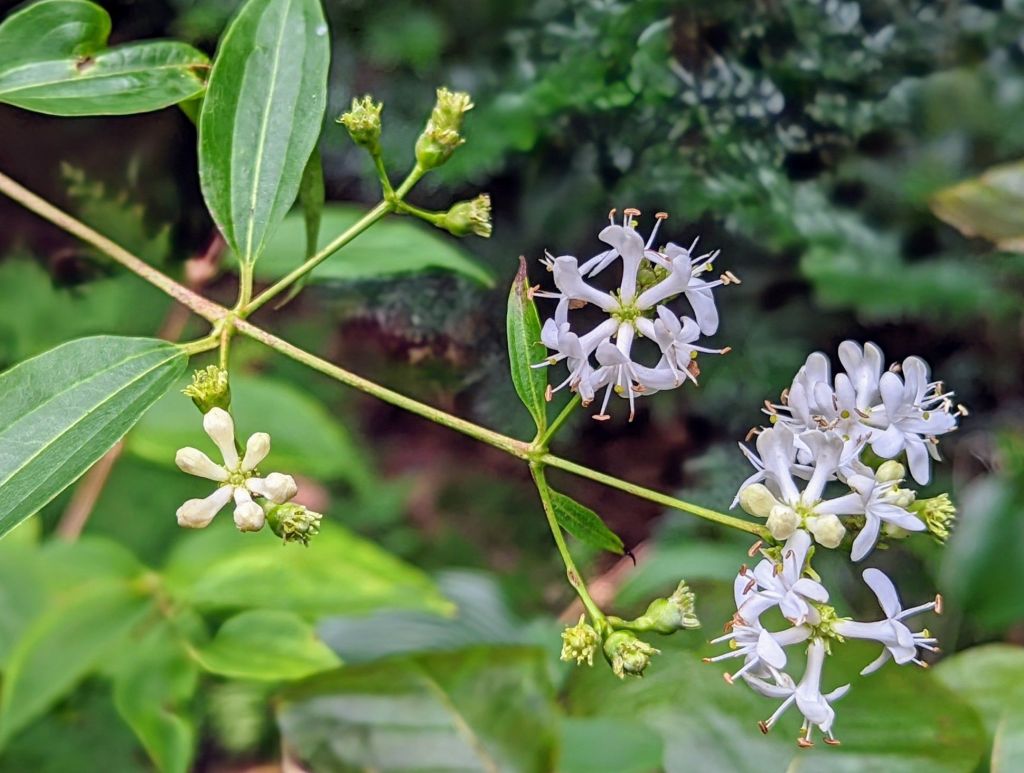
I notice that deer nibbled leaves from several lower branches, but these were ready to go away. As the two shrubby trees have grown so vigorously, I will be pruning lower branches to develop a more tree-like form. The Seven Sons’ peeling bark is attractive, which will be more visible without lower branches.

Typically, late summer and autumn flowering of Encore reblooming azaleas (above) is scattered and undependable. Early in October, my guess is that flowering is less than the average, though I see many fat buds that could change the count. Several Encores are unlikely to flower at all, or at least there will be only a few blooms.
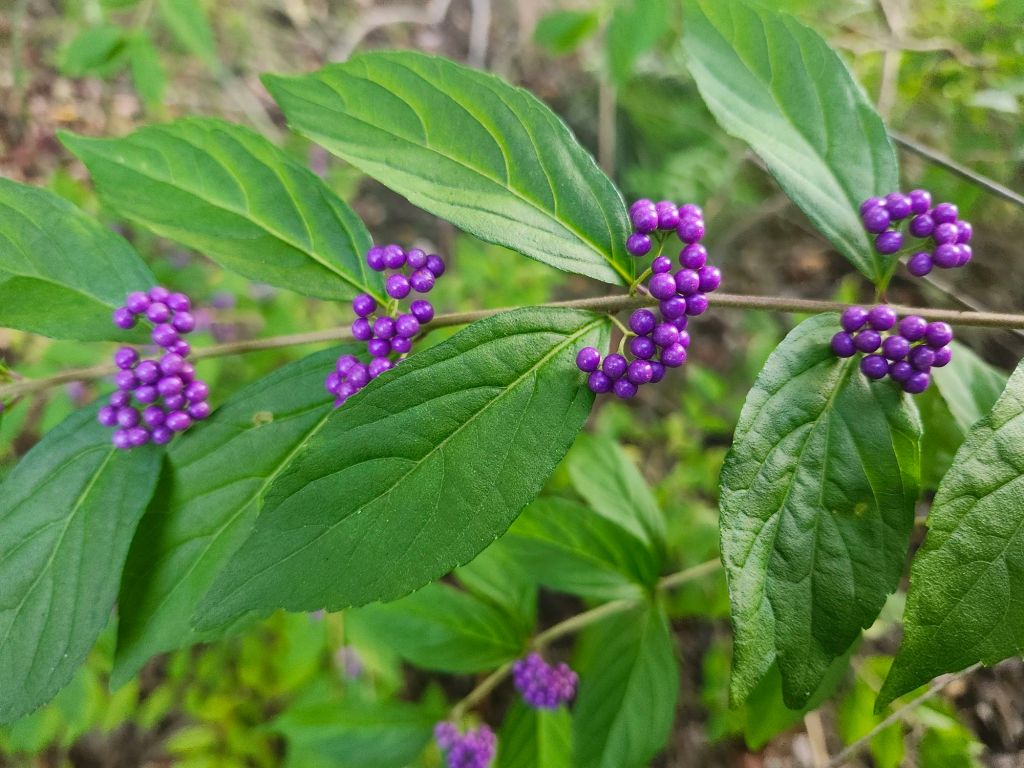
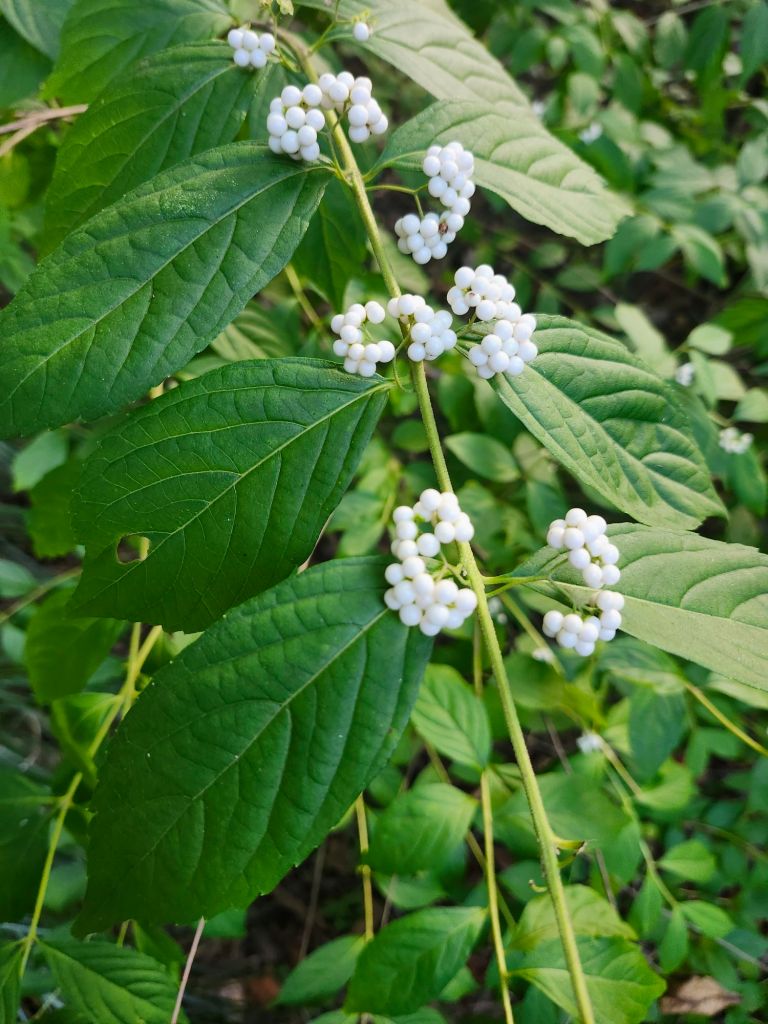
Unfortunately, the lone American beautyberry (Callicarpa americana) perished last winter, and I haven’t a clue why. I suppose it must be as sturdy as other beautyberries that thrive in deep shade and part sun. I will try again, but I see handfuls of seedlings of Asian beautyberries (above and below) in unmanaged areas at the back corner of the garden. These are equally divided into purple or white berries, while other seedlings are a year from flowering. Several will be dug and shared.
 Ramblin' through Dave's Garden