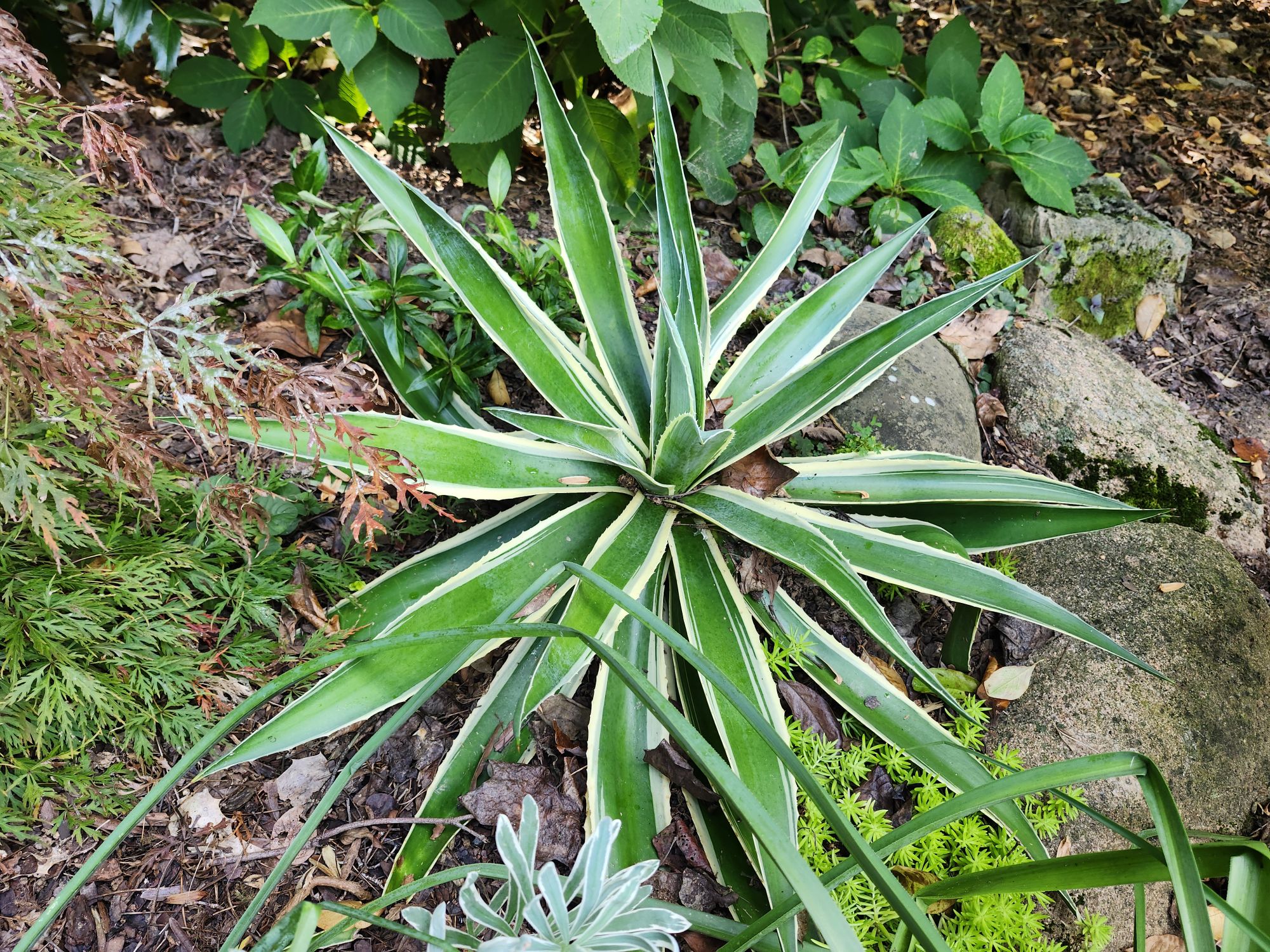
With temperatures forecast to plunge near freezing this week, I must prepare for the inevitable move of tropicals into the basement and greenhouse. I delay lugging heavy pots of aeoniums and digging and potting large mangaves (below) that are in the ground as long as possible in a lost cause act of defiance. While many will tolerate a mild frost, each day increases the potential for damage. Typically, the chore is done with a single burst of energy, and I suppose that must be aroused early this week.

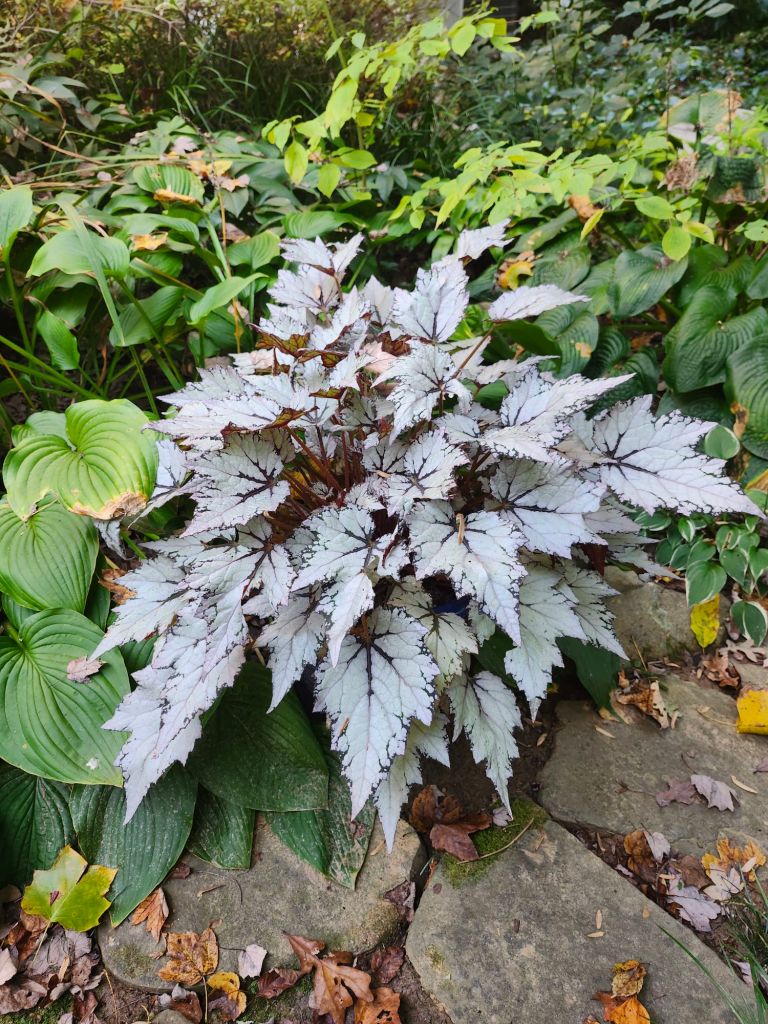
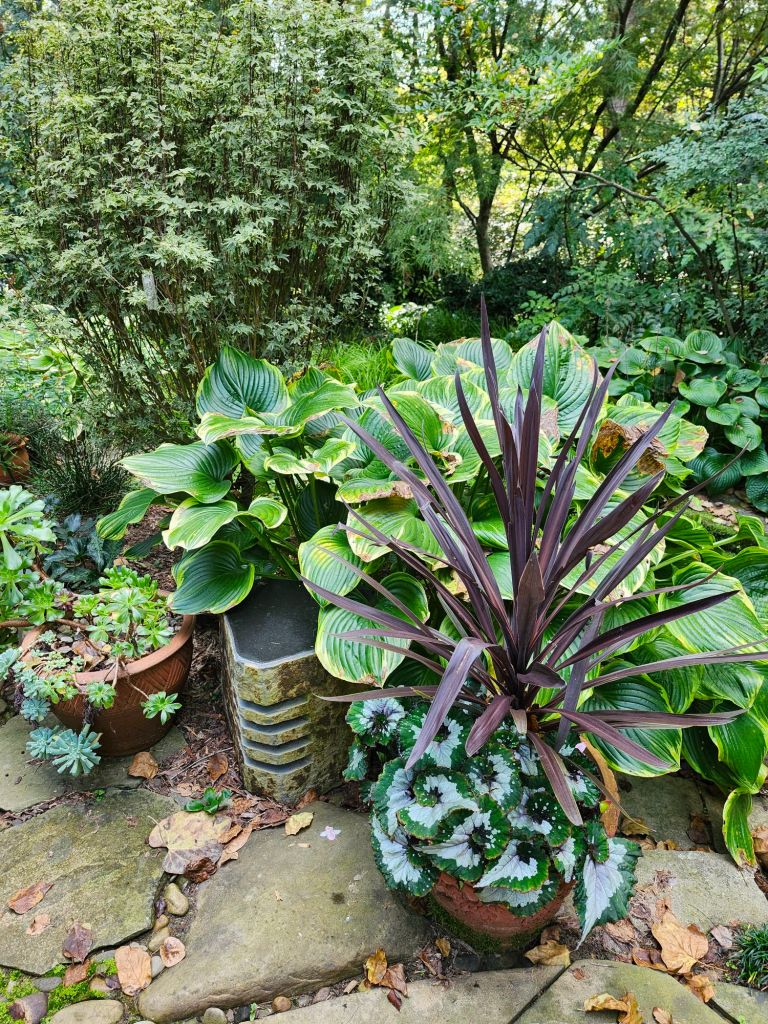
Several tropicals are left behind, knowing they will perish. Protected interior spaces are limited, so the glorious pots of begonias (below) will be left behind until the last moment when a few might sneak into the basement.
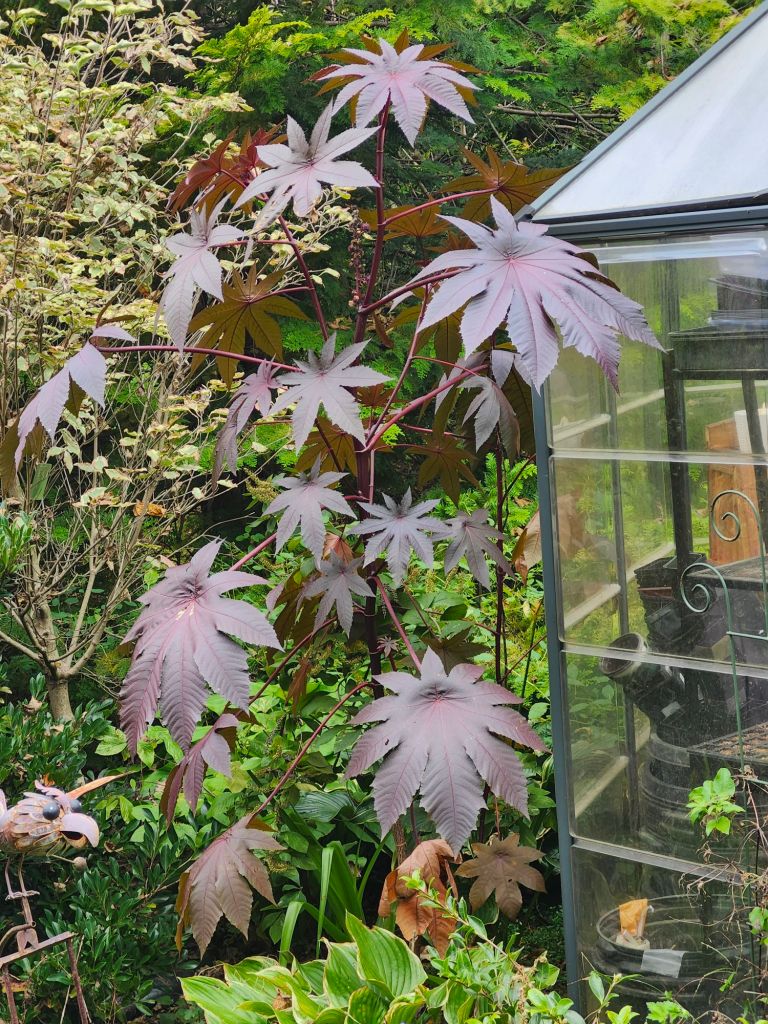
Again, I’ve been quite pleased with the castor beans. This year, only red leafed castor beans (below) were grown, and I’ll harvest seeds once the withered stalks are chopped down. Next year, I’ll direct sow the seeds in the soil and probably a few of the taller green leafed castor beans rather than starting them early in the greenhouse. I am particularly poor in attending to seedlings (and rooted cuttings), and these come along so quickly once the weather turns that there’s hardly an advantage getting an early start.
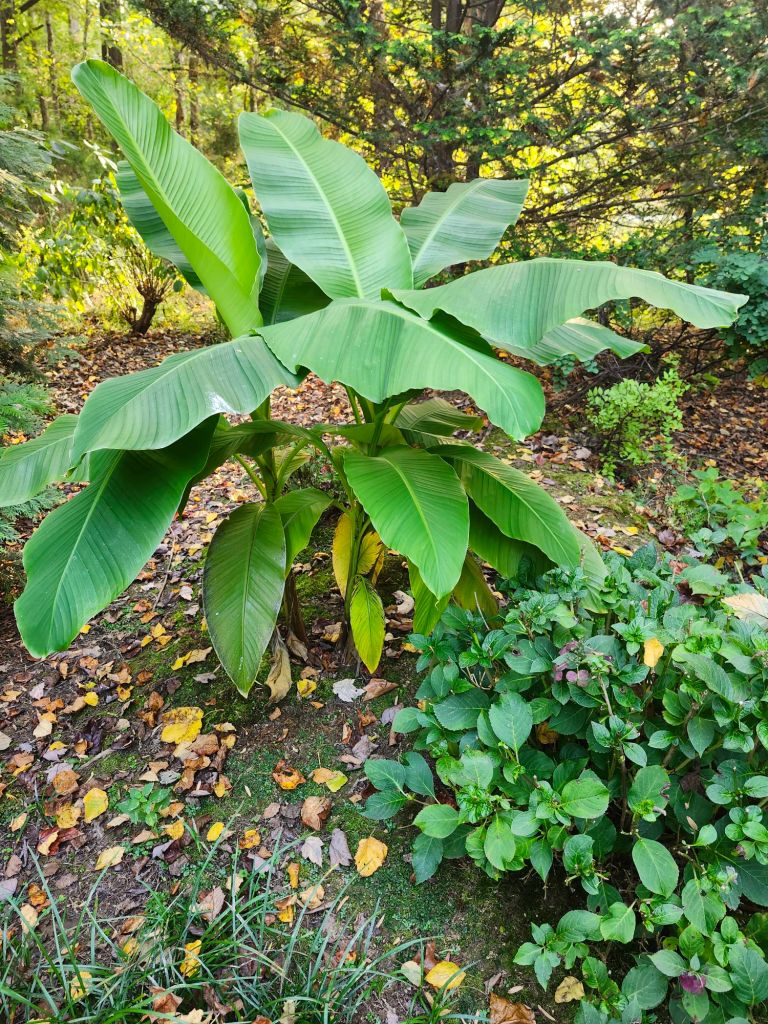
The cold hardy bananas (Musa basjoo, above) have grown nicely in late summer, but I look forward to the clump increasing and growing another few feet taller next year. Of course, the bananas and rice paper plant (Tetrapanax papyifera) that has spread and grown to nearly ten feet will die to the ground, but begin growth again by mid spring.
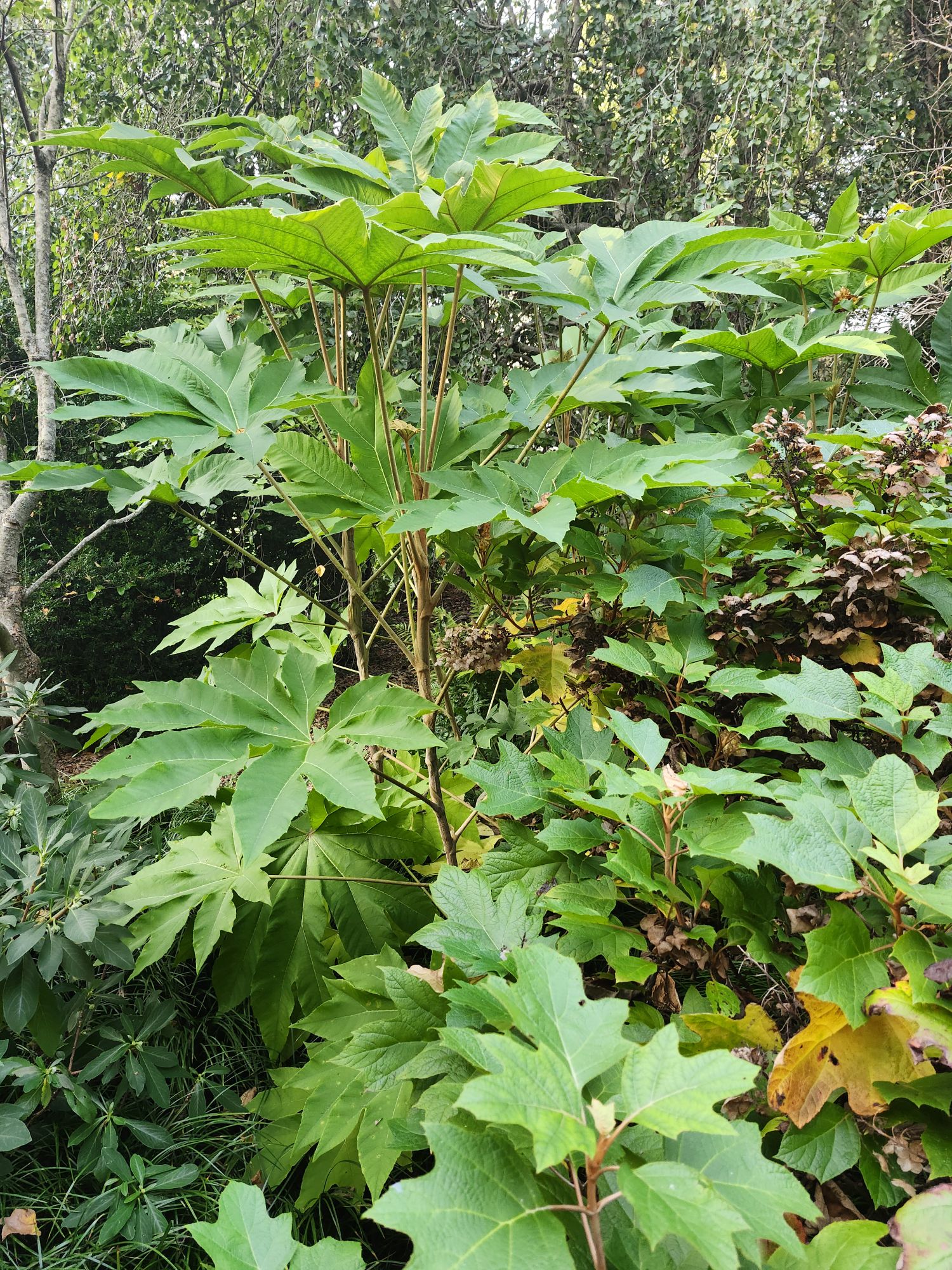
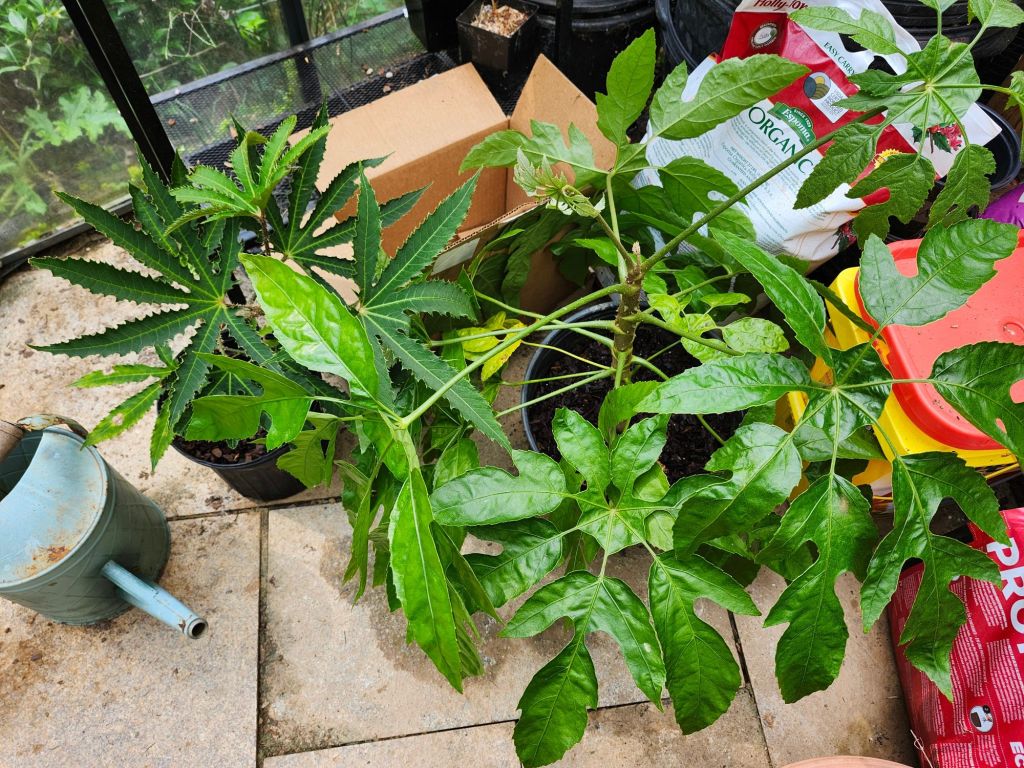
Two non-hardy aralia family members, Trevisia and Brassaiopsis (below), have been dug and temporarily stashed in the greenhouse. Once they have adjusted to their transplant into a pot, they’ll be moved to the warmer basement. I dug both early since at least one is questionable below forty degrees (Fahrenheit), and I don’t want to take the chance to lose them. I haven’t a clue where they’ll be planted next year since this year’s spot will be far too small for their second year growth.
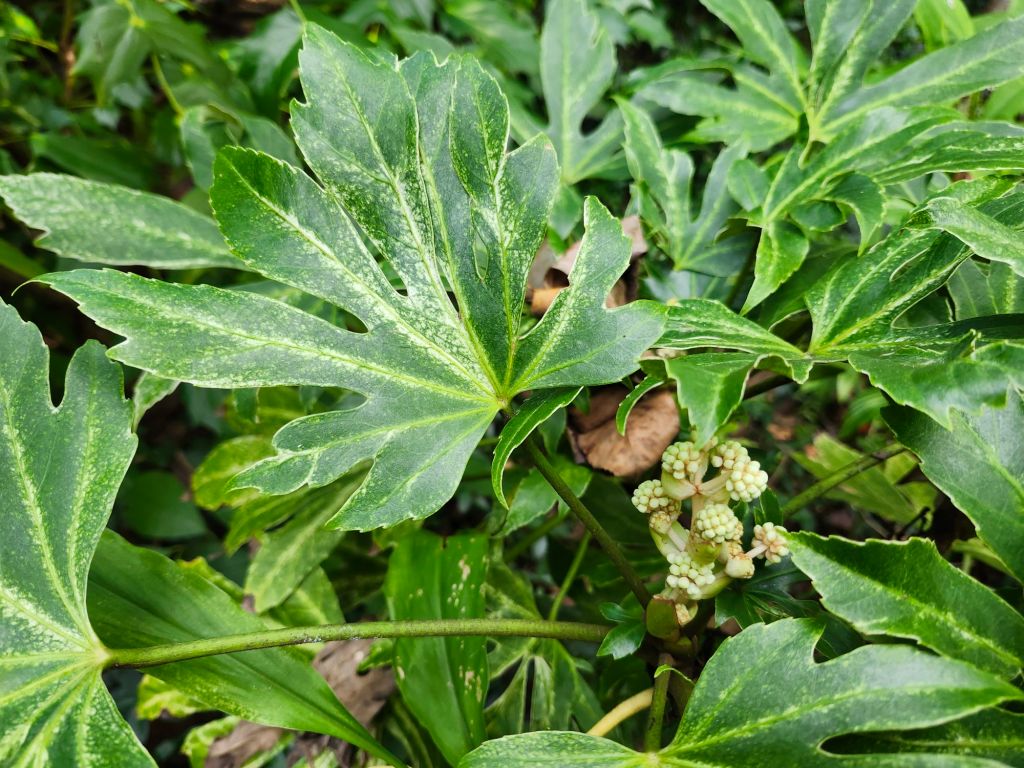
Another aralia, the Japanese fatsia (Fatsia japonica ‘Spider’sWeb’, below), is just about to flower, of course, just as pollinators are dwindling. Two of three ‘Spider’s Web’ are new this year, but one has easily survived three mild winters without protection.
 Ramblin' through Dave's Garden