No doubt, there are varying goals that gardeners hope to achieve. This is not an edible garden, at least not for my consumption, though numerous beasts feed here daily. There are several blueberries that have grown far above my reach, but I pluck only a handful or two, leaving most for the birds.
While the original intent was to please only myself, I’ve grown to appreciate the various levels of wildlife drawn to the garden. I will soon plant several sweetferns (Comptonia peregrina), a shrub I’ve encountered a time or two on local, mid-elevation hikes. It is a valuable wildlife resource, but it also tolerates the sometimes saturated soil of the lower rear garden. I am determined to minimize weeding in this fertile, damp ground, and of course, if I’m able to cover every inch, I also have more plants to enjoy.
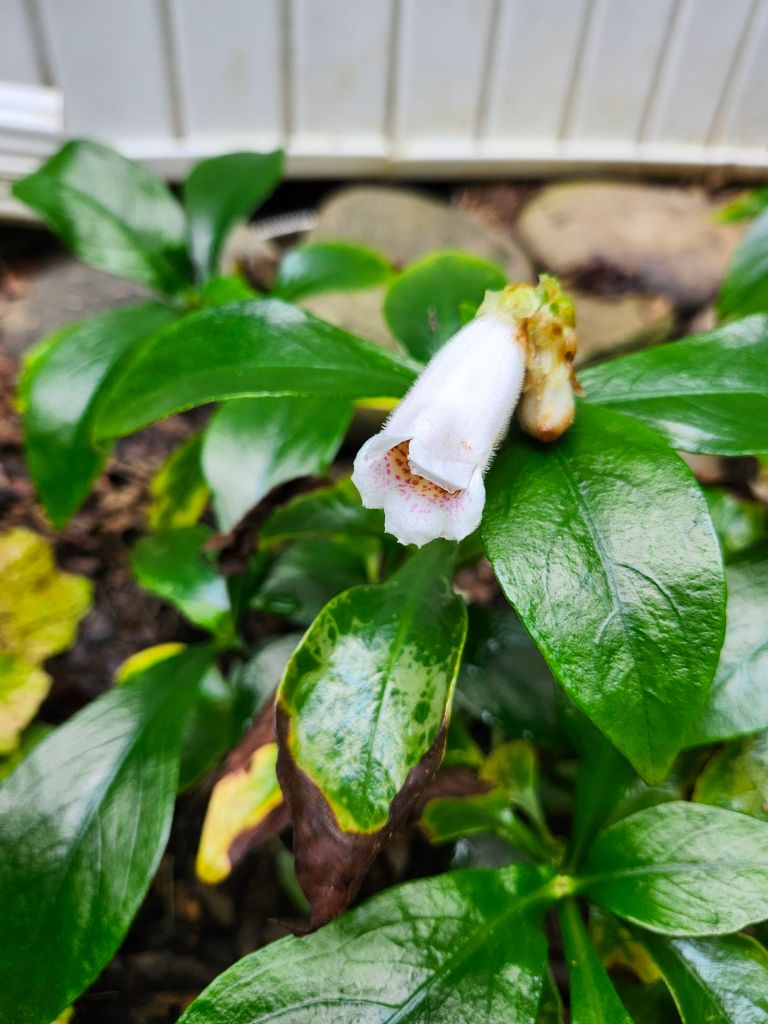
I’m quite pleased that one of two of the African violet relative Glossy False Sinningia (Hemiboea subcapitata, above) is flowering after planting a year ago. Reports of its cold tolerance are somewhat uncertain, but both survived their first winter and have grown and spread happily, though perhaps both are a bit too exposed to sun until their neighbors gain some size.
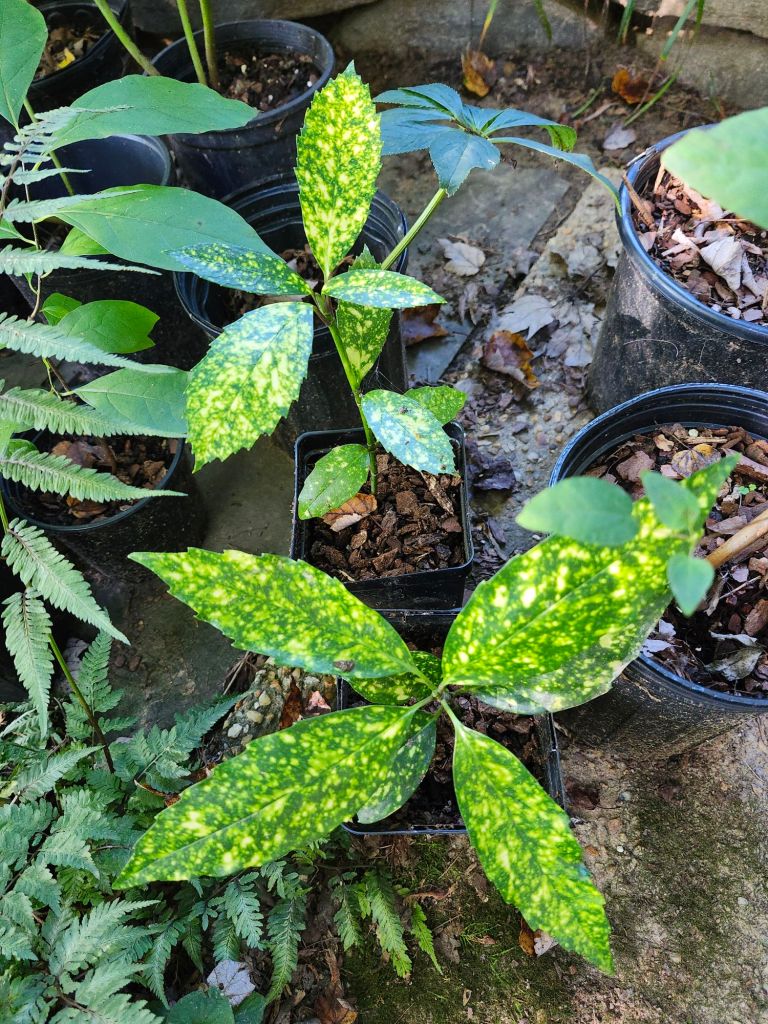
While I am delighted by my time in the garden, perhaps I am most pleased that plants are happy to be here. I am overjoyed to see seedlings of aucuba (Aucuba japonica, above) that will soon be transplanted to permanent locations. Every year, multiple seedlings of Japanese maples and hellebores must be weeded out and discarded, with a few potted to share or moved about the garden.

Sporelings of Japanese Painted ferns (Athyrium niponicum, above and below) are particular favorites. For whatever reason, the degree of shade or the soil moisture (probably this combination) encourages many new ferns each year. Some must be moved from between gaps in stone paths, but few are discarded. Happily, I can no longer recall the few that were once purchased, and here is what pleases me most. Happy plants show their vigor, sometimes in growth or by multiplying.

I am most grateful that two native orchids, cranefly (Tipularia discolor, above) and putty root (Aplectrum hyemale), have resumed growth with their single, distinctive leaf after going dormant following spring flowering. Numbers of both have doubled. I’ve been happy enough that the small numbers of each have survived, uncertain that the soil contained the proper ingredients for these particular orchids. With numbers increasing, I’m now overjoyed that they are thriving.
 Ramblin' through Dave's Garden