Green branch tips of the Japanese Umbrella pine (Sciadopitys verticillata, below) litter the path through the side garden, a befuddling occurrence seen annually in early autumn. I blame this on the obvious repeat offenders, squirrels, though I have no direct evidence of their mischievousness.
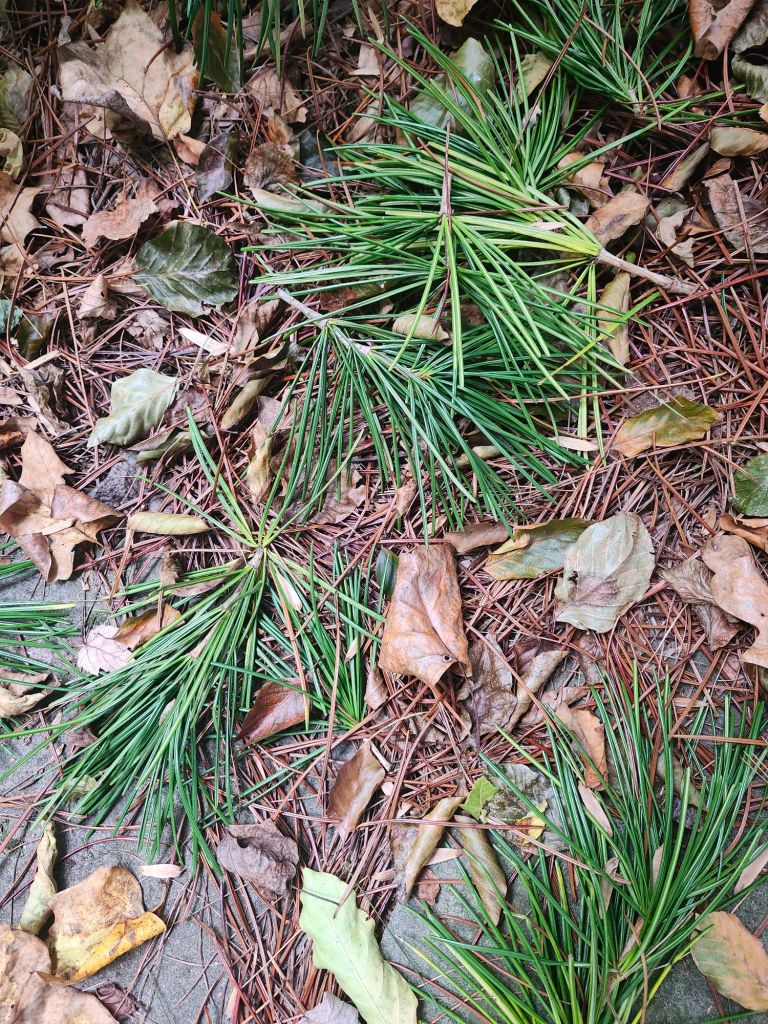
In any case, the lost tips seem to do no harm to the pine that has grown well above the surrounding canopy of tall shrubs in this shaded area of garden. Several years ago, ten feet of one of the pine’s three trunks was snapped by wet snow, but again, with no long-term harm.
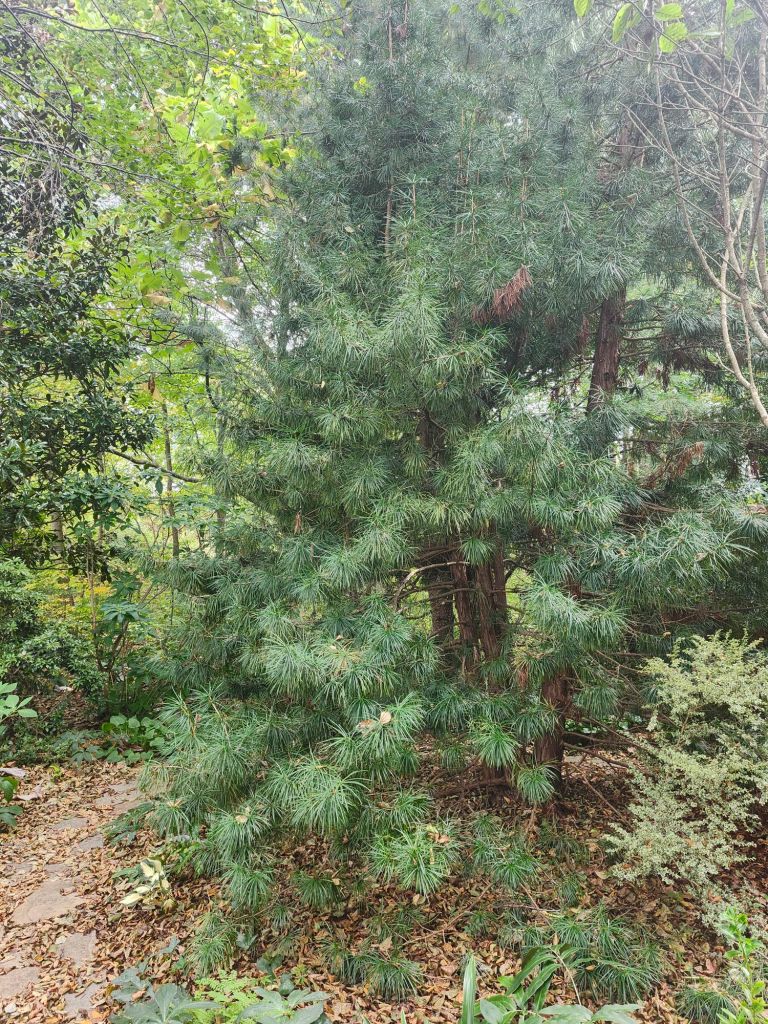
While the Umbrella pine occupies a corner as the path turns so that it is viewed from three sides, I regret it has lost prominence as the garden has grown around it. Still, I marvel that the slow growing pine has grown so tall, a testament to occupying this garden for several decades and not to care on my part.
As autumn progresses, leaves of tulip poplars, maples, and blackgum pile deeper in the side garden. Most will be left in place to slowly decay, though some will be cleared from the many clumps of hellebores so flowering can be seen through the winter months. Huge leaves of the bigleaf magnolia (Magnolia macrophylla, below) that is centered in the side garden become the biggest nuisance along with leathery leaves from neighbors’ sycamores.
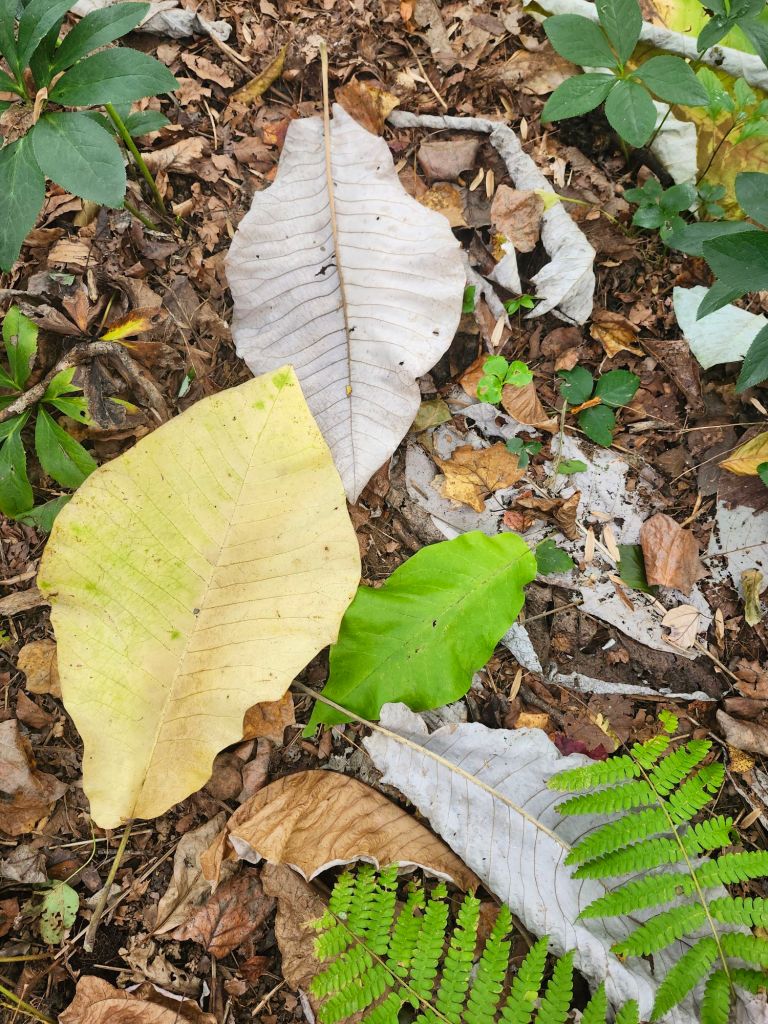
When I choose to tidy up an area of hellebores, fallen leaves of the magnolia and sycamores require hand removal since they do not fit into the handy leaf vacuum that shreds leaves to accelerate the process that mulches and enrichens the soil in this side garden. Years ago, a larger area of leaves was shredded, even with many fewer hellebores, but I no longer require this degree of tidiness.
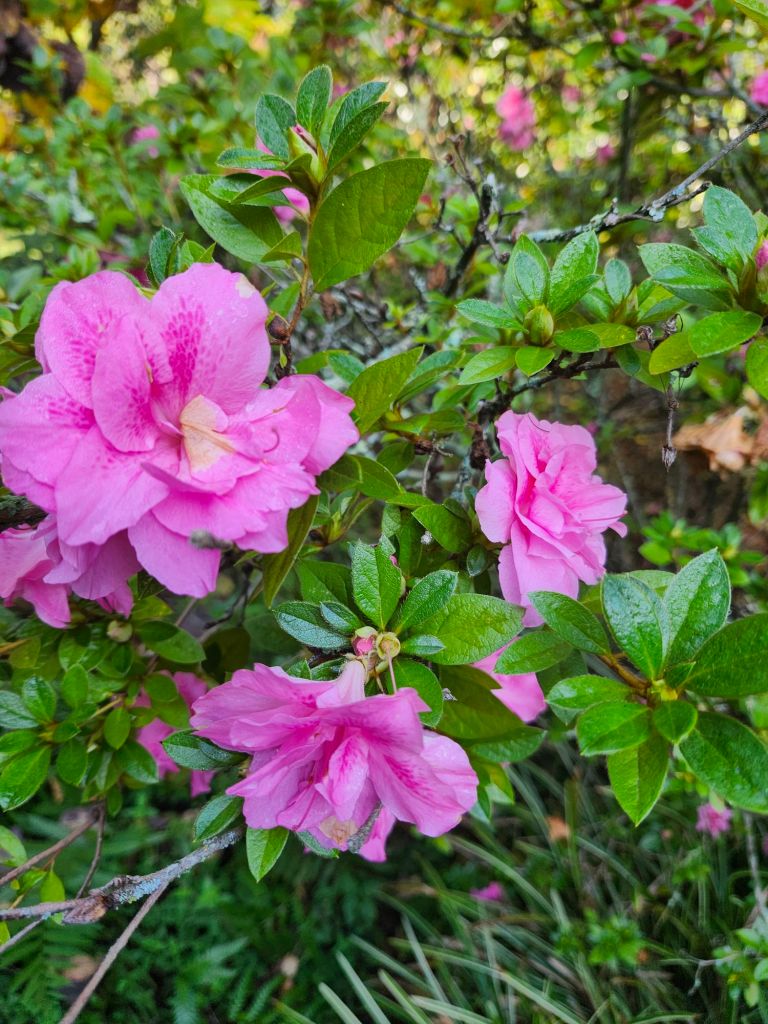
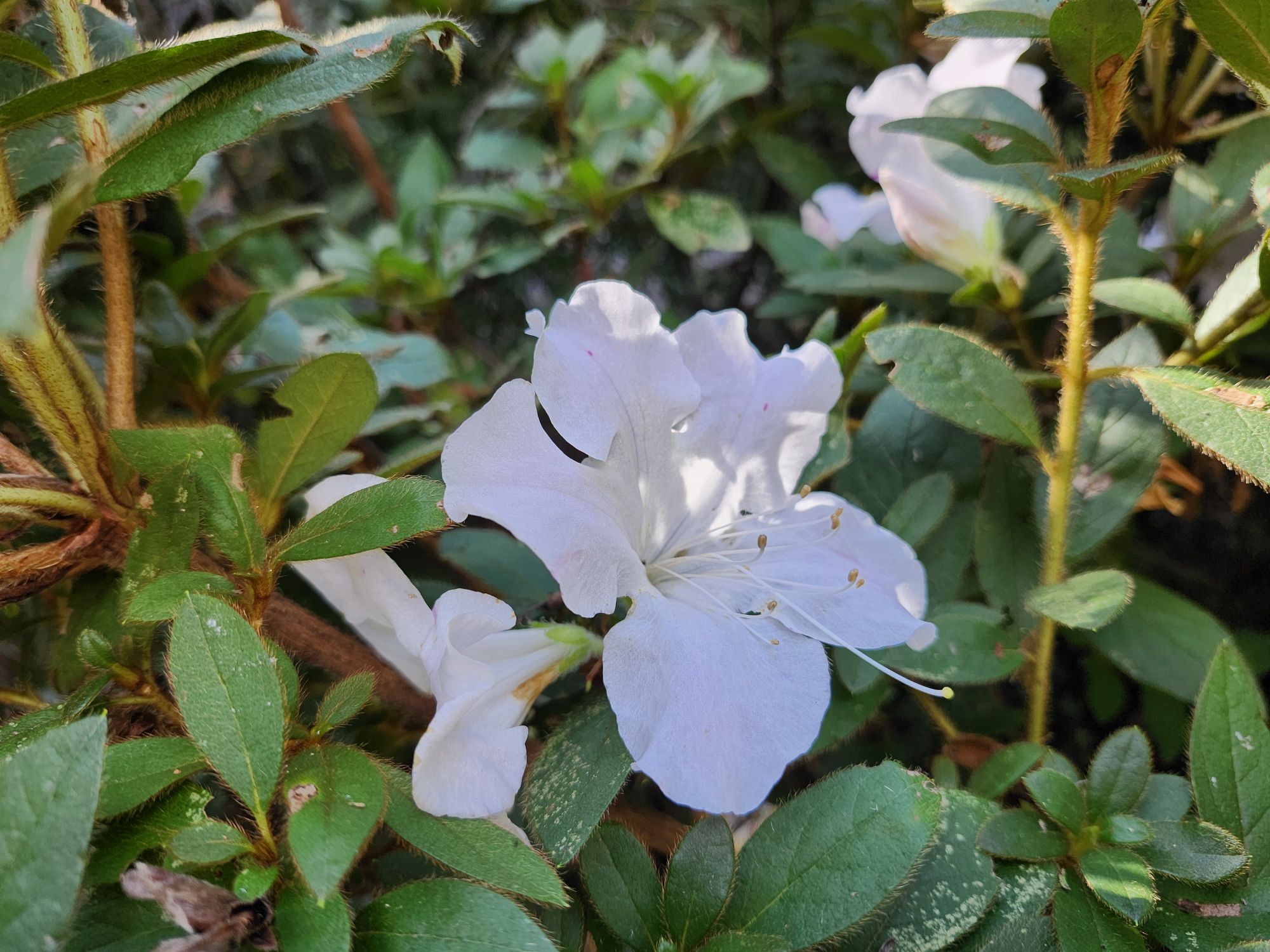
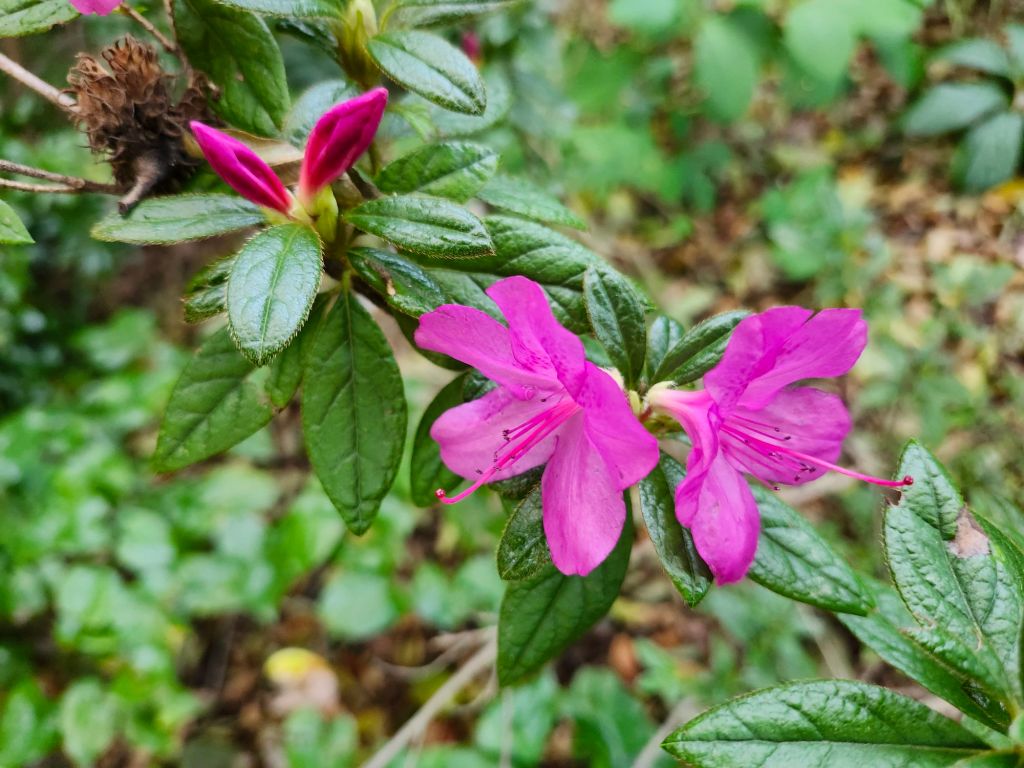
Flowering of the repeat blooming Encore azaleas (above) has picked up as temperatures have cooled after a disappointing late summer bloom. Several will flower into November, I expect, and often the least floriferous of the Encores, ‘Autumn Amethyst’ (above) will have a few scattered blooms into December.
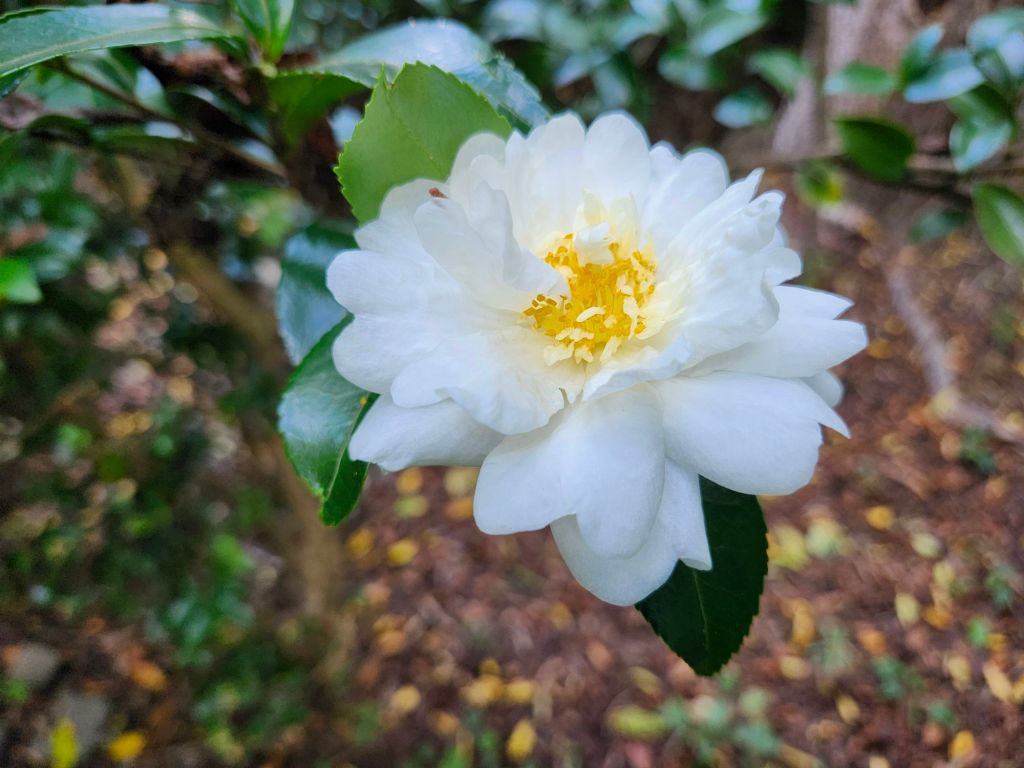
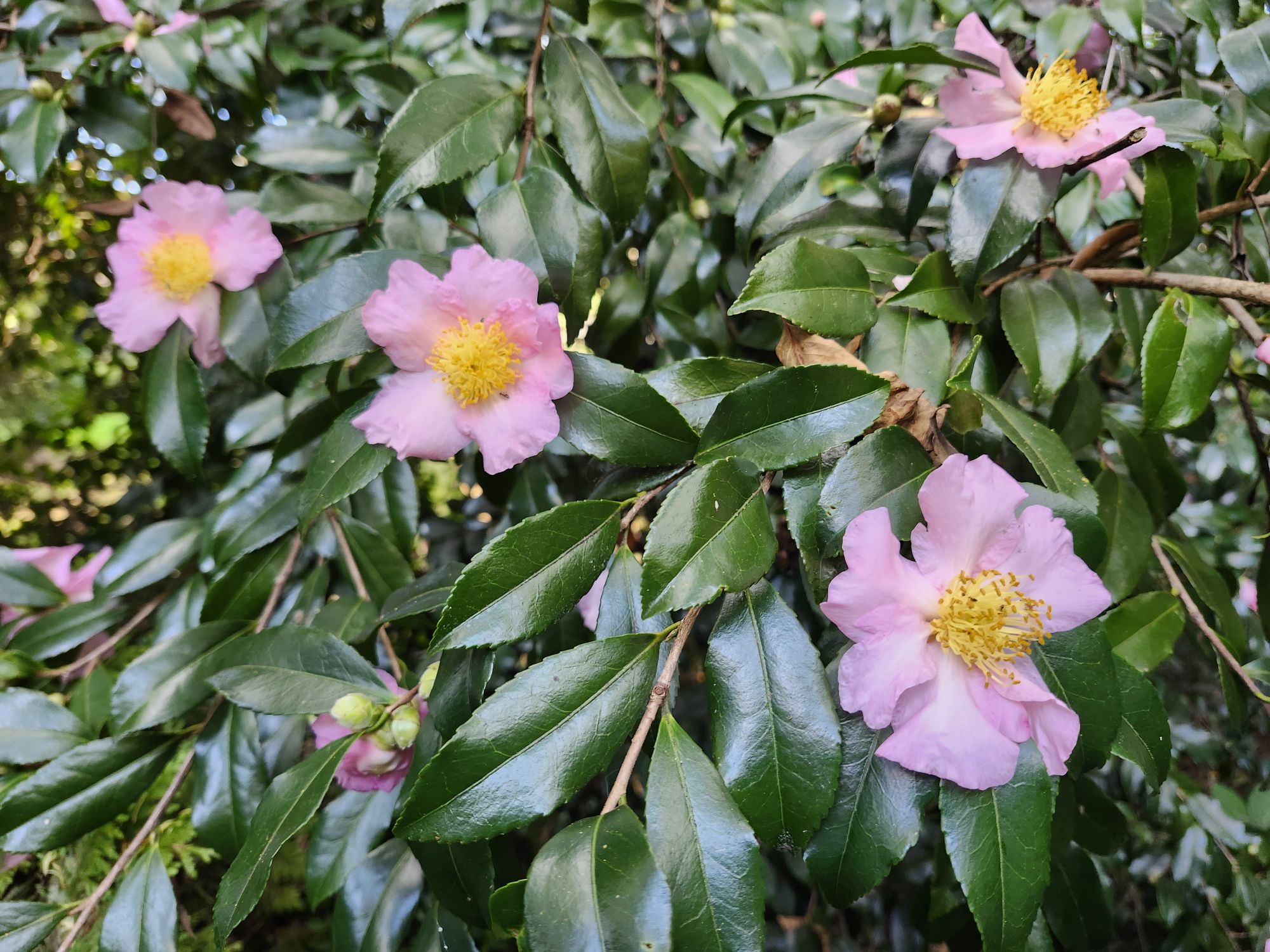
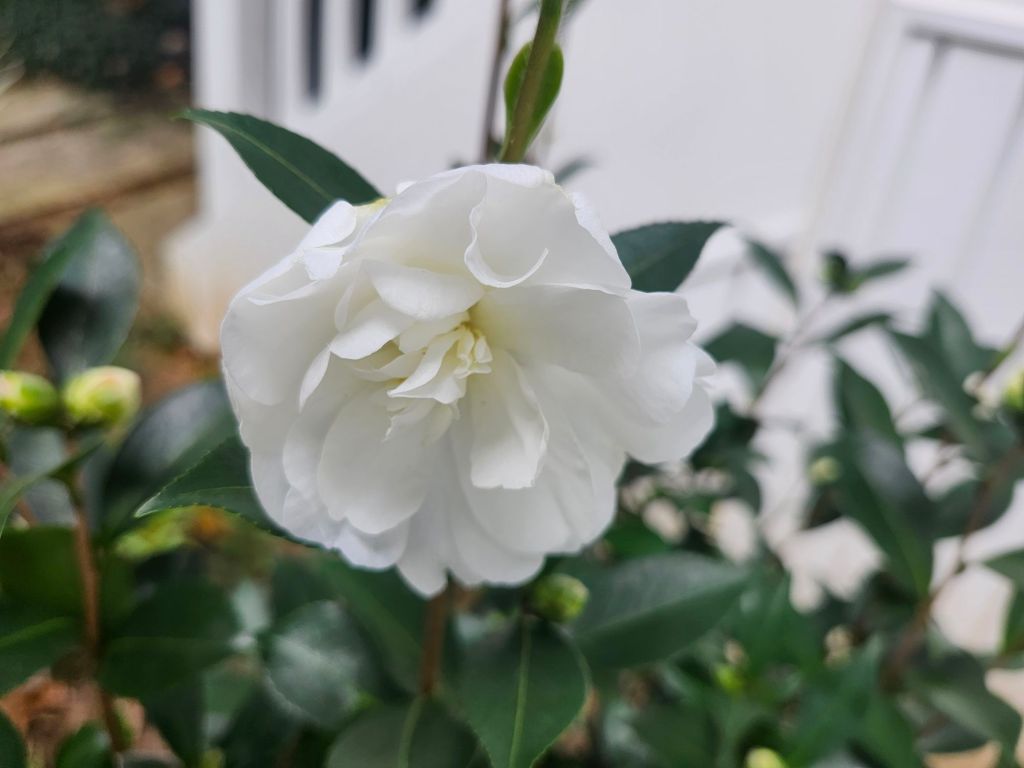
The autumn flowering camellias are on schedule with the first blooms arriving a week ago. The columnar sasanqua ‘Autumn Rocket’ (below), planted in spring, has grown vigorously and now is flowering along with several long-established hybrids. Other sasanquas have been undependable bloomers, and while ‘Autumn Rocket’ was selected for its upright form, I’m thrilled that it adds to camellias that will flower for weeks until tempertures fall into the teens (Fahrenheit).
 Ramblin' through Dave's Garden