After five days of touring arboreta and gardens in the Philadelphia area with the annual conference of The Maple Society, I have minor concerns. I only pretend to know better. I hope this thirty-five year old garden has been planted to flourish for many decades after I’m gone, but several aged trees in arboreta raised questions.
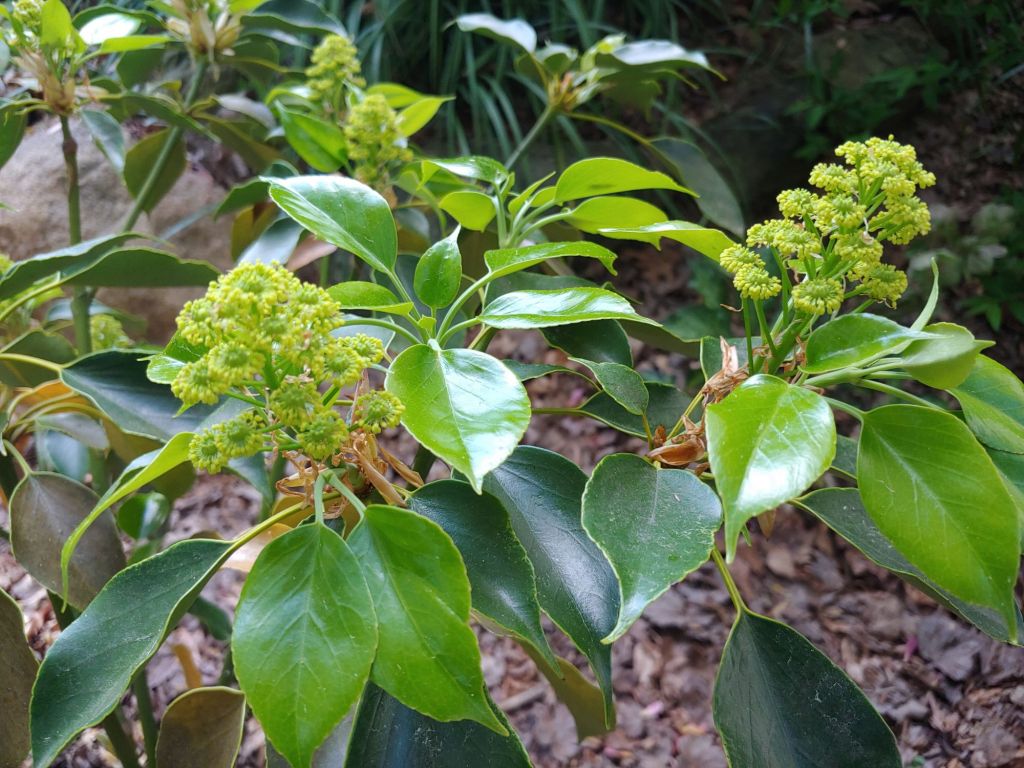
Will my pendulous branched beech (Fagus sylvatica ‘Pendula’) spread to a hundred feet? Will my wheel tree (Trochodendron aralioides, above) reach forty feet, or only to the ten to twenty height indicated by references?
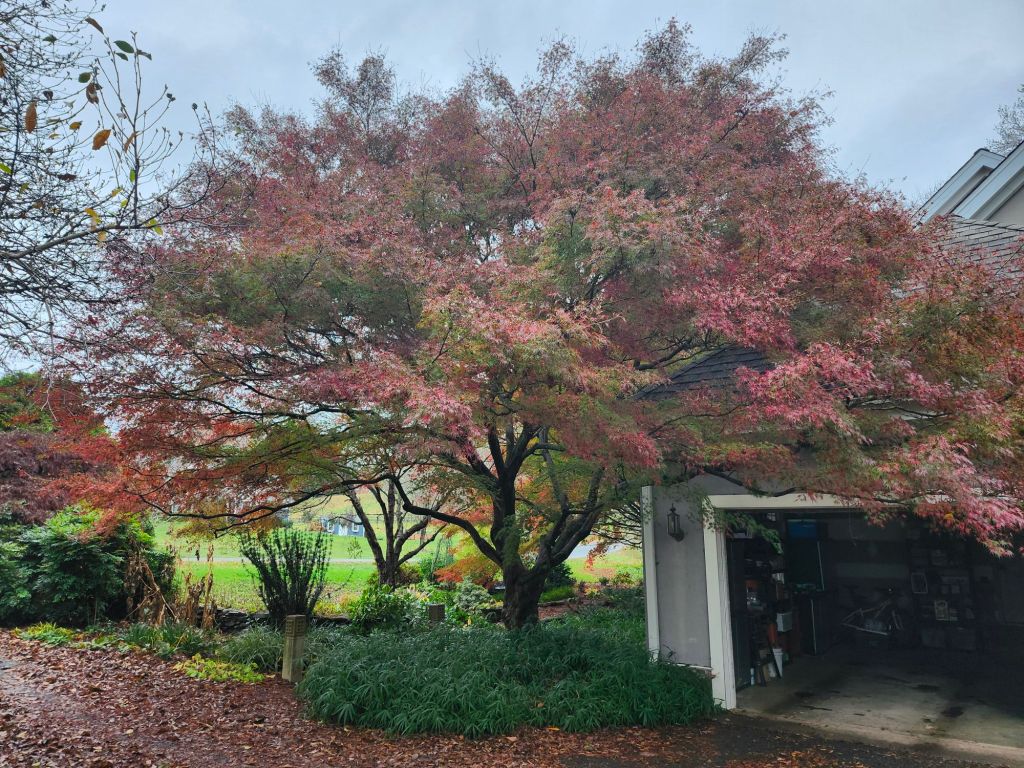
I am somewhat comfortable with my Japanese maples, the primary subject of this tour of arboreta. Many of the maples in my garden are twenty and thirty years old, so I’m regularly reminded of their potential mature sizes. A weeping maple thirty feet across at Morton Arboretum was a bit concerning, but I’ve allowed adequate space for the upright growing maples. Of course, I won’t be around in fifty or a hundred years when these grow to become a problem, and gardens must change over time. Somebody, some time, will have to decide what stays and what goes.
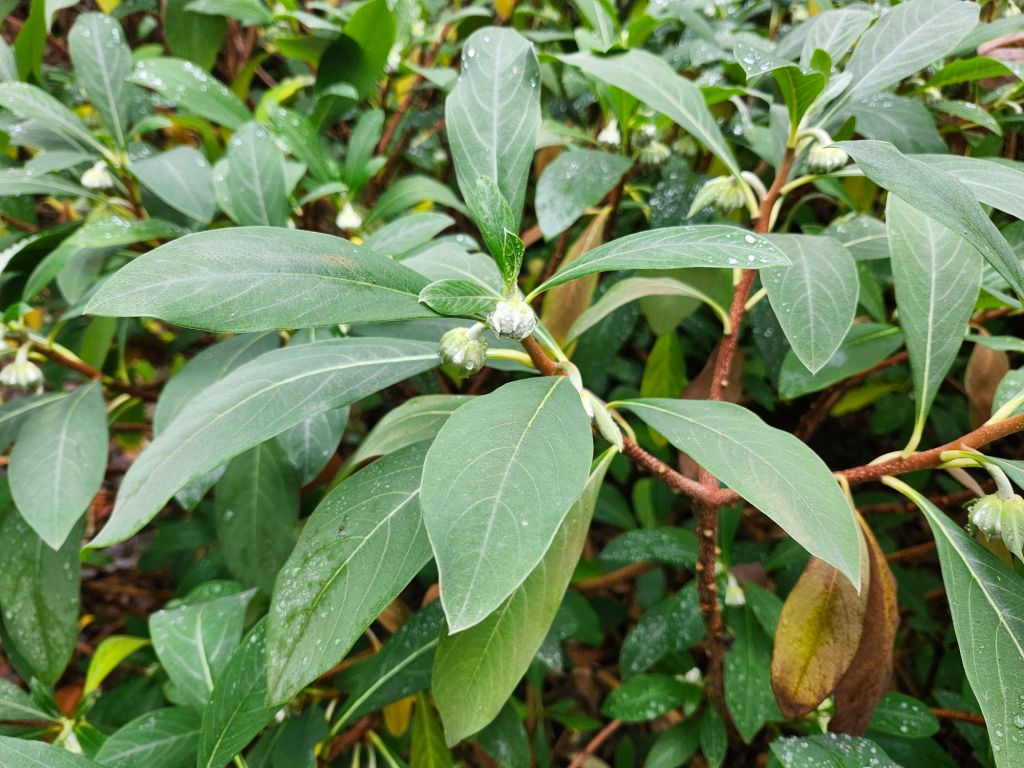
In the short term, while I’m still here, there will be annual decisions. Several paperbushes (Edgeworthia chrysantha, above) must be hacked back, or paths will disappear. Shrubs are easy, at least easier, though severe pruning of a few viburnums in the shaded side garden only delays an obvious problem. A lower branch or two must be pruned from Japanese maples that arch over paths. There’s more to be done, but that’s part of managing a somewhat mature garden.
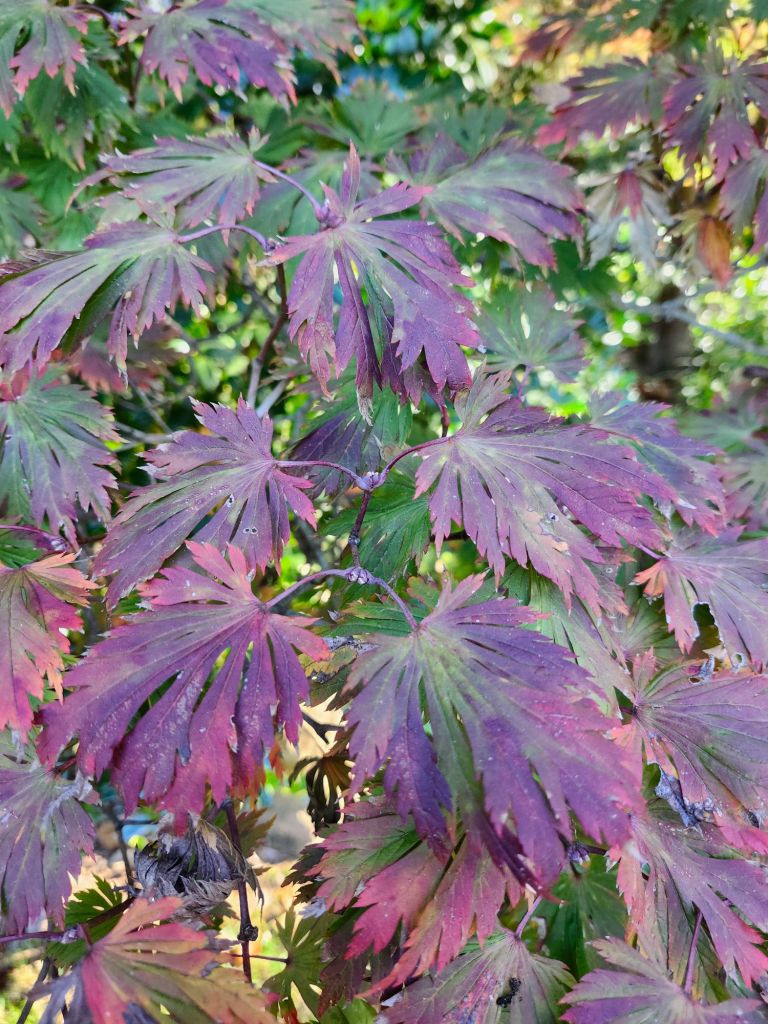
The most immediate issue is the large fernleaf maple (Acer japonicum ‘Aconitifolium’, above) that has been losing branches in recent years. I expect this favorite in declining health won’t survive more than a few years, so I’m pondering choices to replace it. I’m in no rush, but to blend with neighbors, a good-sized replacement is necessary.
The question raised by observing huge trees decades older than ones in my garden is, does it matter? Should I be concerned about trees growing too large long after I’m gone? Certainly, a tree that remains in scale to the garden over several decades has served its purpose. I’d like to think that my placement of trees could work for the next hundred years, but I’ve no doubt that a few conflicts will require adjustment along the way.
 Ramblin' through Dave's Garden