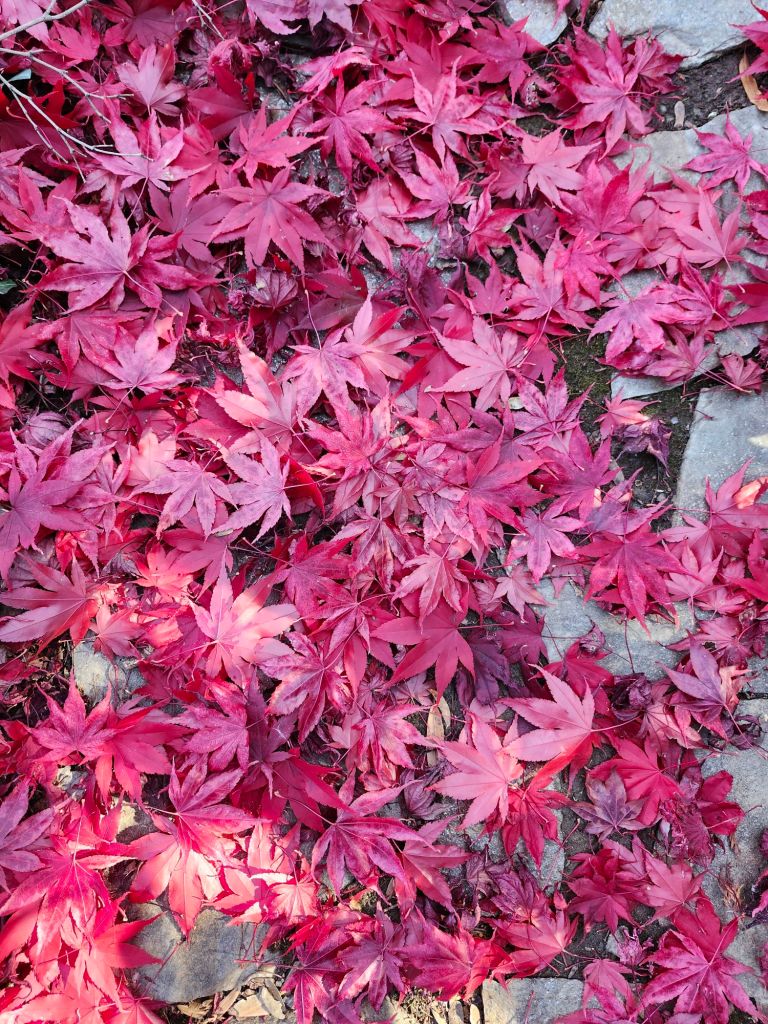
One after the other, the Japanese maples drop their leaves. Thanksgiving Day was the day for leaves of ‘Bloodgood’ (below) to cover the front walk, a day after leaves of ‘Seriyu’ fell and just after piles of leaves from dogwood and beech had been removed to prepare for our holiday guests. The brilliantly colored leaves of ‘Bloodgood’ turn to brown after a few days on the path, but with no traffic to the front door, they’ll stay for a while.
Today, leaves of the Lion’s Head maple (Acer palmatum ‘Shishigashira’) are falling with every gust of the chilly breeze. While leaves of Full Moon maples fell weeks ago, the Lion’s Head and ‘Okushimo’ (below) changed color over the past two weeks, so today ends the glorious season of foliage color.
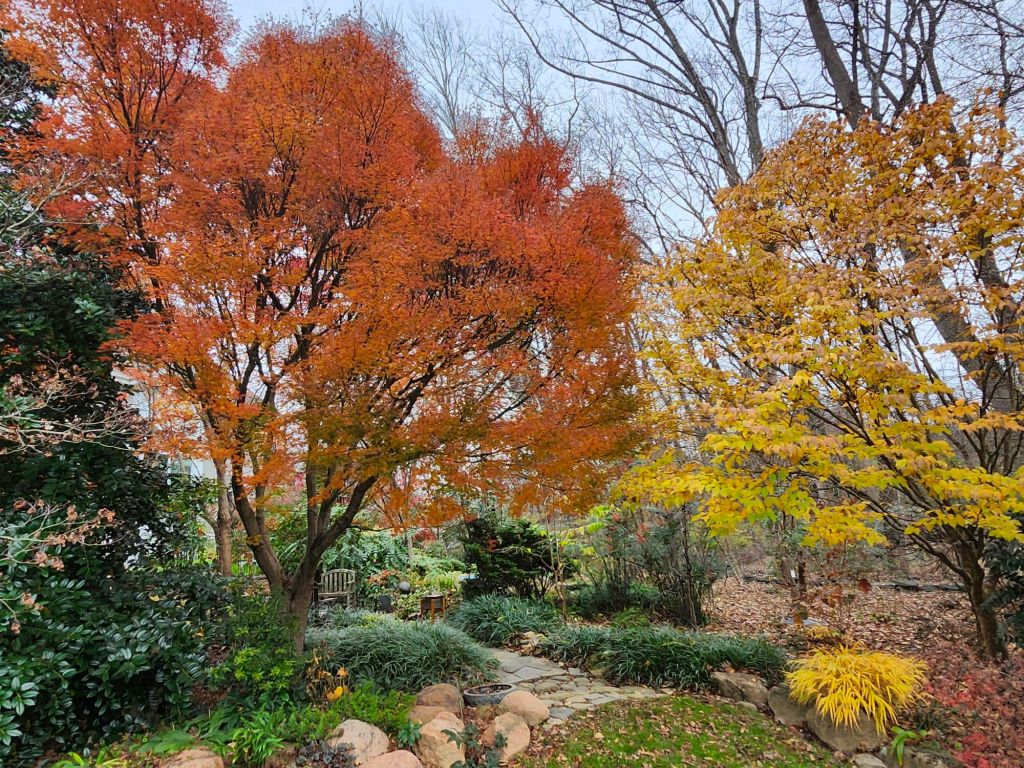
Sandwiched between the Lion’s Head and ‘Okushimo’, leaves of the variegated ‘Samaritan’ dogwood (Cornus kousa ‘Samaritan’) faded a week ago and littered the patio beneath the day after the holiday. The splendid green and yellow Plectranthus and a few other annuals on the patio that could not be stored indoors met their demise in last night’s cold.
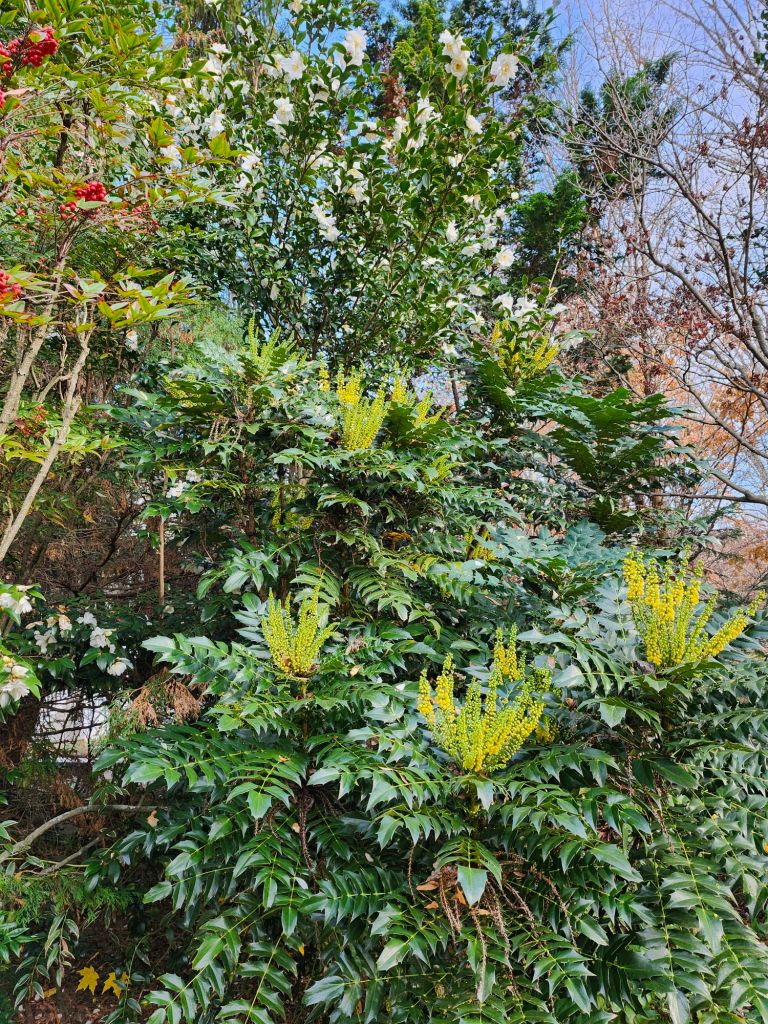
I am fortunate in retirement to no longer need to wake every morning in the early hours to witness the night’s low temperature. Now, I judge the cold as flowers of azaleas are damaged at twenty-eight degrees (Fahrenheit), but camellias remain intact into the lower twenties. While camellias quickly shed cold damaged blooms, azaleas do not, with the crispy brown flowers persisting for months if I don’t pluck them from branch tips.
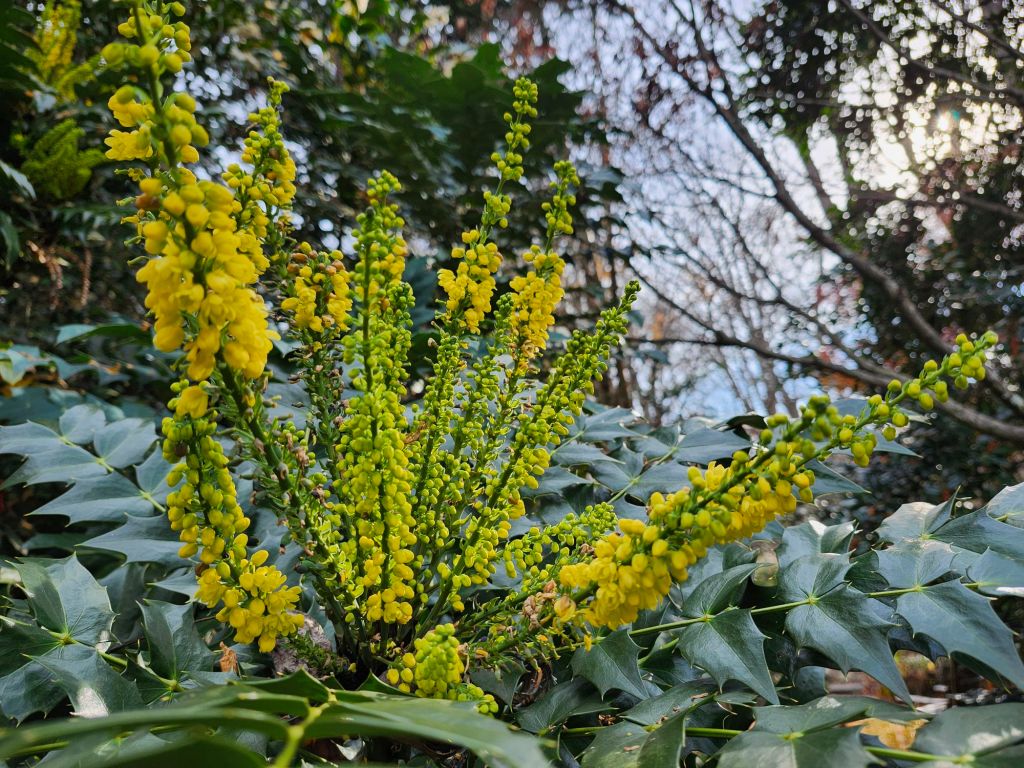
I’m uncertain of the temperature that injures flowers of the various mahonias that dependably flower into January in this Virginia garden. I’m hazy, but think that they’ll damage as temperatures near ten degrees. I’m not anxious to verify this, but by the time such cold moves in, Ozark witch hazels (Hamamelis vernalis) and early hellebores will be flowering.
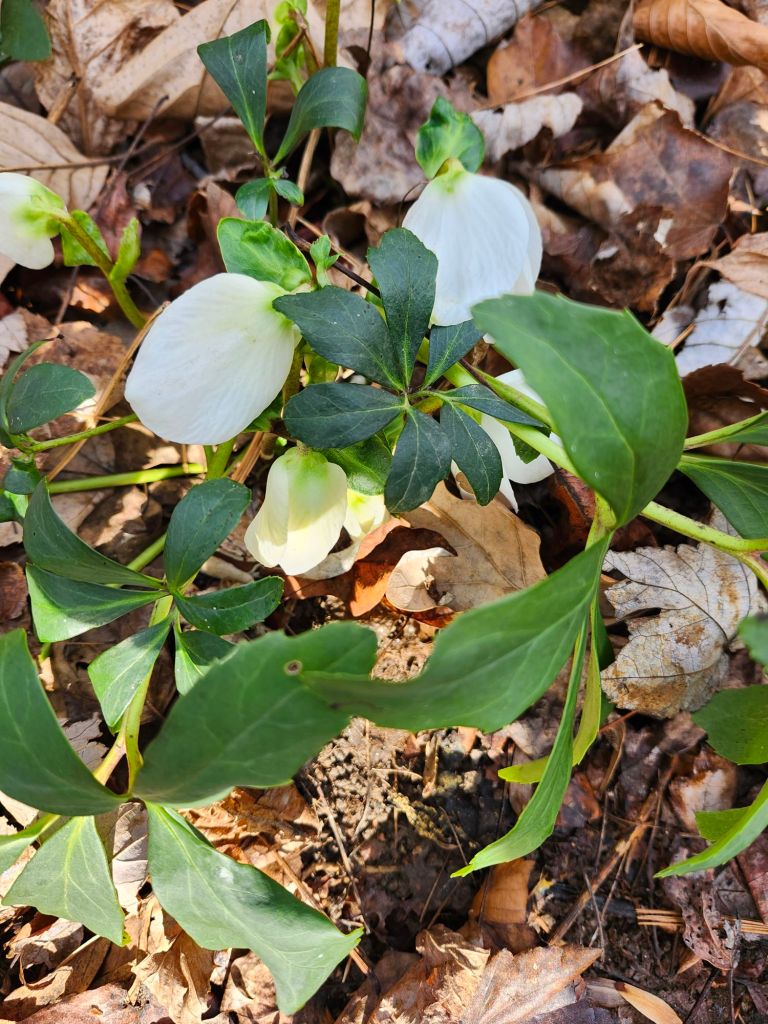
White flowers of one of the Christmas rose hellebores (Helleborus niger, above) are nearly open. These seem more prone to cold damage than Lenten rose types that often begin flowering in late January but more often two weeks later. In a mild late winter, the flowers pass more quickly, and of course, this is the trend in recent years. Still, I’m thankful that there’s something blooming long after the last leaf from the maples has fallen.
 Ramblin' through Dave's Garden