The winter garden is not completely barren with several plants flowering and many evergreens to keep my interest. Still, the dreaded day has arrived, the start of meteorological winter, and of course, overnight temperatures have declined into the upper teens (Fahrenheit) if there is any doubt. Now, I’ll begin the seemingly interminable countdown to spring that is occasionally eased by early flowering of jonquils, snowdrops, winter jasmine, and paperbushes if February temperatures are mild.
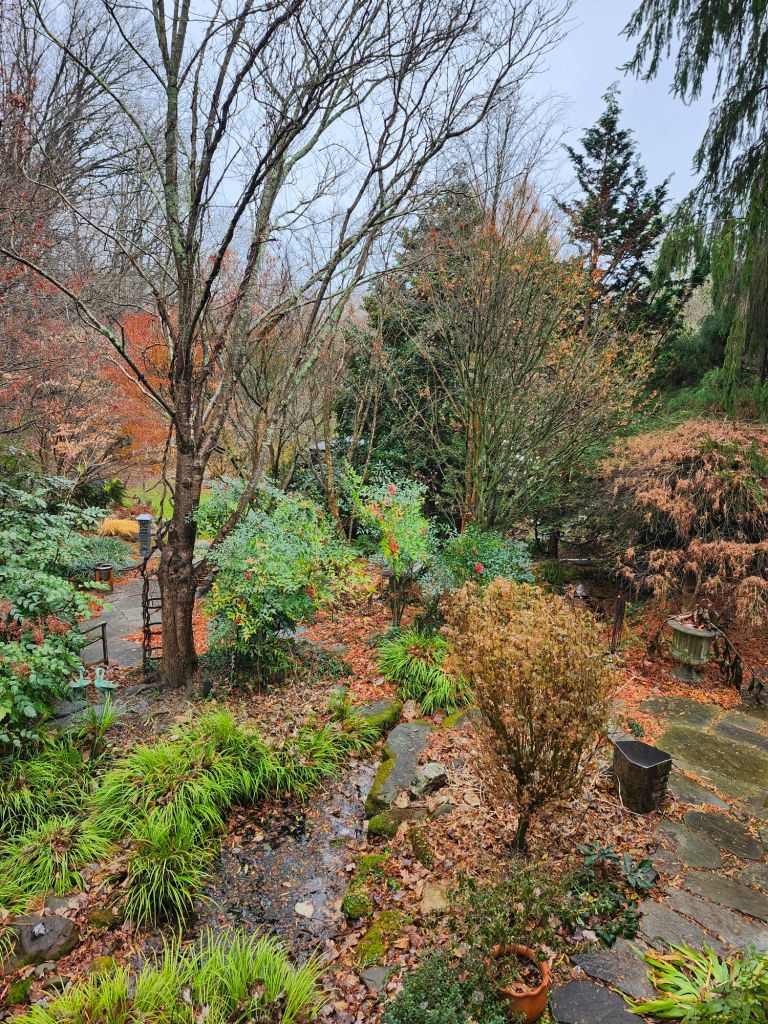
Of course, activity in the garden slows, still with daily strolls, but with few chores accomplished until piles of leaves must be removed from hellebores so that flowers can be seen. Inspirations will come and go. From my perch on the couch in the sunroom (above), countless ideas will be inspired, then disgarded or forgotten with a few keepers.
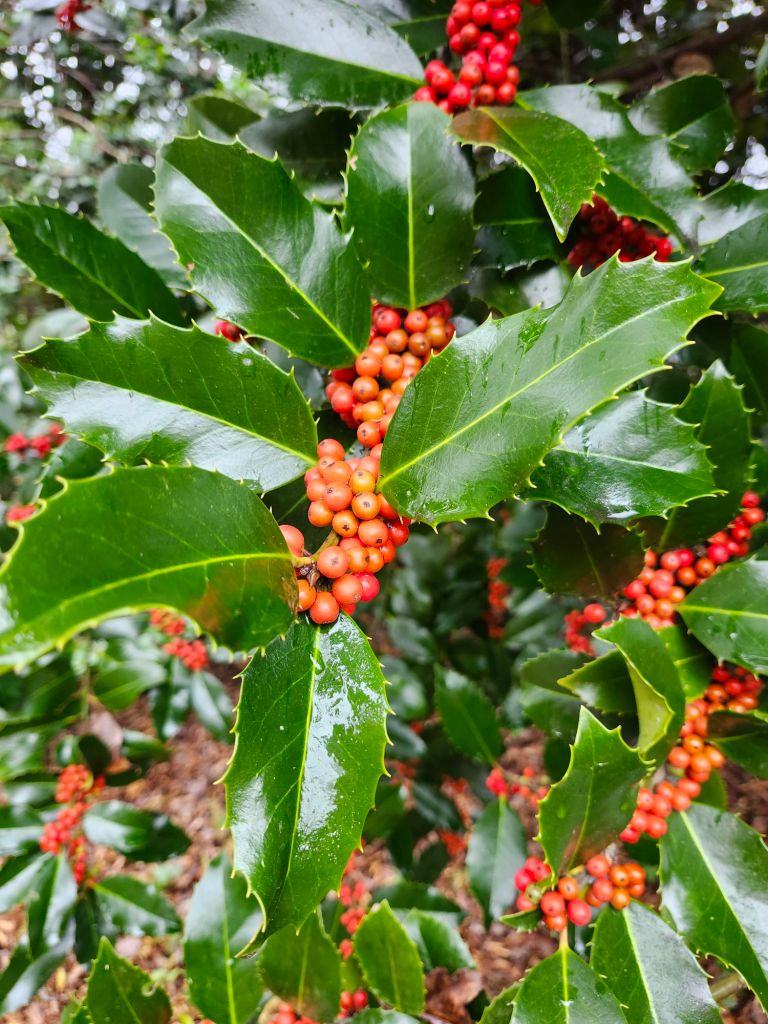
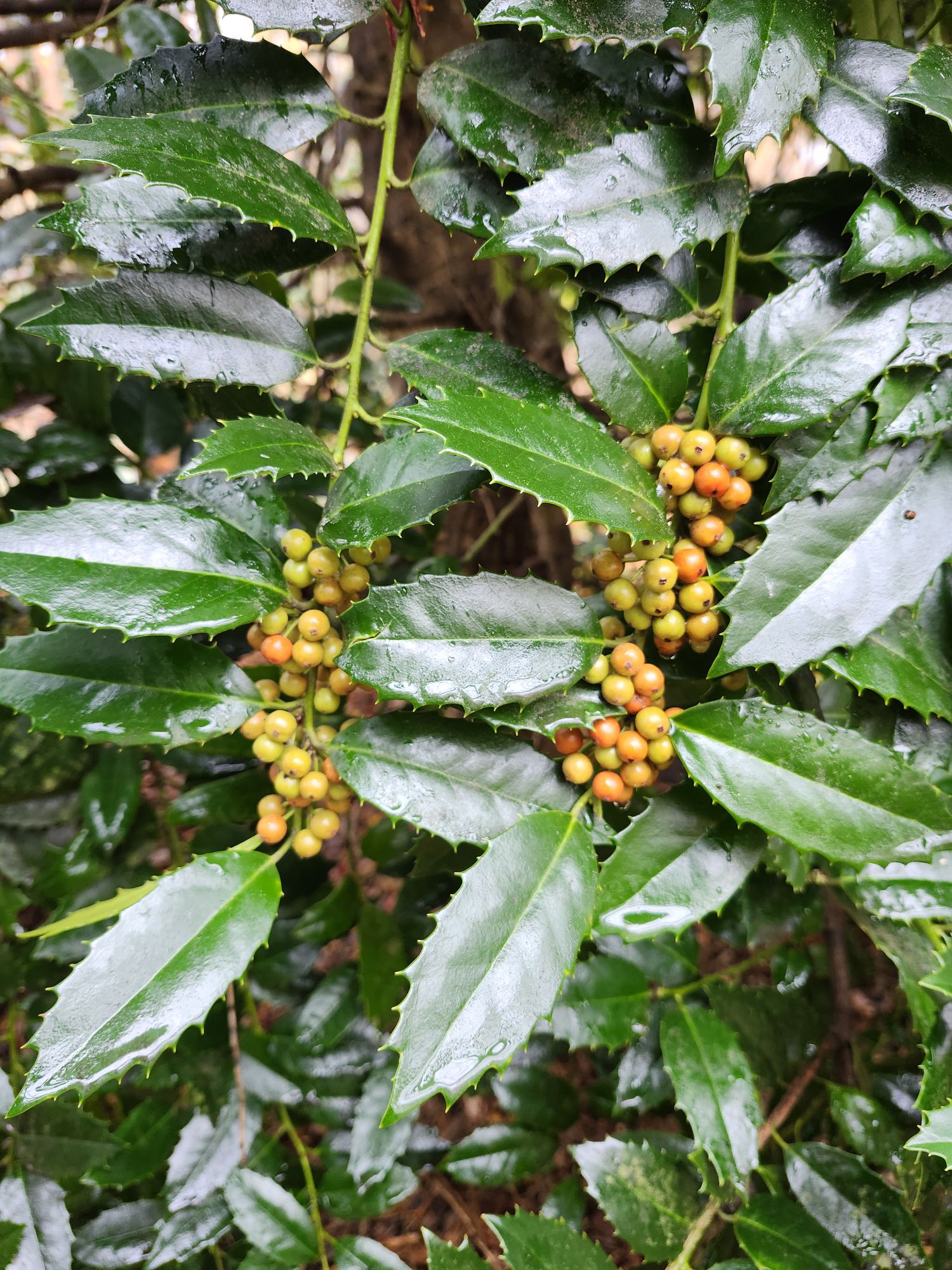
Little must be added to this densely planted garden, but as flowers fade and leaves drop, I often focus on brilliantly colored berries of the various large evergreen hollies (above). I’m reminded of unfulfilled plans in recent years that I must add several native, deciduous ‘Winterberry’ hollies (Ilex verticillata, below) to replace two lost several years ago. The area was replanted with deciduous azaleas that will undoubtedly grow to fill the space and provide splendid color.
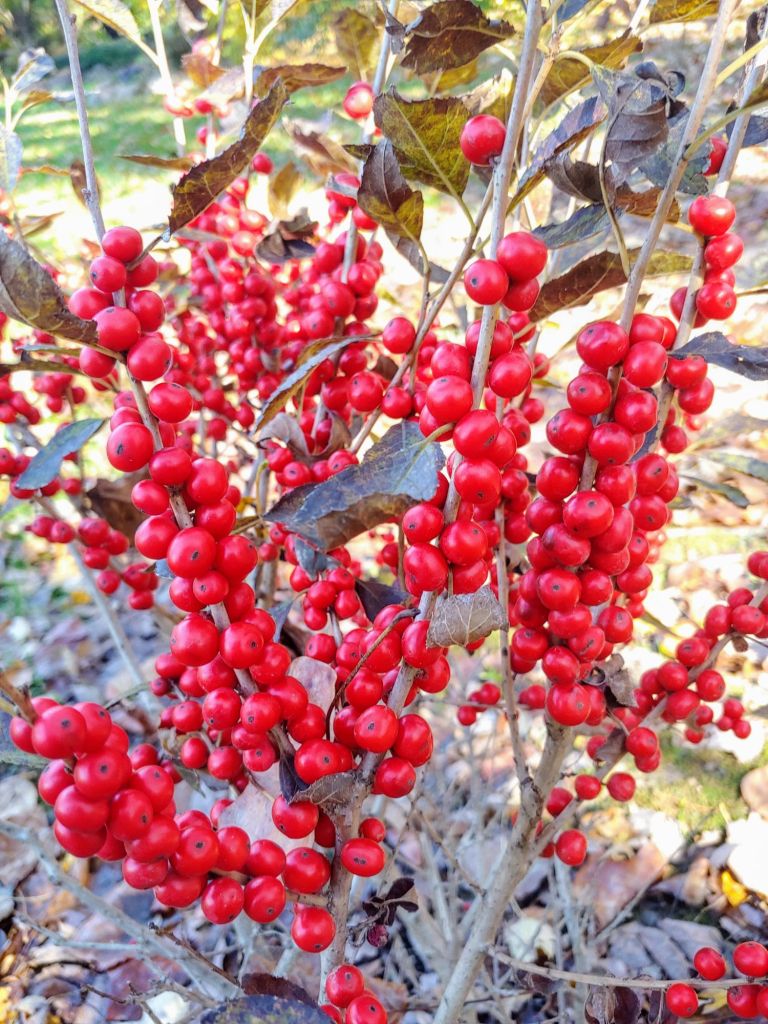
Fragrant red, yellow, and orange flowered azaleas planted nearby have grown to fifteen feet or taller, and for several weeks in spring, this is a highlight of the garden. But, the hankering for hollies remains, and while the clusters of red berries of evergreens are rarely consumed by birds until late in winter, berries of deciduous hollies are often eaten early in the season.
So, are the berries intended for the birds, or for my enjoyment? Whatever, it works for all.
 Ramblin' through Dave's Garden