Early flowering snowdrops barely stand above the arching leaves of a sedge that has slowly invaded its space. In recent years, I’ve chopped this area of ‘Evergold’ sedge (Carex oshimensis ‘Evergold’, below) to the ground before snowdrops appear, but December flowers make this task difficult without injuring an unacceptable number of flowering stems.
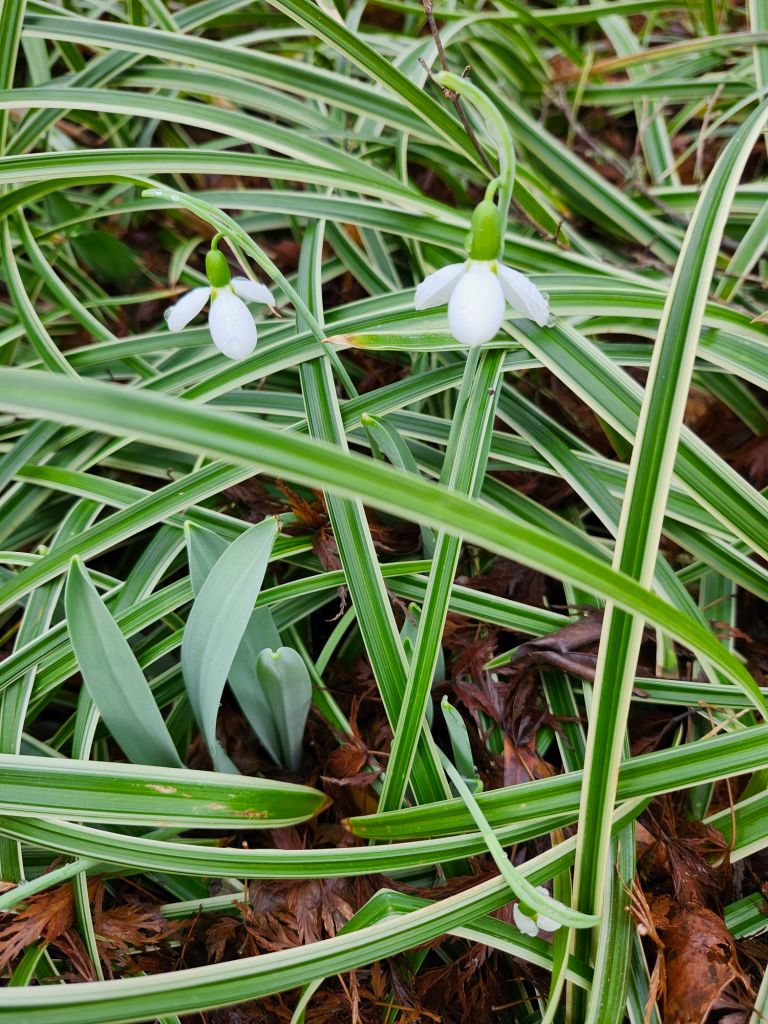
Oh well, I’ll have to accept this obstructed view that I’ll visit increasingly as winter progresses, and fortunately, with a number of snowdrops that remain outside the sedge’s spread.
Today is one of few winter days that can be termed as warm rather than just mild. With intervals of clouds and sun, I must take advantage to stroll the garden before rain moves in this afternoon. Now is the time to enjoy, not to labor, though I consider changes to the garden as I walk.
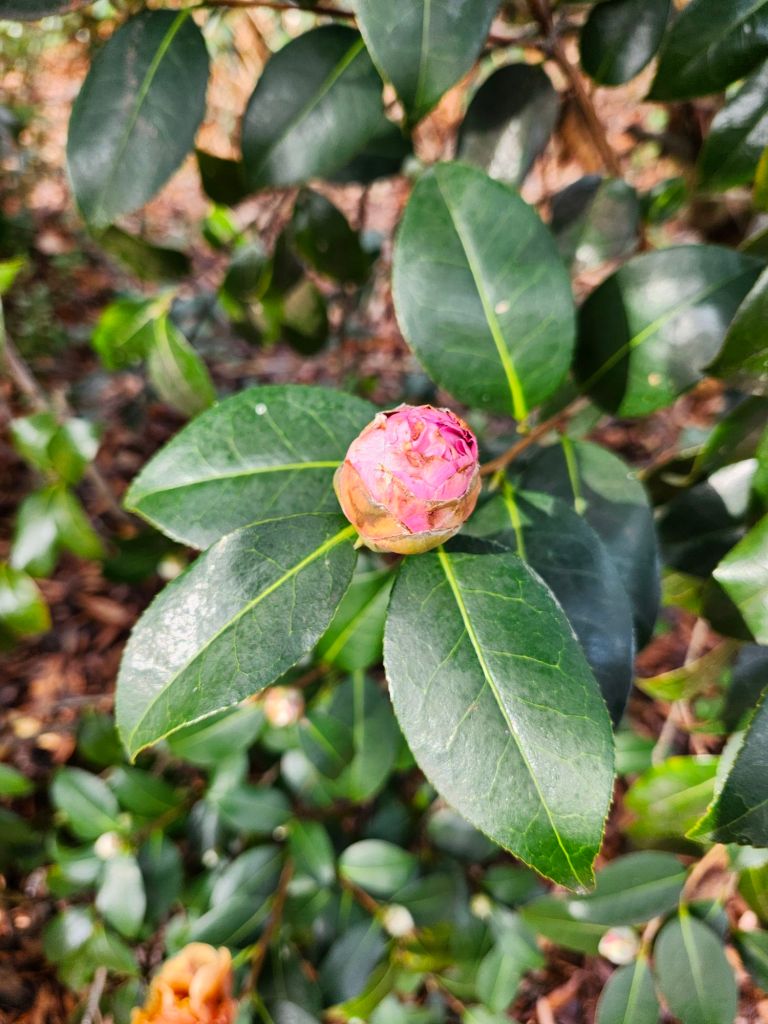
As the garden has grown around it, a ‘Stellar Pink’ dogwood has declined, losing lower branches first, but now deteriorating in health. Its few flowers that peek through the dense canopy are far overhead, so I will consider alternatives before removing this old favorite.
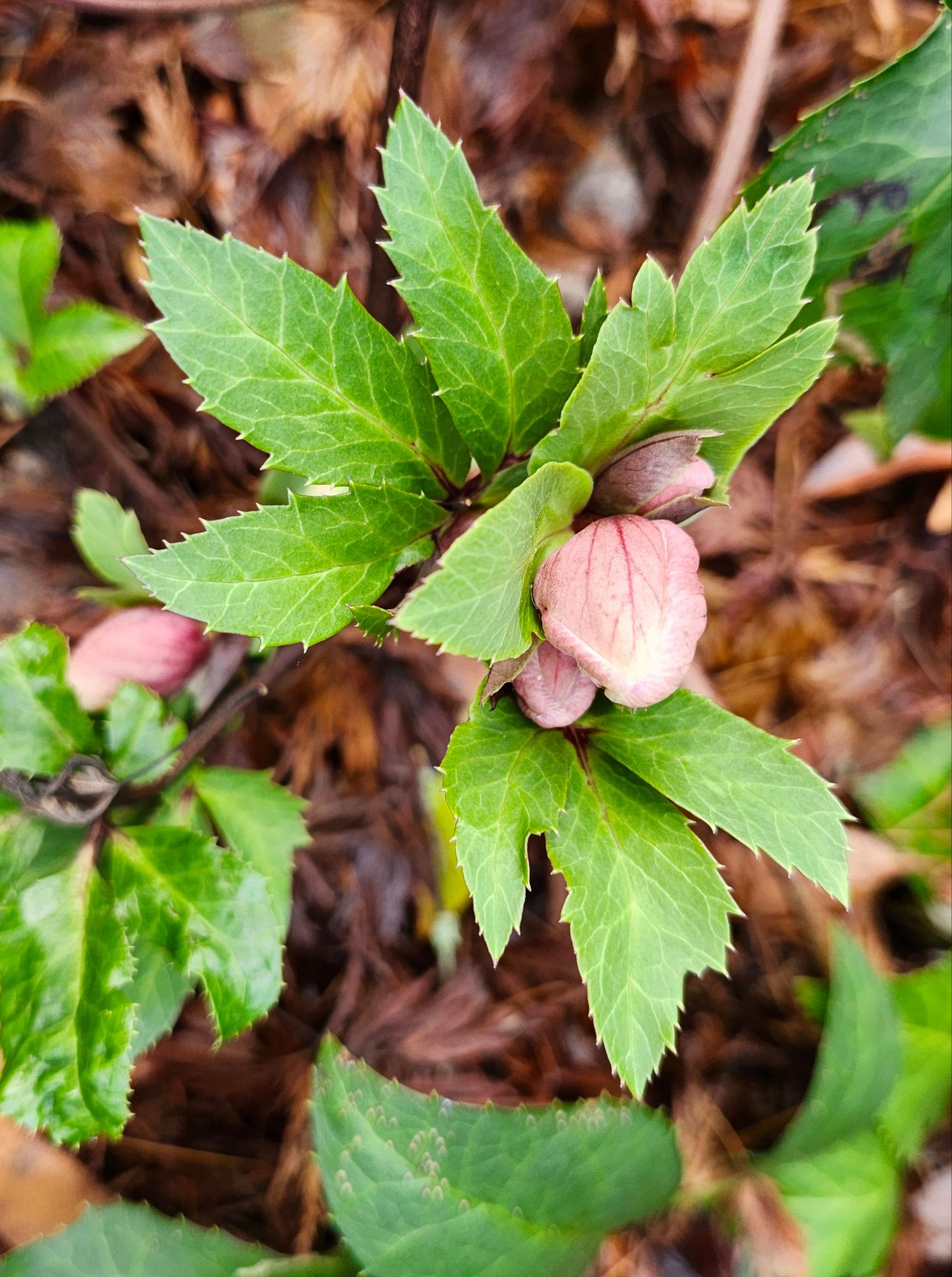
In fact, the flowers of ‘Stellar Pink’ rarely display more than a slight blush of pink, but the blooms are large and once were plentiful. In this shaded space, much beneath the canopy of the huge bigleaf magnolia (Magnolia macrophylla), a variegated leaf, small tree seems a good choice, but the next few months give plenty of time for consideration.
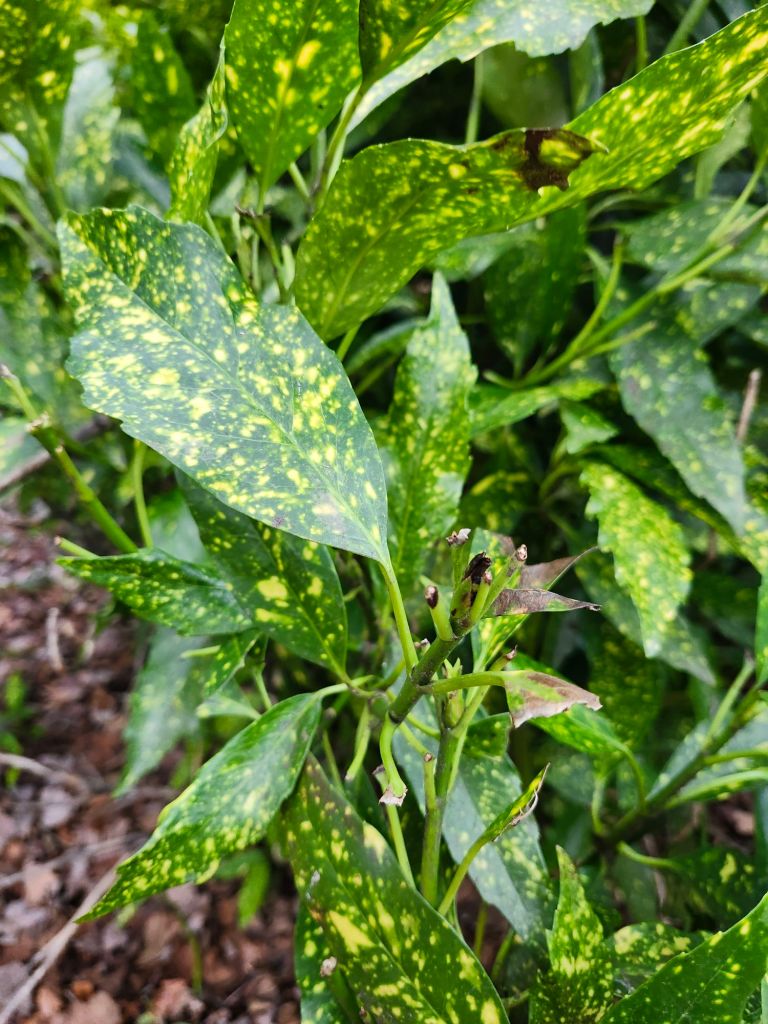
I see that deer have nibbled leaves of several Japanese aucubas (Aucuba japonica, above) and the evergreen dogwood (Cornus elliptica). I believe all were sprayed with repellent in November, and while I expected this to be effective through the winter, I’ll have to spray again on a day when rain is not expected. Both evergreens are not typically favored by deer, but at the time when there is little broadleaf foliage, they have few alternatives.
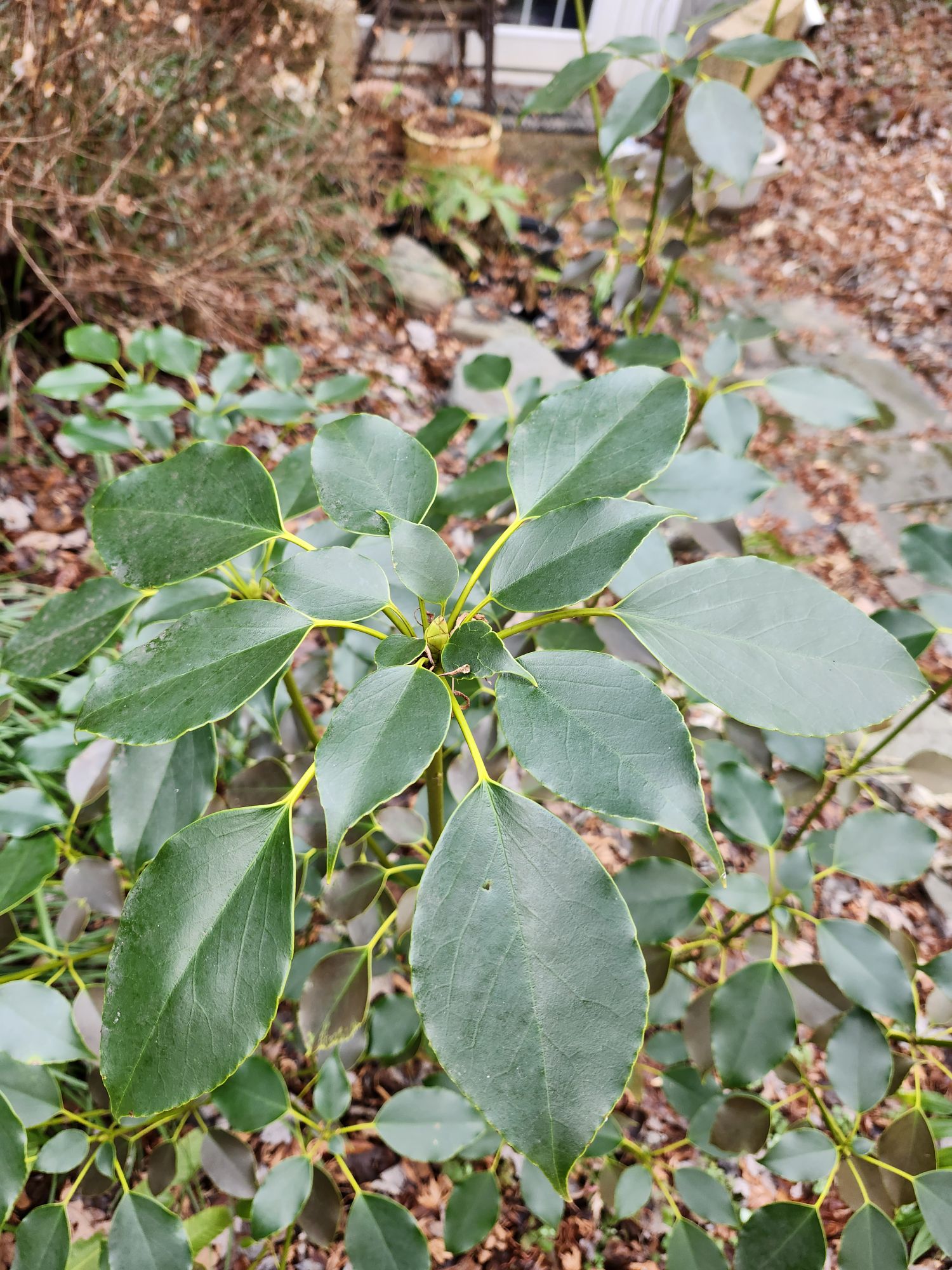
More importantly, if the effectiveness of the repellent is waning, I must spray the wheel tree (Trochodendron arailiodes, above). A year ago, the previous year’s growth was munched, so flowers were lost on the slow growing tree. Today, there are fat buds and evergreen leaves to entice deer, so I must protect it if there’s any hope for it to grow to substantial size while I’m still here.
 Ramblin' through Dave's Garden