The pristine cover of snow is now interrupted by many footprints, some mine as I walked the garden to dislodge heavy accumulations from arching branches, but also from deer prospecting for their next meal. I’ve recently become aware that the double strength, November application of deer repellent that typically carries through until spring was waning in effectiveness. Leaves of several Japanese aucubas were munched, so I planned a follow-up. But the freezes hit, then ten inches of snow with continued cold.
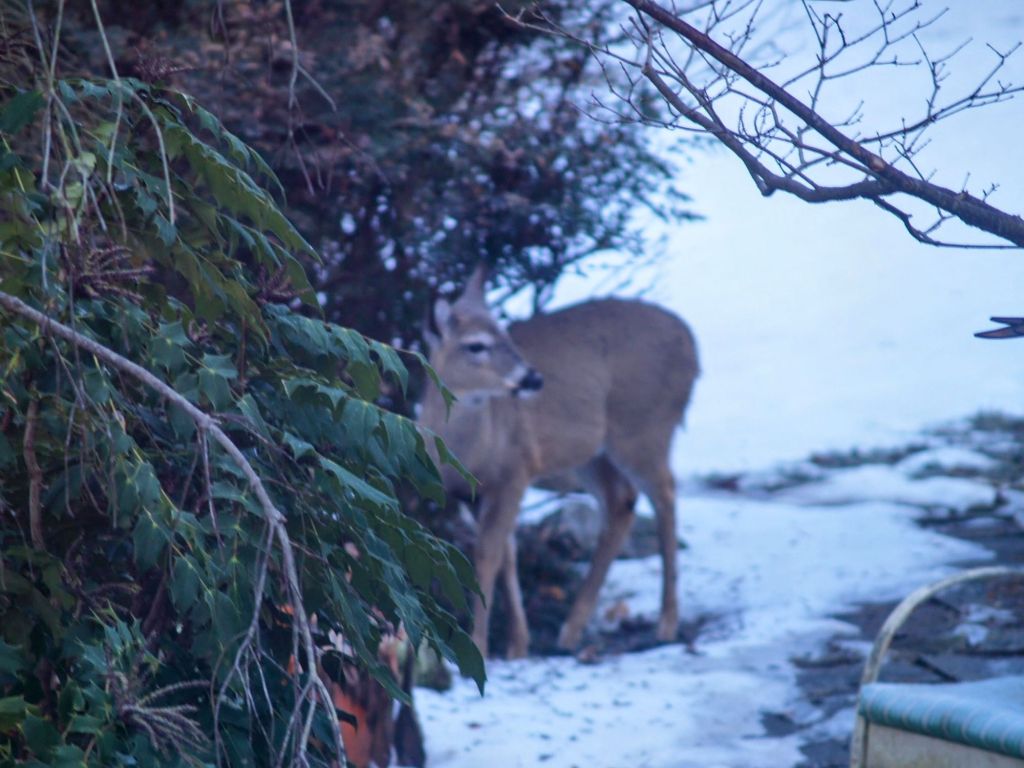
As I nudged camellias in the side garden with a leaf rake to dislodge snow, I saw several lower leaves had been eaten. Behind the camellias, an aucuba was nearly stripped of leaves. Both are evergreens that deer don’t bother for three seasons, but ones that are sprayed for the winter.
Later in the afternoon, stretched out on the couch enjoying the sunshine while reading in the sunroom, I was distracted by objects larger than the many birds feasting at our feeder. I looked up to see three deer at the garden’s edge, and as I stood, the three froze in place, looking in my direction.
Immediately, I looked just below the window for the wheel tree (Trochodendron arailiodes) with branch tips nibbled a year ago, so that it had no flowers this past spring. Happily, deer hadn’t munched it yet, but I could see tracks that passed nearby. So, despite temperatures that might not rise above freezing for several days, I sprayed the repellent. I don’t know if it will stick in subfreezing temperatures, but I had to try.
In recent years, the garden’s ponds haven’t frozen for more than a day or two with each period of cold, so I haven’t worried about running the recirculating pumps to keep open water for the birds. But this year, the cold has persisted, and with a forecast of extended cold, I turned the pump in the pond below the sunroom back on. It runs at little more than a trickle, but this is enough to keep a few small areas of open water. And, birds visit these regularly.
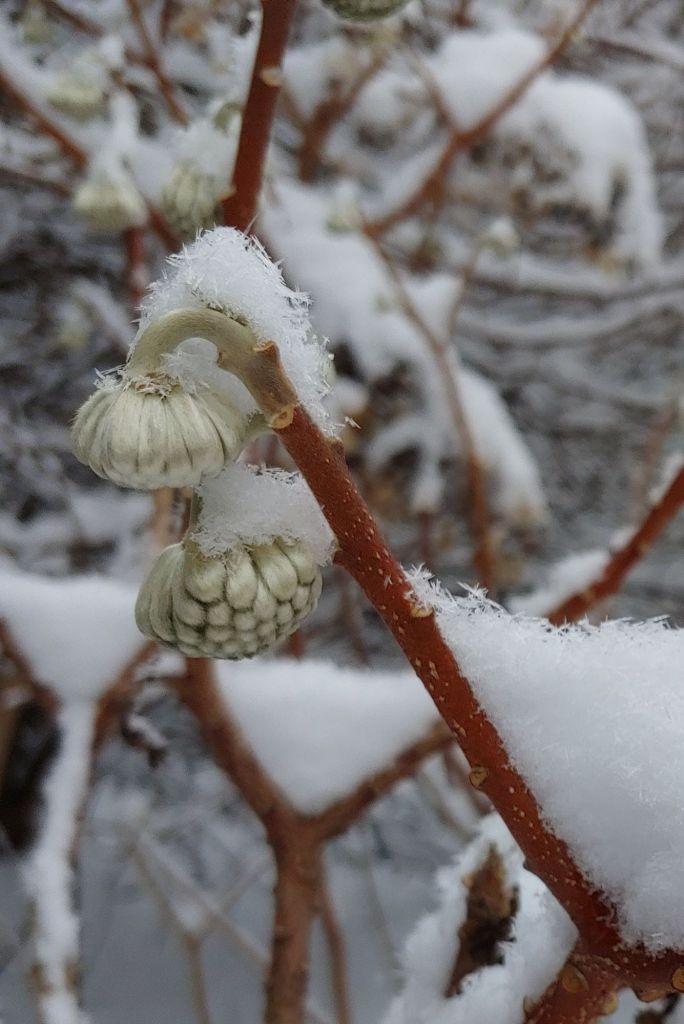
Single digit temperatures come and go from the week’s forecast, but with lows possibly falling to five degrees (Fahrenheit), there’s not much to be concerned about. A few marginally cold hardy plants (fatsia, schefflera, and cleyera) are half covered by insulating snow, and if temperatures slip below five, there can be damage to flower buds of paperbushes (Edgeworthia chrysantha, above). But, a drop this low seems unlikely, and there’s not a thing I can do to cover paperbushes twenty feet across.
The snowdrops flowering along the front walk are buried in the snow. It could be weeks before hellebores and snowdrops poke above the melting snow on this shaded side of the garden. An all-day rain would do the trick, but with cold temperatures forecast for January, that would turn out to be deep snow.
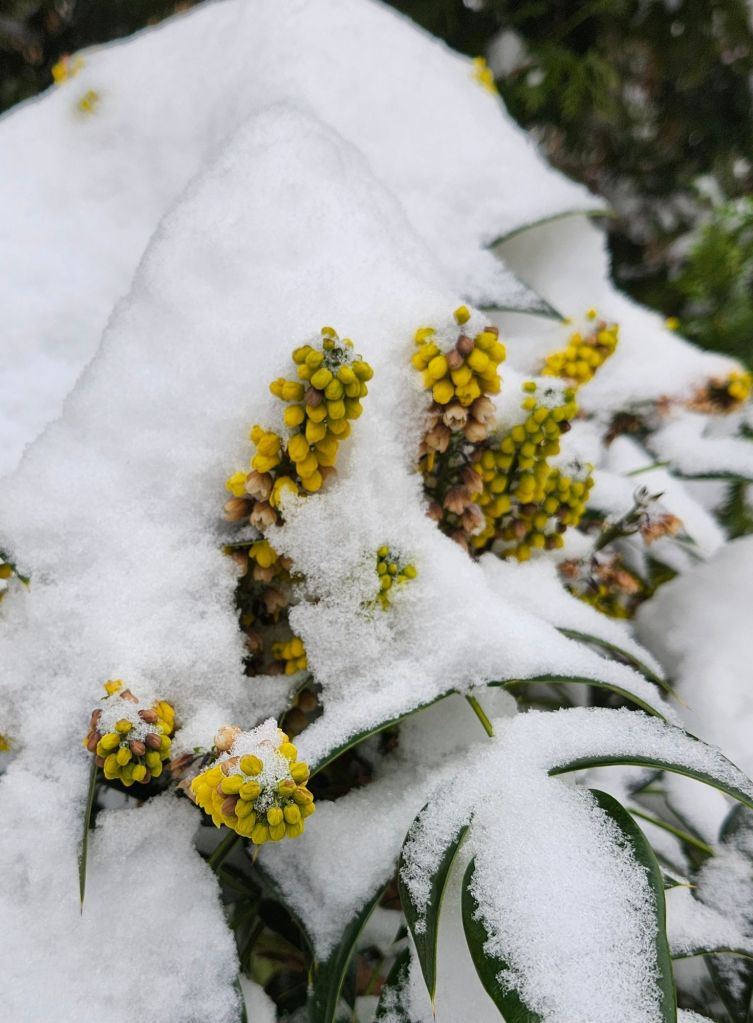
Flowers of the mahonias (Mahonia Marvel, above) are in varying stages of decline, though the brilliant yellow continues to stand out despite the bright sun and snowy white backdrop. With cold weather, I expect flowers will persist late into January. Occasionally, flowers of the late autumn blooming hybrids intersect with the earliest flowers of the late winter blooming leatherleaf mahonia (Mahonia bealei). This appears to be a possibility this winter.
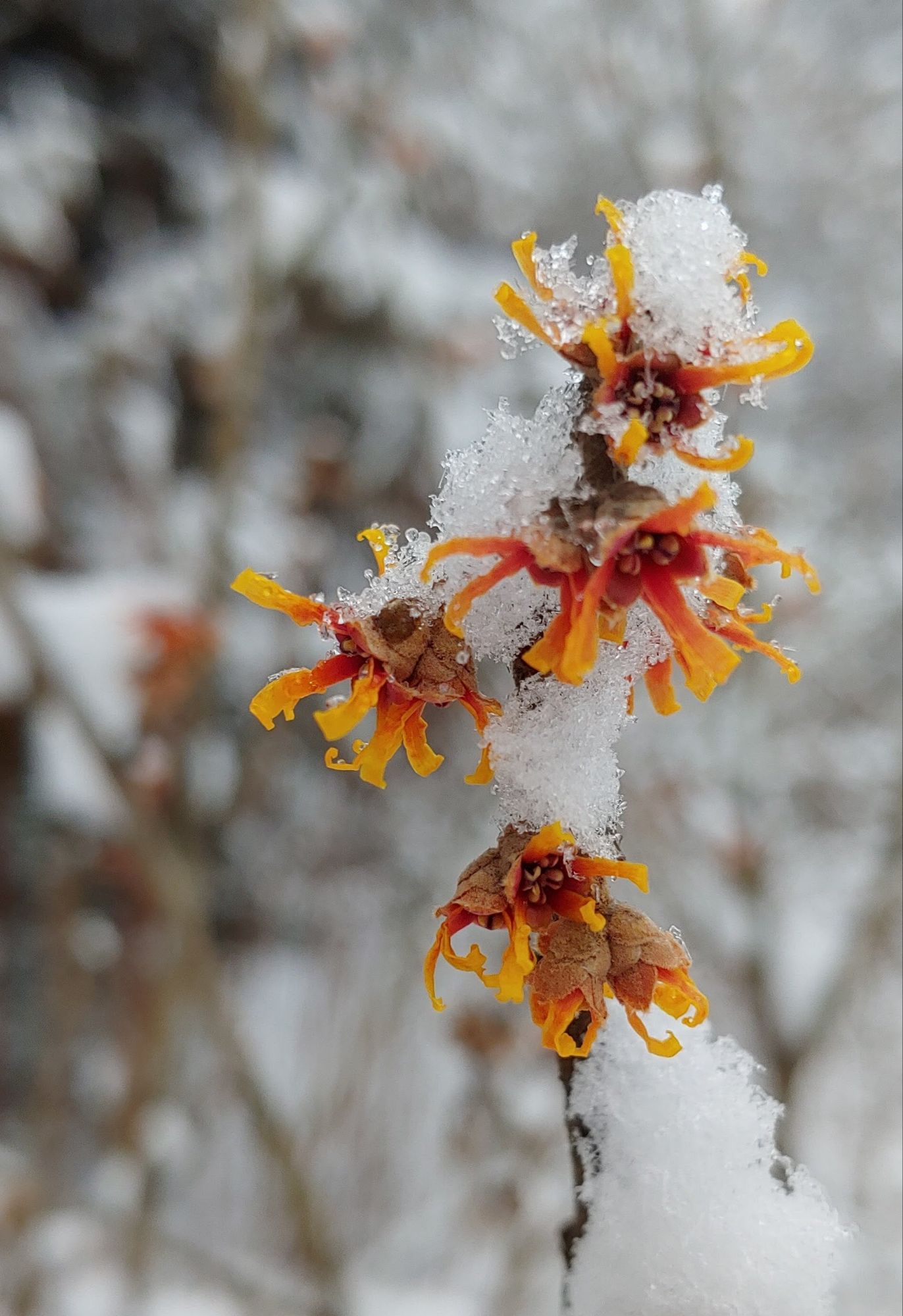
While flowers of Ozark witch hazels (Hamamelis vernalis, above) are not injured in our cold, the blooms curl inward for protection. Perhaps with slightly milder temperatures next week, the flowers will become more prominent.
 Ramblin' through Dave's Garden