A chilly January and a cover of snow have delayed flowering that is anxiously monitored in winter’s closing weeks. No doubt, more cold will follow this welcome spell of mild temperatures, but now I anticipate one favorite bloom after another until spring’s arrival.
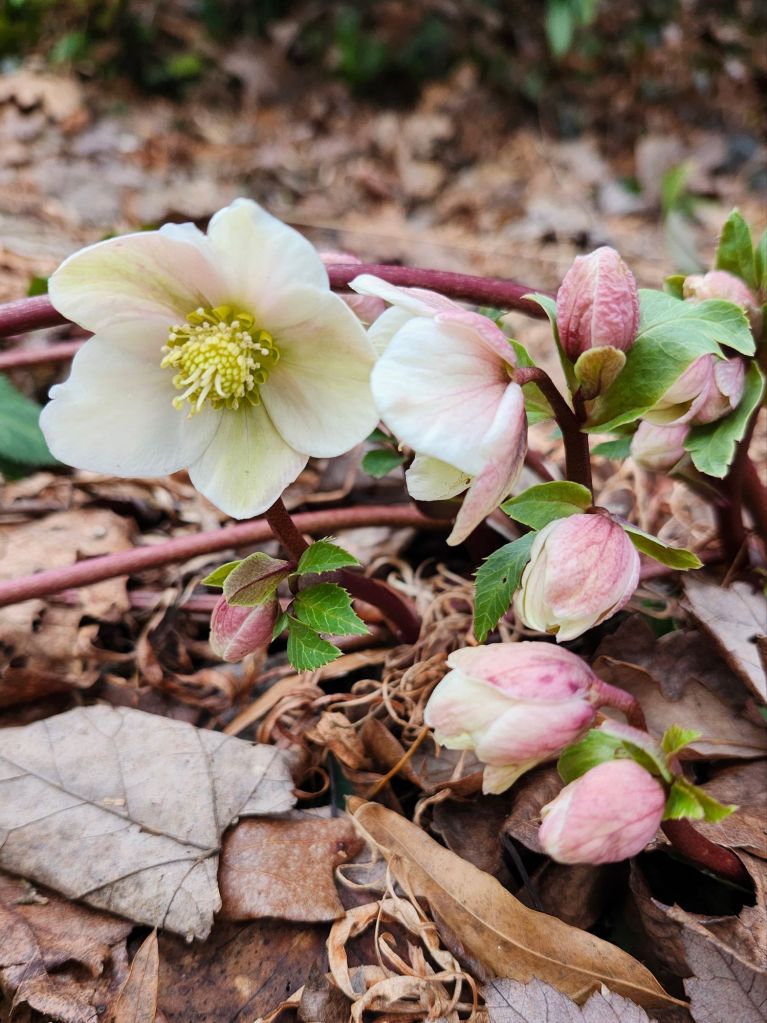
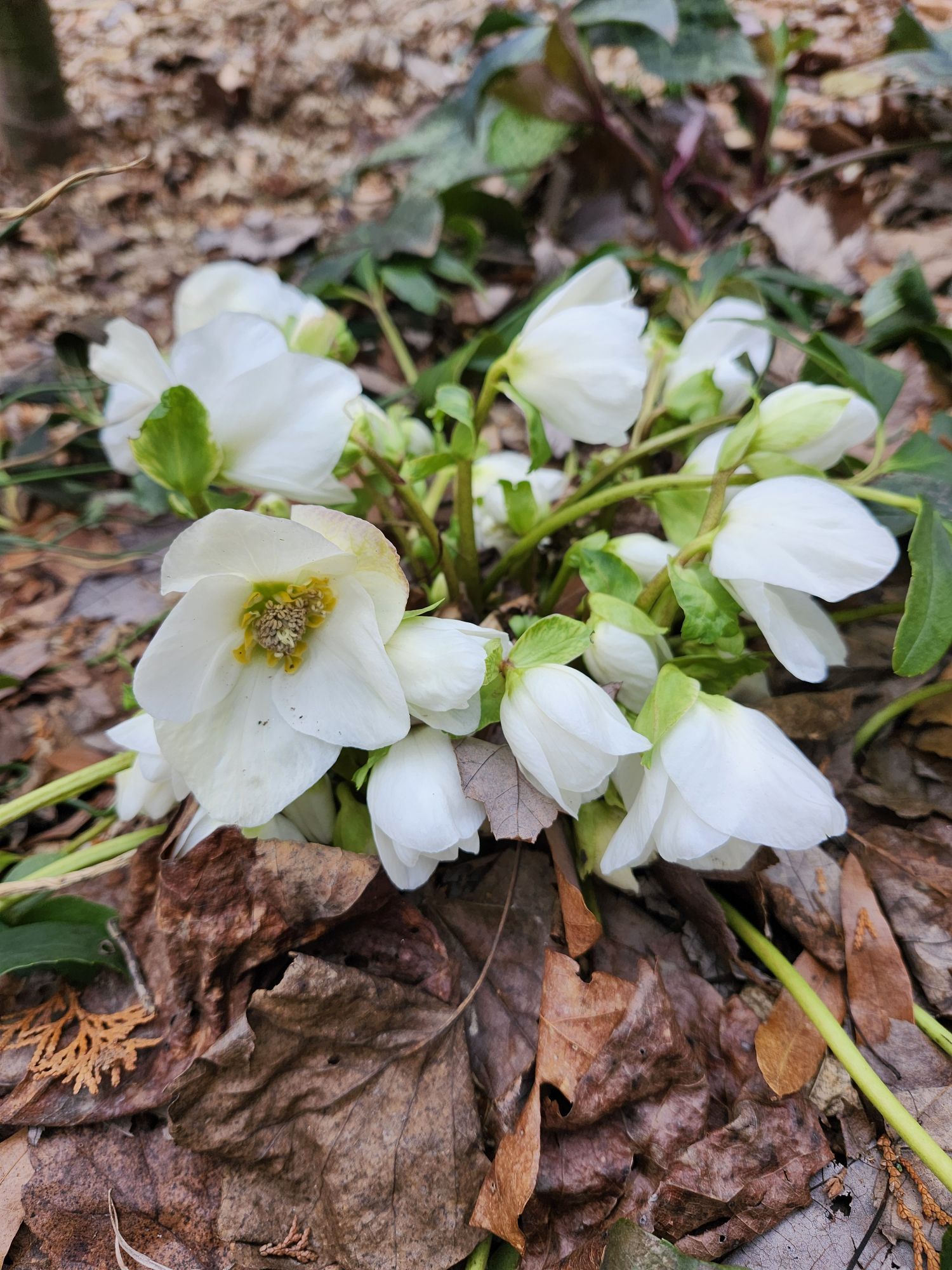
I haven’t a clue how many hellebores are in the garden, but if seedlings are counted, it’s hundreds. Many are too young to flower, but there are more than enough flowering now that the snow has melted with dozens more that will soon begin. One Christmas rose (Helleborus niger, below) did not flower along with others in December, so it popped open hours after emerging from the snow.
While flowering of the Ozark witch hazels (Hamamelis vernalis, below) began weeks ago, the spidery flowers remained tightly curled for protection from cold temperatures for much of the past month. I expect that none were pollinated during this period, so blooms might stick around a few weeks longer to join Asian hybrids (Hamamelis x intermedia) with buds that are beginning to crack open.
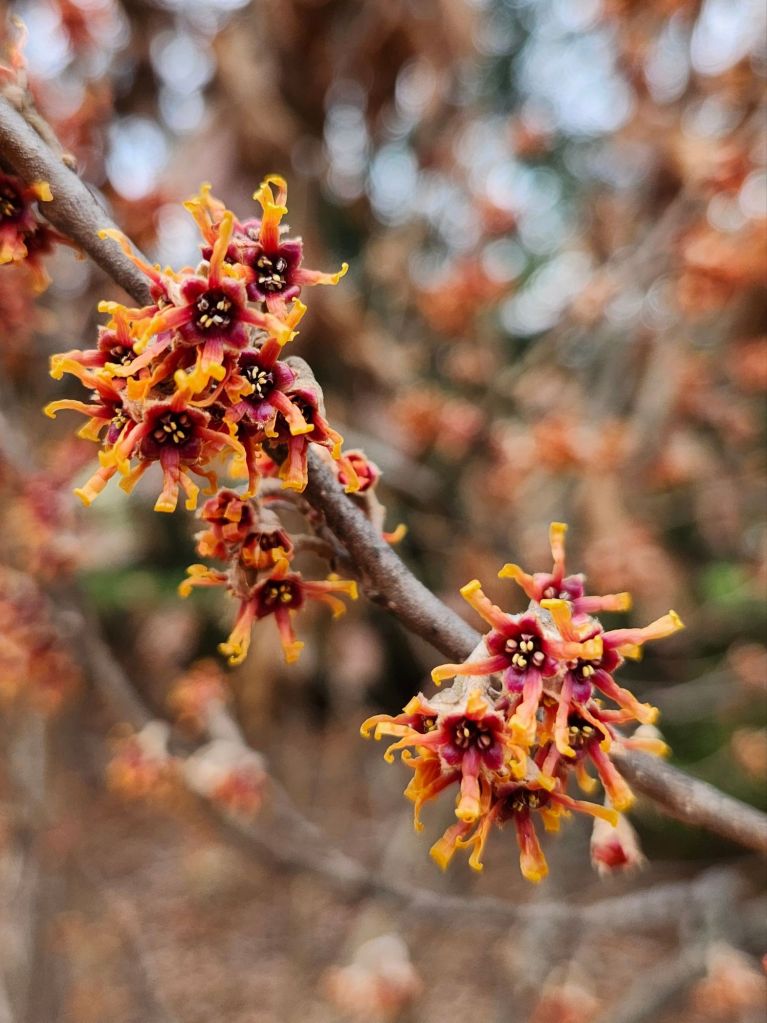
With my colorblindness, the red flowered ‘Diane’ and coppery-orange ‘Jelena’ hardly stand out without close inspection, so the bright yellow ‘Arnold Promise’ is the largest and clear favorite. This ‘Arnold’ replaced another nearby that perished in saturated ground after an unusually wet year. Fortunately, while the new location in the lower rear garden is at least slightly damp, the tall witch hazel has flourished.
I am pleased that ‘Diane’ and ‘Jelena’ are moderately budded since the garden has become more shaded in recent years. In my dreams of bulldozing the neighbors’ homes to expand the garden, I would gleefully add many more witch hazels that could grow in sunny spots.
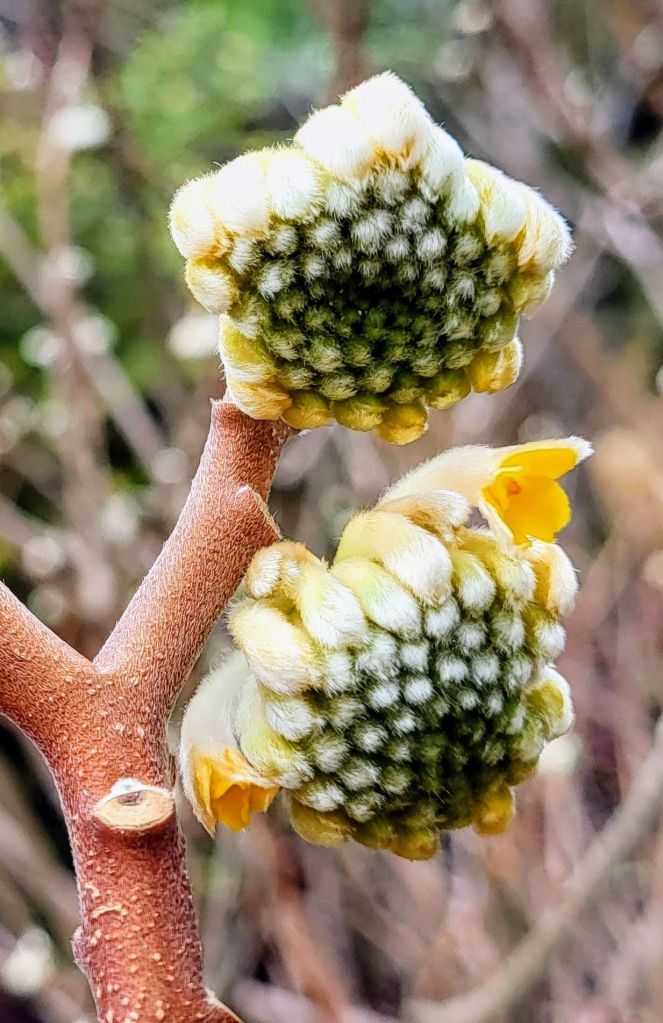
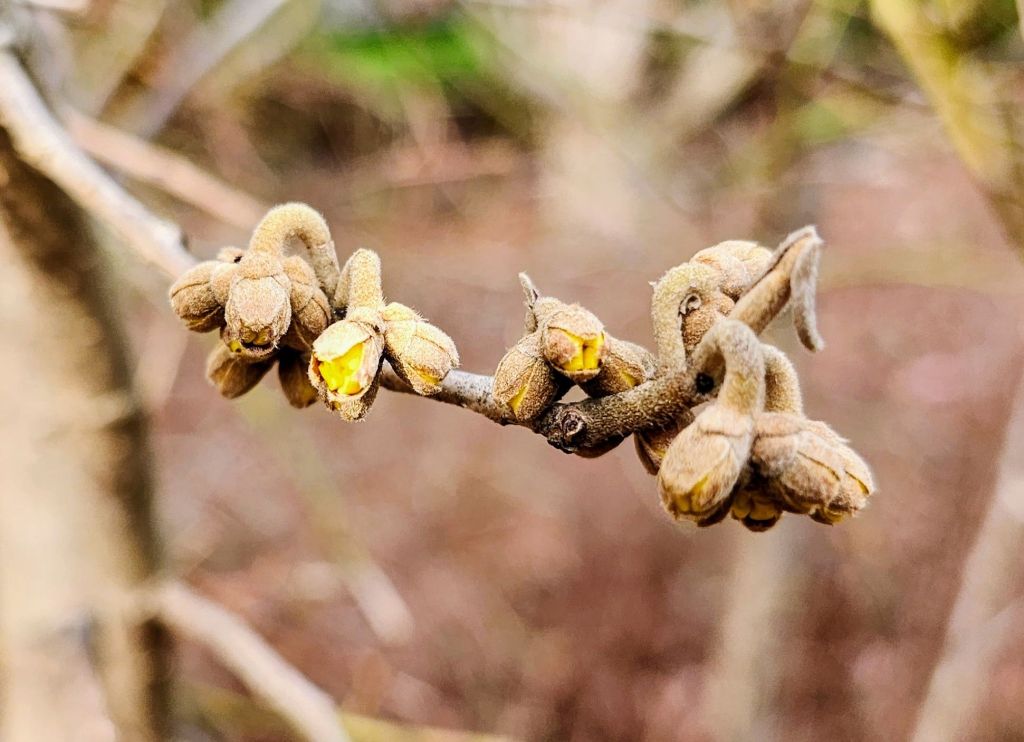
The paperbushes (Edgeworthia chrysantha, above) have flowered in late January in recent mild winters, but typically, the first glimpse of the yellow tipped flowers comes in early February. Perhaps this brief period of warmth will accelerate swelling of buds, but flowering is likely to be delayed by a week or more.
I’m told that the daphne related paperbushes are strongly scented, but in addition to colorblindness, my sense of smell is also deficient. A week ago, I feared that flower buds would be damaged by temperatures that dropped to three degrees (Fahrenheit), but all appear undamaged, so I’ll watch daily for the first color.
 Ramblin' through Dave's Garden