The garden is getting close. A year ago, this point was reached by early February, but a colder and snowier winter has delayed flowering by weeks. But we’re almost there.

In milder winters, there will be short periods of bloom with holdover buds from autumn flowering and spring flowering camellias. The flowers are typically ruined by the next twenty degree night (Fahrenheit), but today, there are numerous browned buds that swelled but stopped short of opening.
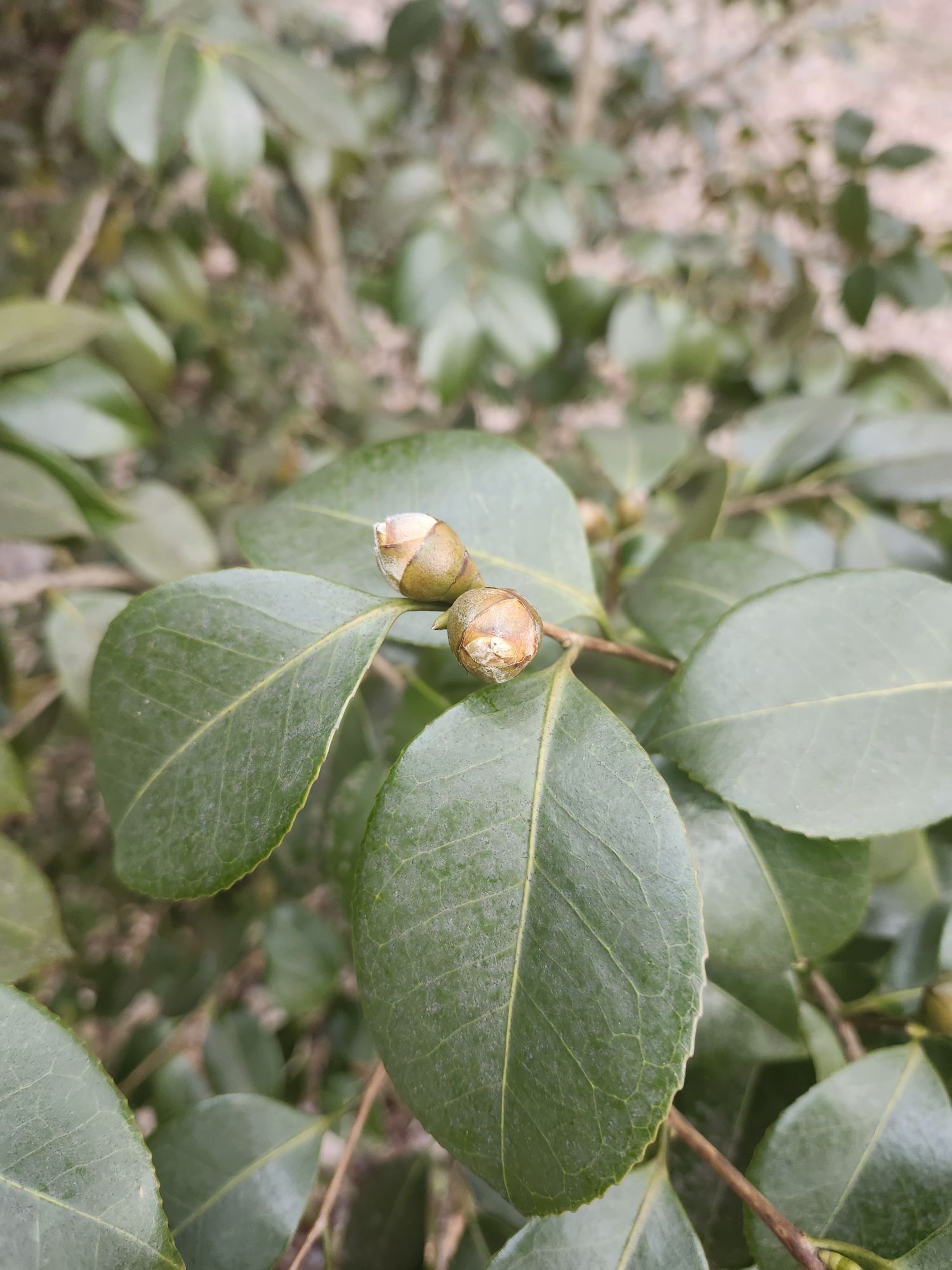
Viable buds of spring flowering camellias are swelling noticeably (above), so I expect some will open in the next week. Two shaded autumn flowering camellias are typically late to bloom, and occasionally, these flower in March. There are plenty of buds, but I’m uncertain if they’re damaged, which is often the case when their buds last until spring.
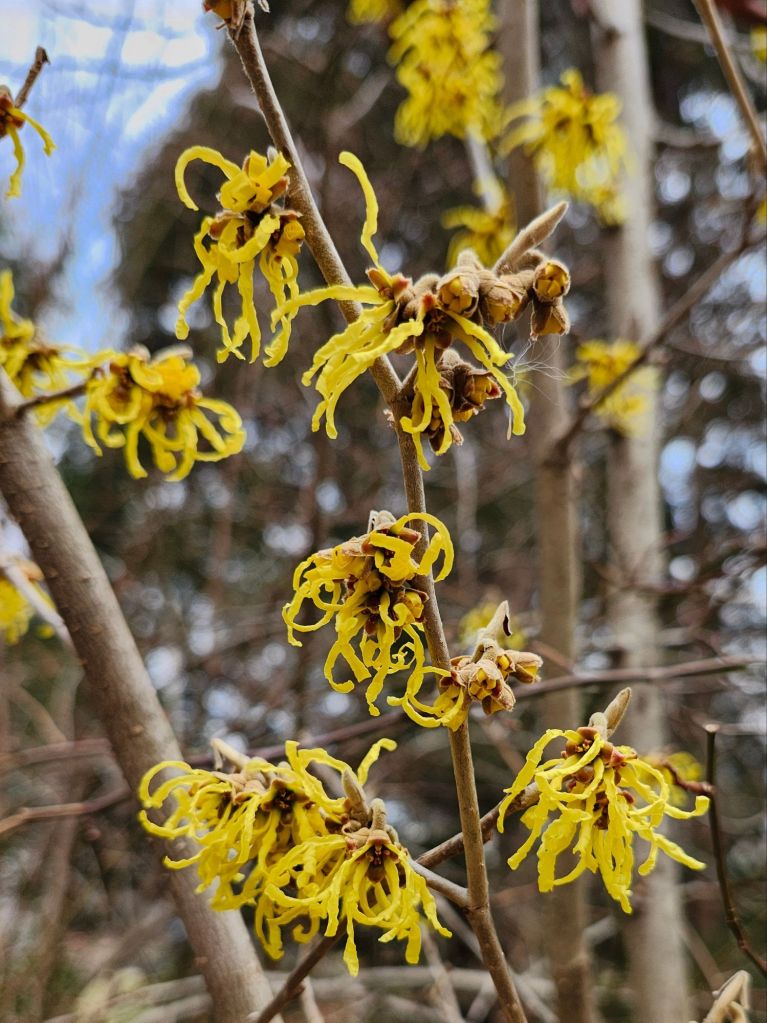
The Asian hybrid ‘Arnold Promise’ witch hazels (Hamamelis x intermedia ‘Arnold Promise’, above) have burst into flower with recent warm temperatures. Their spidery, bright yellow blooms stand out in the dormant garden while I must search close up (with my colorblindness) for flowers of ‘Diane’, ‘Jelena’, and others. I have faint memories of the witch hazels’ pleasant scent on warm afternoons, but it is now rare that I smell any but the strongest scents.
The upright vase form of ‘Arnold’ is particularly well suited to this garden while others are more sprawling. Of course, the Ozark witch hazels (Hamamelis vernalis) also match this form, though they are slightly wider, and all remain in flower from their first bloom the second week of January.

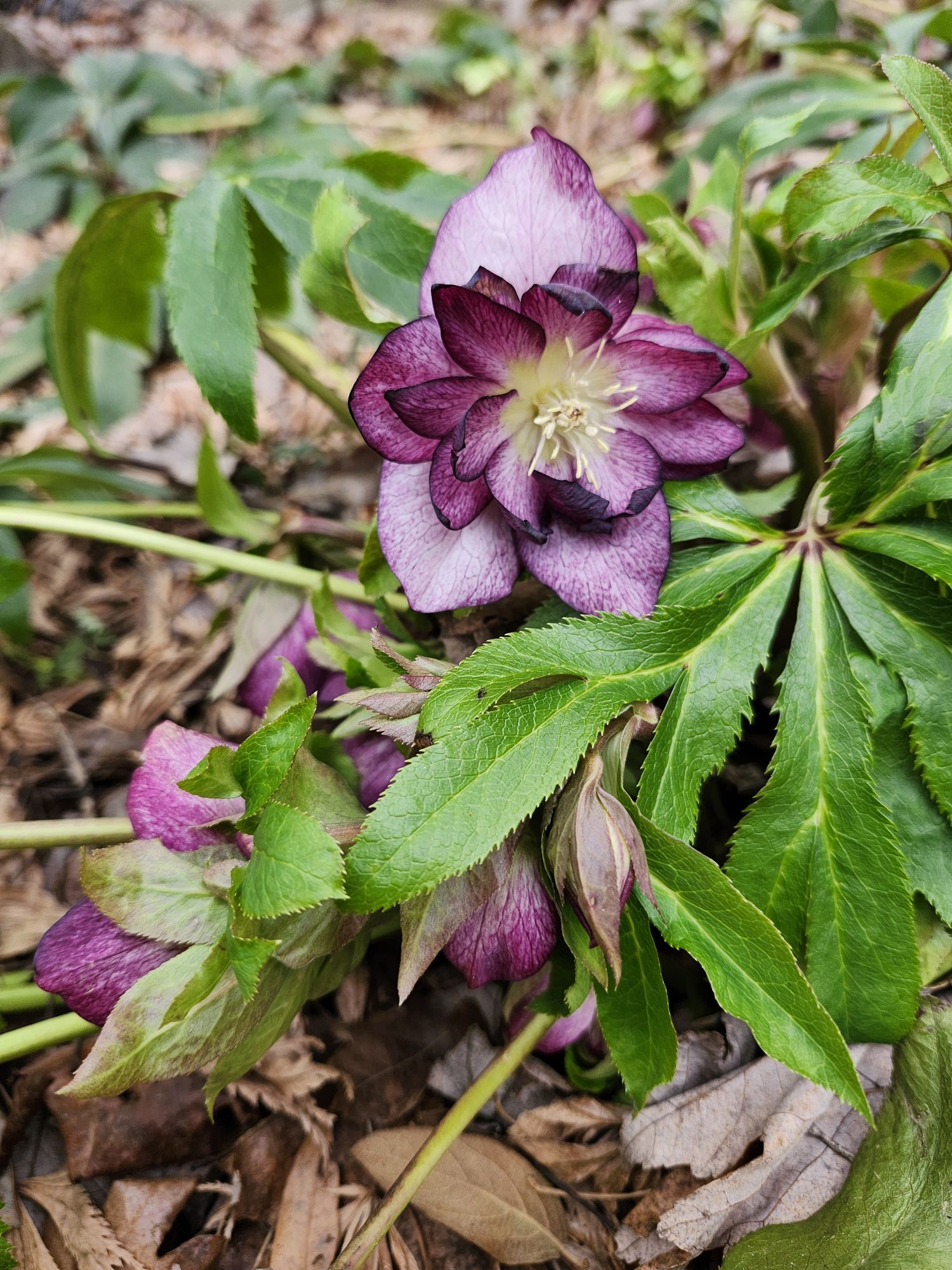
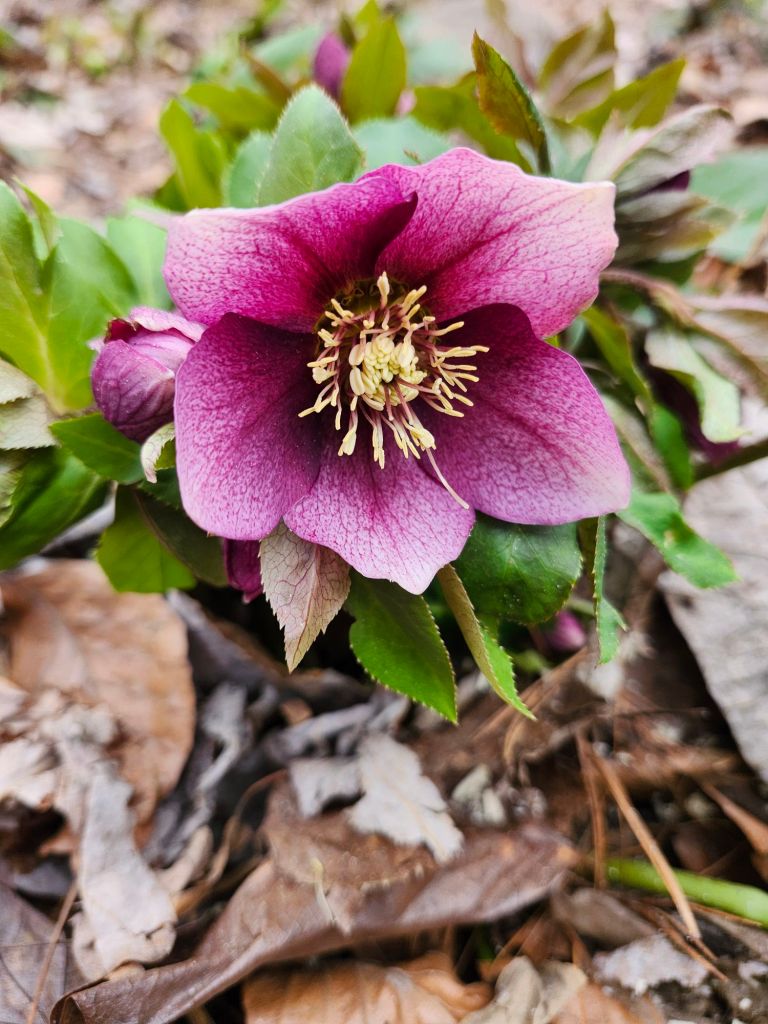
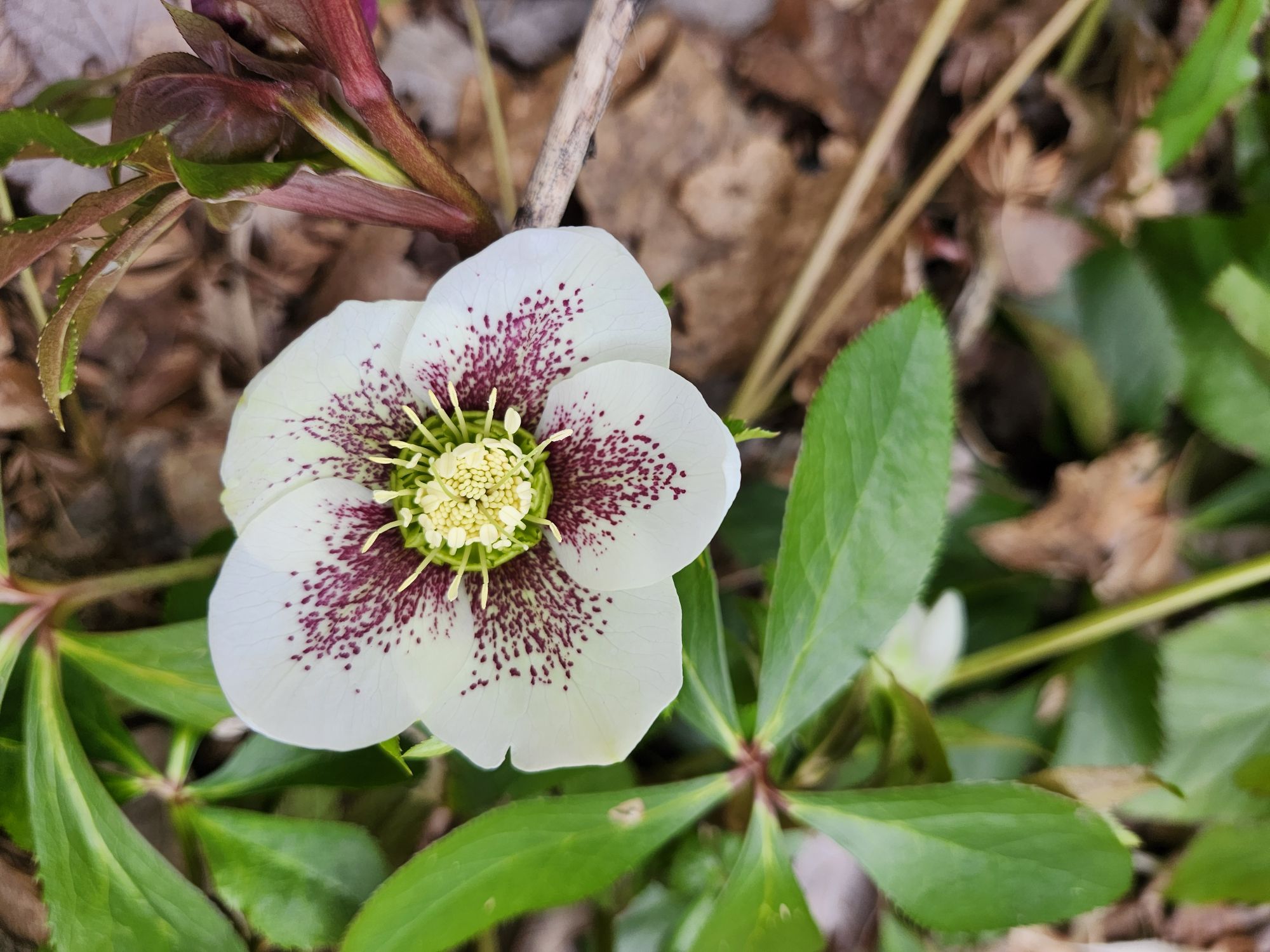
A few weeks after the covering of snow melted, a third of the hellebores (above and below) are flowering with many dozens more showing colorful buds that will soon open. A significant number of the hellebores are seedlings with various colored blooms. Both seedlings and sterile and often expensive hybrids are treasured, and I do not mind the hundreds of seedlings with many that must be weeded out. Handfuls are saved and moved around or given to acquaintances.
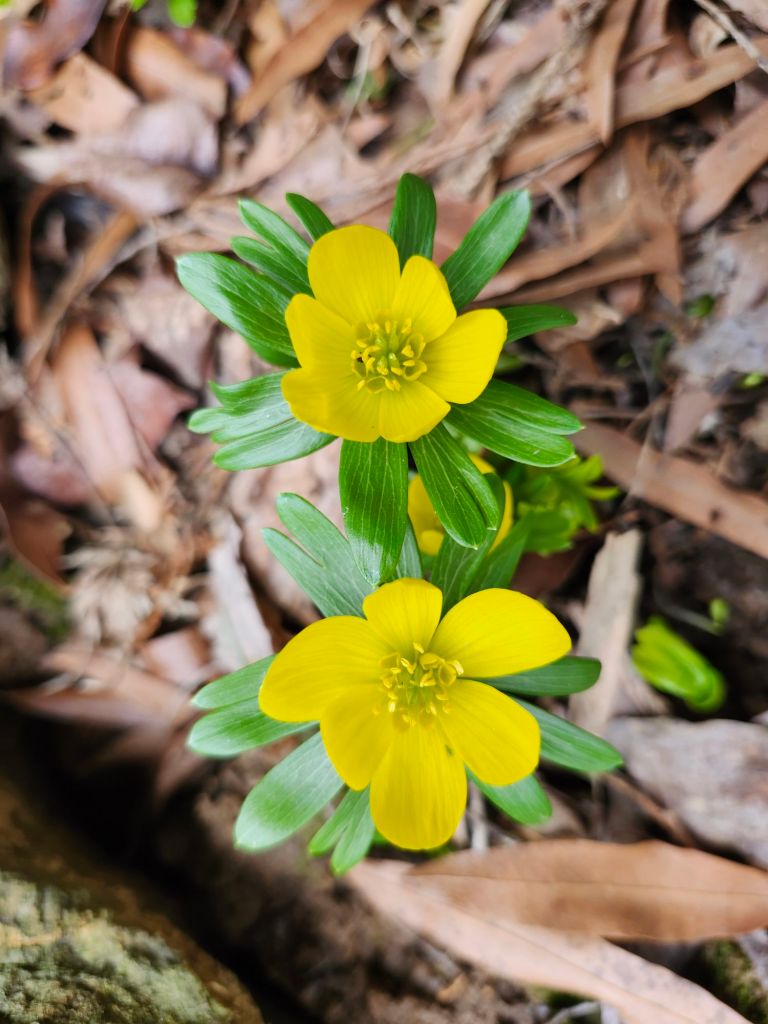
While snowdrops (Galanthus) spread vigorously, I have yet to discover the secret to encourage winter acconites (Eranthis). Instead of spreading, a small patch along the front walk has perished, and a second group in the back refuses to spread further. Bulbs are generally foolproof, so I am mystified by this failure.
 Ramblin' through Dave's Garden
Your hellebores are beautiful! I’ve had no luck with snowdrops or aconites, alas. It may be too hot for them in my location (Georgia).
I enjoy my small groups of winter aconites, but I’m happy to plant other bulbs rather than losing this fight.