After thirty-six years in this garden, I long ago ceased being surprised when a plant declines and eventually must be replaced. Here, the reason for decline is most often due to increasing shade as the many Japanese maples, dogwoods, and redbuds (and others) increase in size.
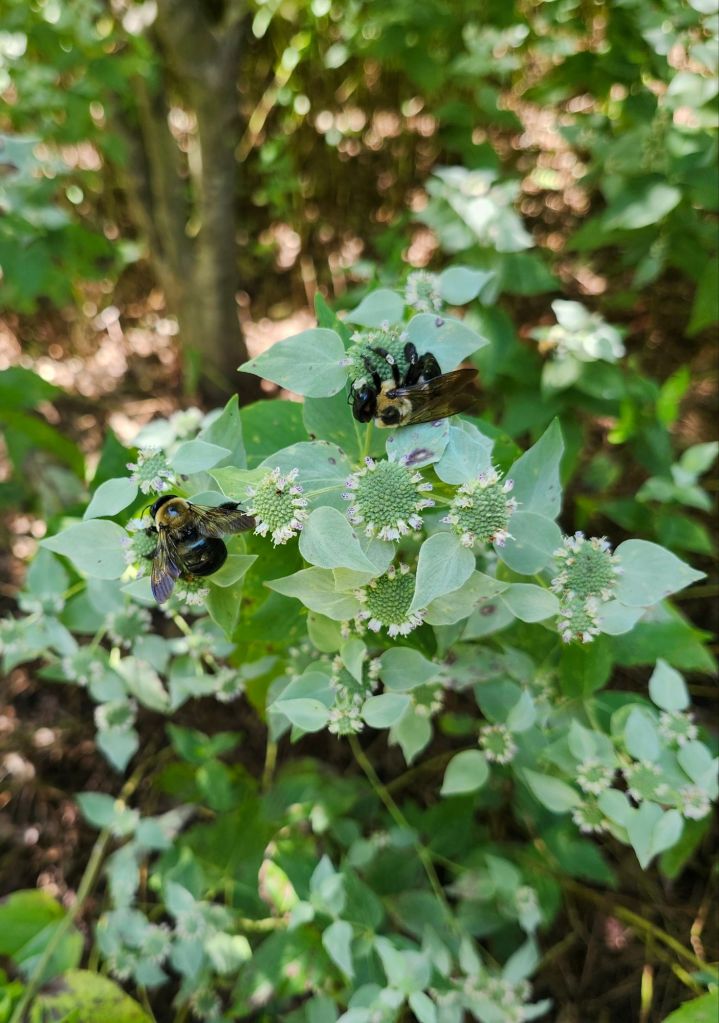
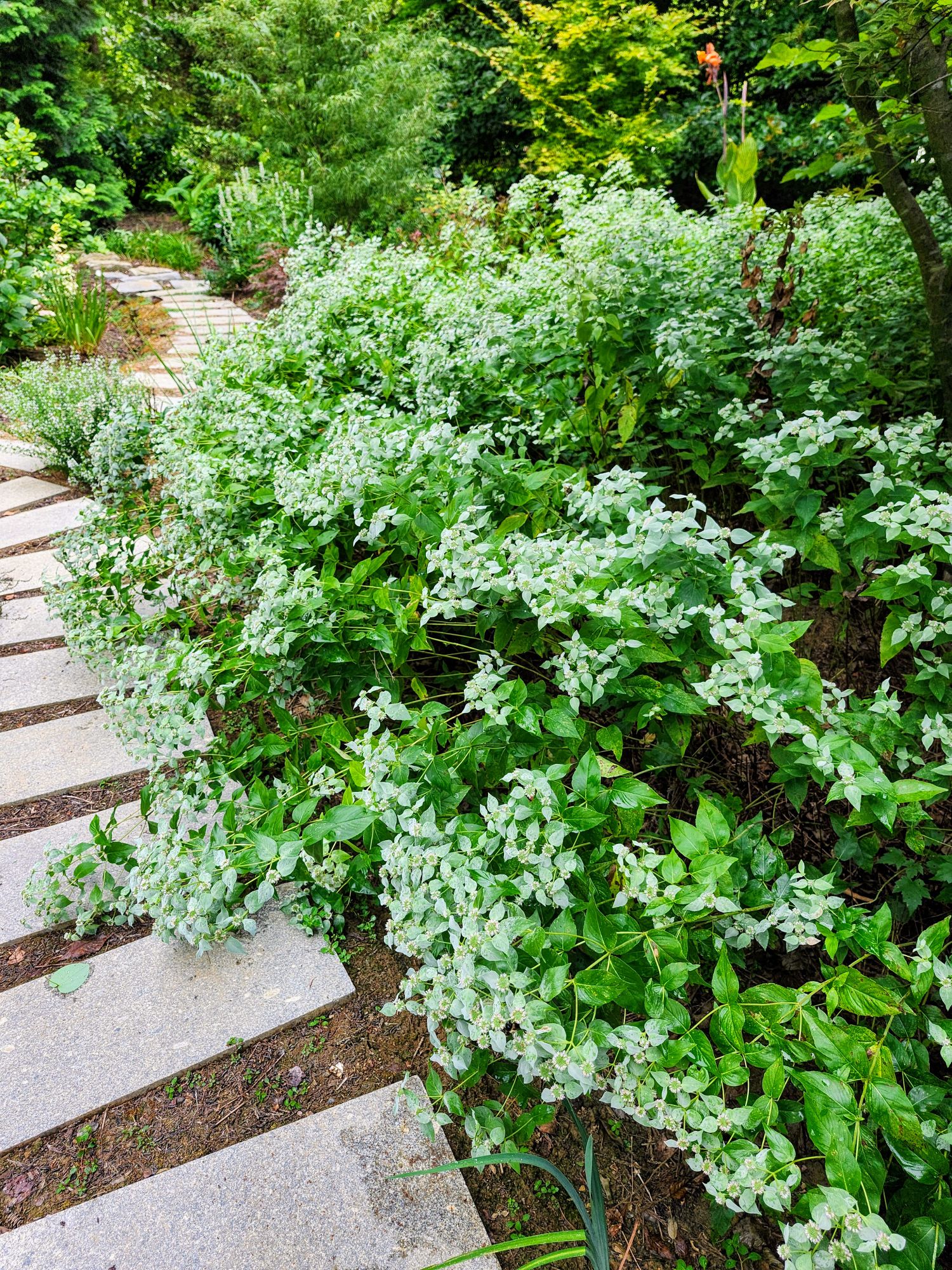
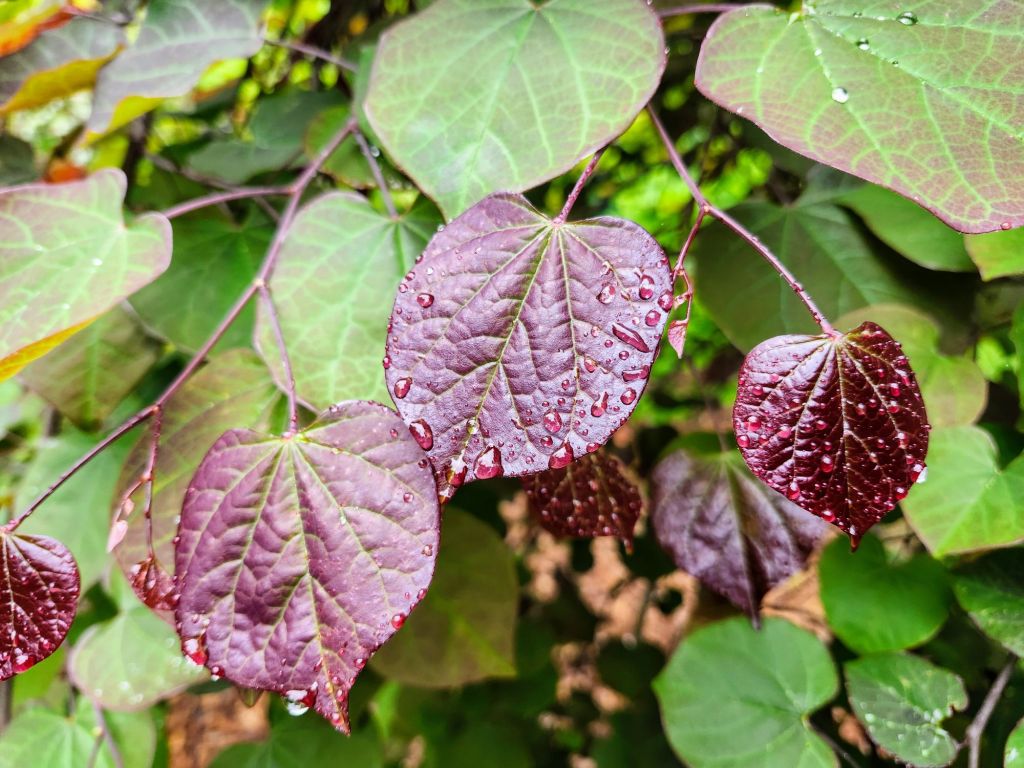
In rare cases, I’ll prune tree branches to allow more sunlight, but mostly, I stand back and enjoy the natural progression. Today, while growth is just beginning on the garden’s perennials, I notice the decline of a shaded portion of the mountain mint (Pycnanthemum muticum, above) in the damp, rear garden. The original area where the mountain mint was planted has become overshadowed by a large katsura (Katsura japonica), two Japanese maples (Acer palmatum), and a redbud seedling (Cercis canadensis, below) from a ‘Forest Pansy’ that perished years ago in the damp ground. The redbud does not share its parent’s colorful foliage, but with a growing collection of redbuds, I haven’t the heart to cull it out.
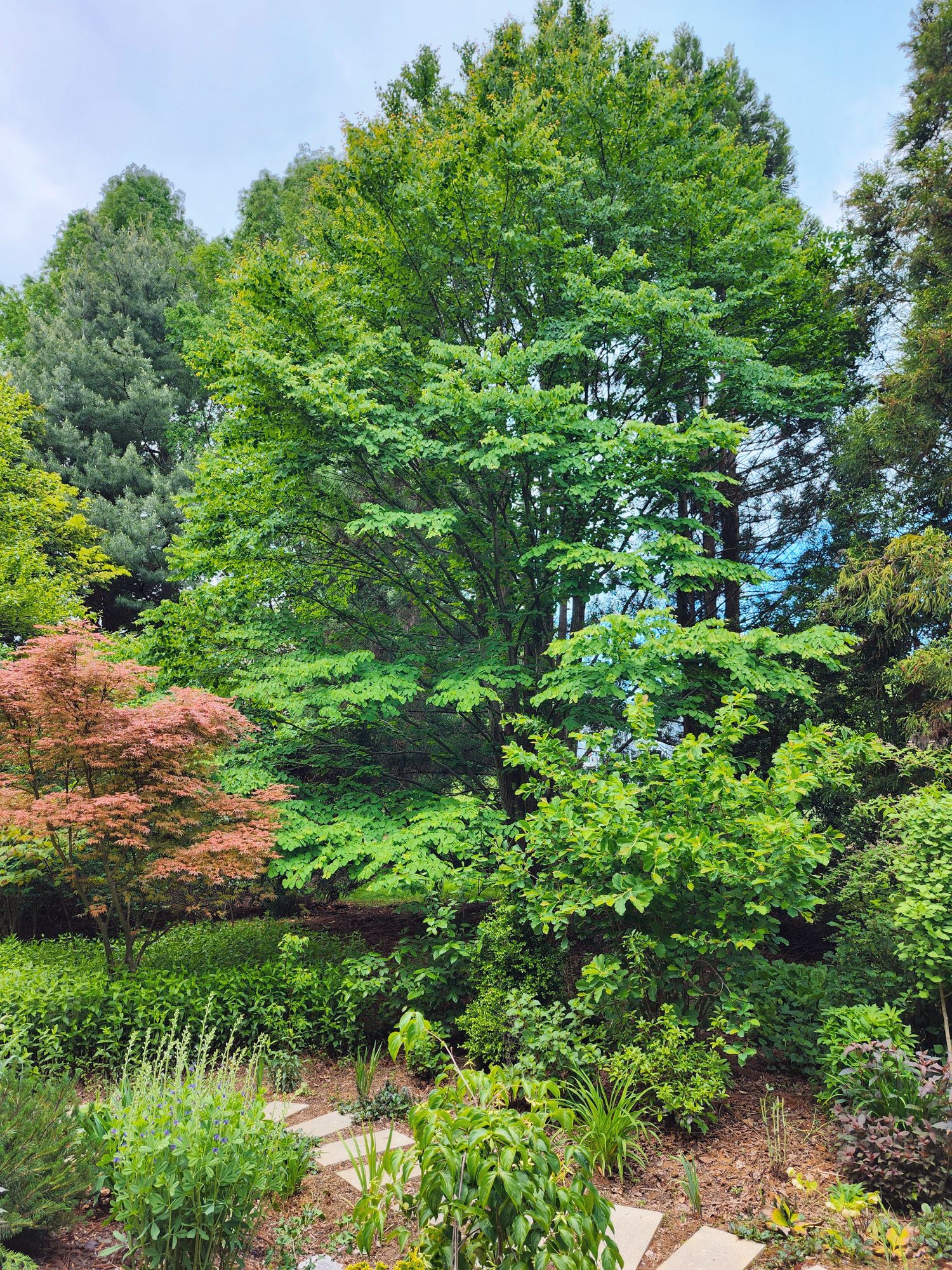
Fortunately, the mountain mint clump has forged ahead into sunnier spaces, and while its spread is easily controlled if it encroaches on neighbors, I’m pleased that a substantial colony remains. The fading remnants of the original mountain mints are still visible beneath the low tree canopy, so I will transplant small Ostrich ferns that continue to pop up since a large colony was removed in the upper rear garden a few years ago.
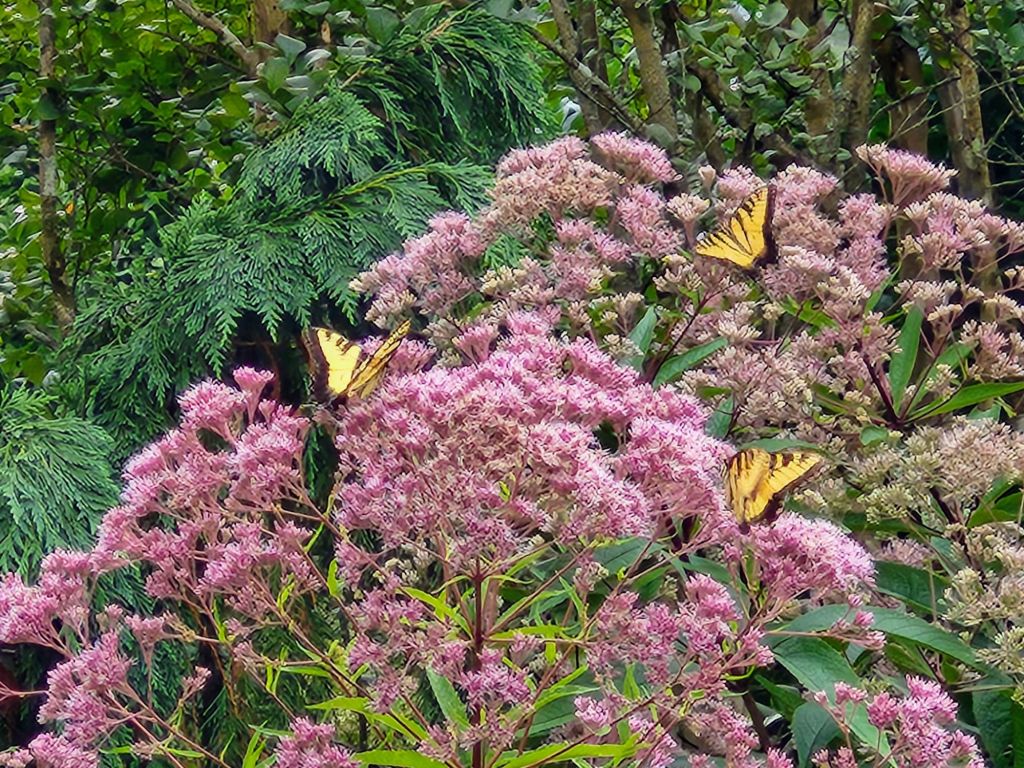
Mountain mint is the favored flower for pollinating insects in midsummer. While butterflies visit the earliest flowers, they move on to more peaceful blooms of Joe Pye weeds (Eutrochium purpureum, formerly Eupatorium, above) when the weeks of peak bloom attract abundant bees and hoverflies.
This garden is a mix of natives and non-natives, and over the years, it has become a haven for wildlife. Some plants are valued for their beauty and others for their value to pollinators. Mountain mint and Joe Pye are attractive, but both are treasured for their value to pollinators.
 Ramblin' through Dave's Garden