Recurring acts of negligence in previous months too often result in today’s disappointment. I long ago lost my excitement for blooms of the common evergreen azaleas, so I am not overly bothered by the sparcity of flowers as deer nibbled lower branch tips over the winter months. Still, a more regular spray routine with the repellent would have saved many blooms. I will be more vigilant in the future.
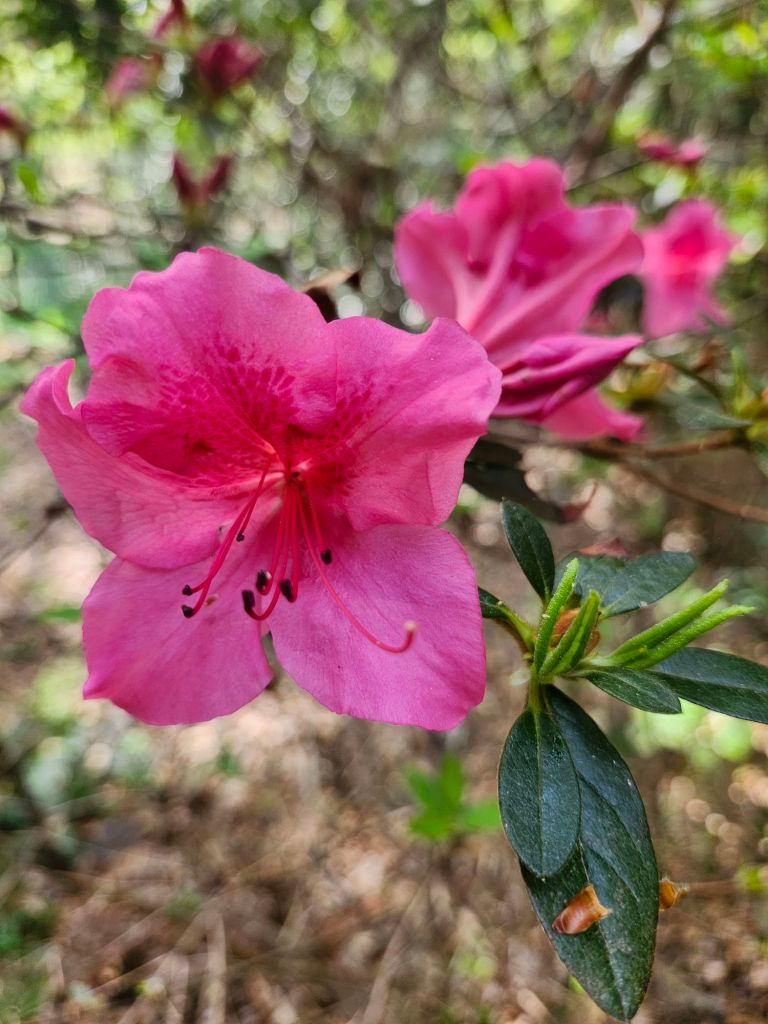
In most winters, damage to azaleas is scattered and hardly a problem, and thus, the root of my neglect. But this year, deer were an inordinate issue. Several evergreens were stripped of foliage and bark rubbed from handfuls of shrubs and young trees. Most will recover quickly, but a few Japanese maples lost primary branches, and spring flowers of azaleas were lost as buds were munched.
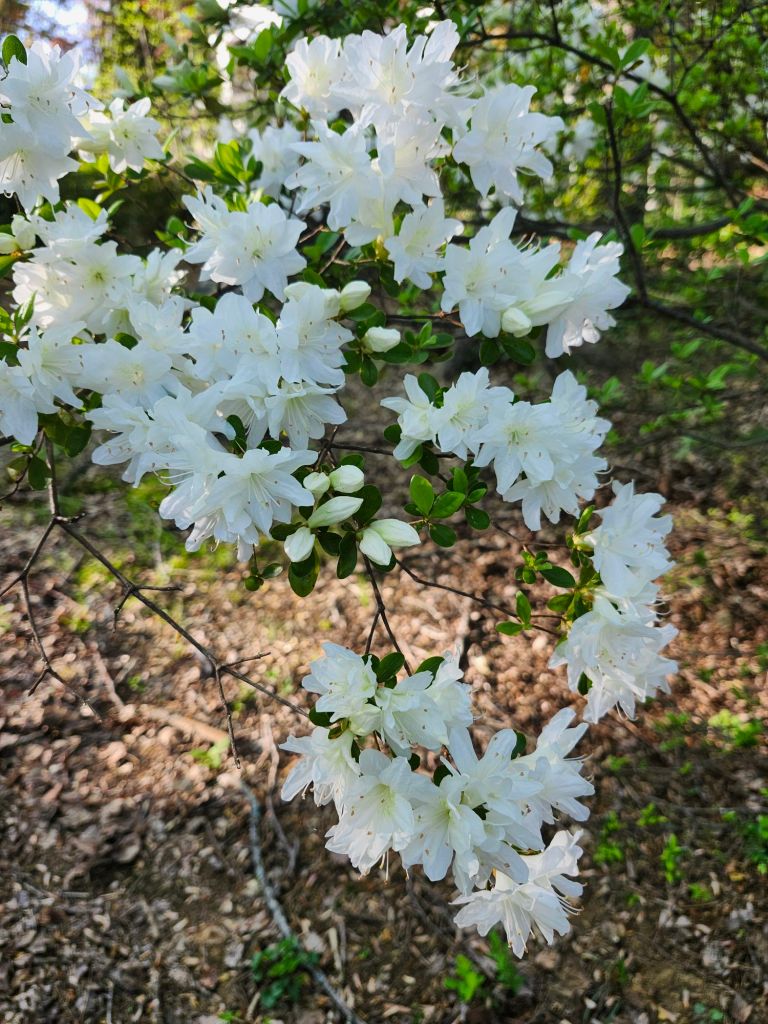
While the evergreen azaleas, mostly reblooming Encores, are lacking in flowers (except Delaware Valley White, above), the deciduous azaleas have no winter foliage and so are not targeted by deer. Flowering is another ten days from its start as the evergreens are fading, but the fragrant and brightly colorful blooms are a highlight of the spring garden.
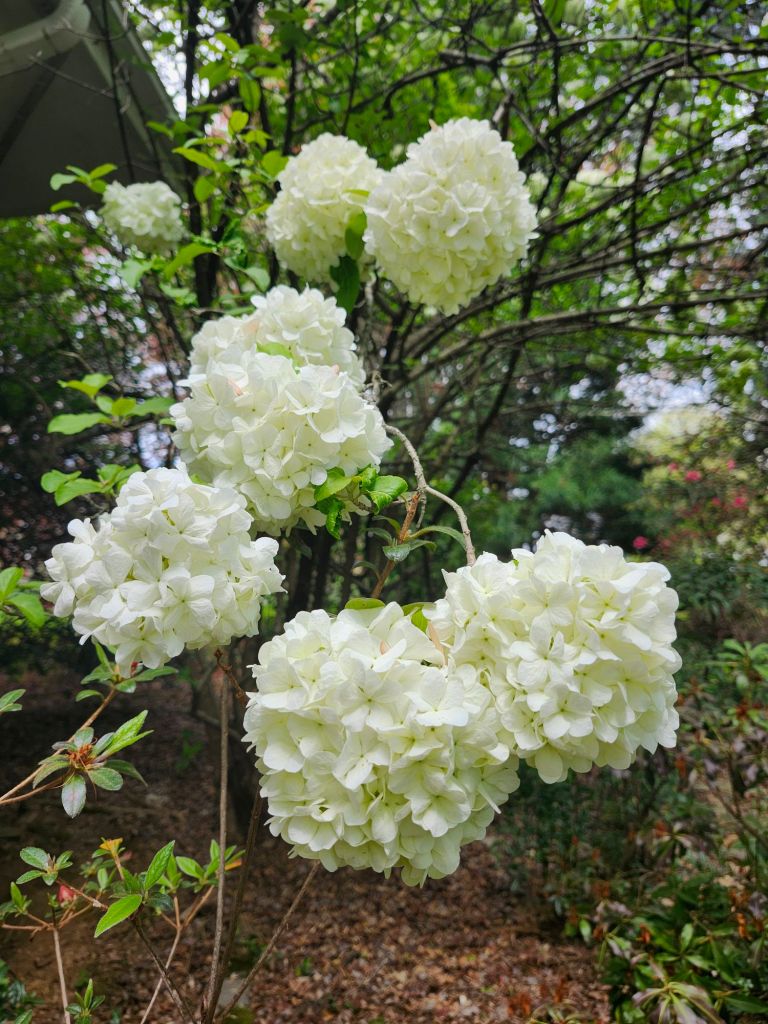
While bigleaf hydrangeas (Hydrangea macrophylla) are a mess after winter injury followed by a late freeze just after the first flush of growth, the Chinese Snowball viburnum (Viburnum macrocephalum, above) is in full flower. This has long been a walk under shrub with branches arching over the stone path in the shaded side garden. I presume flowering might be stronger in a sunnier location, but flowering is surprisingly heavy as I look out windows of our library.
The Chinese Snowball is not a shrub for the small garden, but here it is jammed close to the house will no ill effect. With more space and without a house to one side and path to the other, lower branches could be kept to view the large flowers closer than from a second story window.
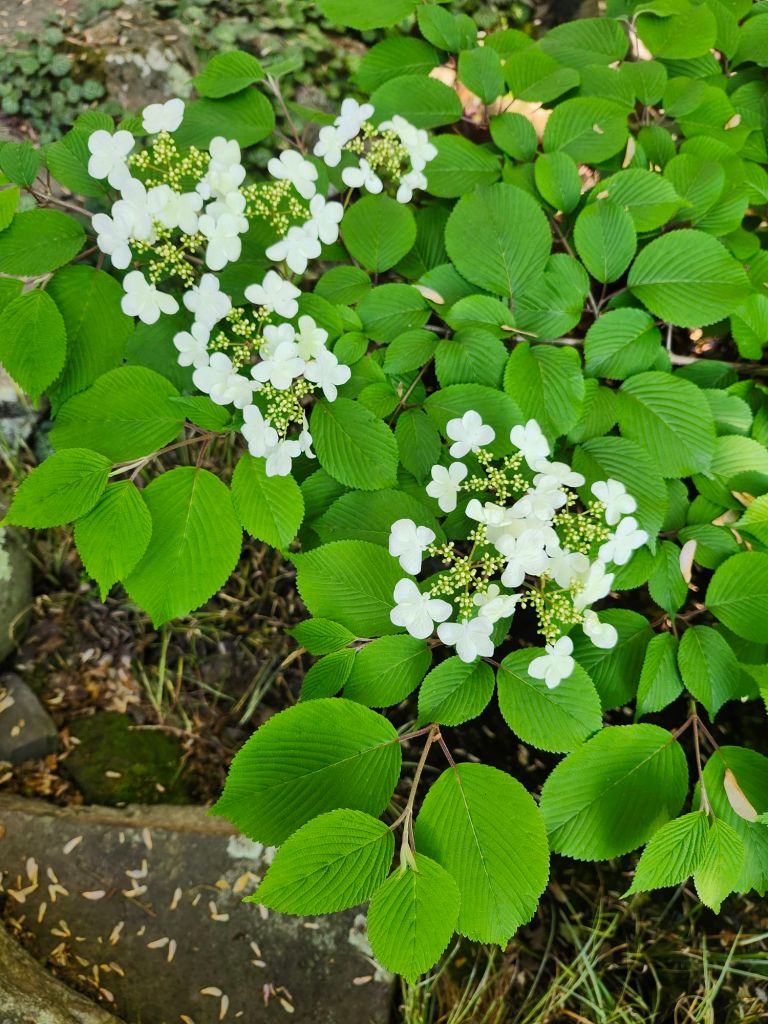
No accommodations are necessary along the path for the Shasta viburnum (Viburnum plicatum f. tomentosum ‘Shasta’, above) that is at least equally as large but nestled at the forest’s edge. The small creek sits between the viburnum and stone path, and while flowering branches drift across the pond, they require no attention except to enjoy.
 Ramblin' through Dave's Garden