Despite cypress spurge’s (Euphorbia cyparissias, below) reputation for invasiveness, it is a favorite in the garden. Perhaps you’ve heard the story from several years ago when the spurge was rescued weeks before it would have succumbed to the relentless spread of a geranium. Some tough guy, that spurge, and while it’s valued more since it was nearly lost, it’s the texture and color that I most appreciate.
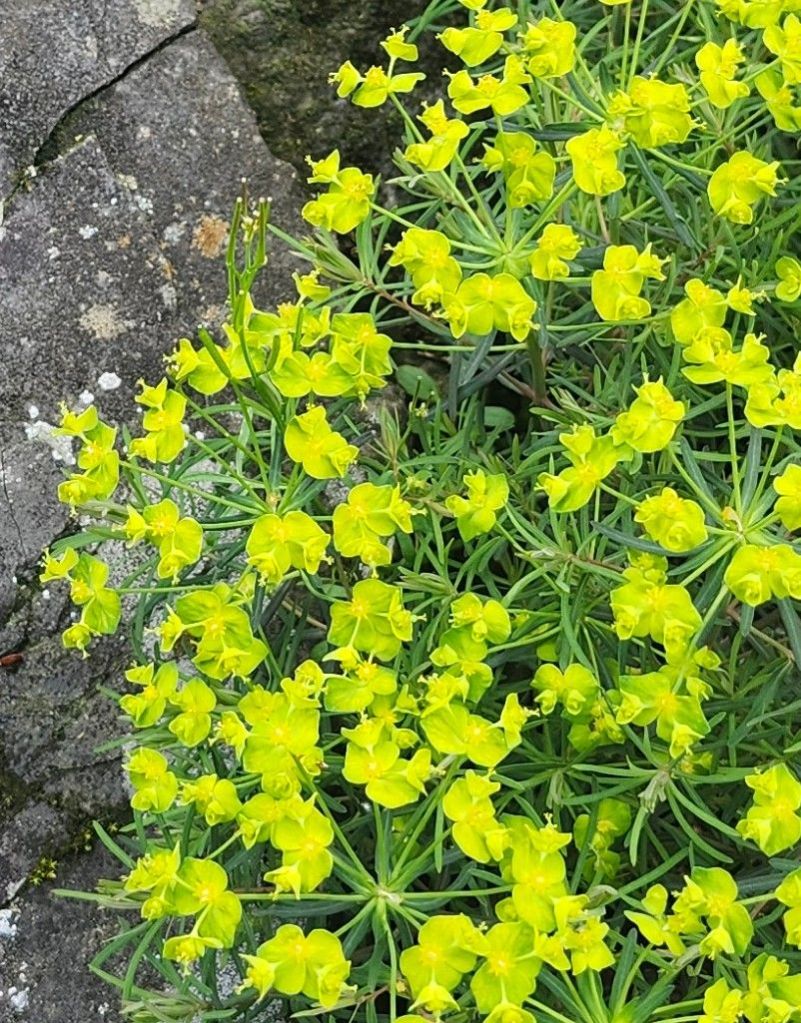
Certainly, not every invasive is such a weakling, and perhaps there are situations where the cypress spurge can escape cultivation. But not here.
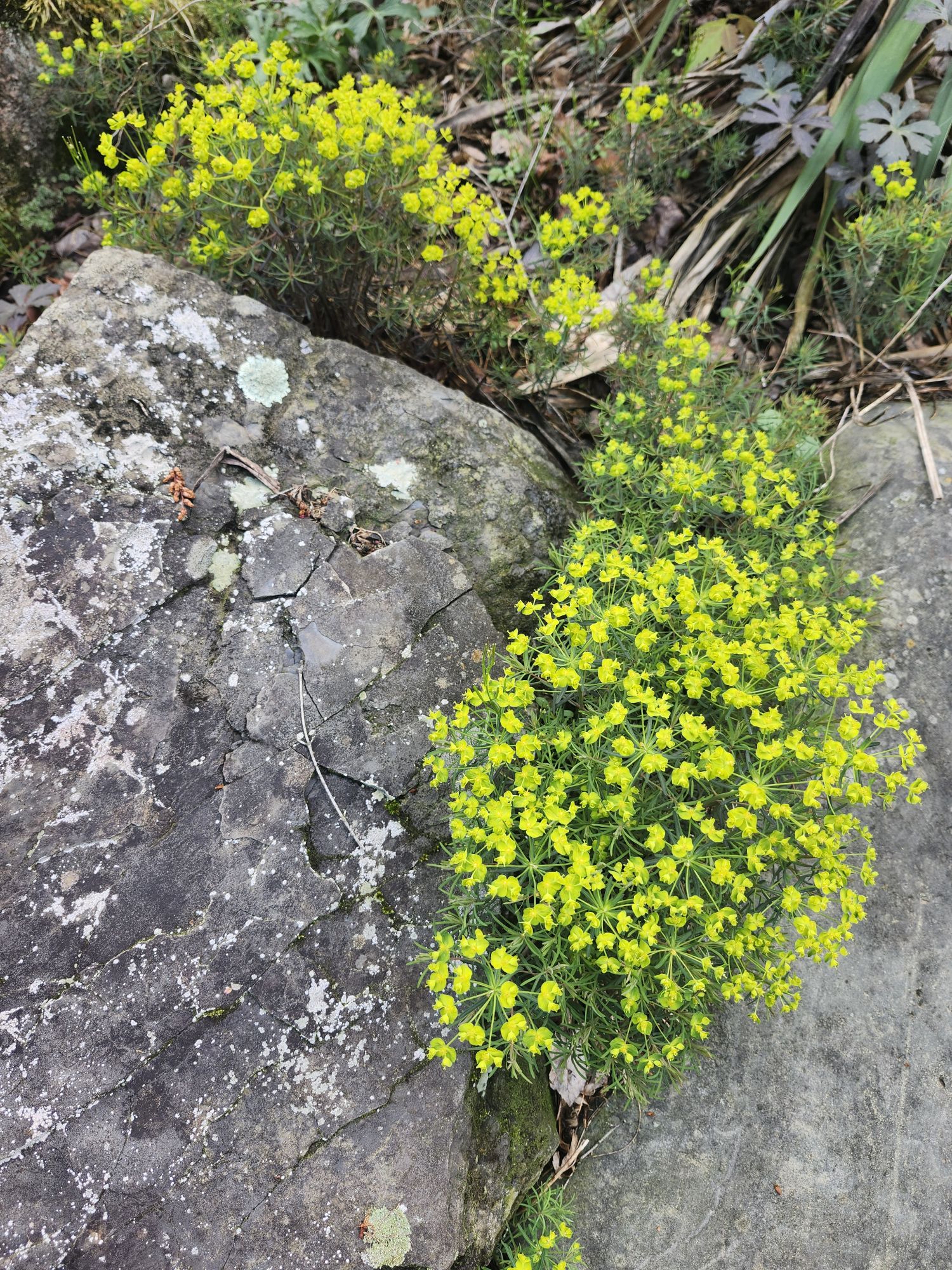
In any case, the tiny bit of spurge that was saved from the geranium’s onslaught was transplanted to where it could spread between boulders bordering the koi pond (above). Here, it has spread slowly to fill gaps between stones. I can think of no plant better suited to add color and texture, with my only concern that a seedling of the geranium has set up residence nearby. I will not allow the geranium to bully the spurge again, though I am quite happy with the current arrangement where both geranium and cypress spurge can thrive.
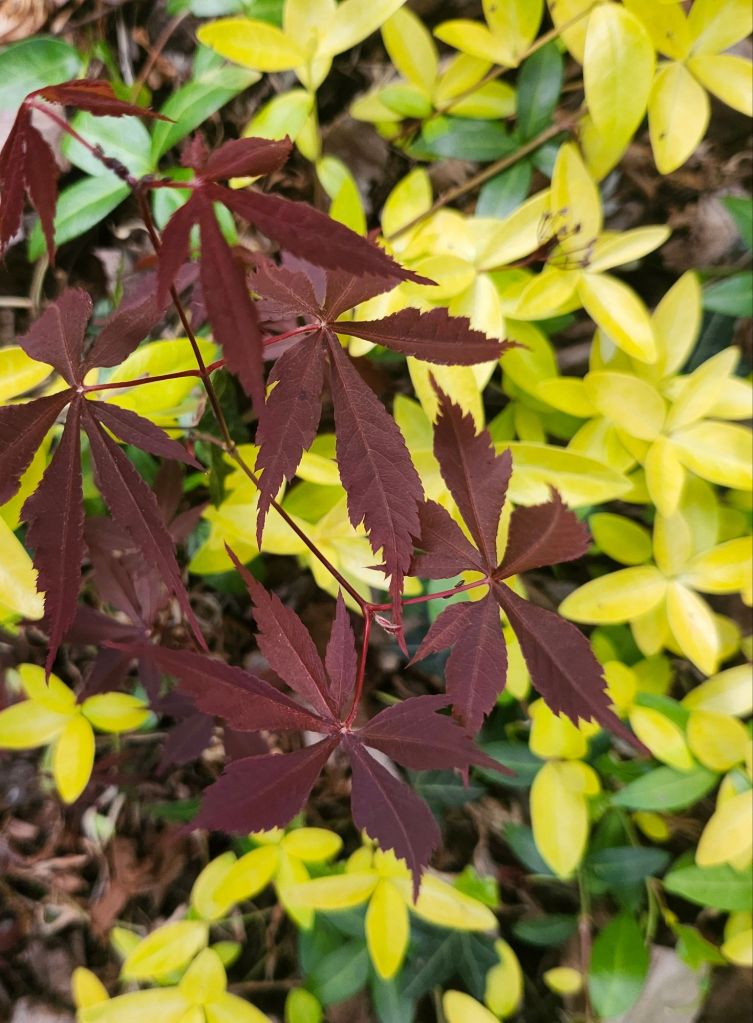
While extolling the virtues of plants commonly accepted as invasive, I must also praise the yellow and yellow variegated leaf periwinkles (Vinca minor) that spread through small areas of the rear garden. Both are mutations of the common green leafed periwinkle that now has a very minor presence, and I must note, one that requires no management except removal of an occasional stem that attempts to sneak across a stone path.
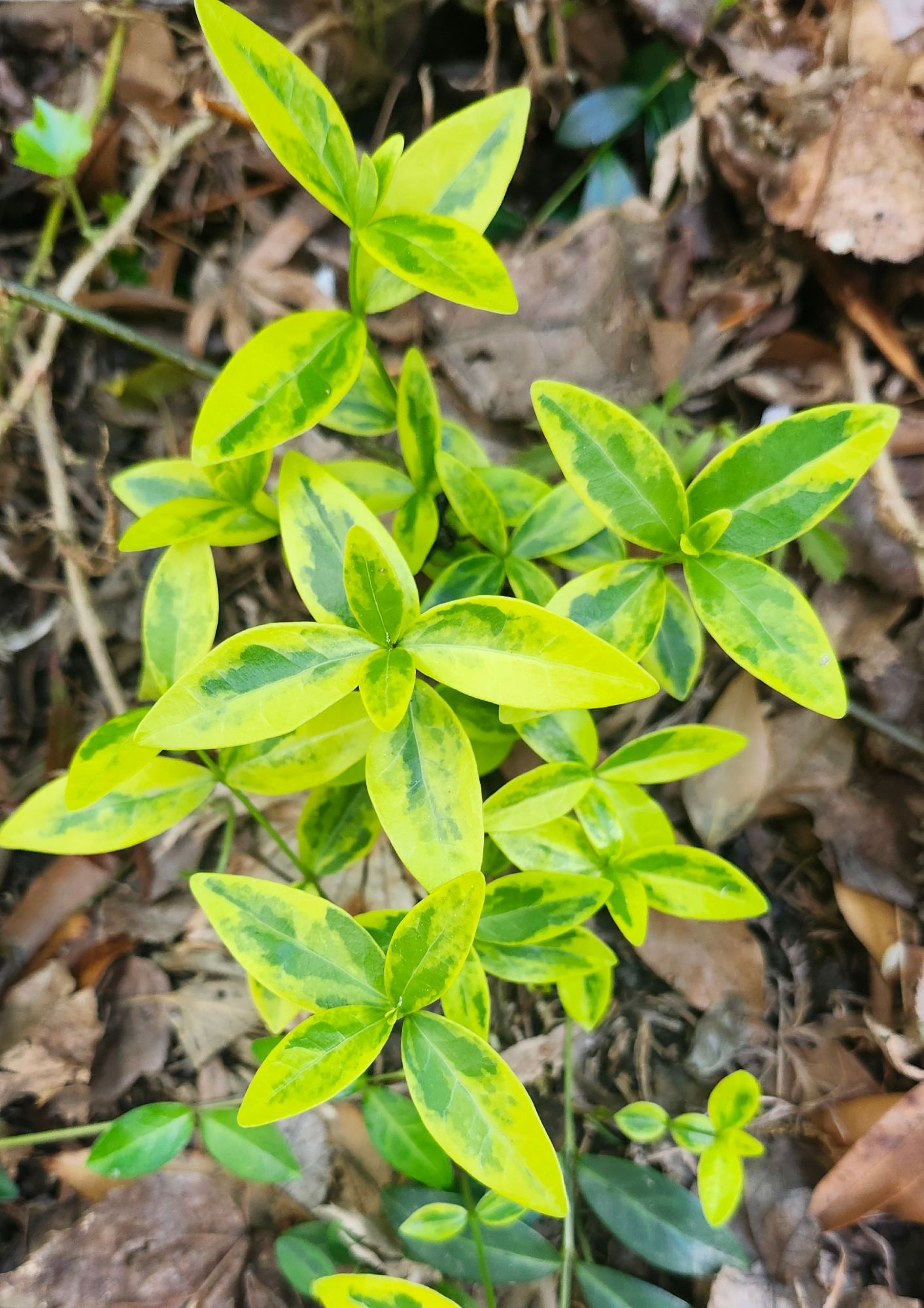
No doubt, there are plants that escape cultivation to become problems, but some are guilty only of spreading to fill an open space with little chance of escaping into the wild. I have no regrets over planting the spurge or periwinkle. I’d plant them again tomorrow.
 Ramblin' through Dave's Garden