As I do every year, I must not miss the opportunity to highlight the various cold hardy orchids in the garden. Reluctant as I am to purchase expensive small plants, I was somehow convinced years ago to purchase several terrestrial orchids (Bletilla striata, below). The sum now seems a pittance while the orchids have multiplied considerably. Gardeners discouraged by the initial cost are encouraged to give them a try. I was not provided this helpful advice, but your expenditure will be repaid many times.
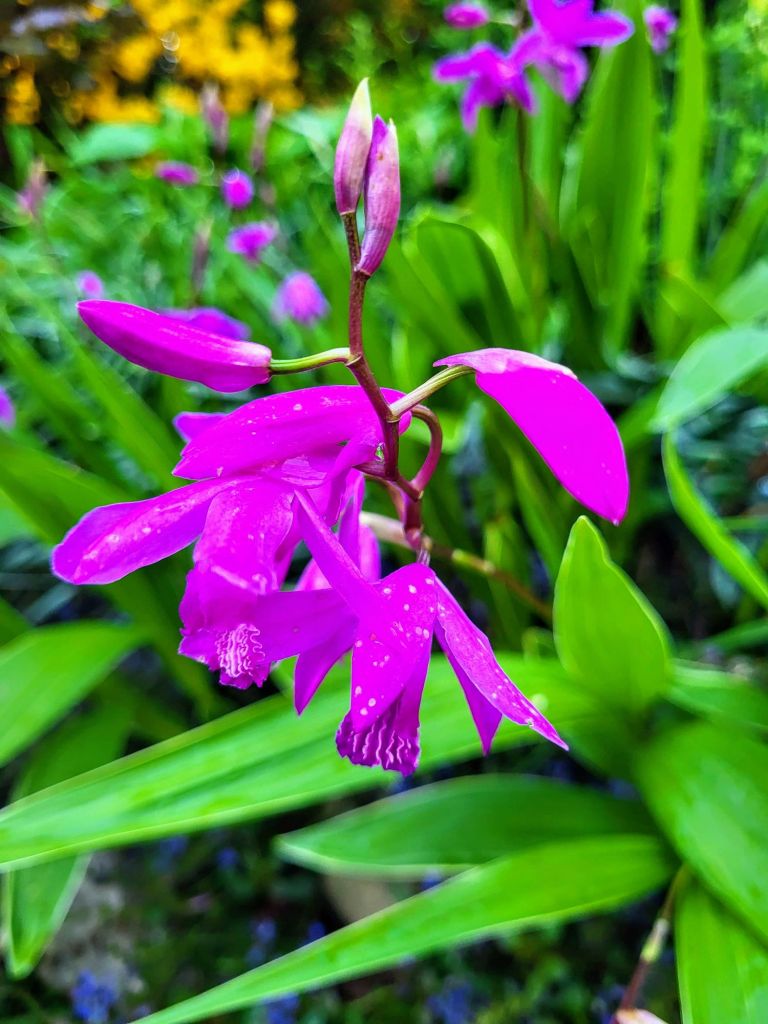
Predictably, after dividing and transplanting about the garden, and potting giveaways, I too often dismiss the orchids as ordinary. The unfortunately timed freeze a few weeks back damaged some newly emerging leaves and flower buds, reminding me that no matter how easy, the terrestrial orchids must be treasured.
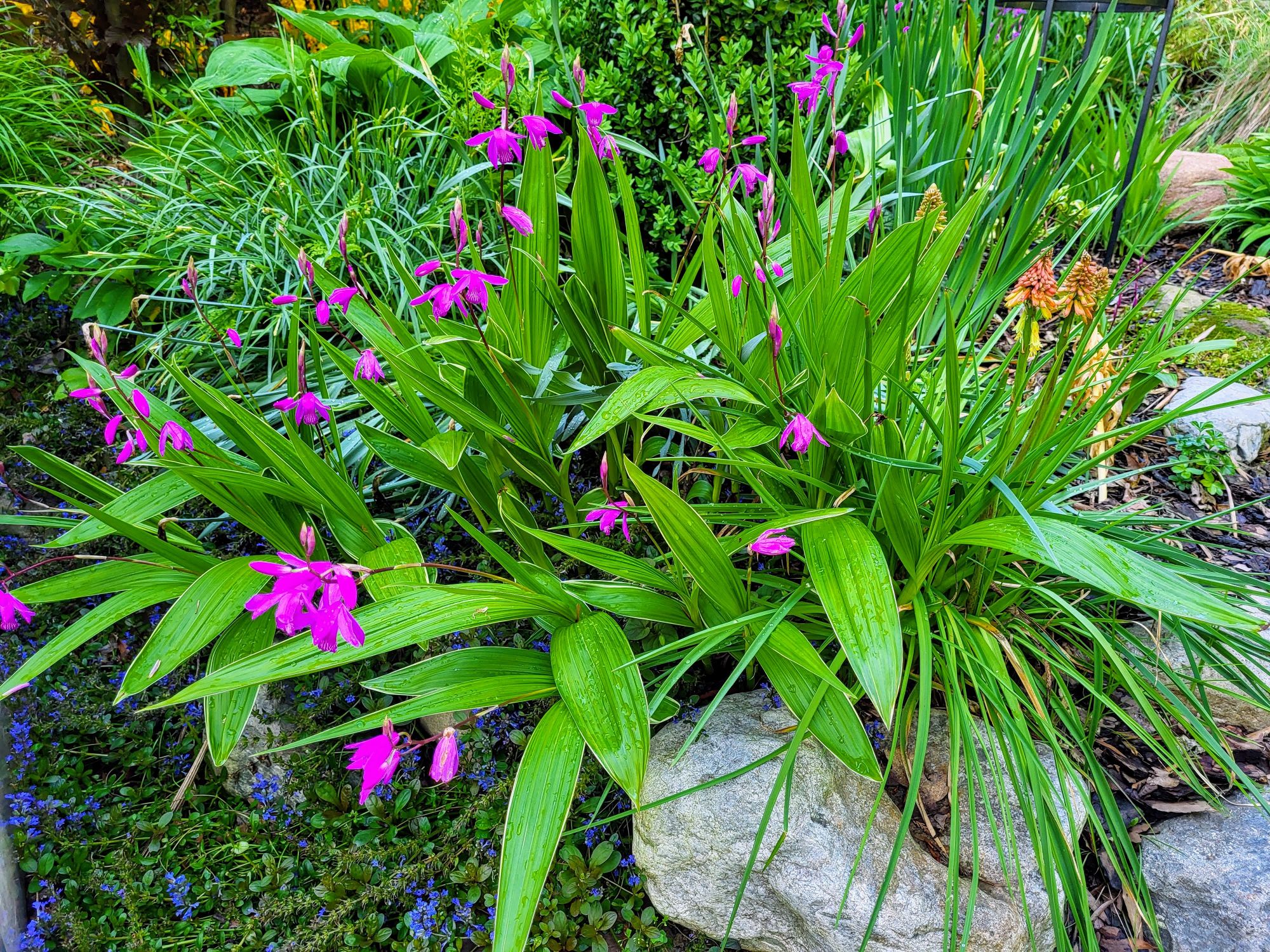
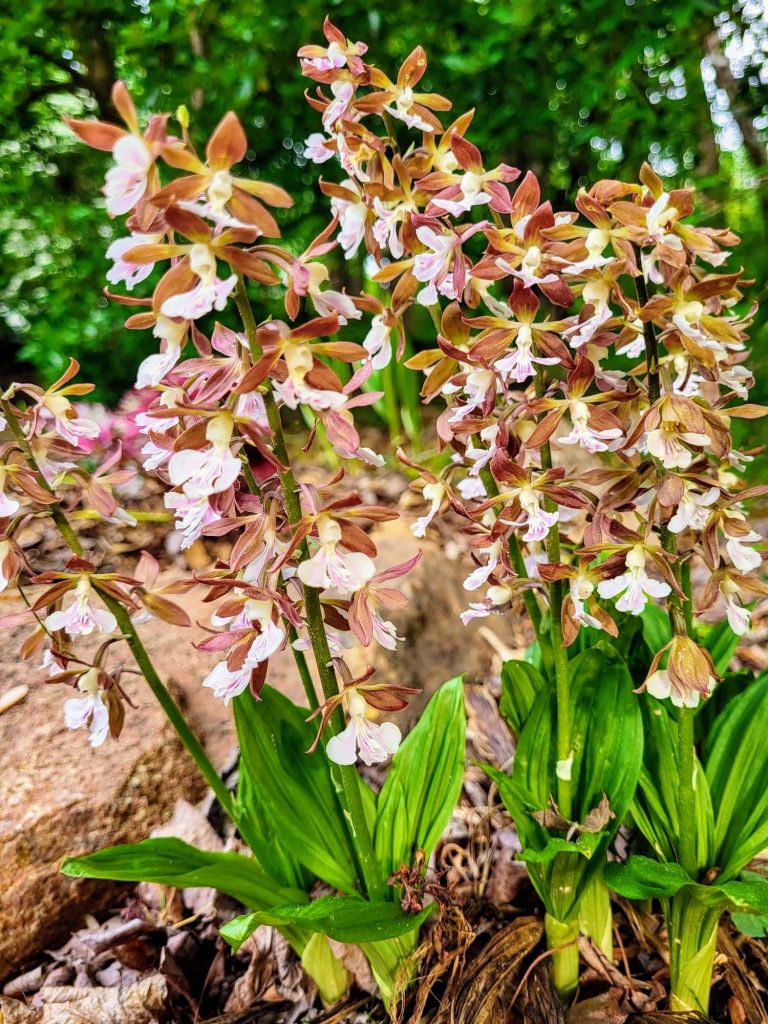
On a recent visit to one of our son’s gardens, he asked about dividing his thickening clump of Bletilla orchids to spread them into other areas. Of course, his original plants came from our garden, and most likely they were dug for a Mother’s Day visit. Dig them, get them in the ground, and water them. I might not dig them in July, but Bletilla and earlier flowering Calanthe orchids (Calanthe discolor, below) are nearly foolproof.
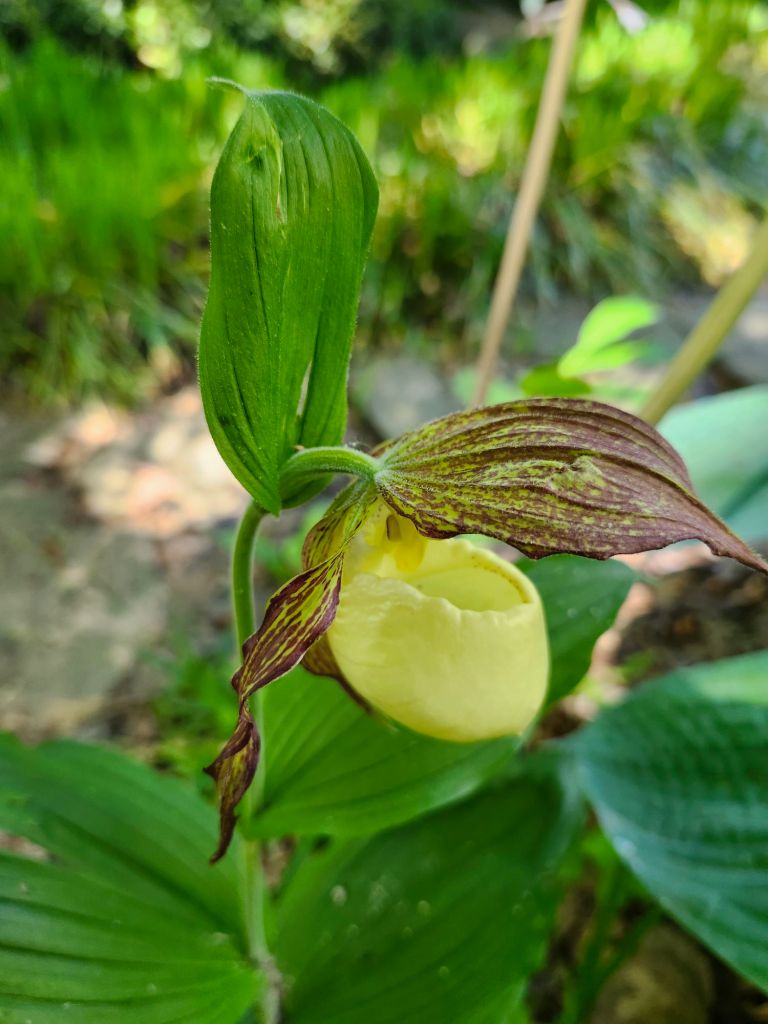
Flowering of several Ladyslipper orchids (Cypripedium parviflorum, below) is an annual event, with buds watched over days until the flower unfolds. If these are to eventually multiply the process is slow, so the gardener must repeatedly appreciate the blooms while they’re here to reward his investment.
Several native orchids are not so costly, but with smaller flowers that are less showy. Unfortunately, a growing colony of less common purple-leafed Cranefly orchids (Tipularia discolor) was decimated by marauding squirrels in autumn. I hoped by spring a few might appear, but all were dug. Most cranefly orchids have purple undersides and green tops to leaves, but Barbara and I notice a fraction that are all purple in local forests.
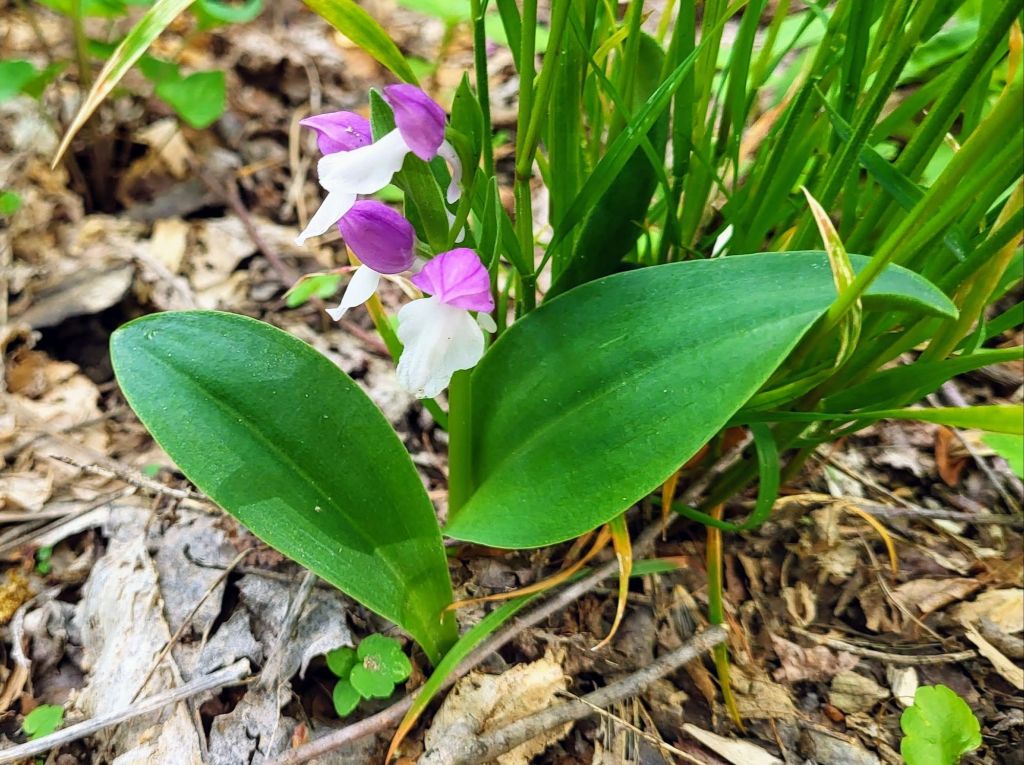
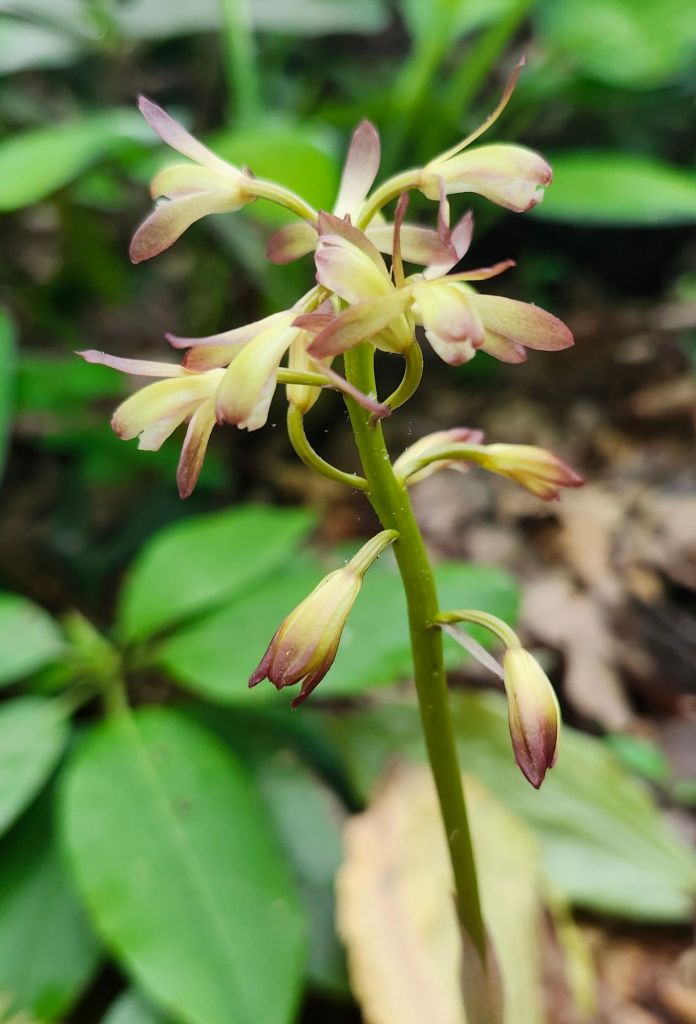
Putty Root (Aplectrum hyemale), Rattlesnake Plantain (Goodyera pubescens), and Showy orchis (Galearis spectabilis, above) are similarly understated at their peak bloom. Of course, there was a time not long ago that I hadn’t a clue there were any local natives. Other native orchids are in the works, but not yet ready to show. I’ll be planting more, and advise you to do the same.
 Ramblin' through Dave's Garden
I’ve never really thought of Orchids, …but I do need a touch of colour on my green Oasis, and they look wonderful …thank you for the info, I’ll definitely be checking my local nursery…💫🌿💫🍃💫
Where might one be able to purchase some of these native orchids, Dave? Do you ever list resources for reputable dealers / nurseries?
I’ve purchased native orchids from Pretty Little Orchids. They offer them seasonally at reasonable prices. I’m uncertain if they are nursery grown.