The Bigleaf magnolia (Magnolia macrophylla, below) is flowering, somewhere up there, and unfortunately, I can no longer see the blooms with the lowest branches twenty feet up. Branches have been lost as shade in the area has increased from the neighboring forest but also from trees I’ve planted. Of course, this is another in an endless string of lessons to be learned in the garden.
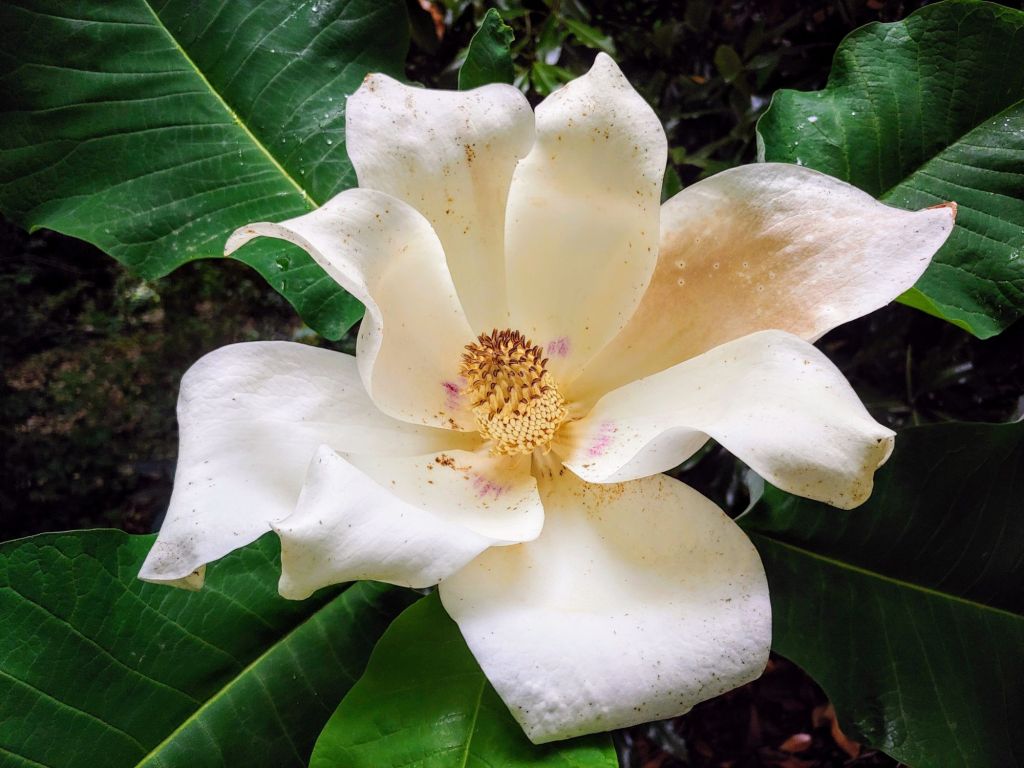
In fact, I probably have ignored this lesson as I’ve done with so many over the years. I do okay for the first twenty years after a tree is planted, but the next decade gets iffy. When you must add another magnolia, Japanese maple, or redbud, and you have only so much space, you must be disciplined to follow the rules or suffer consequences. The loss of lower limbs is the result of considering the shorter term and not the decades beyond.
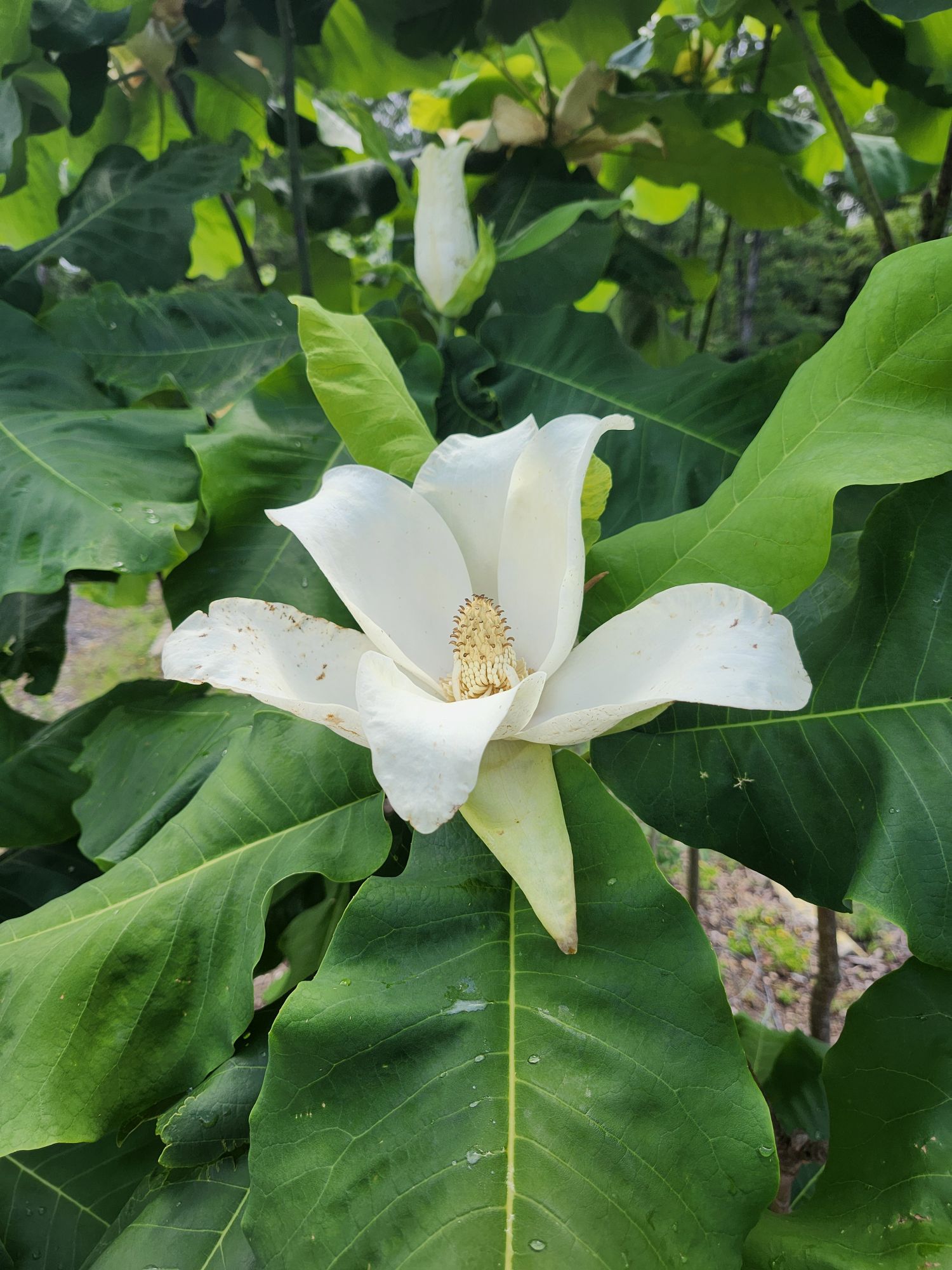
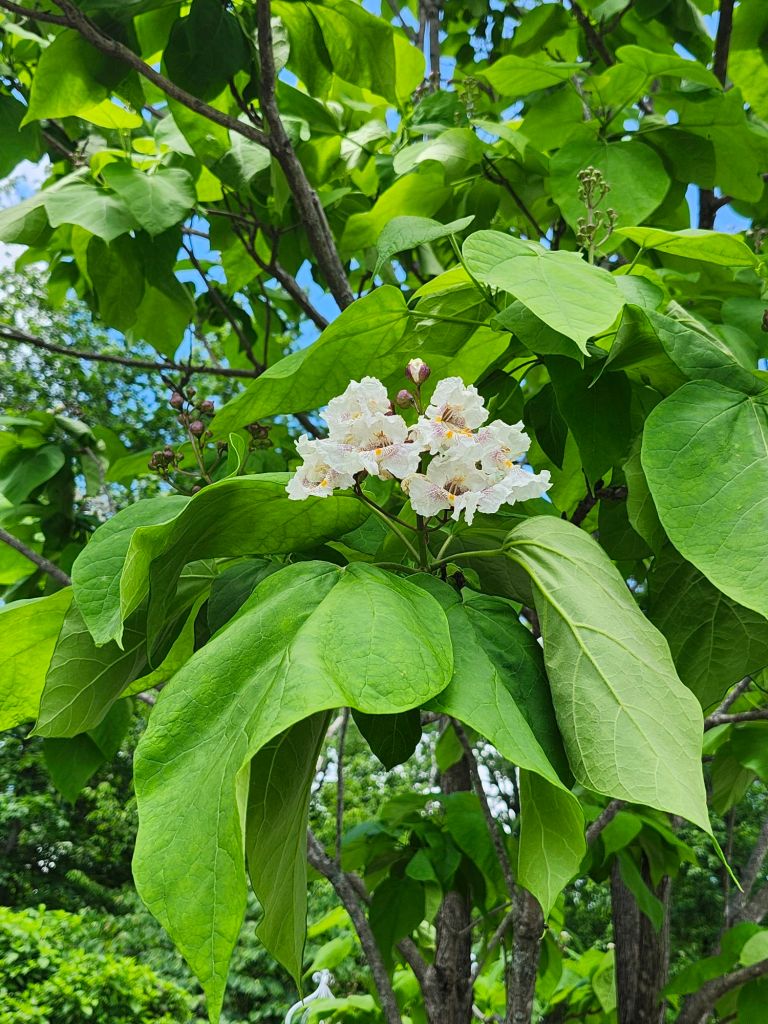
In any case, I’m able to enjoy bigleaf’s blooms at a botanic garden where I volunteer, as well as flowers of Catalpa (Catalpa bignonioides, below). My catalpa is at the forest’s edge, and I pollard it to encourage large leaves, though this sacrifices flowers. As an edge of the garden tree, I want a big-leafed shrubby tree, and the pollarded catalpa does this perfectly. I’m able to enjoy flowers at the botanic garden where I contrast it to visitors with the just past flowering Paulownia (Paulownia tomentosa).
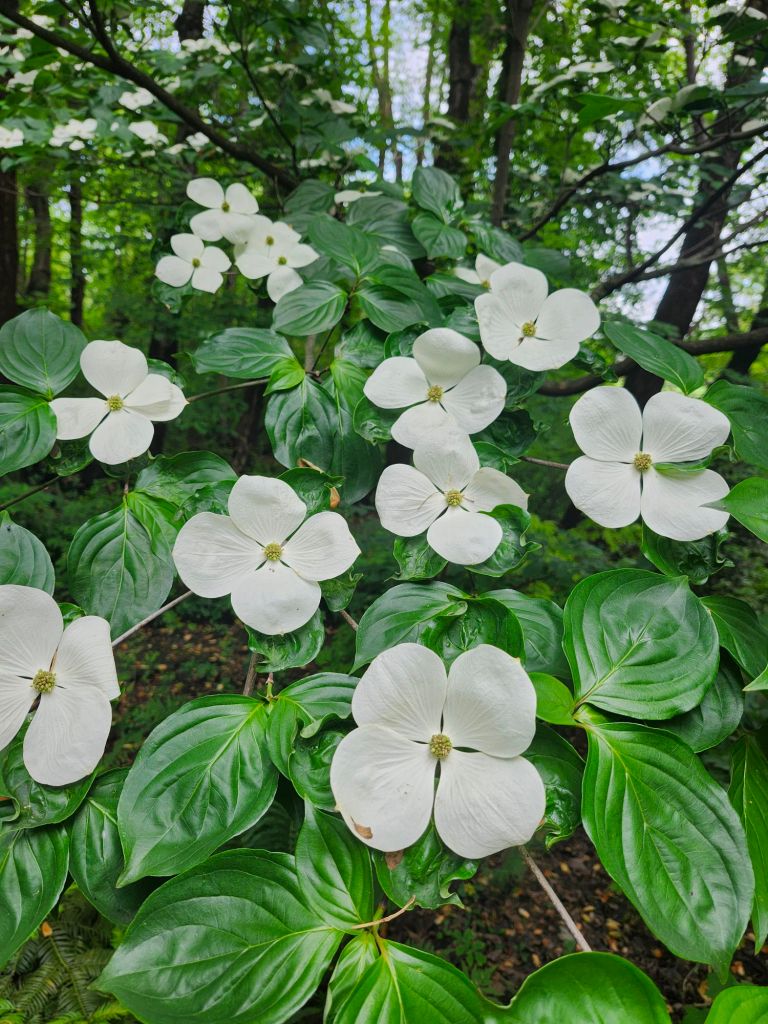
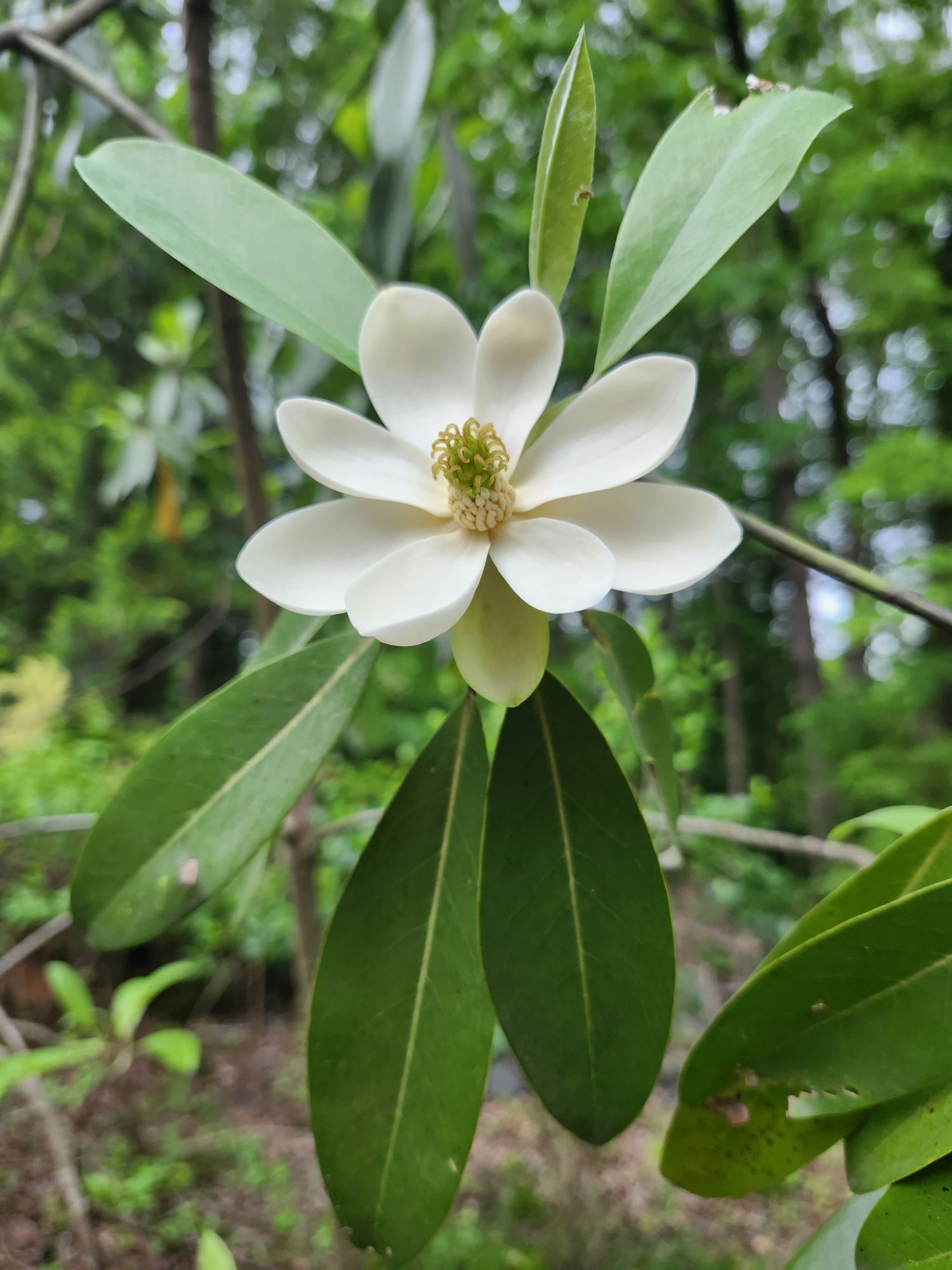
I am pleasantly surprised that the shaded ‘Venus’ dogwood (above) in the side garden is flowering heavily. While a nearby sweetbay magnolia (Magnolia virginiana, below) does not flower in similar shade while one in part sun flowers fully, a ‘Venus’ in half-day sun has no more blooms than in the shade.
The flowers of ‘Venus’ are considerably larger than other dogwoods. Though its branches are overhead, its flowers are greatly appreciated from the dining room window through much of May when it flowers a week longer than a second dogwood in half sun.
 Ramblin' through Dave's Garden