Sadly, the large dogwood (Cornus florida) in the front garden appears to be fading from its partial measure of good health. While the tree has survived for decades, it has long been plagued by the many maladies common to the native dogwood. Late summer powdery mildew, black spotting, and cankers must diminish the health of any tree, so the dead branches and barely emerging leaves on a substantial portion of the dogwood this spring are hardly surprising.
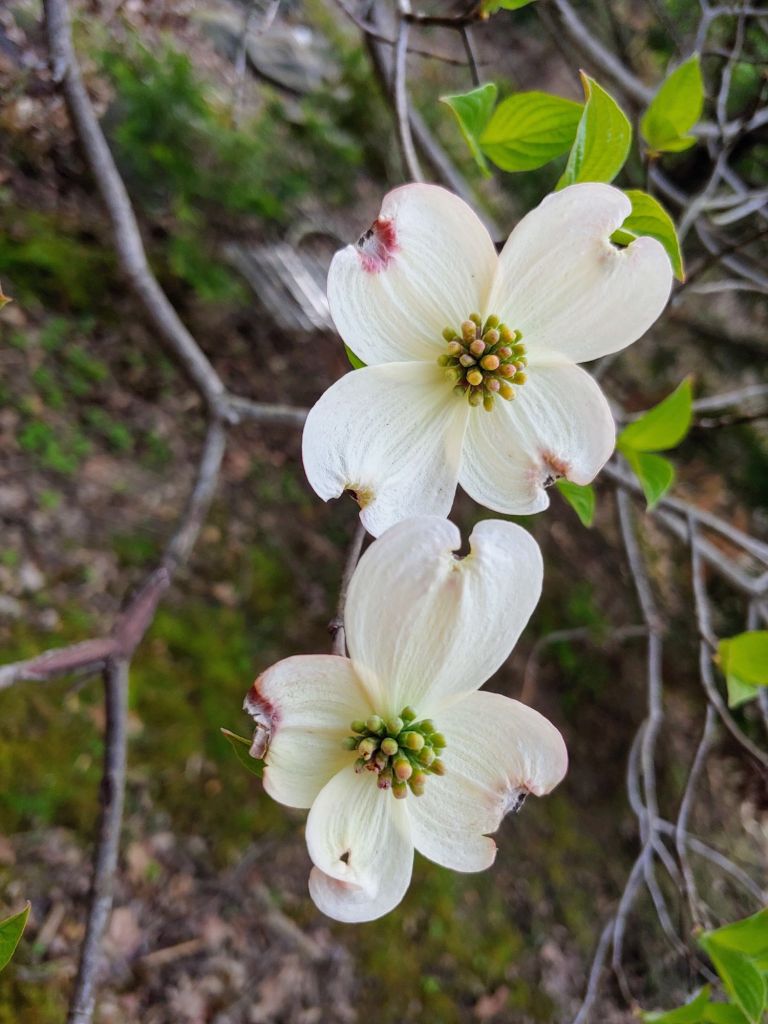
The end is near, I’m certain, but I’ll delay the dogwood’s removal to see what happens to the undersized leaves as summer heat arrives. While I express my sorrow, the tree’s ailments have been evident for years. Spring flowers are spotted and contorted, so yes, I’m disappointed but ready to move on.
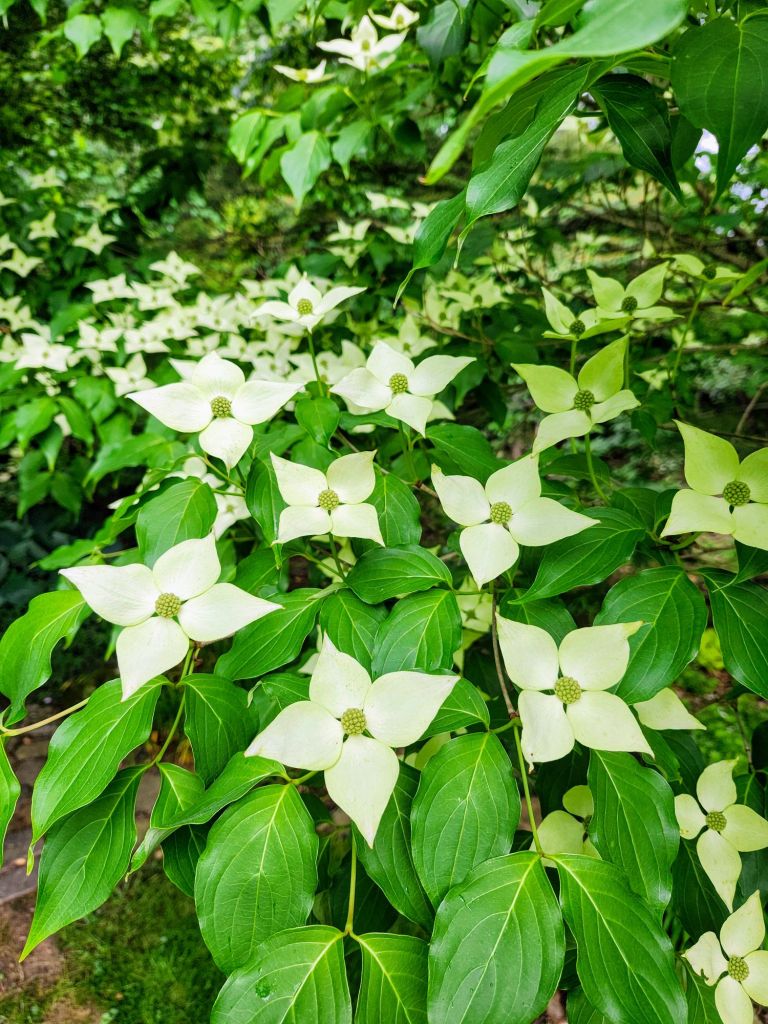
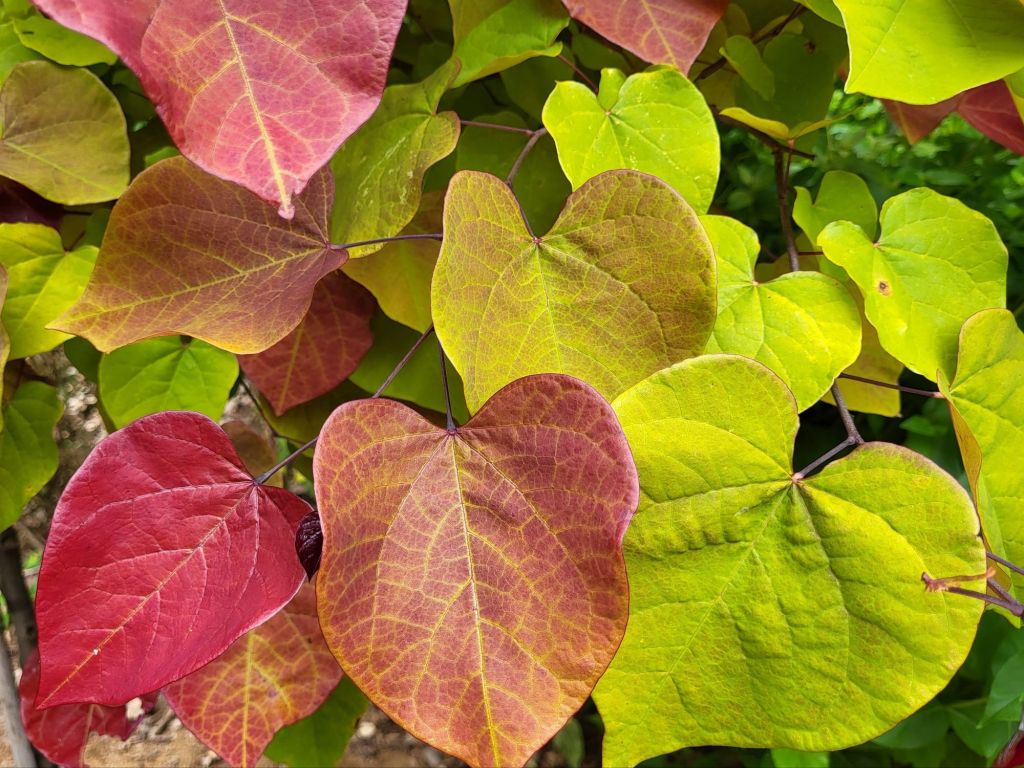
The question to be debated is what tree should replace it? In this thirty-six year old front garden, I will not plant a tree that needs time to grow. I won’t be satisfied by a tree that doesn’t fit in with other nearby mature trees. Almost certainly, the choice will be another dogwood or a rebud, but not a skinny youngster.
I’ve imagined the space with no tree at all, and it doesn’t work. In the garden’s early days, a weeping ‘Crimson Queen’ Japanese maple occupied the space slightly closer to the front walk. But, I made the same mistake as so many others, so after a few years the maple was moved so that it didn’t obstruct the front walk. Now it encroaches on the driveway, but with constructive pruning, it’s not a problem.
The ‘Cherokee Princess’ dogwood that replaced the transplanted maple was supposed to be more resistant to the problems of the native species, and perhaps this increased tolerance has kept it alive. If a dogwood is the decided upon replacement, it’s unlikely I’ll choose a native. While the fading dogwood was never an eyesore, I’ll opt for a small tree that can be enjoyed while not wondering how long it can survive.
 Ramblin' through Dave's Garden