I am pleasantly surprised to see the number of flower buds on bigleaf hydrangeas (Hydrangea macrophylla). Most are cold hardier lacecap varieties with more substantial stems rather than soft wooded mopheads that were cut back considerably to remove winter-damaged stems and again following an early spring freeze. I have seen more buds forming on remontant (blooming on new growth and old wood) bigleaf hydrangeas than I expected, but suspect a few might not flower at all.
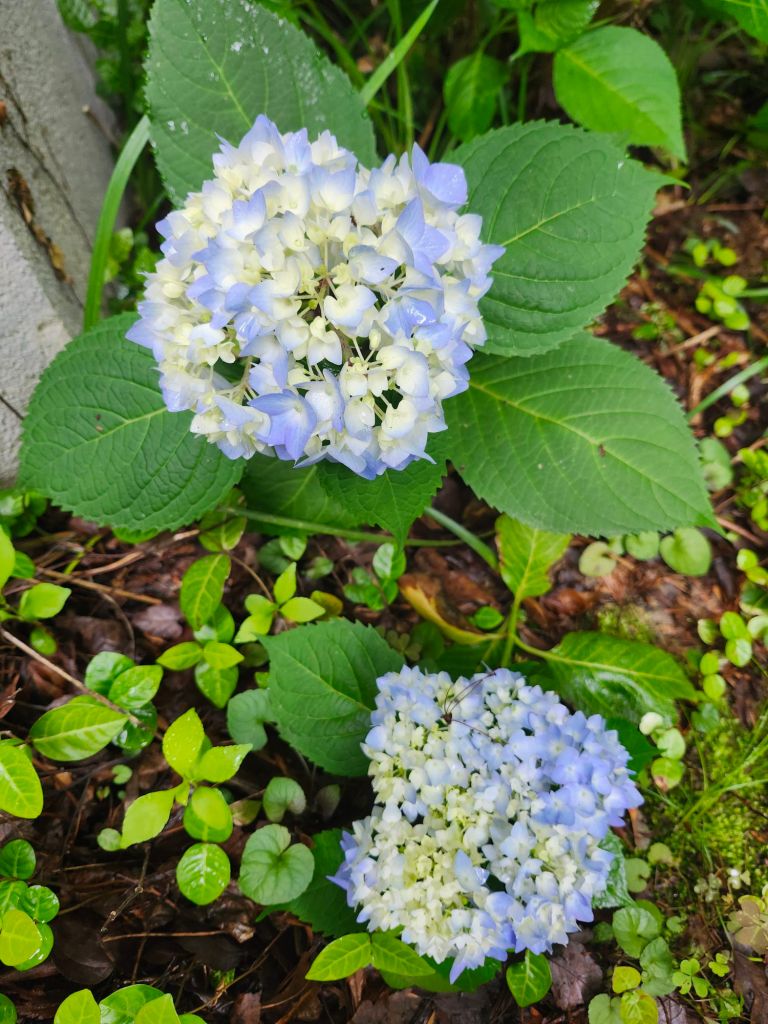
Old wood mophead flower buds that escaped cold damage were well protected or close to the ground and near the house. In any case, despite my cautions about planting mophead hydrangeas, I’m happy to see flowers.
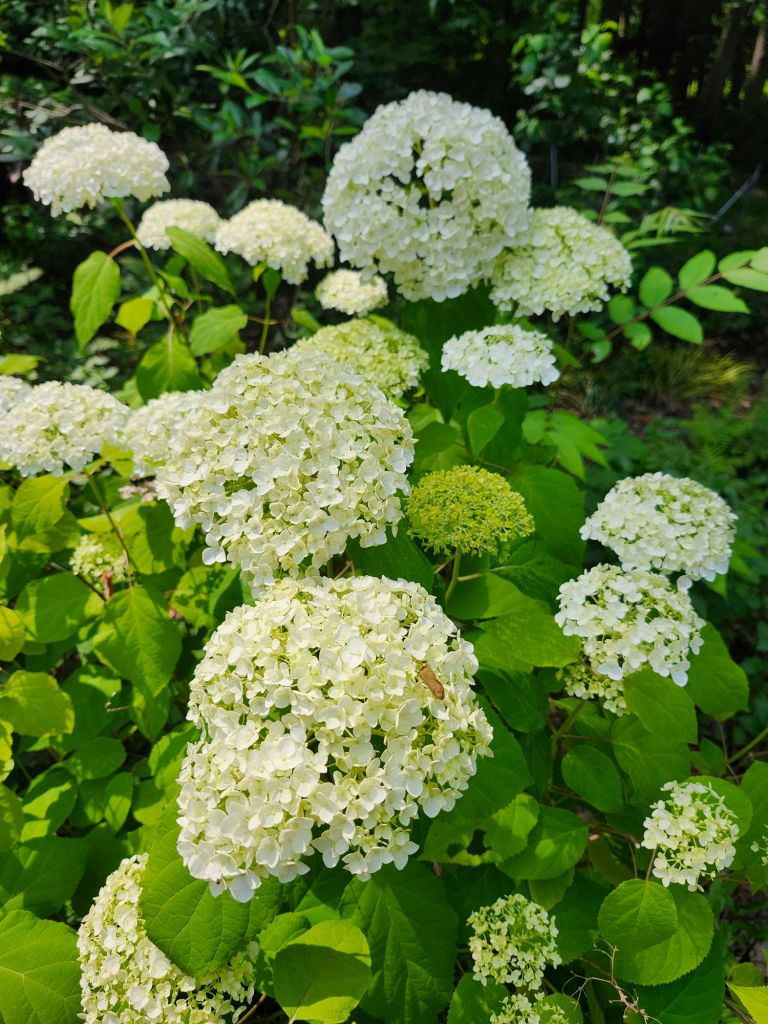
As expected, smooth hydrangeas (Hydrangea arborescens, above) are heavily budded with flowers imminent. These set flower buds on spring’s growth, so while dead branch tips of this soft wooded shrub are pruned, flowers are not diminished. The native smooth hydrangeas are well-adapted to flower in shade, but they’ll also thrive in part sun. I’ve added a few in an area of the side garden that was recently updated.
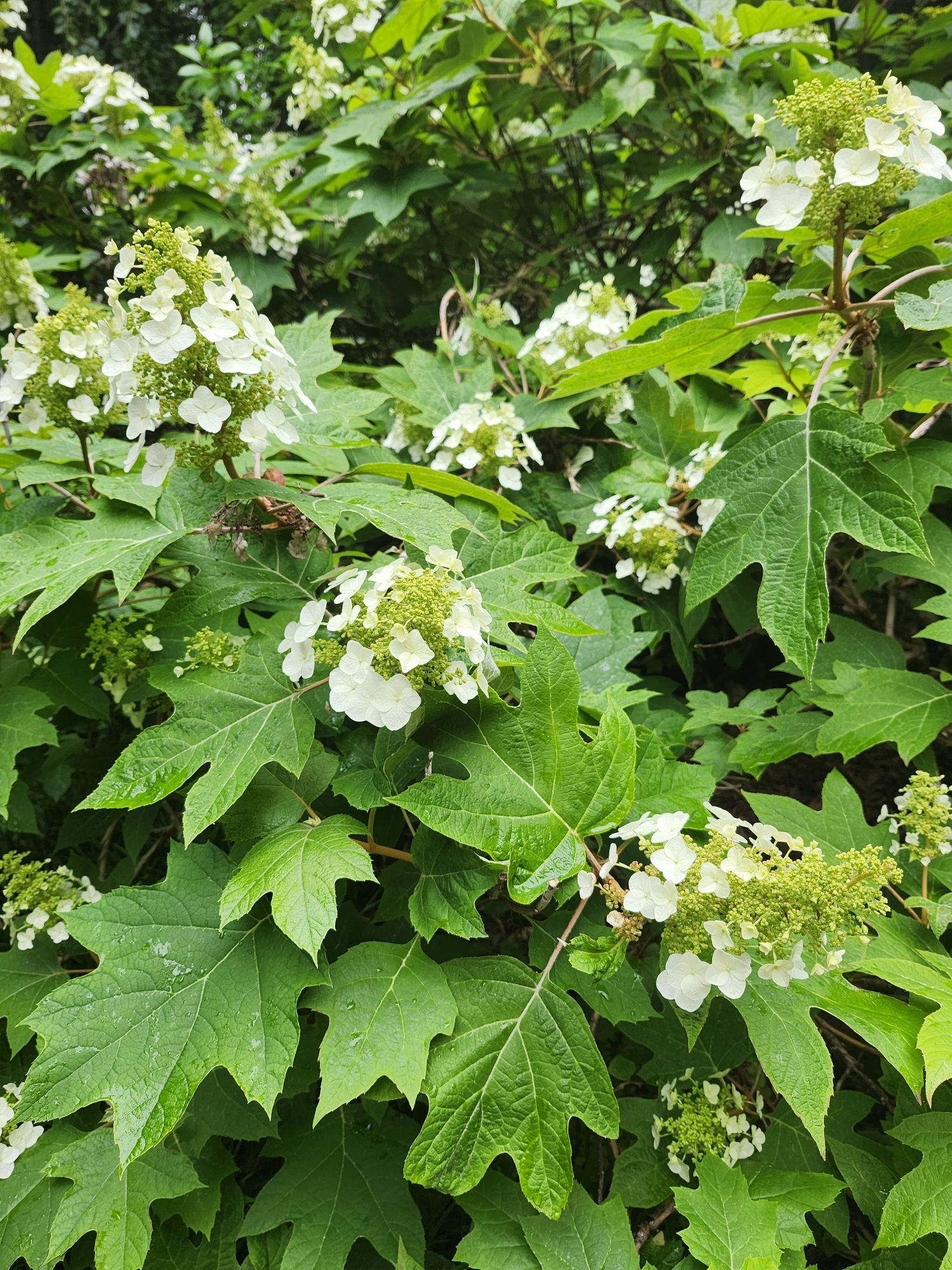
The more shade, fewer flowers are expected on Oakleaf hydrangeas (Hydrangea quercifolia, above). Several in the shaded side garden flower sporadically, but their large leaves define the border of the garden. In part sun, oakleafs flower heavily, and foliage colors deeply in autumn. All in the garden are large growing cultivars, but some are commonly available that grow more compactly.
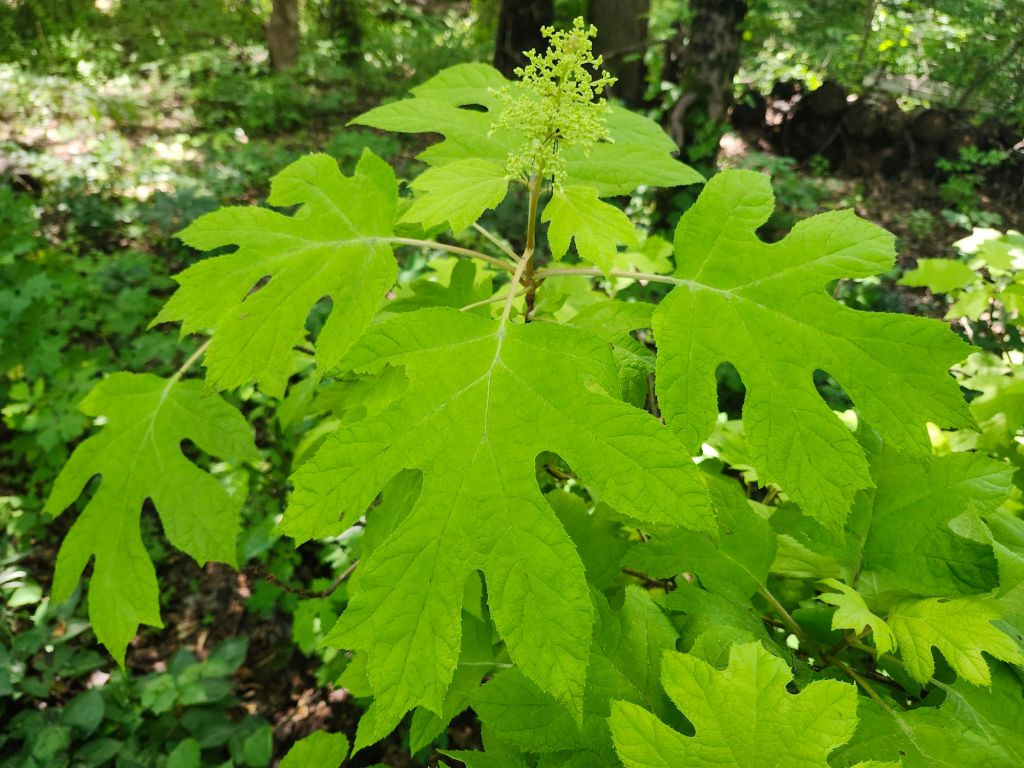
The yellow-leafed ‘Little Honey’ Oakleaf hydrangea (above) remains a partial mystery as it grows in good health since it was moved from a nearly full sun location to a much shadier position. But, it has few flowers and this year there is only a single bud. The hydrangea will remain in place, and perhaps I can fiddle with the tree canopy to bring in a bit more sunlight. In any case, the foliage is superb, and far better than when leaves were scorched by the summer sun.
 Ramblin' through Dave's Garden