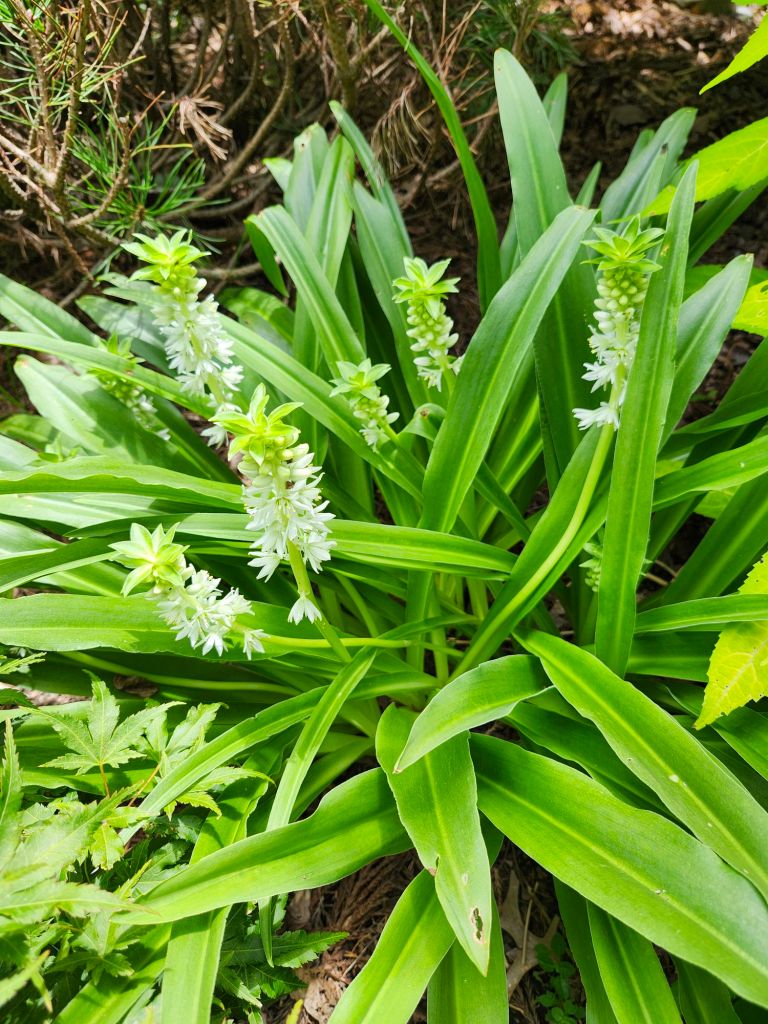
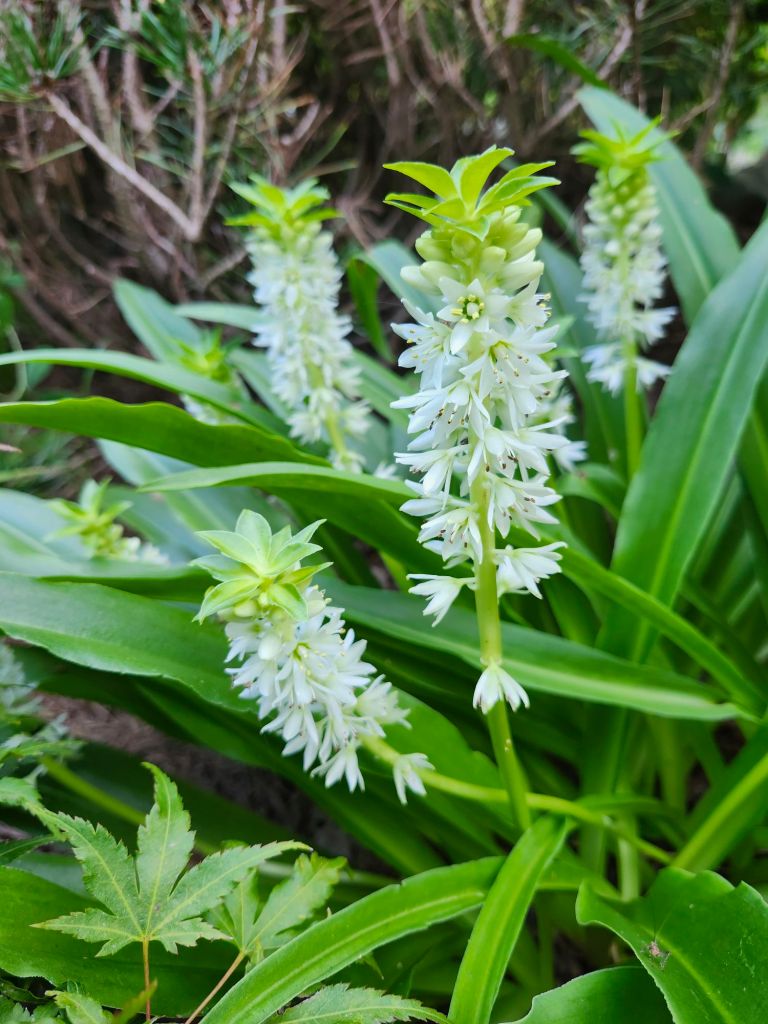
Apologies are due for my failure to recollect the variety of pineapple lily (Eucomis, below) that is performing with such splendor at the moment. In a few years, it has multiplied in an out-of-the-way nook to demand my attention, but most notably the pineapple lily is shorter in stature than others so that it does not flop, even after many inches of recent rainfall.
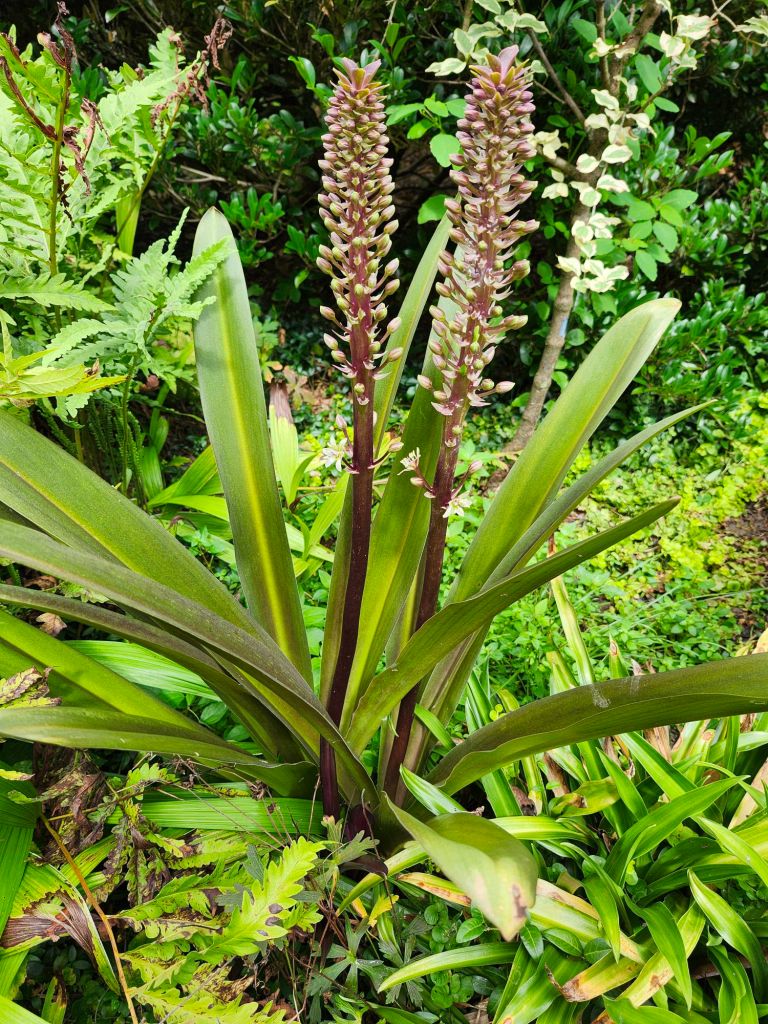
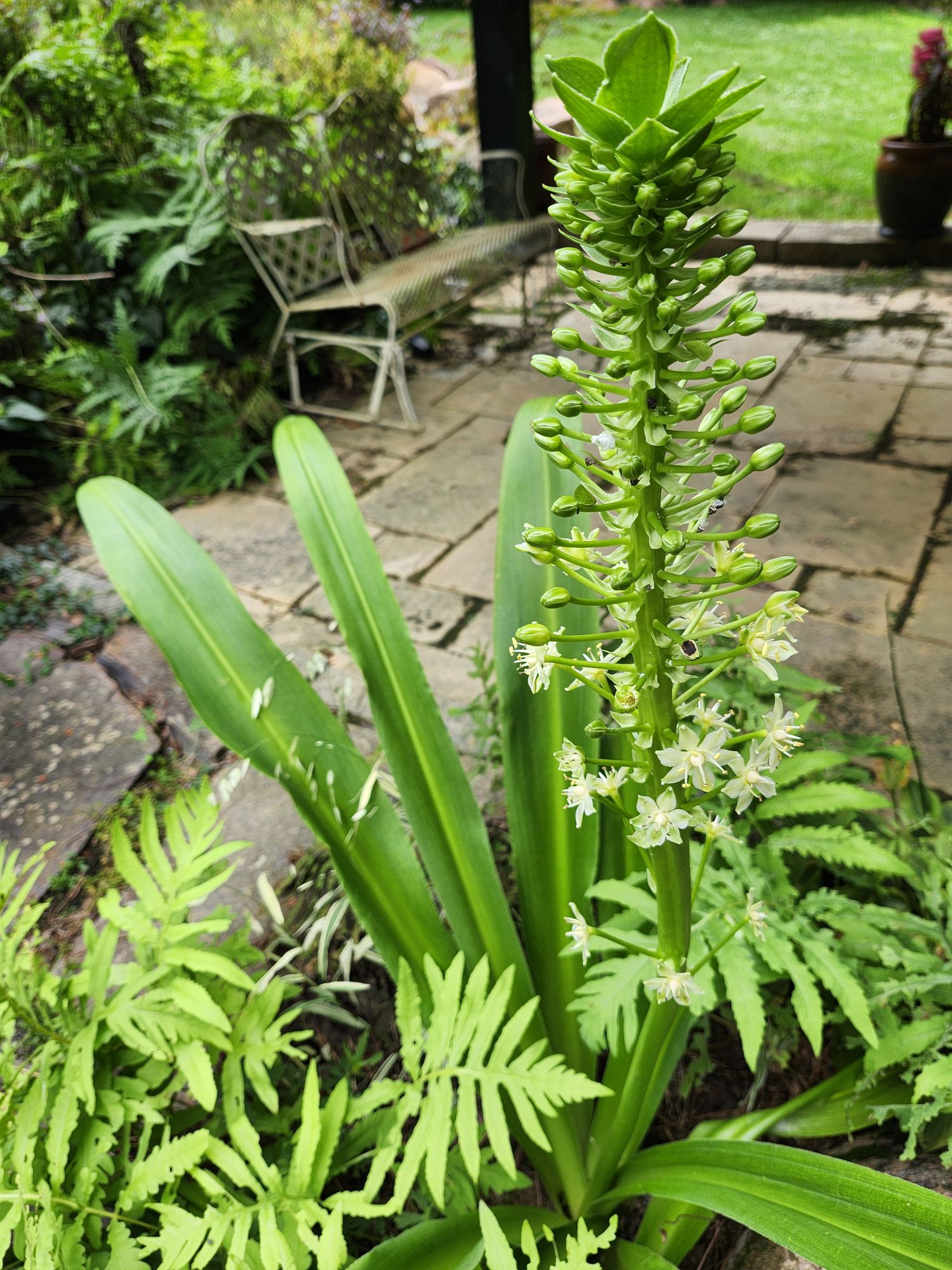
The more common ‘Sparkling Burgundy’ (below) is deserving of attention, but unfortunately, its foliage flattens and the flower leans as it reaches its peak. I suspect this South African native thrives in drier conditions and lean soil. Still, I have no regrets about planting it, though any future acquisitions will be smaller types less likely to flop in our typically damp summers (and with moisture-retentive clay soil).
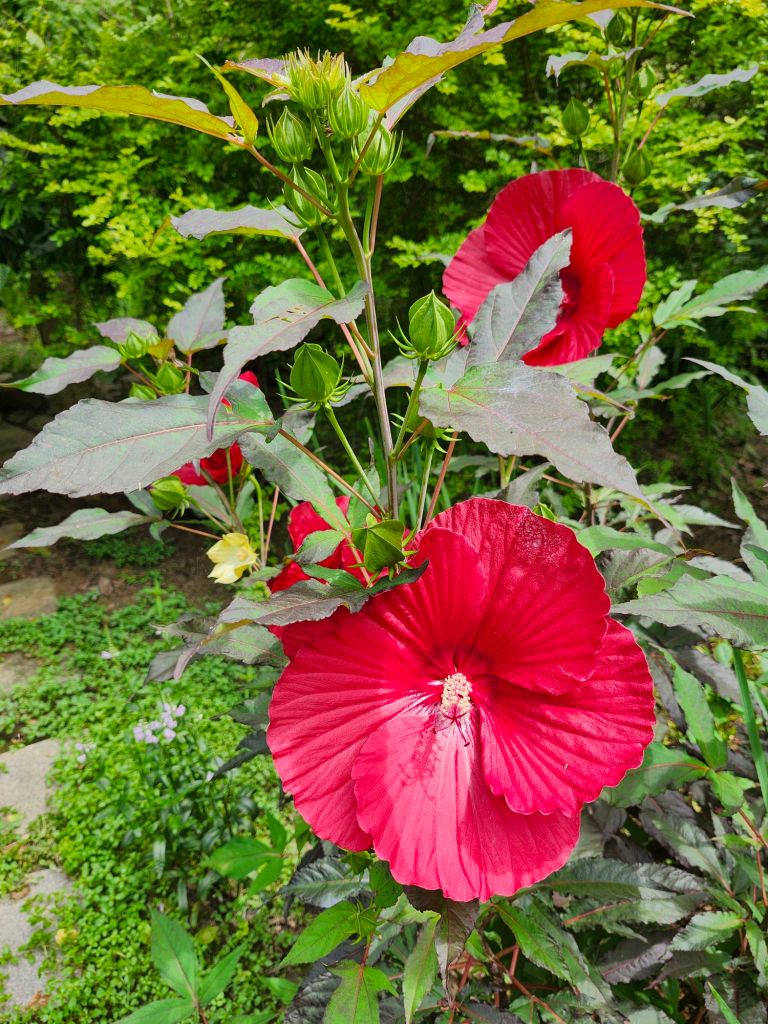
A dark-leafed hibiscus (below) was recently planted along the drainage swale in the damp, lower rear garden. Here, it should flourish, and though the foliage color has faded slightly, the large flowers are splendid. As with most hibiscus, it is a bit garish, but in this damp ground, it is a perfect choice. Also, July seems an appropriate time for such a display. Again, and as you would expect, I’ve forgotten the cultivar name, but I expect any hibiscus should perform in a similar manner.
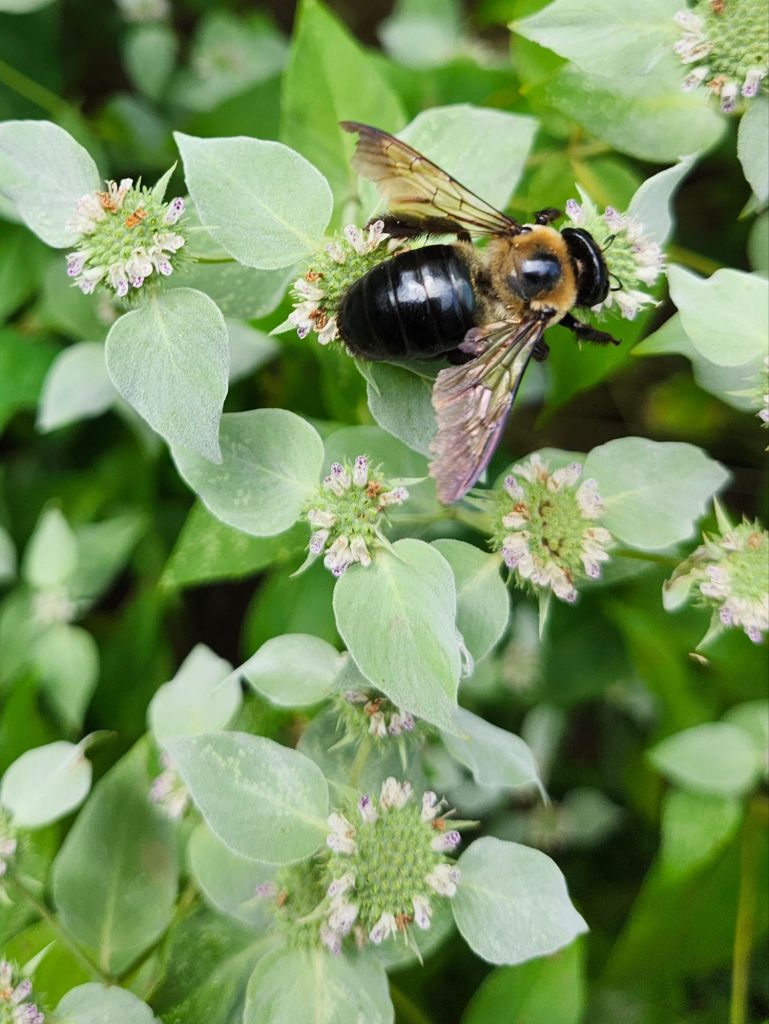
On this cloudy morning, I noticed abundant bumblebees and carpenter bees visiting the widespread clump of mountain mint (Pycnanthemum muticum, below). Yes, I must be congratulated for recalling the species, and two other young clumps of mountain mint varieties are less visited only because there are fewer flowers. I expect that there will be more varied types of pollinators once the sun appears.
 Ramblin' through Dave's Garden