Seeds of Blackberry lilies (Iris domestica, below) have been directly sown to spread through sunny parts of the garden in recent years. With effortless germination, gaps are now overfilled, so I no longer harvest the abundant seeds. Still, I’ll consider starting seedlings to pass along to visitors or one of my volunteer groups.
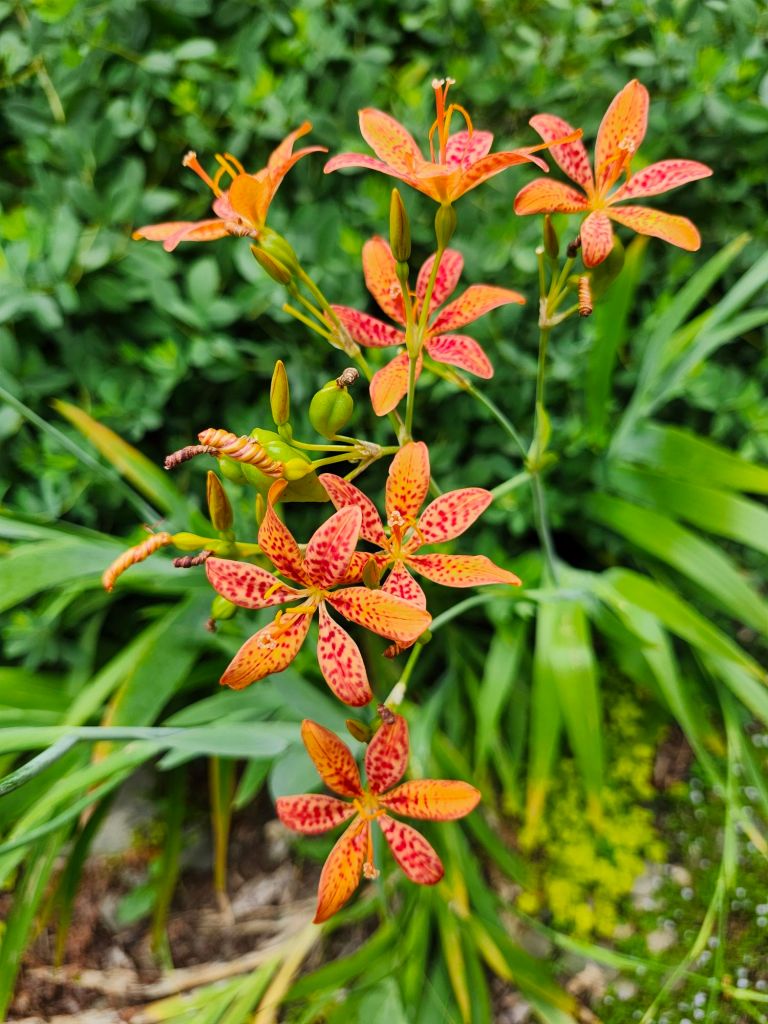
I am not surprised by my consistent failures with growing from seed. While established plants can be set out with little aftercare, seedling trays demand regular attention. Perhaps my seed starting is a project better suited to the high school horticulture class where I volunteer. Surely, the scattered attentions of high schoolers are superior to mine.
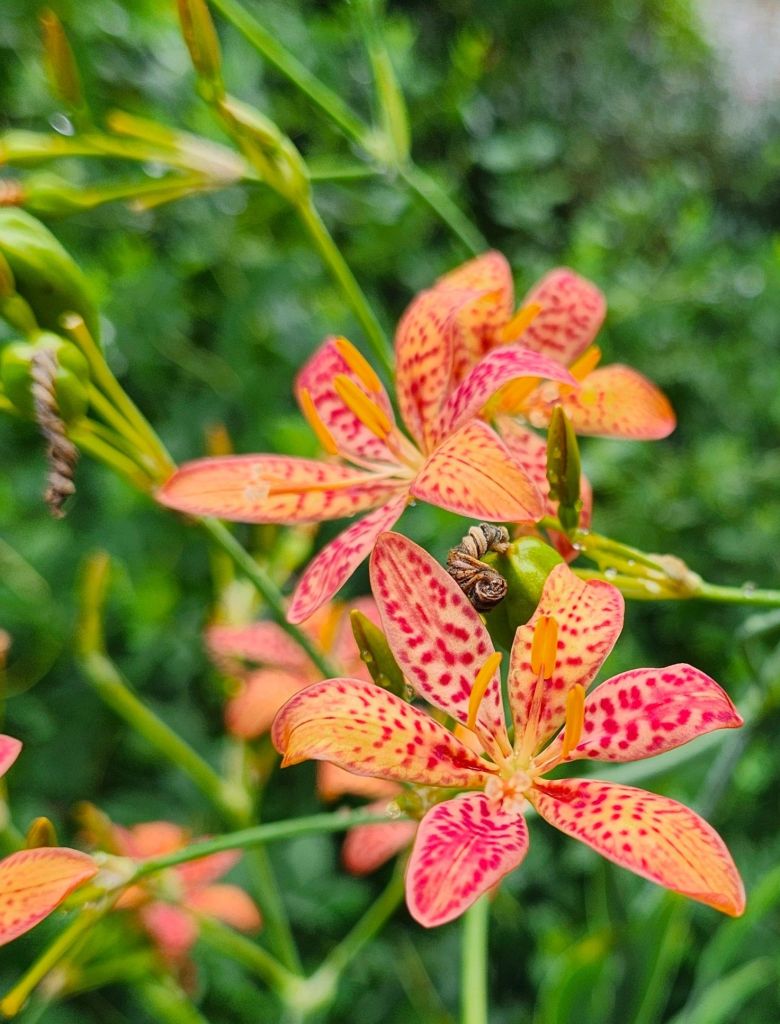
In any case, blackberry lilies are favorites of the midsummer garden though several have become step-overs with foliage and flowers leaning far over narrow paths. Occasionally, I’ve supported ones that flop, but it’s not really much effort to step over the few that fall onto the stones.
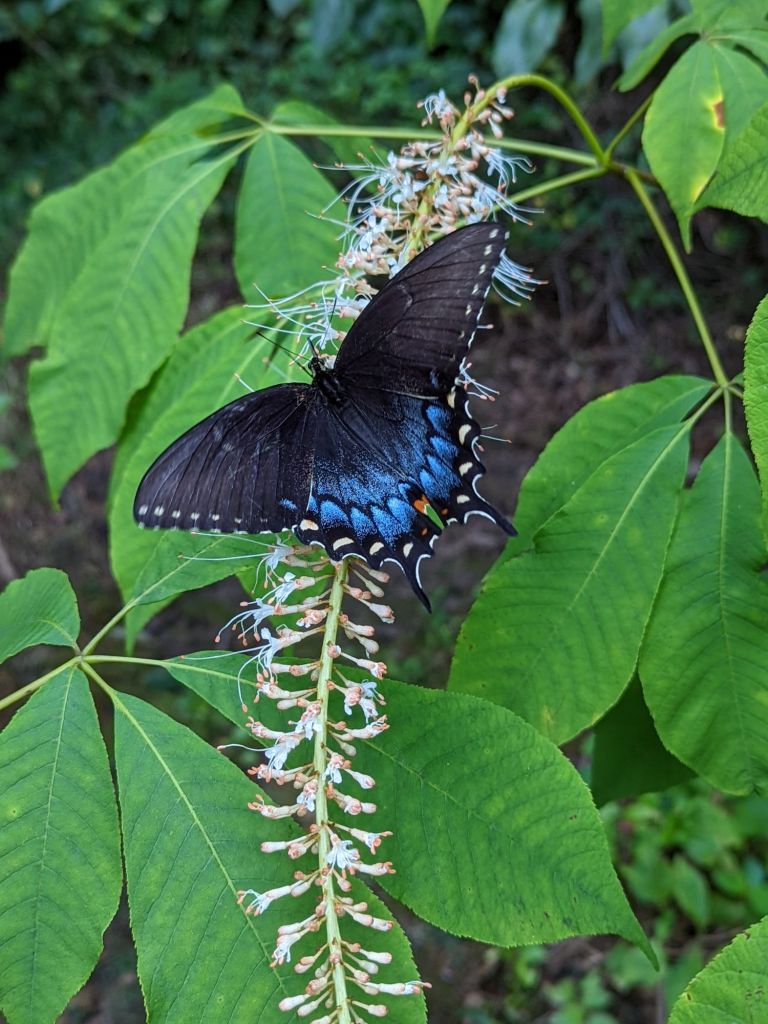
Bottlebrush buckeye (Aesculus parviflora, above) should be more widely planted. It’s not rare, though with July flowers, it is largely ignored by spring shoppers. Butterflies do not ignore it. Unfortunately, I traveled for decades on business at the time the bottlebrushes flowered, and I’ve just returned from a vacation to find the fading blooms. I must adjust my schedule in the future.
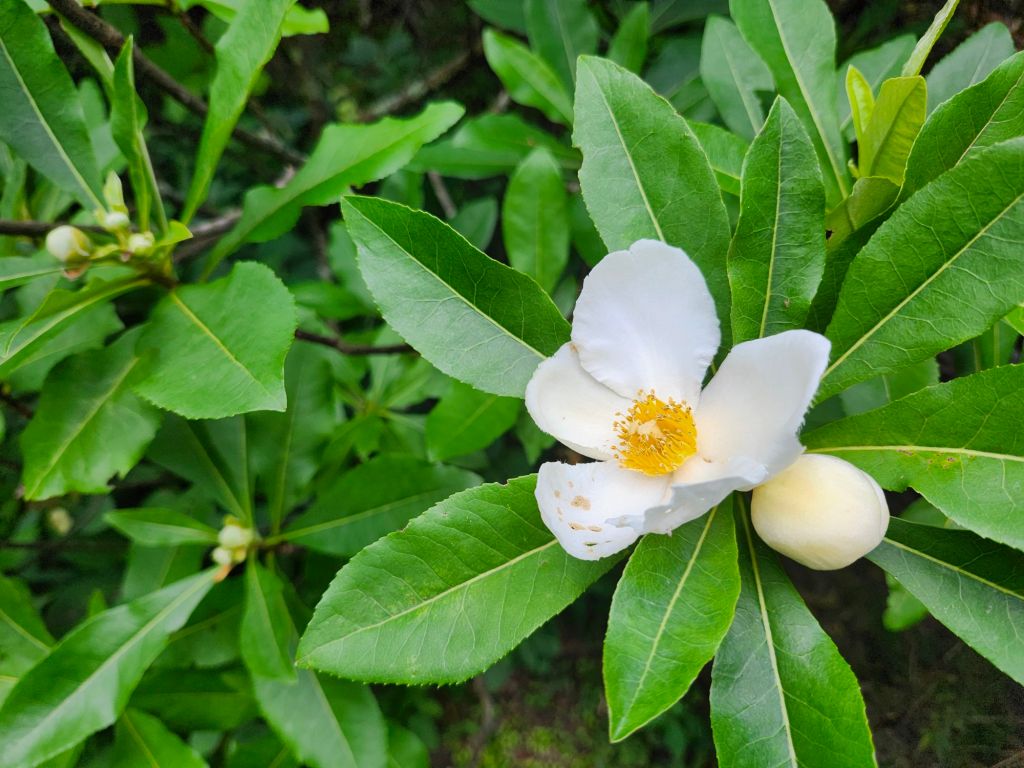
Camellias in midsummer? Of course not, but flowers of the shrubby Gordlinia (x Gordlinia grandiflora, above) could easily be mistaken. The tree is a cross between two camellia relatives, Franklinia and Gordonia, with similar blooms. Mine was planted when a long-time favorite Franklinia (Franklinia alatamaha) perished after a steady decline in soil that became increasingly damp. A moisture-loving yellow-twigged dogwood has flourished in the space while the Gordlinia was planted on higher ground where it flowers into September.
 Ramblin' through Dave's Garden