There are many native plants in the garden, but these alone are not adequate to fulfill my passions. While varied selections of redbuds and dogwoods are arguably native (with some non-natives), the numerous Japanese maples, several magnolias, beech, and others originate from other parts of this glorious planet. I must have these, and many more.
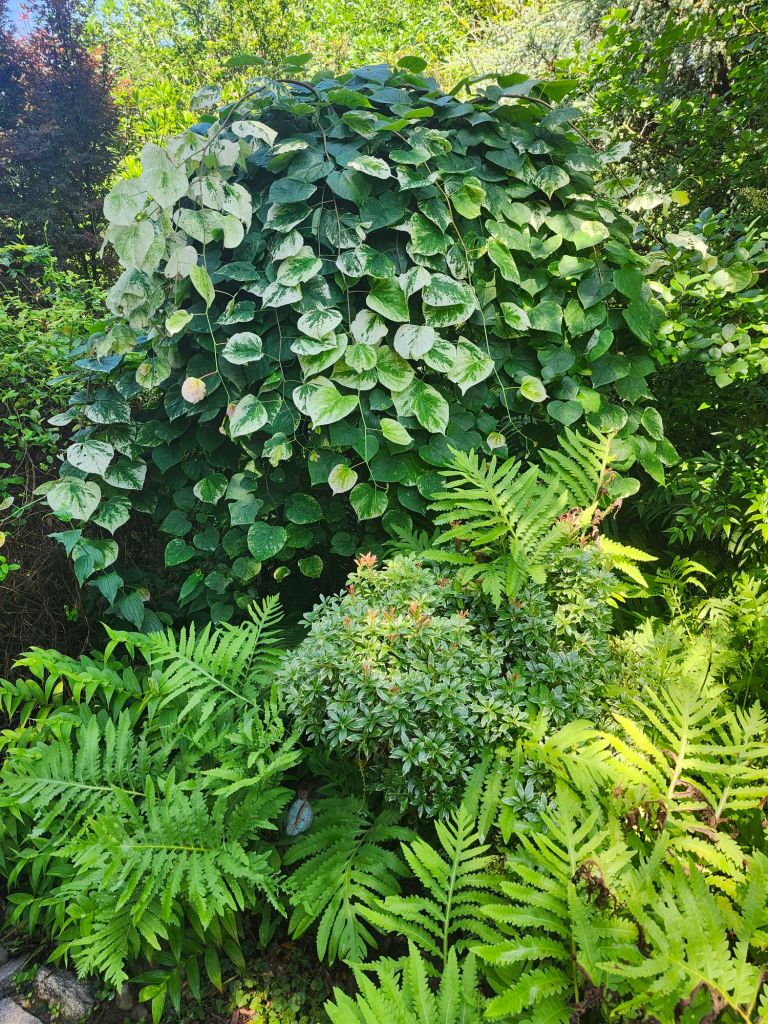
While thirty-five Japanese maples consume the widest spread of the tree canopy, shrubs and perennials occupy the spaces beneath. I am particularly inspired by gardens in the Pacific Northwest, where many Asian species thrive (though redbuds and dogwoods seem better suited to East Coast heat and humidity). Try as I must, I can not replicate the mild weather, so many plants grow satisfactorily while not thriving. Some require time to settle in.
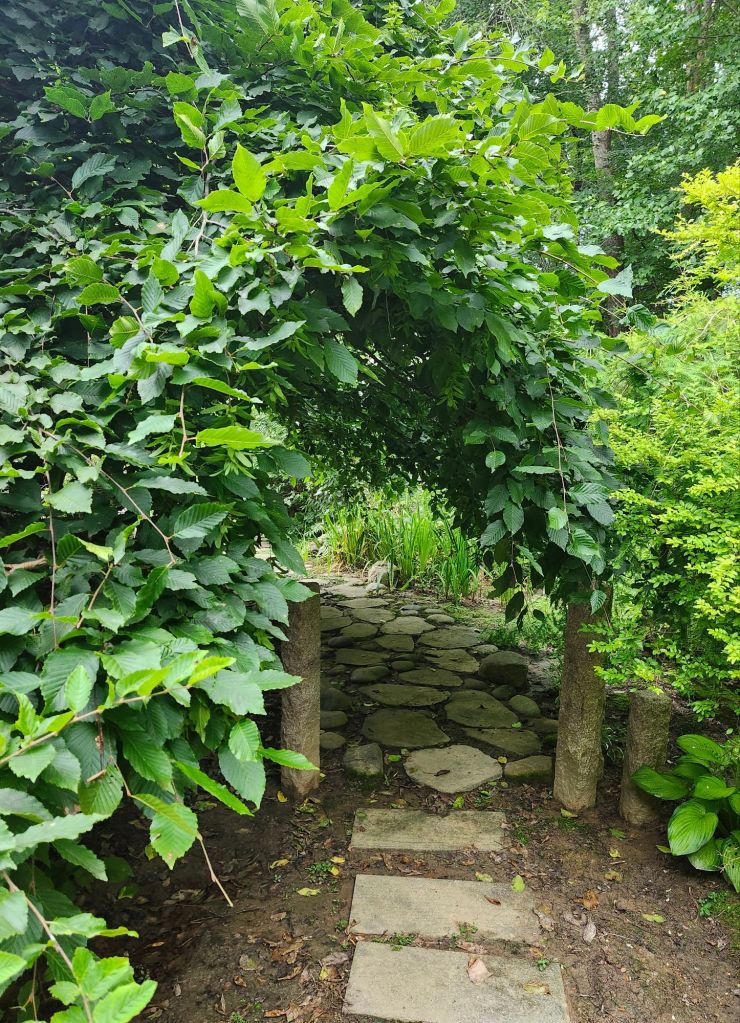
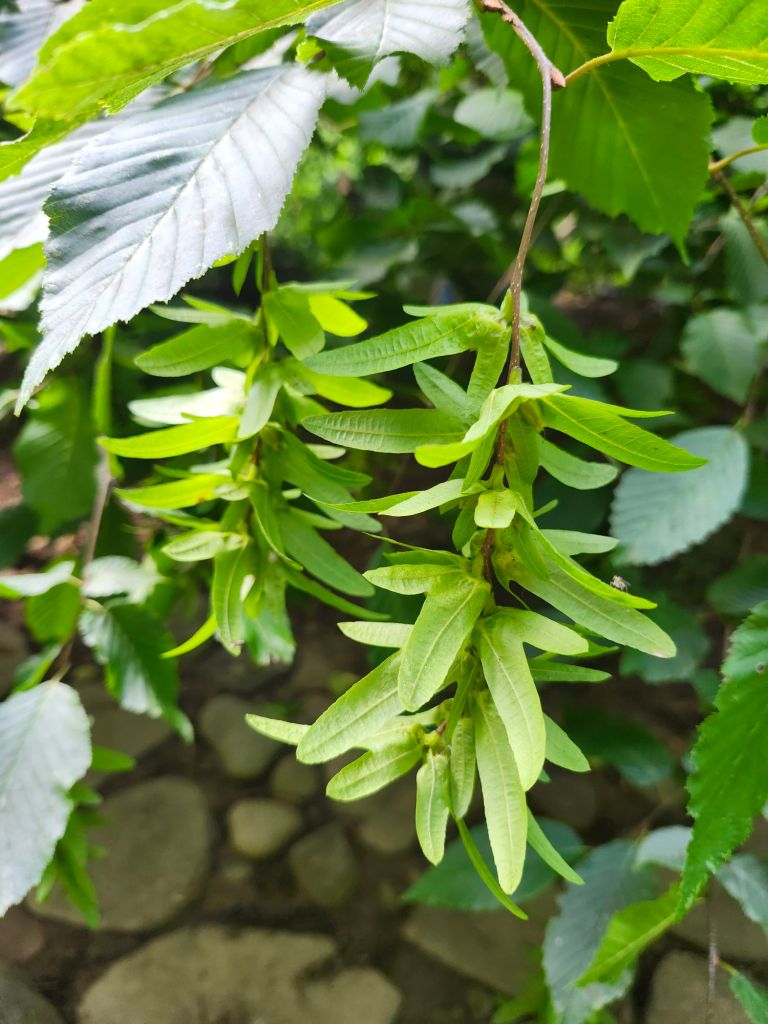
A hornbeam (Carpinus betulus ‘Pendula’, above) with pendulous branching quietly separates two areas of the rear garden with a tunnel carved for passage. I must stoop slightly to enter the lower rear garden and more so after a rainstorm. The pendulous seeds (below) are an understated highlight, but otherwise, the hornbeam serves its purpose without seeking attention.
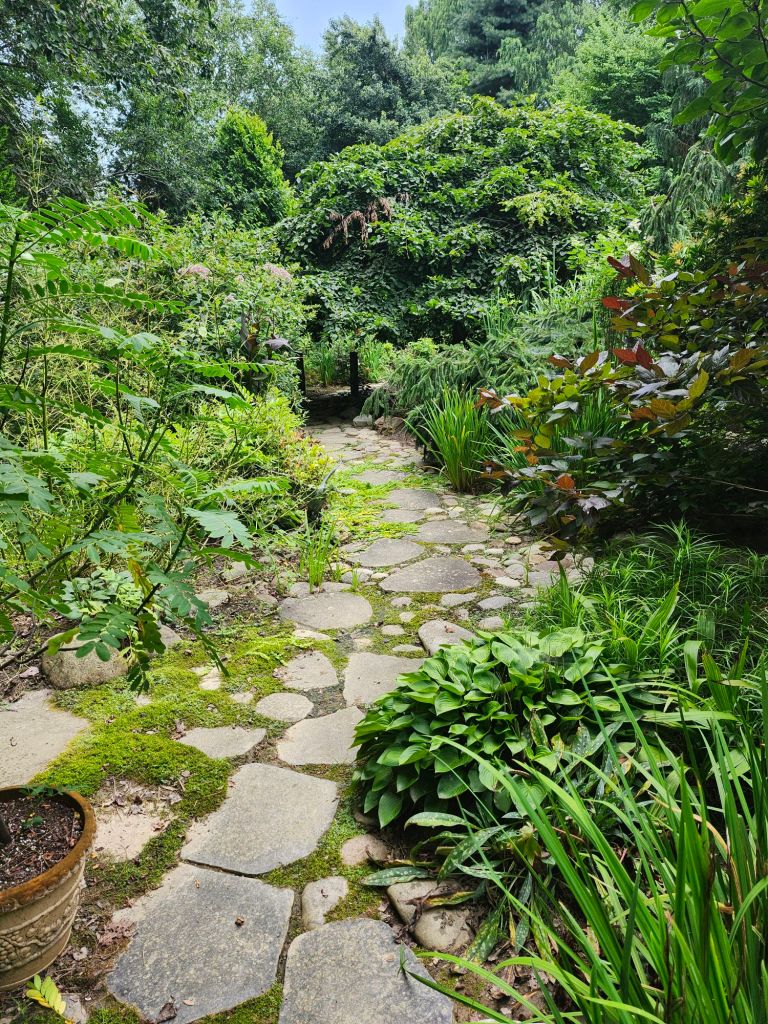
At this point, the garden appears at its end (above), or at least that is frequently the thought of visitors until they are led further to its hidden lower third. In contrast to the wide-spreading hornbeam, I’ve attempted to jam more favorites into the garden by planting more narrow trees with columnar forms.
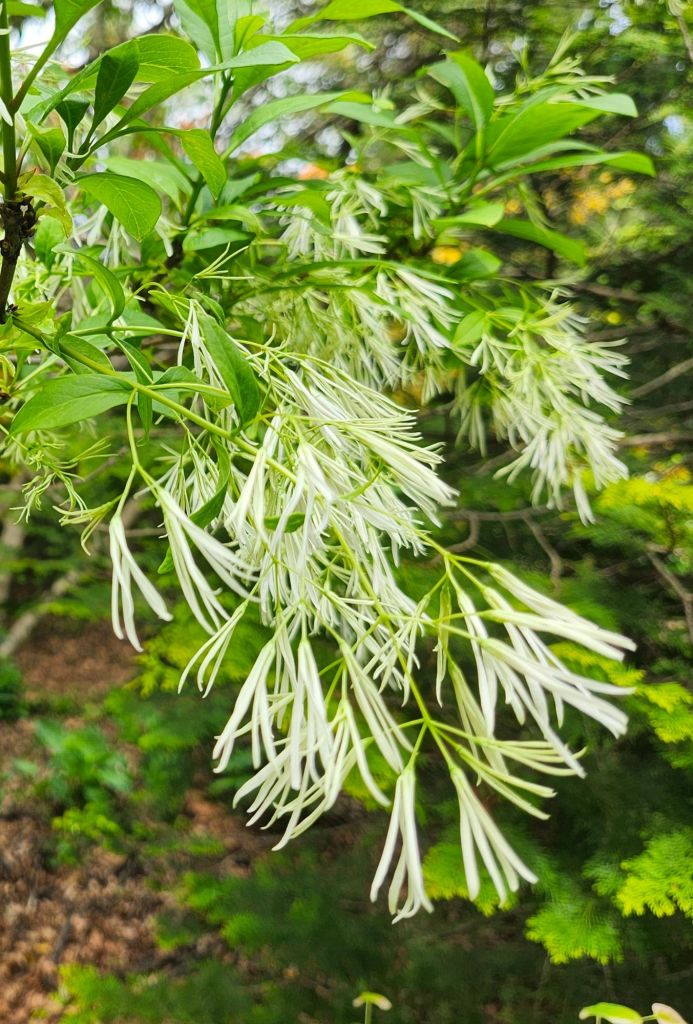
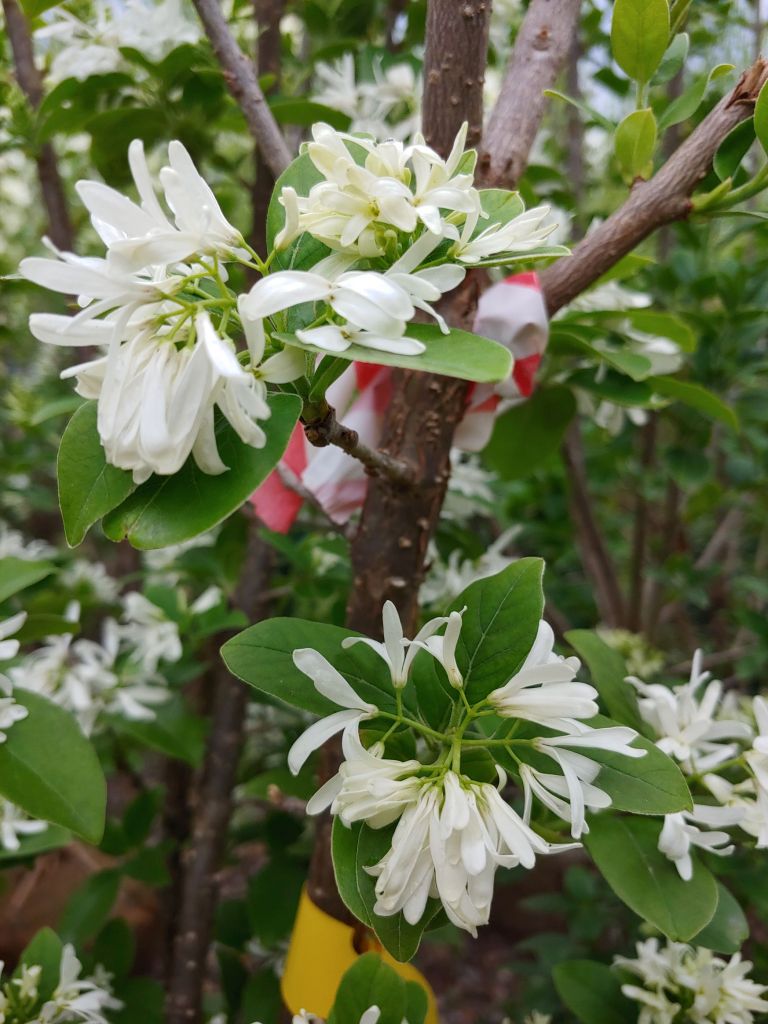
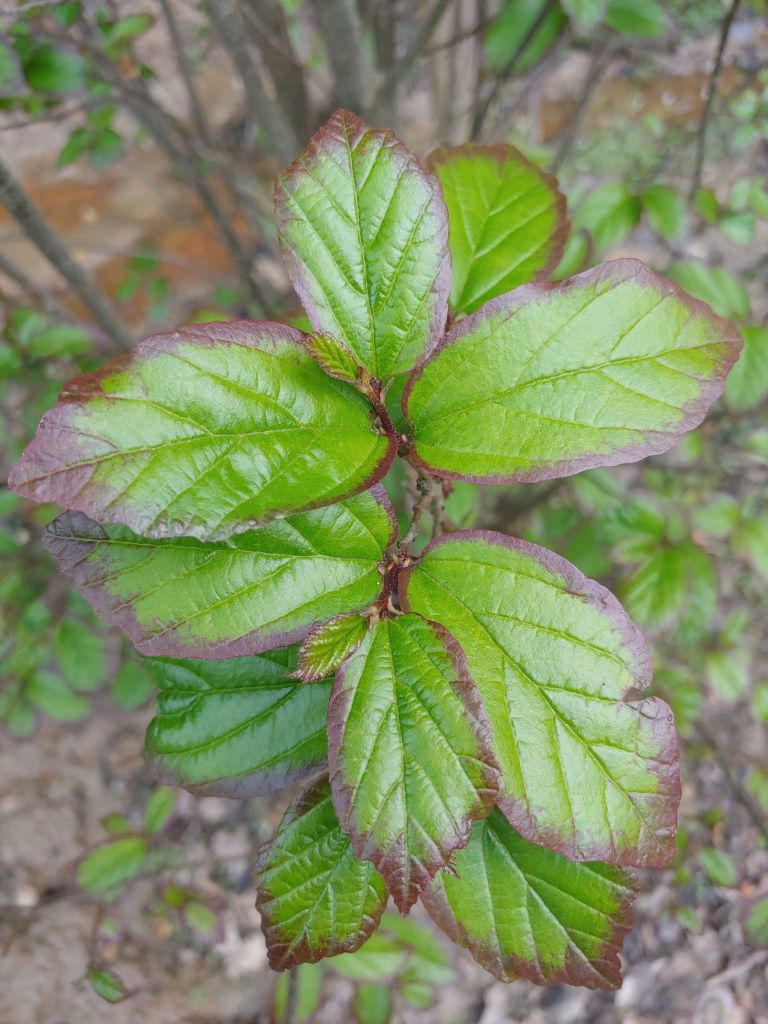
While the lacy, white blooms of several native fringetrees (Chionanthus virginicus, above) are dependable in shaded and part sun areas of the garden, flowers of the broadly columnar ‘Tokyo Tower’ Chinese fringetree (Chionanthus retusus ‘Tokyo Tower’, above) are mysteriously absent many years. Flowers of the slightly narrower Persian Spire parrotia (Parrotia persica ‘JL Columnar’, below) are insignificant, but the early-season leaves bordered in purple are exceptional. Lower branches of both trees consume an ever-widening space, so I expect I’ll prune to avoid competition with lower-growing neighbors. Someday.
When we first moved to this property I was quite pleased to see native jack-in-the-pulpits (Arisaema triphyllum) and mayapples (Podophyllum peltatum) in the woodland that borders the garden. When trees and shrubs I planted increased shade in the side garden, handfuls of the ephemerals were transplanted, but I began adding Asian mayapples and Solomon’s Seals (Polygonatum) that persist until frost.
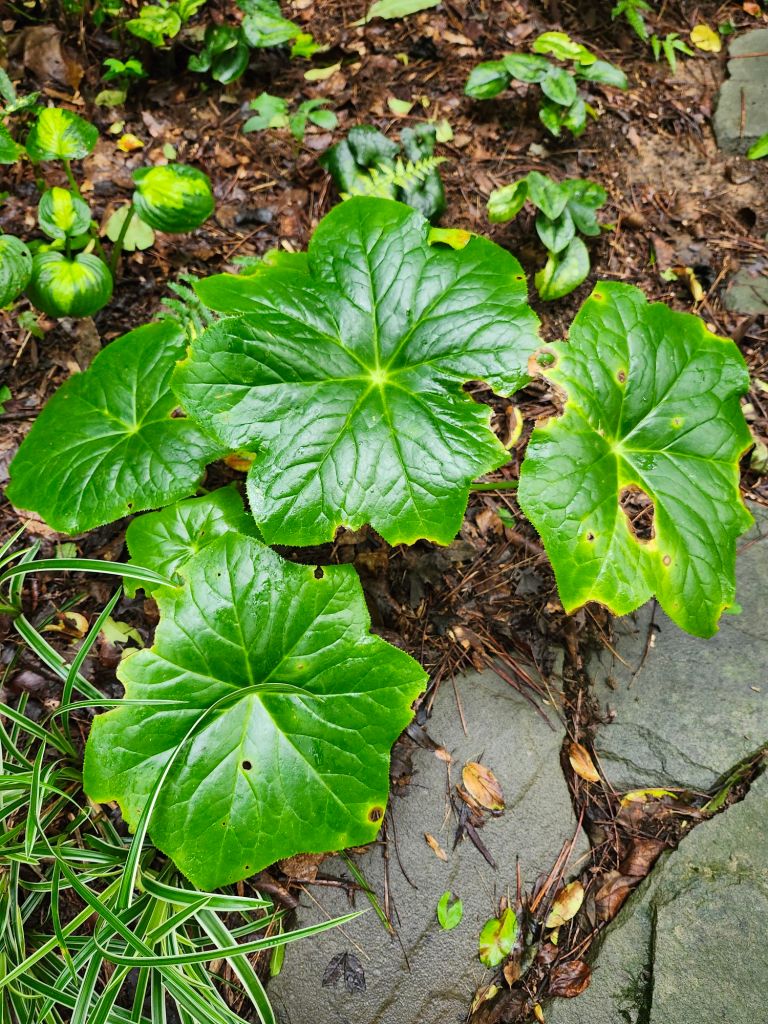
The large-leafed Asian mayapples (above) are particular favorites though they lack the vigor of ones that I’ve seen growing in the cooler Pacific Northwest. Still, one day they’ll get there, as I continue to add mayapples that can be obtained for reasonable prices.
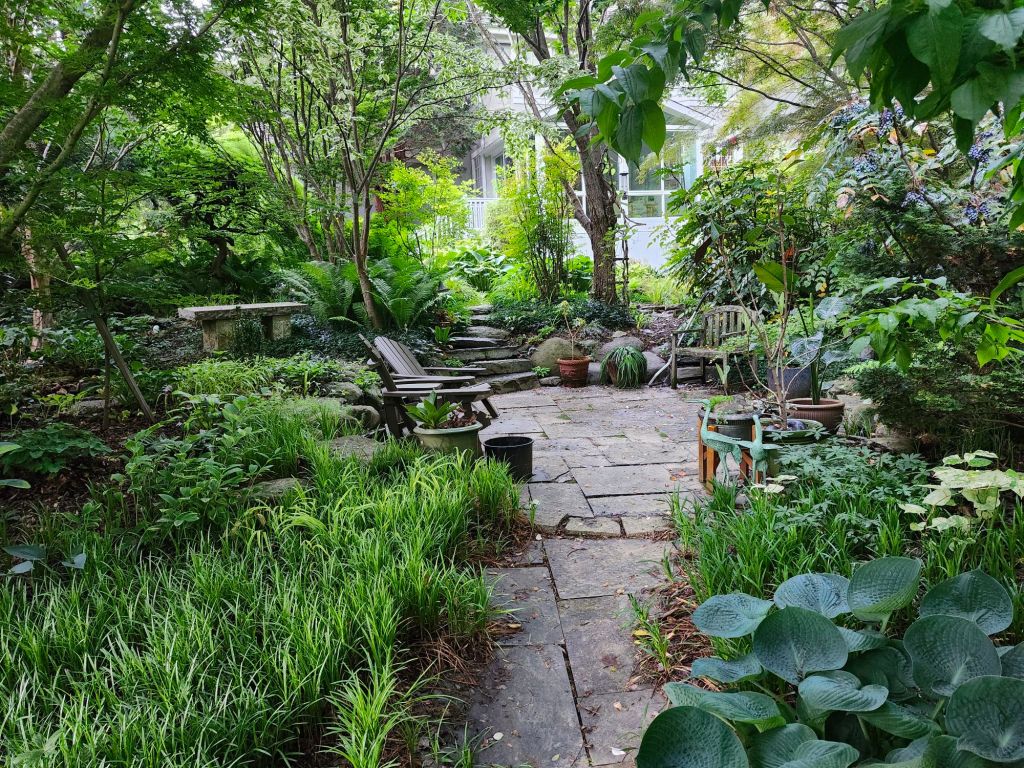
In shaded areas where flowers are more scattered, varied foliage size and texture are the primary considerations, and of course, there is a limit to how many hostas should be planted.
 Ramblin' through Dave's Garden