There’s good news and not so good, but little that’s truly bad. After a pessimistic start in very early spring, I’m now more positive about the garden’s hydrangeas.
Typically, flowers of Oakleaf hydrangeas (Hydrangea quercifolia, below) fade gracefully to pink then tan despite scorching summer temperatures. But, not this year when they have quickly turned brown. Perhaps this is due to the abundant rainfall through July, but as is often the case, the cause is unclear.
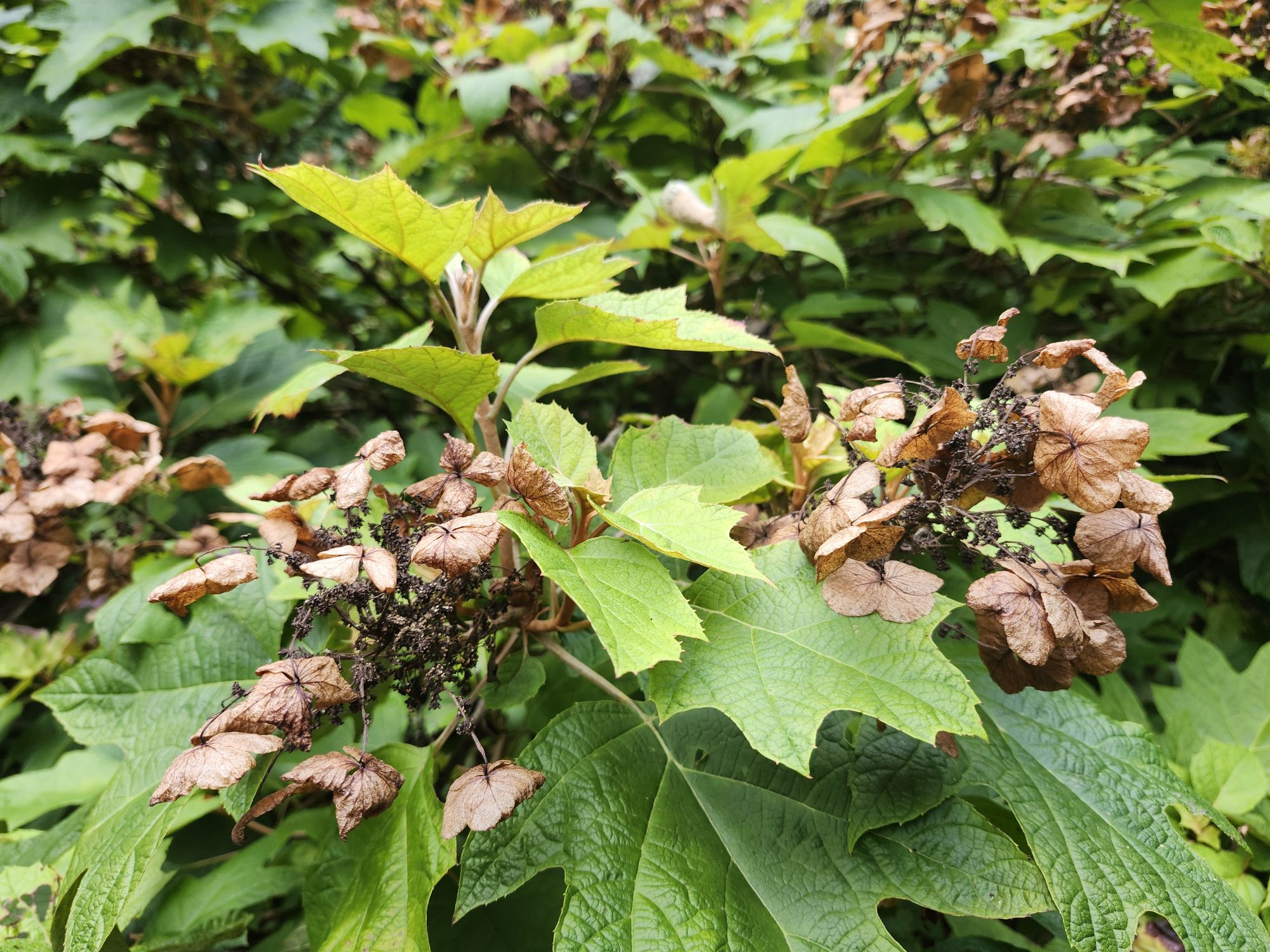
One oakleaf is struggling a bit after the large Bigleaf magnolia (Magnolia macrophylla) fell on it in a storm several weeks ago. Nothing was broken, and the debris was cleared after a few days, but it looks unhappy while other hydrangeas are thriving after our damp July. It’ll be okay, but along with a few others, it’s unlikely to flower in the dense shade of the side garden.
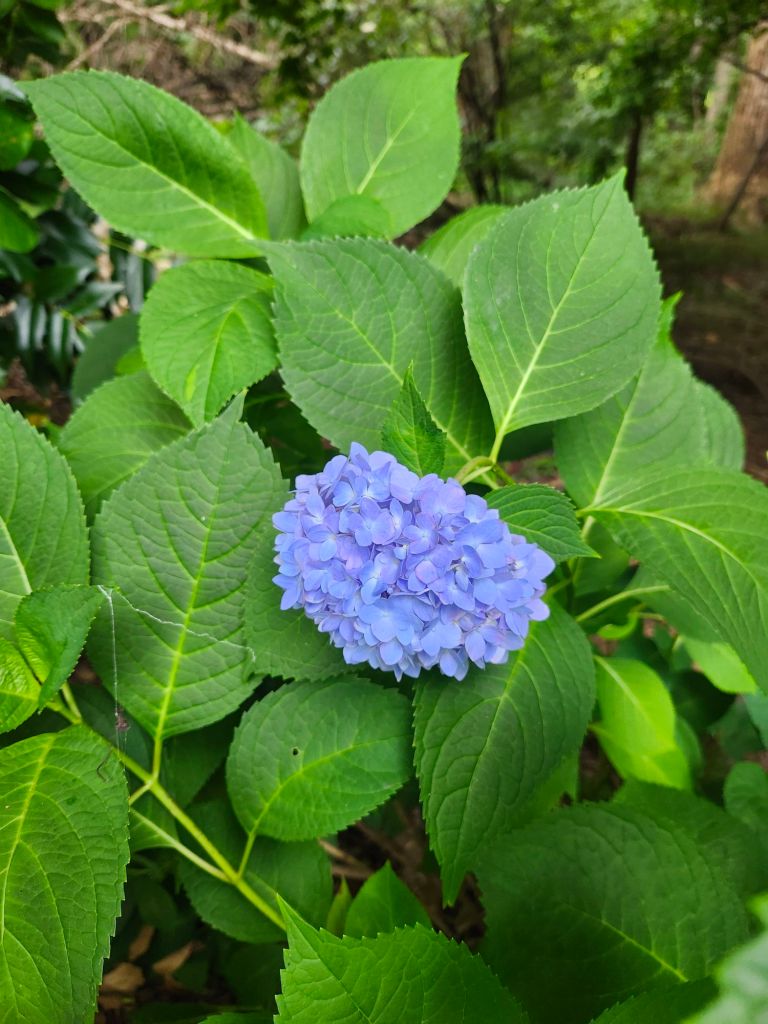
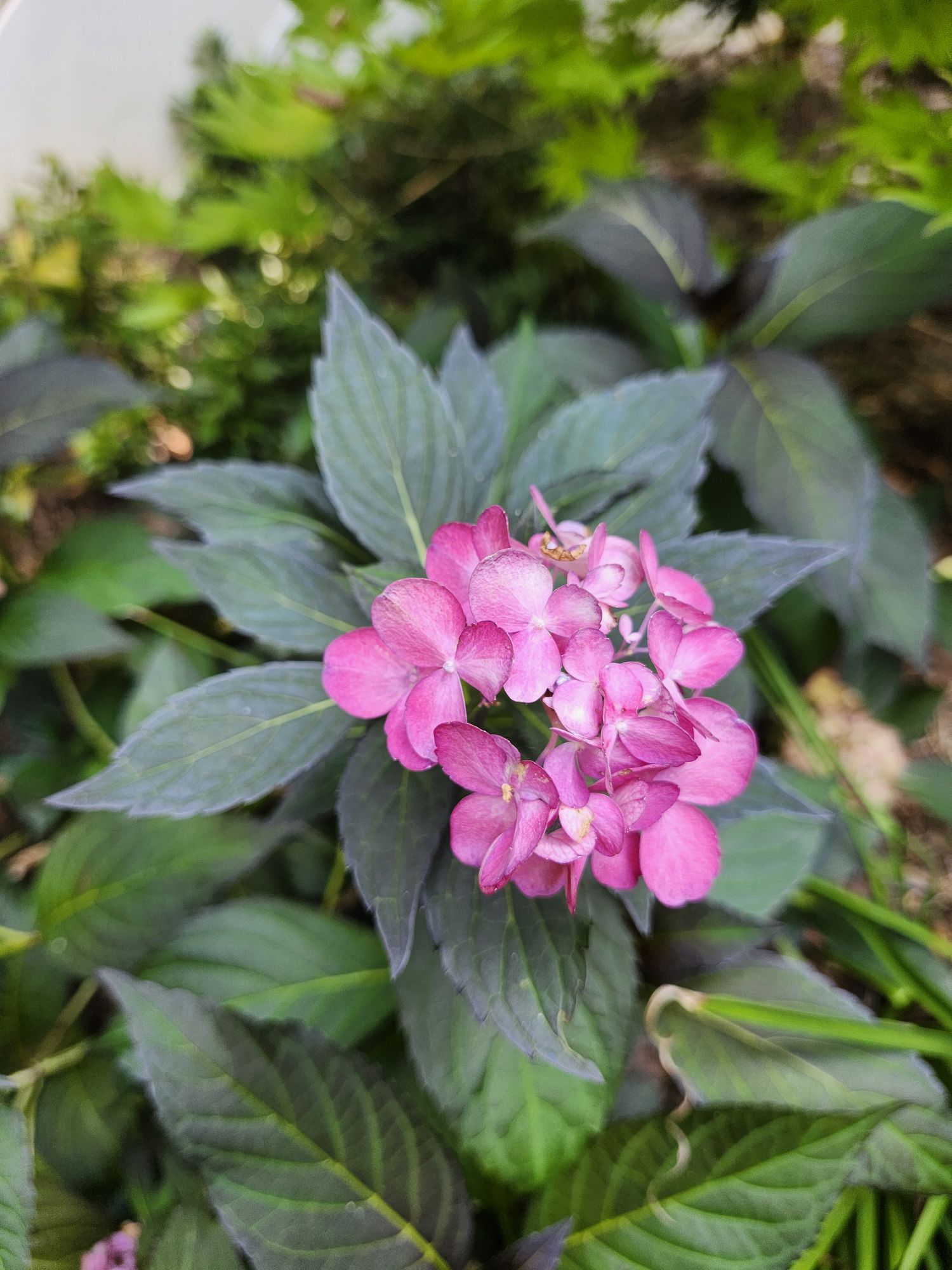
After suffering substantial dieback of stems in winter, and then damage from a late frost as spring growth had begun, I expected few blooms on bigleaf hydrangeas (Hydrangea macrophylla, above). Of course, I was wrong, though several have barely flowered. Remontant varieties (flowering on old and new wood) recovered to flower a few weeks later as buds formed on new growth, and a bloom or two were found near the ground on hydrangeas close to the house where stems were not damaged.
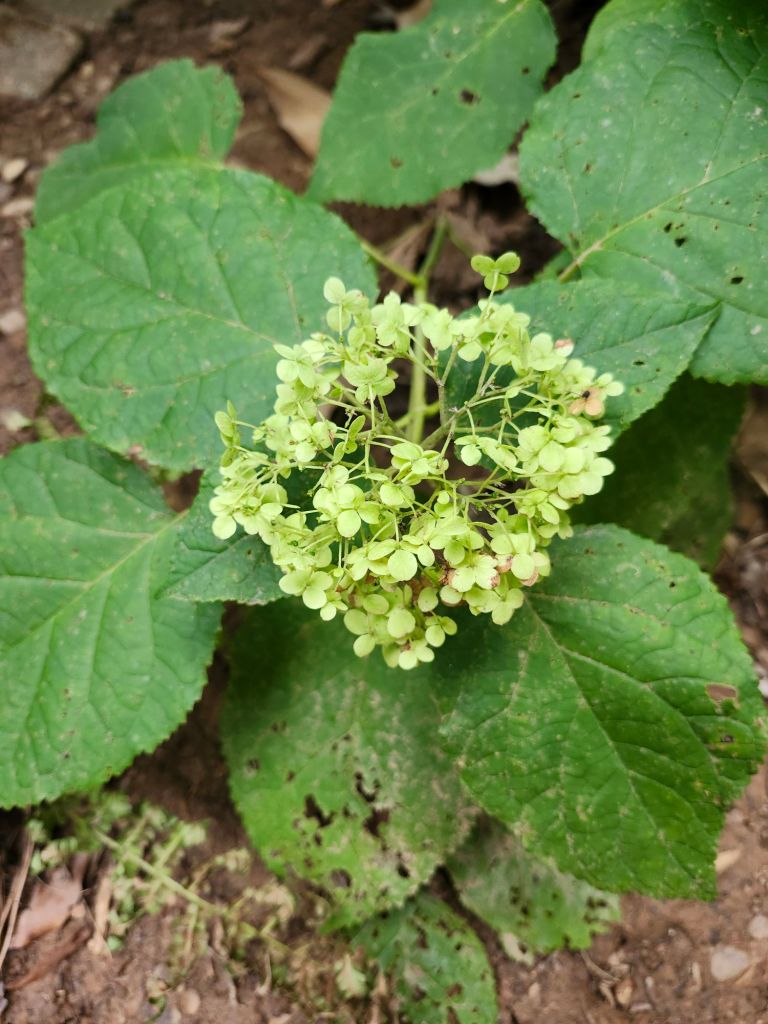
Smooth and panicled hydrangeas flower on the current year’s growth, so all flowered fully. Surprisingly, smooth hydrangeas (Hydrangea arborescens, above) suffered in the prolonged dampness through July. Flowers faded and much of tbe foliage turned brown. As rainfall became more scattered they have recovered, but one has lost all leaves.
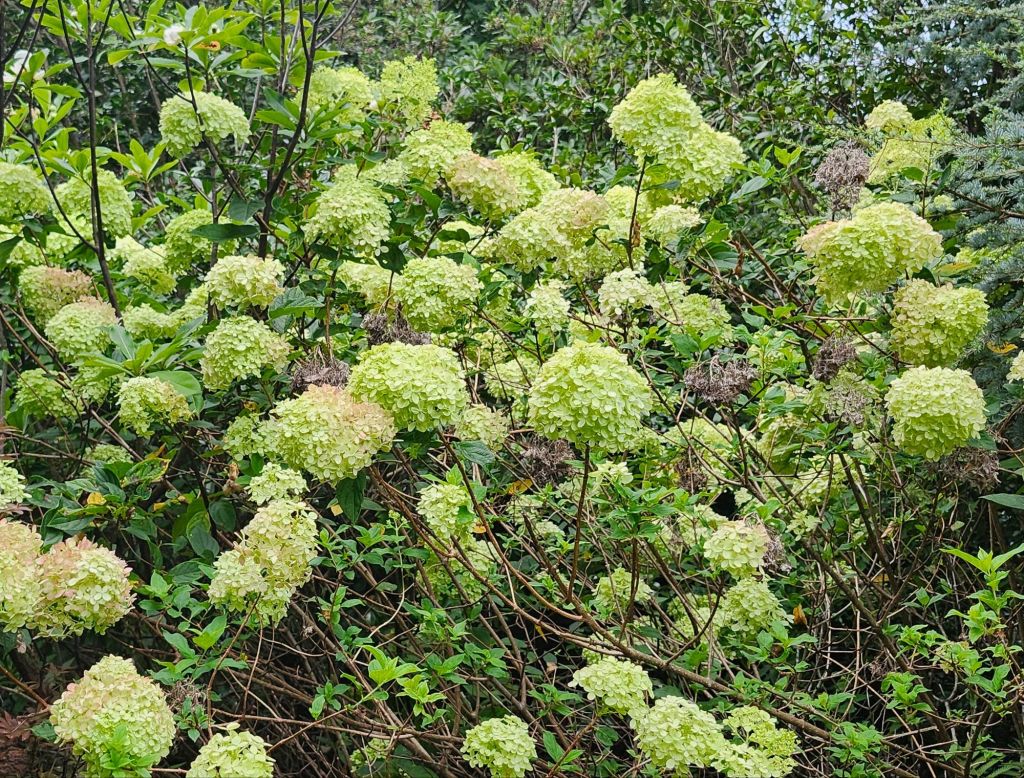
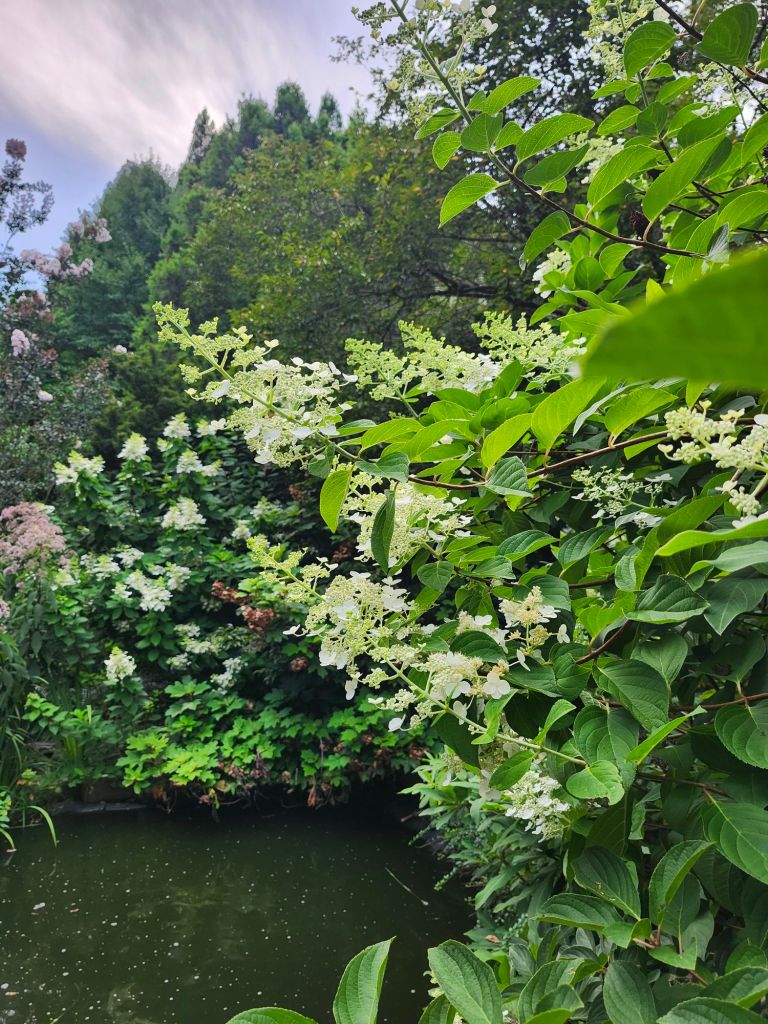
Panicled hydrangeas (Hydrangea paniculata, above and below) are the sturdiest of all, never failing to flower and surviving the coldest temperatures without damage.
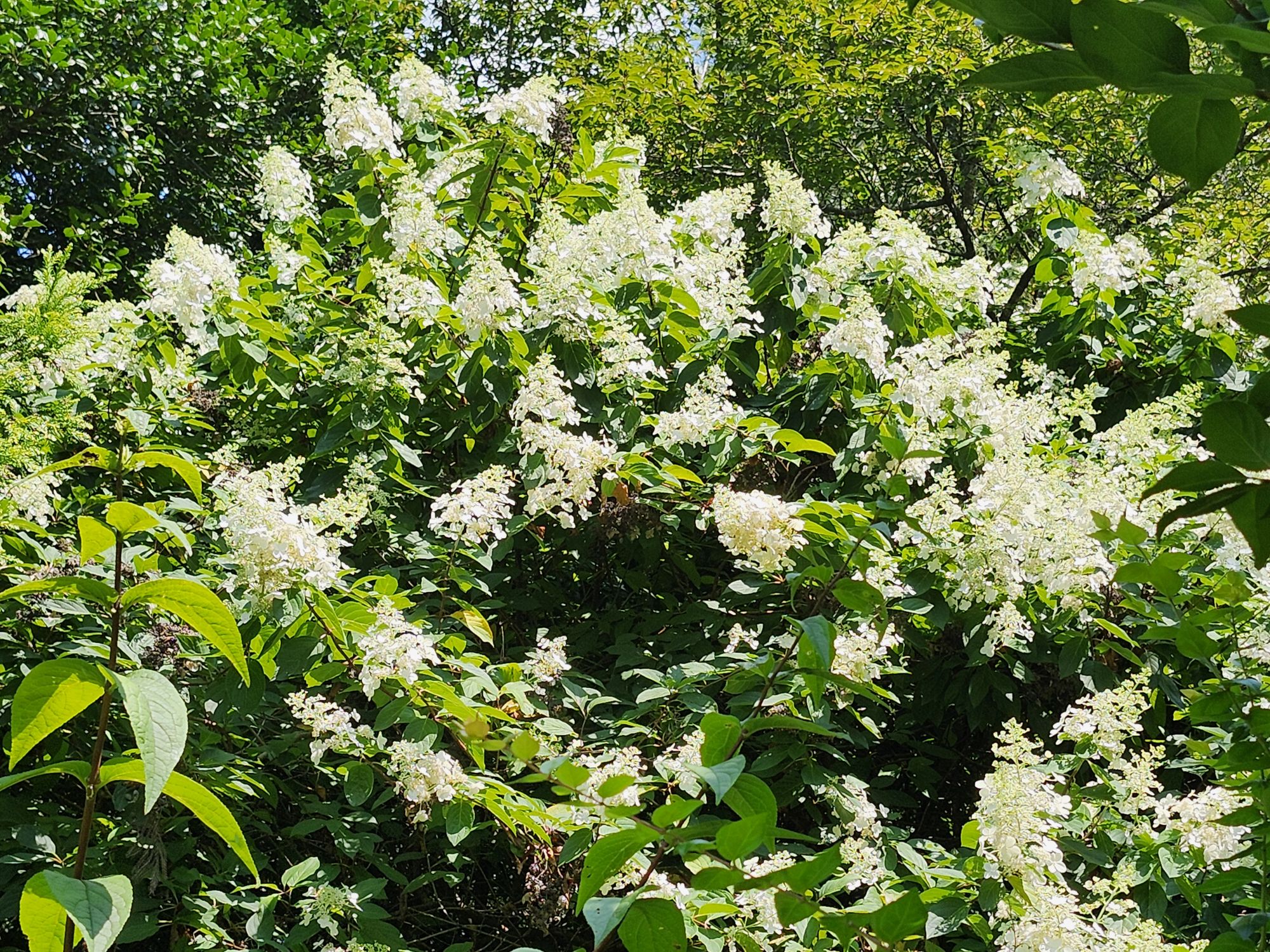
Compact varieties are recommended since ‘Tardiva’ (above) can grow over ten feet in height and width though all can be pruned severely without missing a summer bloom. Several ‘Tardiva’ seedlings have spread along the koi pond, requiring an annual chop to remain in scale with neighbors.
 Ramblin' through Dave's Garden