I have habitually referred to the Gordlinia (x Gordlinia grandiflora, below) as a shrubby tree with its dense growth and comparative lack of height. No longer. While still multi-branched, I see that I must now accept that it has achieved tree status as it has grown to ten feet or slightly taller.
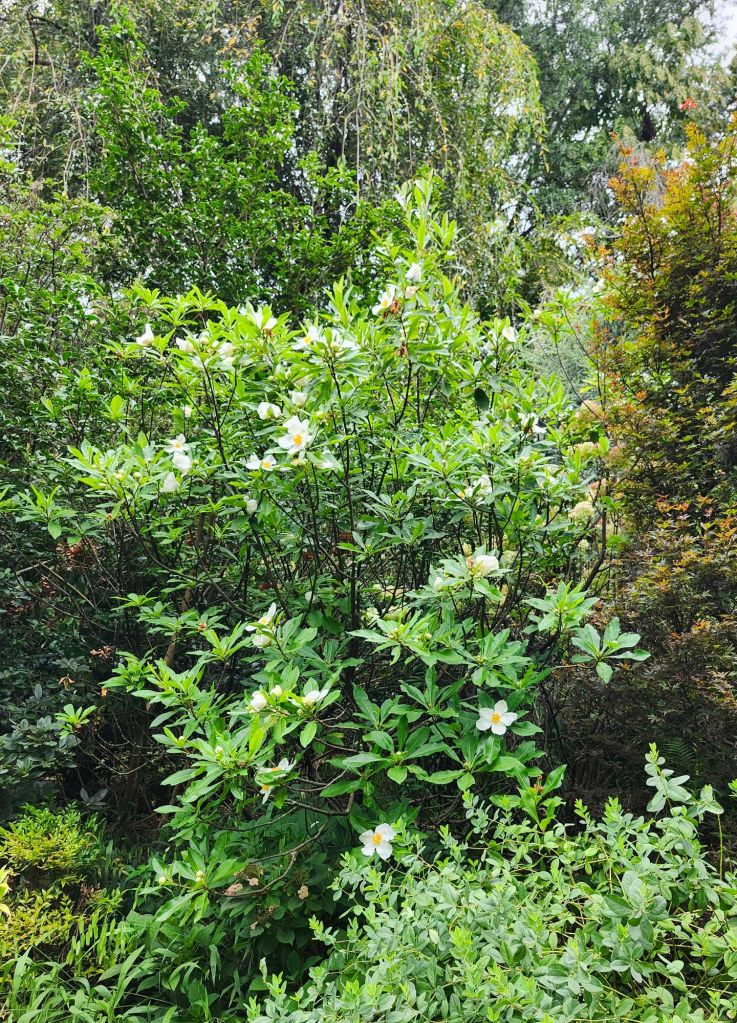
The gordlinia still stands below neighboring camellias and deciduous azaleas, but now it stands well above and is a considerable presence behind the yellow-leafed Chardonnay Pearls deutzia. As a replacement for a glorious Franklinia that perished after a years-long struggle in damp ground, the gordlinia is just below the top tier of favored trees in the garden. As an obsessive collector of trees, that is a high compliment and it is disappointing that the small tree is not more readily available.
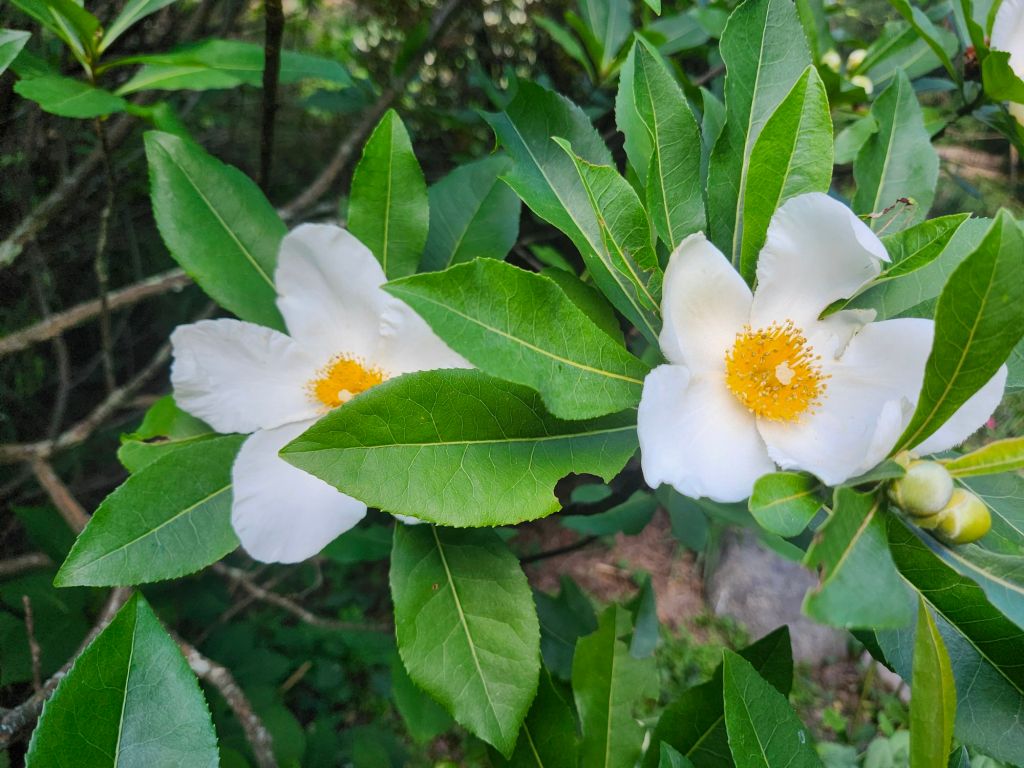
The flowers of gordlinia are familiar (above), nearly identical to ones of Franklinia, but also similar to related camellias and stewartia. Franklinia and gordlinia share this period in August to reach their peak bloom, and along with its recent growth are more abundant flowers.
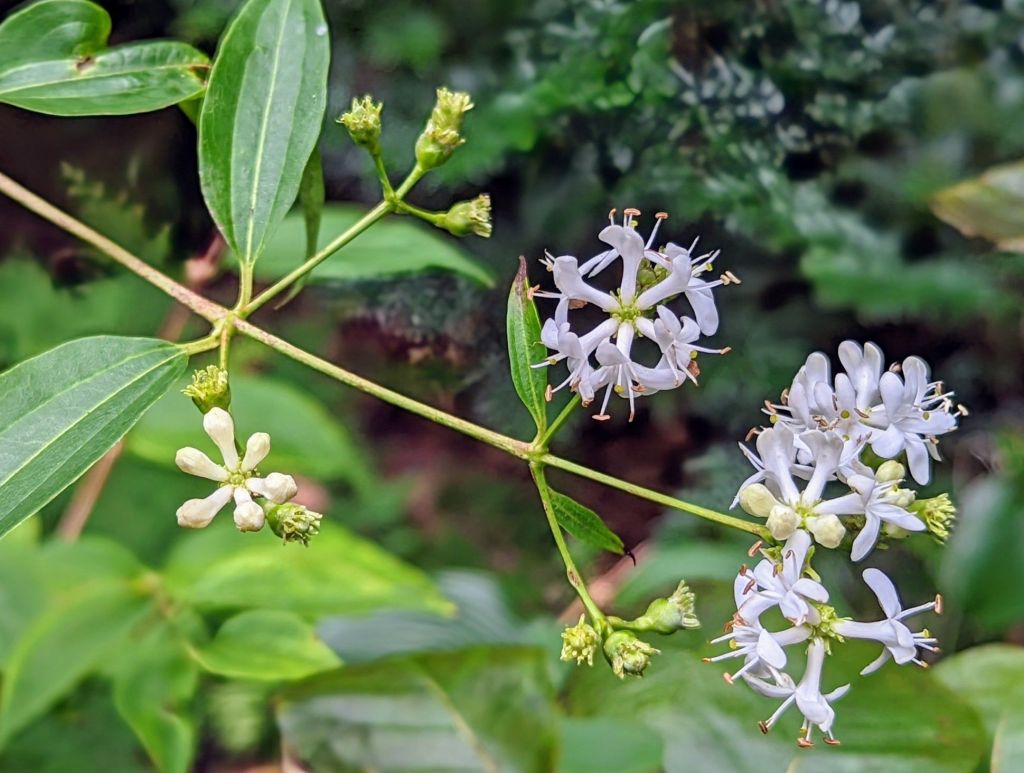
I am quite pleased with one of two Seven Son trees (Heptacodium miconioides, above) that replaced one lost years ago in a summer storm, though not the one I expected. The more prominent of the two is too shaded to flower at its best, while the second, which I had little hope for its survival in damp ground, has thrived and is flowering despite sun exposure only at midday.
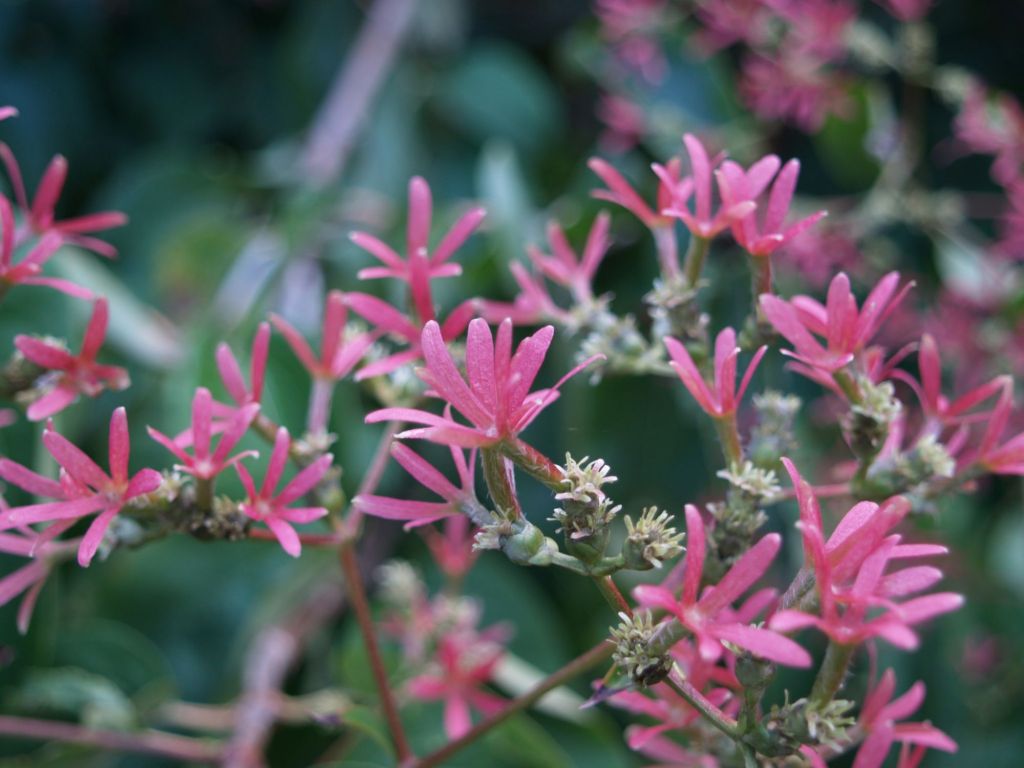
The Seven Son’s clustered white flowers are unremarkable, though still welcome in late summer. The blooms are favored by bees, but after the flowers fade, red sepals (above) are ornamental through early autumn. In both positions in the garden, the Seven Sons are splendid small trees. After a lengthy wait, I was pleased to find the two that have quickly grown to fill their spots. A red horse chestnut (Aesculus x carnea) that has become a favorite replaced the original Seven Son that was damaged, and how lucky to now have the horse chestnut and the Seven Sons.
 Ramblin' through Dave's Garden
Is red horse chestnut popular there? I have not seen one in years, and maybe not since the 1990s. What is weirder, though, is that I do not remember seeing them in the Pacific Northwest either. I can understand their lack of popularity here, but not there.
For our area, the selection of trees is dictated by autumn foliage color. Acer rubrum cultivars are the trees of choice, unfortunately with little exception. Of course, this dictates that I would plant anything except a red maple. I rarely see a horse chestnut or any related trees.