Today, I wake to cool breezes and clear, blue skies. Overnight temperatures fall into the fifties, not the stuffy seventies more typical for August. We’re in desperate need of rain, but otherwise, how could late summer be any better?
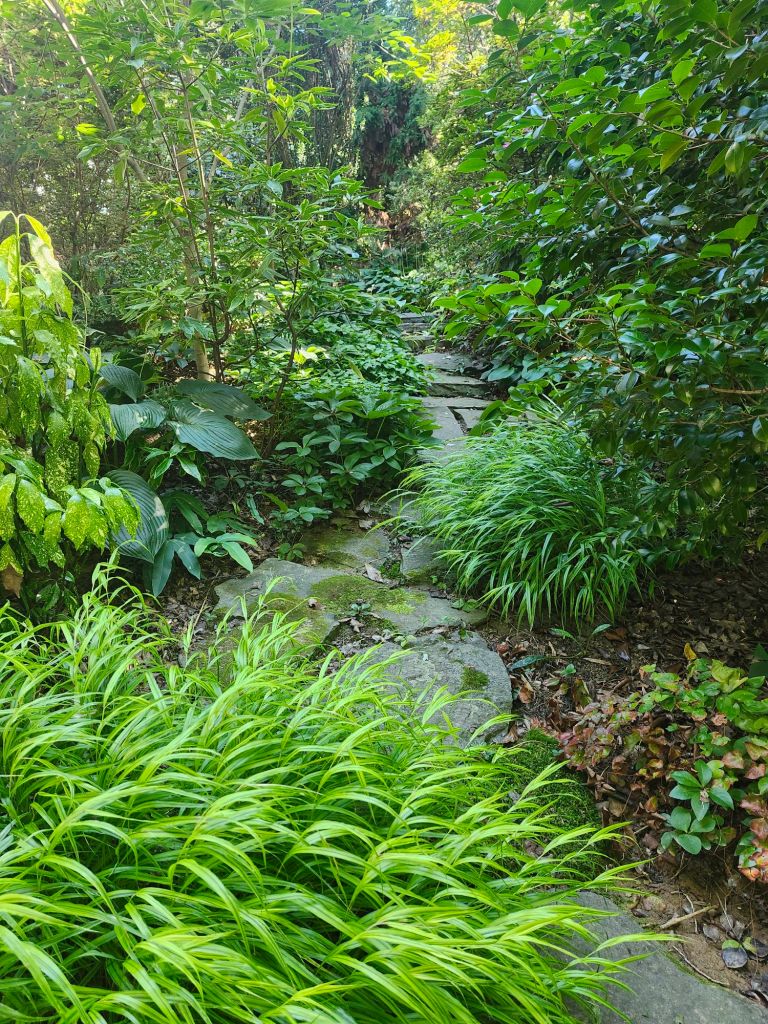
The garden shows signs of dryness, but while I’ve had to water the containers a time or two, the garden survives without me dragging hoses around to irrigate. A chance of rain is forecast for late in the week. I’ll be very disappointed if it doesn’t.
Despite the dryness, I’ve been moving a few plants. I’m still reviewing ideas to fill the space of the bigleaf magnolia (Magnolia macrophylla) that fell in late June. I think the mid-afternoon glimpse of direct sun is good for the side garden, but visually, more is needed.
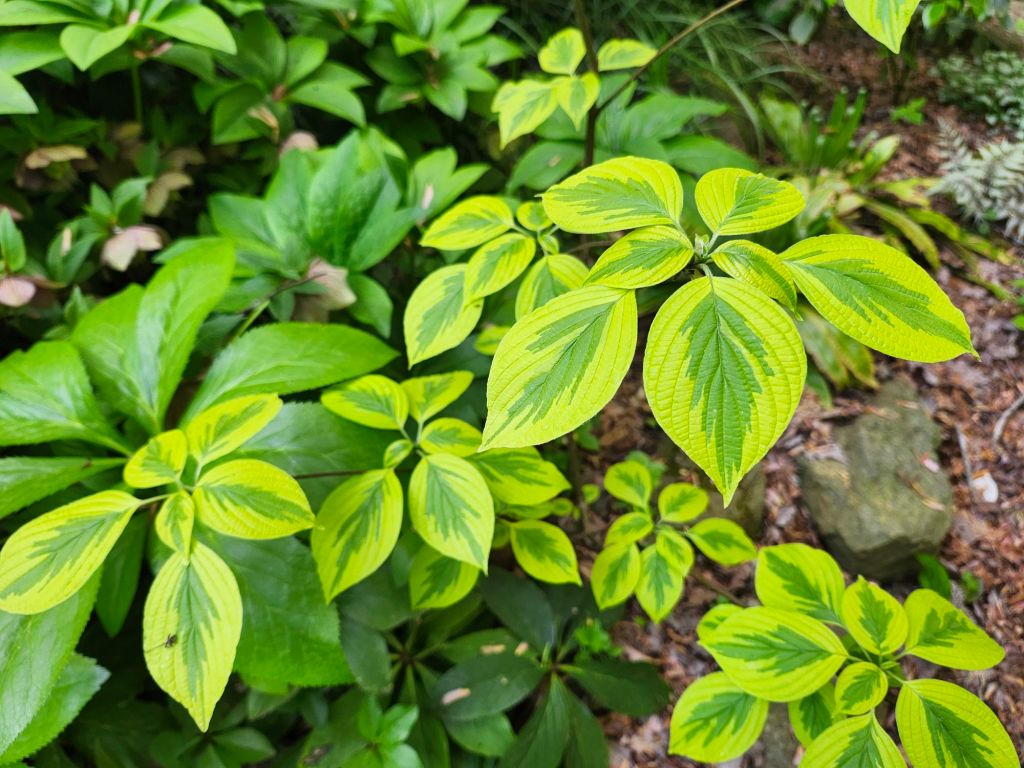
A small Wedding Cake dogwood (Cornus controversa ‘Variegata’) has been purchased for autumn delivery, but it will be years before it makes much of a show in this space. Mostly, I can now stop obsessively looking for one.
With plans still flopping around, I plan to add a more substantial tree near the spot where the magnolia came down. This will be a redbud or dogwood, I’m almost certain, but I could be inspired in another direction. In any case, it will be a smaller tree that will allow more sunlight, at least until its canopy spreads.
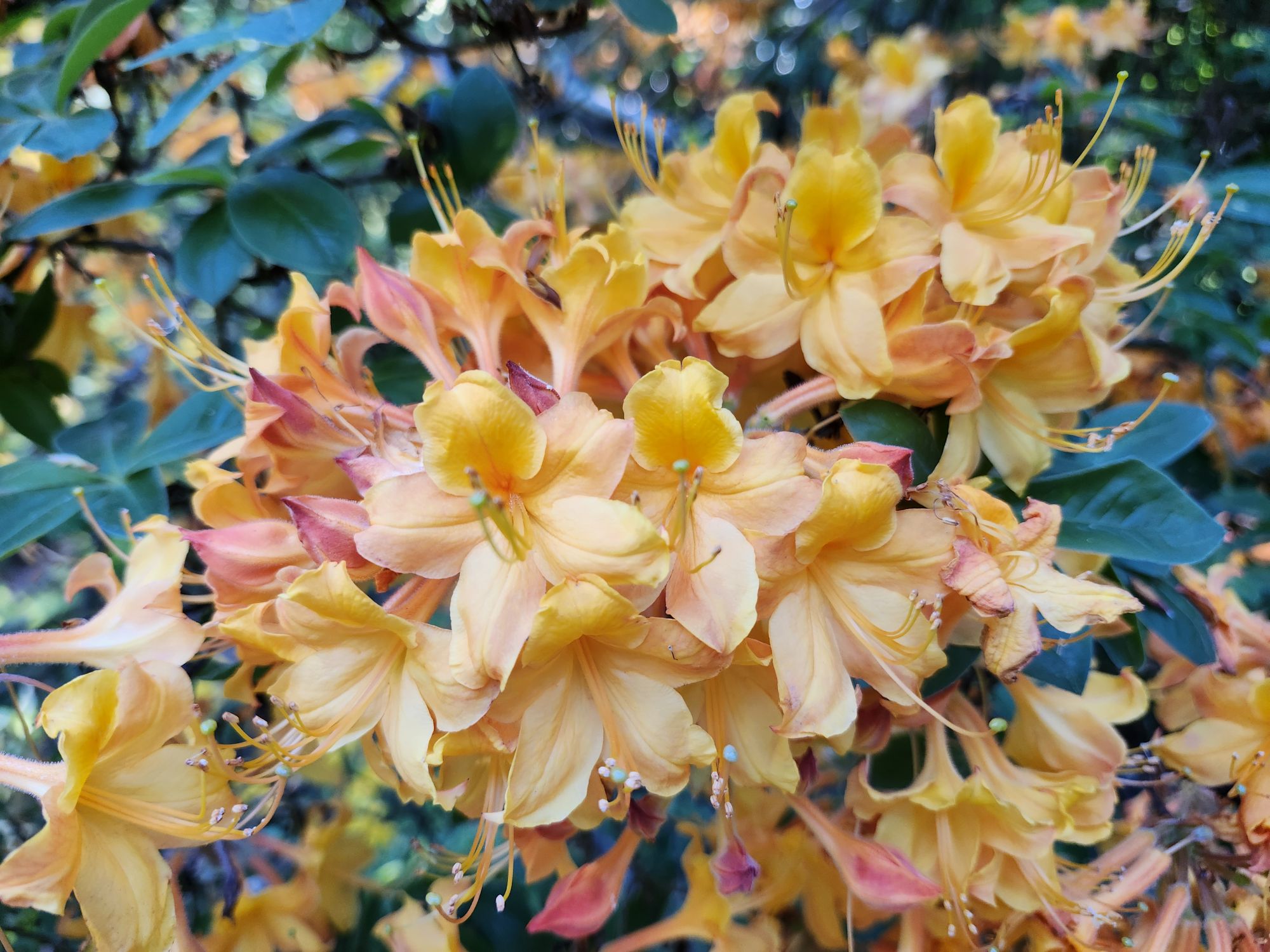
In the very short term, weeks not months, I’ve been determined to fill the space and yesterday I scouted the garden for underperformers that could be transplanted. A deciduous azalea was not flowering and was clearly ill-suited in a shadier spot in the side garden. So, despite our mini-drought, I moved it to the sunnier gap. Something else will take its place, but the azalea served no good purpose where it was. And yes, I watered it after planting.
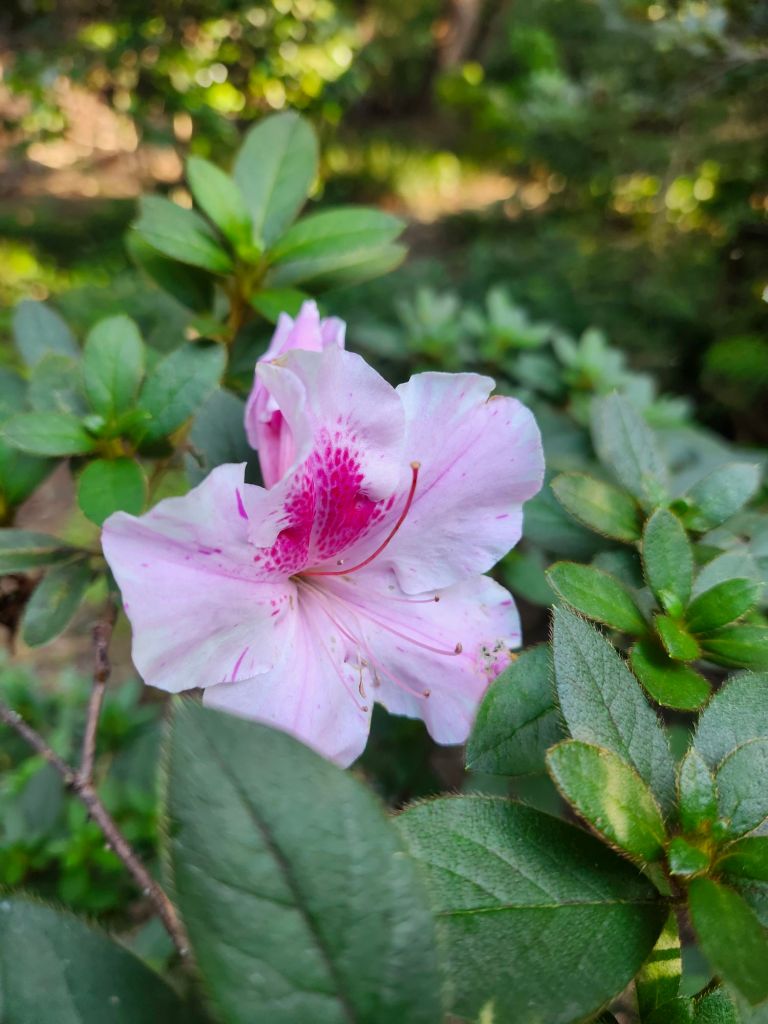
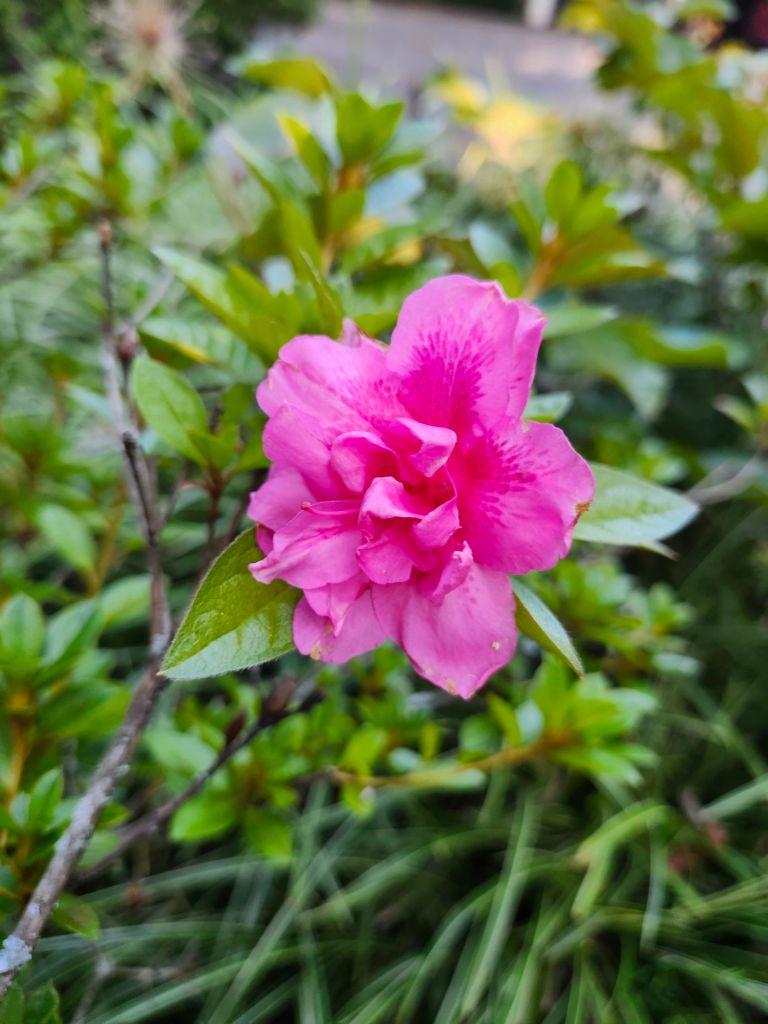
I’m seeing scattered flowers on several of the reblooming Encore azaleas (above), though most will flower in late September and October. Years ago, I trialed Encores to determine ones with the best autumn flowering. A few remain that rarely display an autumn bloom, and for that matter, they are also disappointing in spring, so the problem could be environmental and not an issue with the variety.
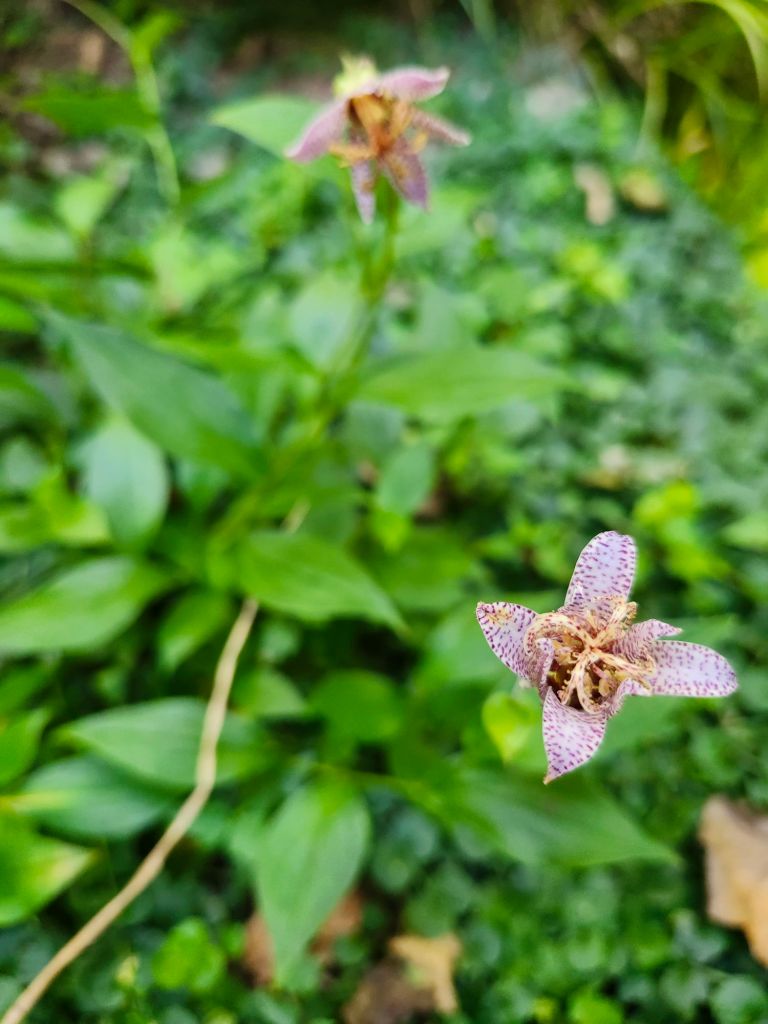
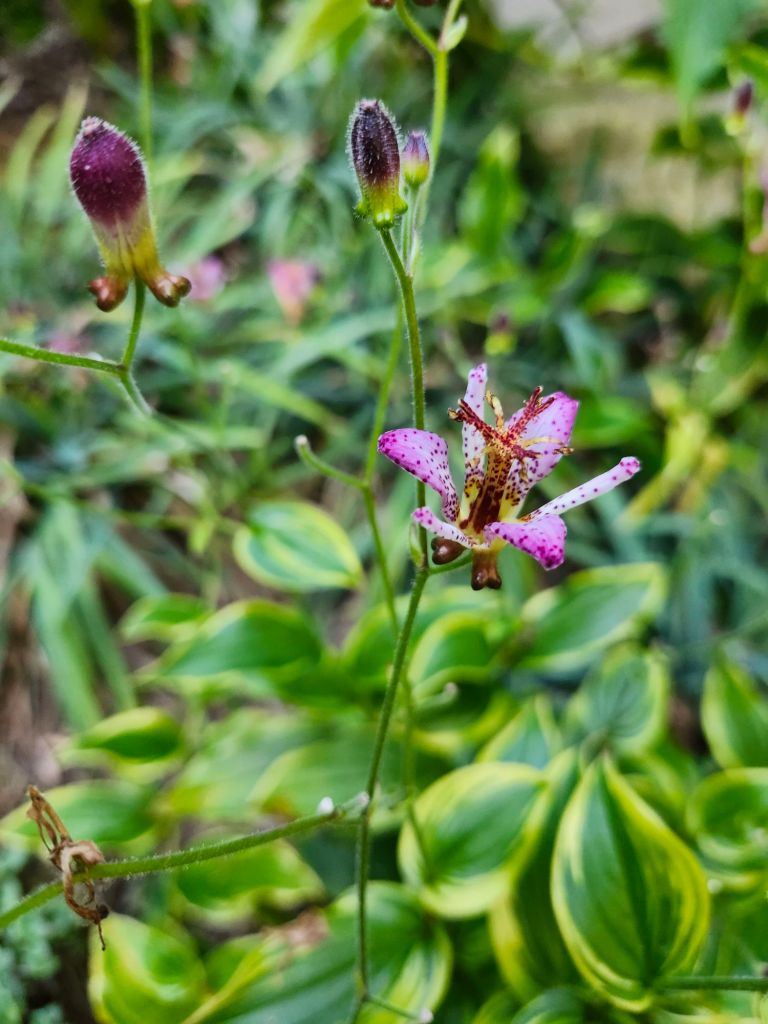
My overenthusiasm for toad lilies (Tricyrtis, above and below) has waned in recent years as I noticed that highly anticipated new introductions were very similar to others already in the garden. A true enthusiast will enjoy the most minor variations, but I’ve backed off on purchasing every new one I could find, and unfortunately, one or two have been lost as neighbors have spread.
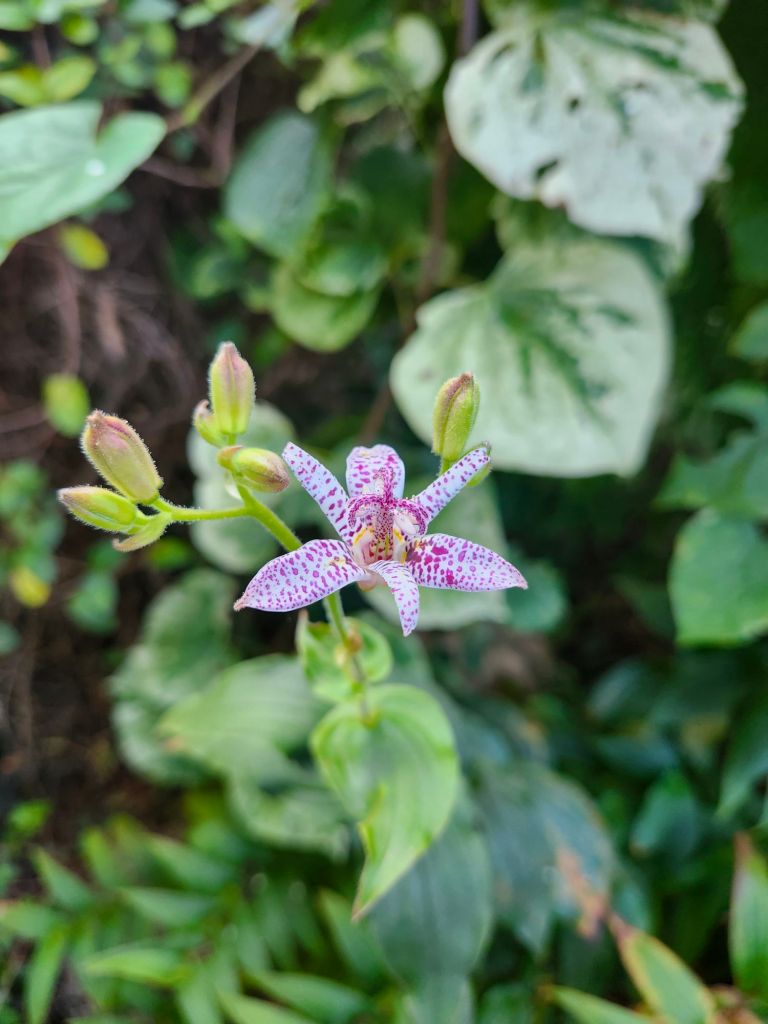
I continue to marvel as bumblebees rob nectar by biting through the bottom of flowers, bypassing the pollination process. With mountain mints and Joe Pye waning, I expect bees will soon find the toad lilies. With mild late summer temperatures, I’ll be there to watch.
 Ramblin' through Dave's Garden
Thank you, Dave, for that beautiful and uplifting walk through your garden, … feeding the birds this morning I saw all the brown patches in our garden, the summer here was mainly scorching, but it’s making up for it now, Autumn is bringing the rain, which is nice… and nature always recovers (well nearly always!) …🍀
Erm ,….it was ‘birds’ plural, … not just one fat bird, …🐦⬛
I look forward to light rain forecast for tomorrow but I’m prepared for disappointment. As I stroll through the garden, my eye catches every sign of dryness.
In the last picture with the Trycirtis, is that a weeping Cercis “Whitewater” in the background? (It’s holding its variation really well.)
Yes, it’s Whitewater. It starts a little greener with the second flush of growth more white. It holds its variegation through the summer without irrigation.