I see little in the autumn coloring of Katsura (Cercidiphyllum japonicum, below) to justify the acclaim for its faded yellow. Perhaps I am missing something, and unfortunately I am unable to enjoy the scent of its fallen leaves that is most talked about.
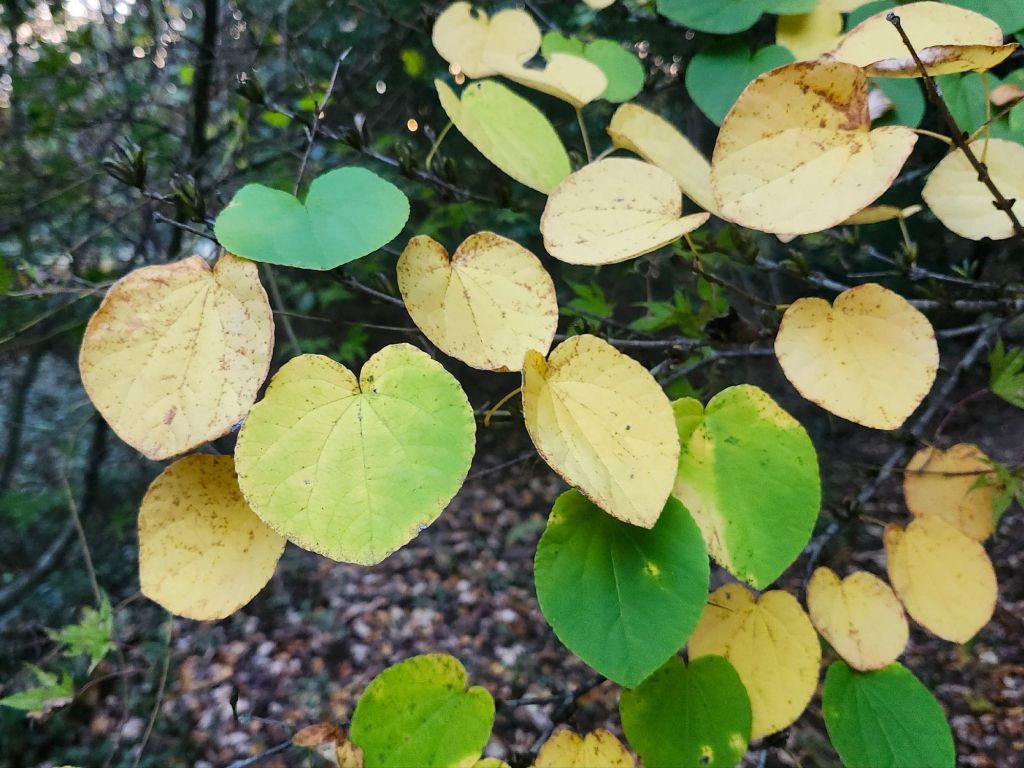
Undoubtedly, environmental factors effect such things as foliage color, and I’m pleased to include this large tree in the lower garden, but there are more notable colors to be enjoyed in late October.
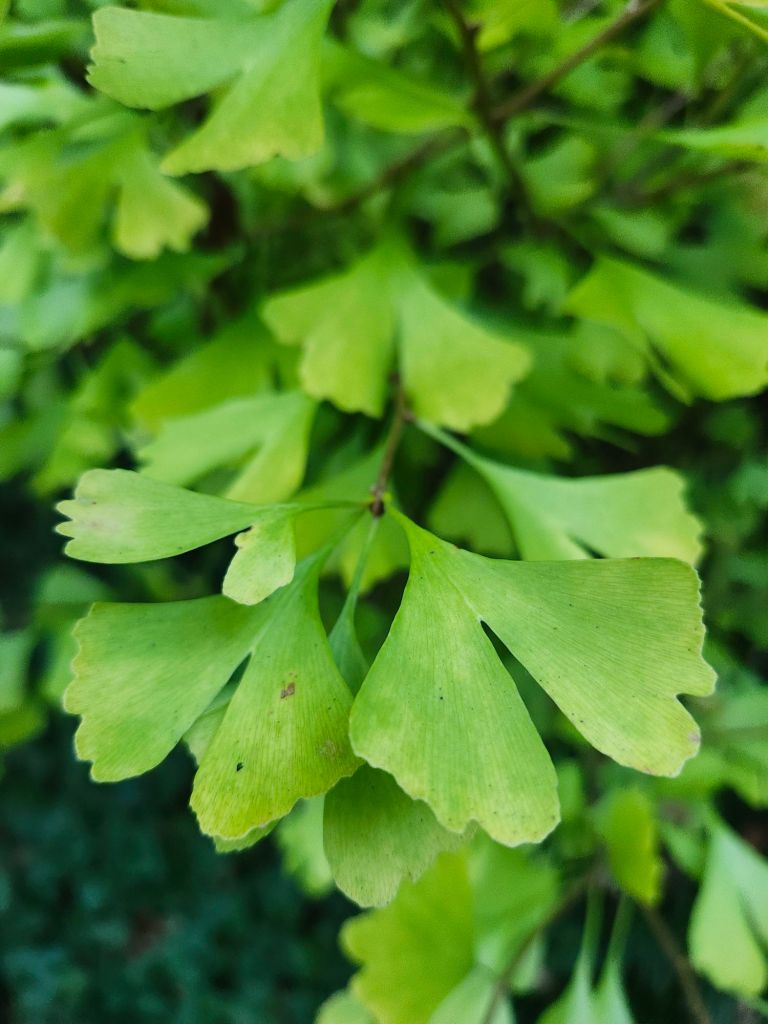
The ginkgos (Ginkgo biloba, above) are not yet at their peak color, a marvelous yellow that brightens the rare October afternoon without brilliant sunshine. Unfortunately, the splendid color is short-lived, with leaves falling and branches bare within two days.
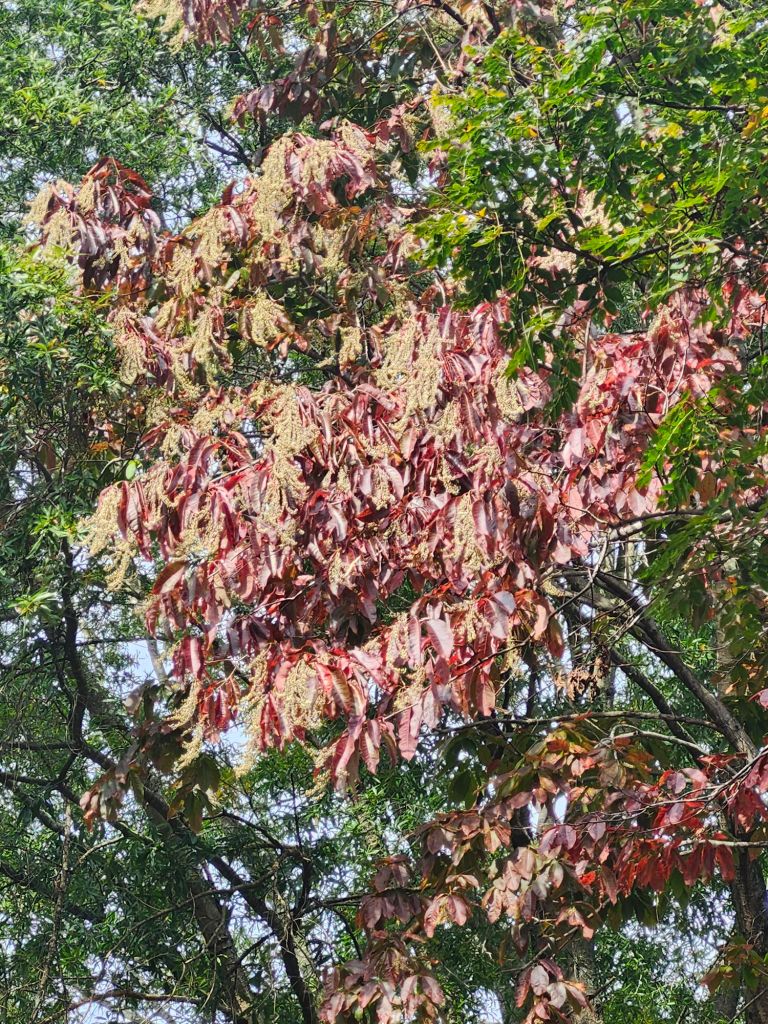
Again, I regret that the Sourwood (Oxydendrum arboreum, above) was planted in close proximity to several trees so that all lower branches were lost in earlier decades. The colored foliage is so high in the tree canopy that most visitors would never be aware of it along with dangling clusters of seeds that would also be highly ornamental if they were more readily seen.
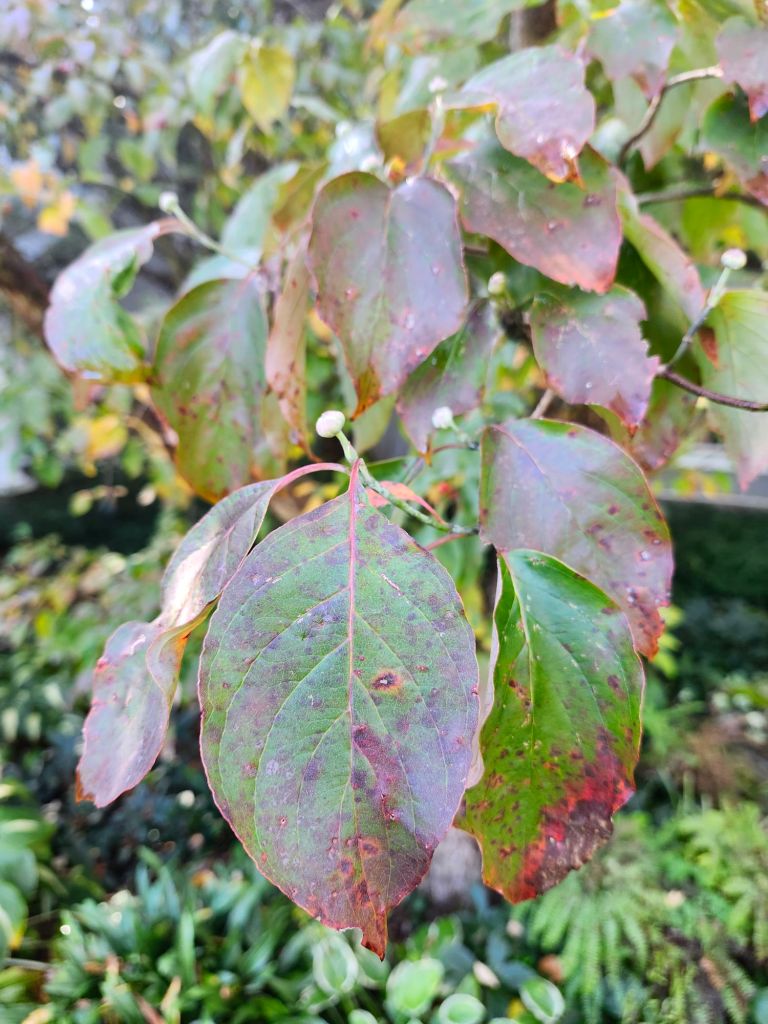
While native dogwoods (Cornus florida, above) in the neighborhood reached their peak autumn coloring a week ago, the dogwood in the front garden is slow to catch on. Much of the tree’s growth is from suckering branches as the dogwood struggles for survival, and while there are clusters of berries and flower buds set for spring blooms, the leaves have turned only slightly.
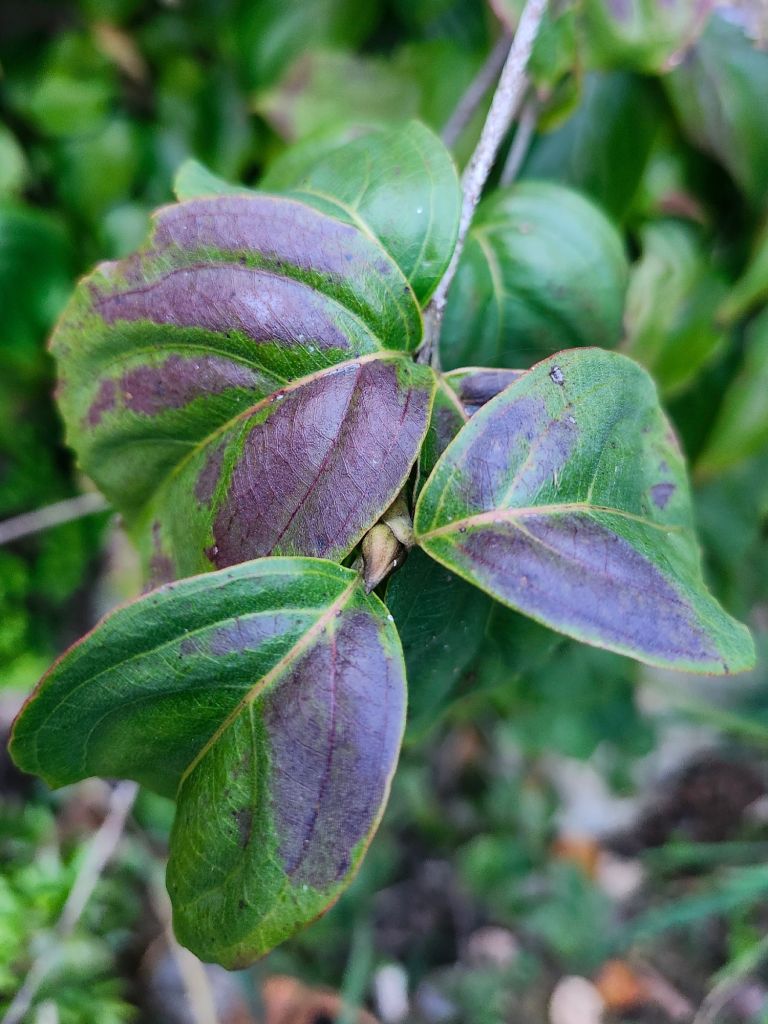
The Chinese dogwoods (Cornus kousa) are slower to change color than the natives. While a large dogwood in the upper rear garden remains green, the pendulous branched ‘Elizabeth Lustgarten’ (above) in the lower rear is wonderfully colored with the best to come, I think.
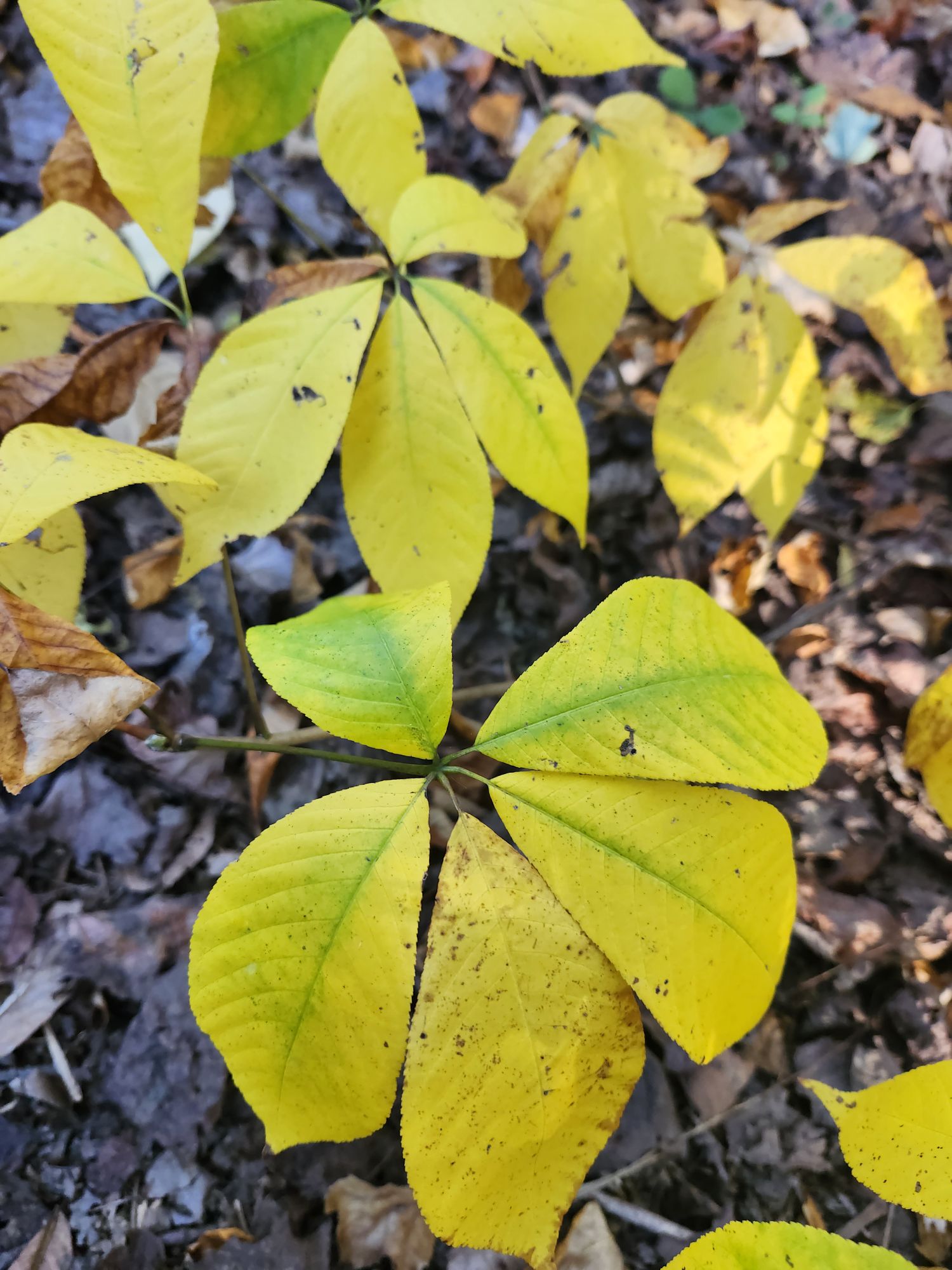
Foliage of the Red horse-chestnut (Aesculus x carnea) and Red buckeye (Aesculus pavia) drops early in the late summer dryness, but Bottlebrush buckeye (Aesculus parviflora, above) glows a translucent yellow in mid-October with leaves falling before the month’s end.
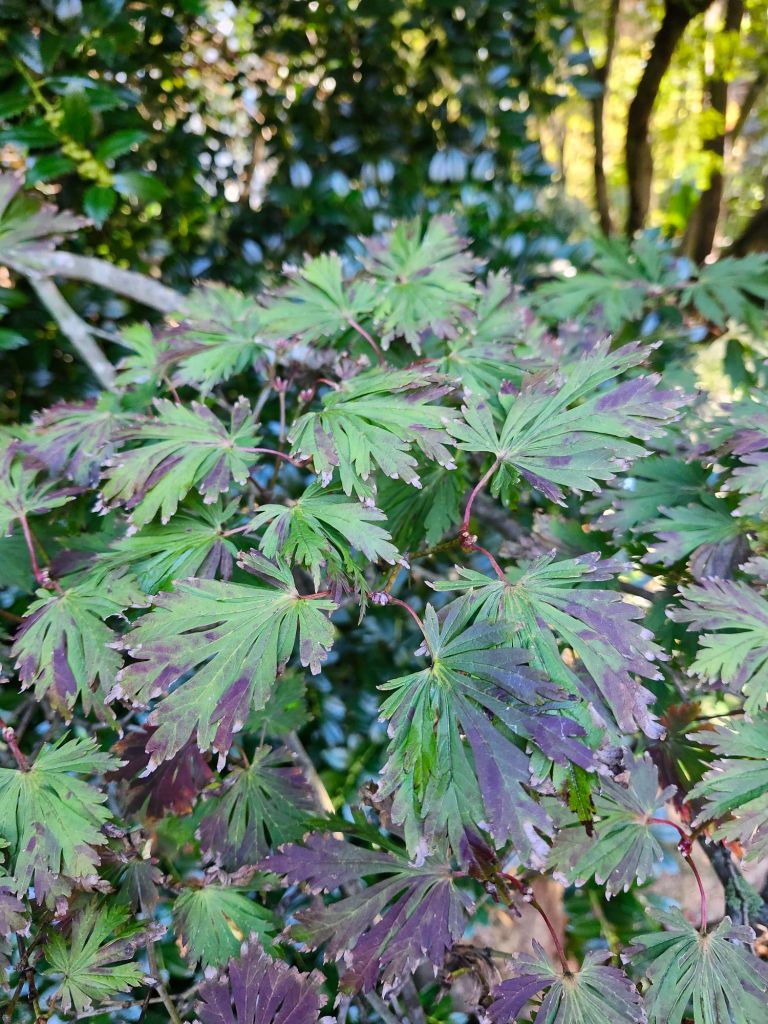
The garden’s thirty-some Japanese maples color to varying degrees beginning in October, with several displaying no color change until mid-November. Sadly, the Fernleaf maple (Acer japonicum ‘Aconitifolium’, above) is suffering from considerable dieback. The maple, that typically displays the best autumn coloring in tbe garden, requires substantial pruning this winter and many leaves are browned. Still, I’m certain that some healthy branches will put on a show.
 Ramblin' through Dave's Garden
So, you also find that ginkgo defoliates a bit too efficiently. Do you notice that red maple also defoliates a bit too soon? It is an uncommon tree here, so I do not know if I should judge the species by the few specimens that I encounter. It certainly is fabulous while it lasts.
Acer rubrum is the predominant tree in the forest that borders our property. Unfortunately, all autumn leaves are a sickly yellow rather than the reds of cultivars. When the time comes for leaves to fall they drop in bunches but it is a week long process that can be accelerated by heavy rain or wind.
Oh, that is more information than I wanted to know. I like to think of them as fiery orange and red, like the cultivars. Not much colors as well here as it does there, but red maple cultivars do well. I just wish that the color lasted longer.
Lovely to hear from you! Thanks!!!