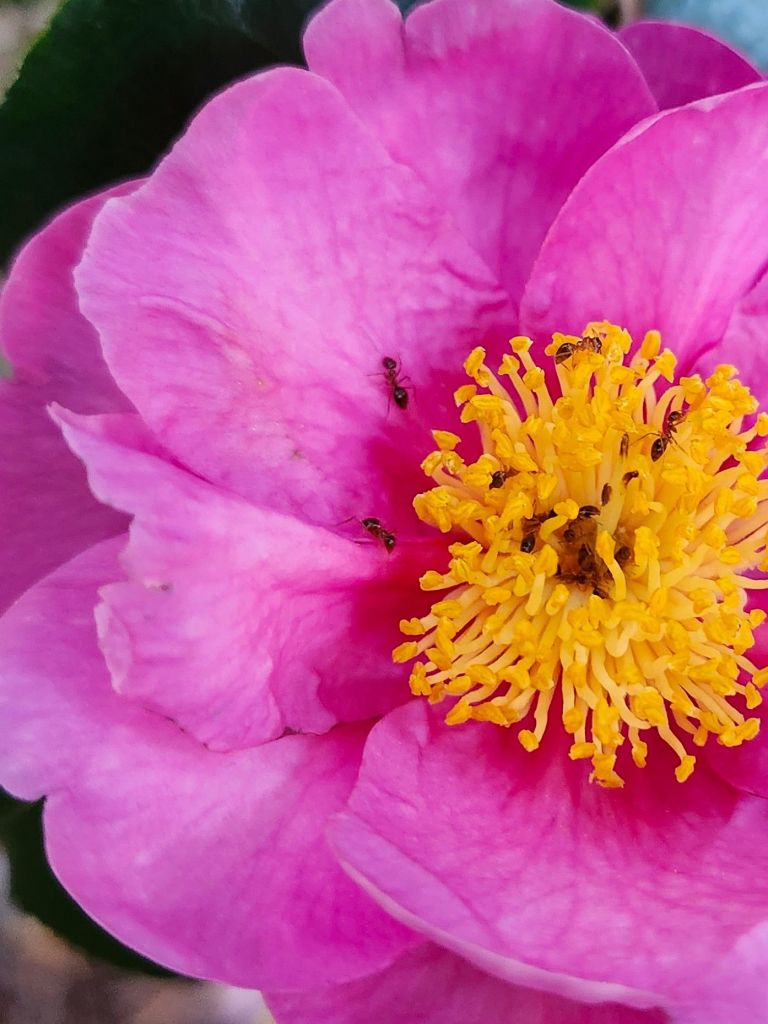
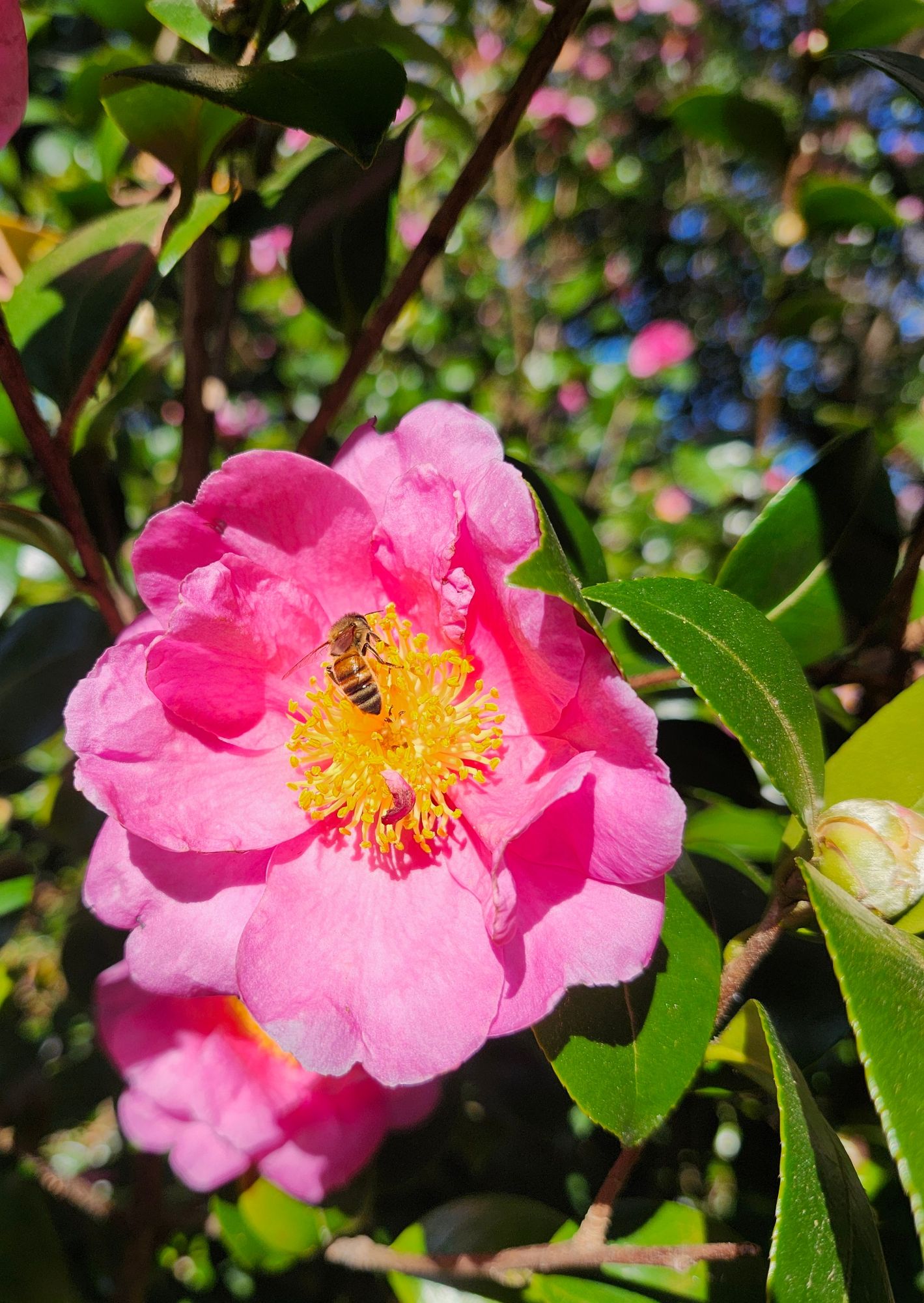
Several frosty nights quickened the garden’s seasonal change, but this was noticeably accelerated by one night of freezing temperatures. Many hostas and several late blooming perennials have collapsed, while bees and ants remain hard at work pollinating autumn flowering camellias (below) that will continue into late November.
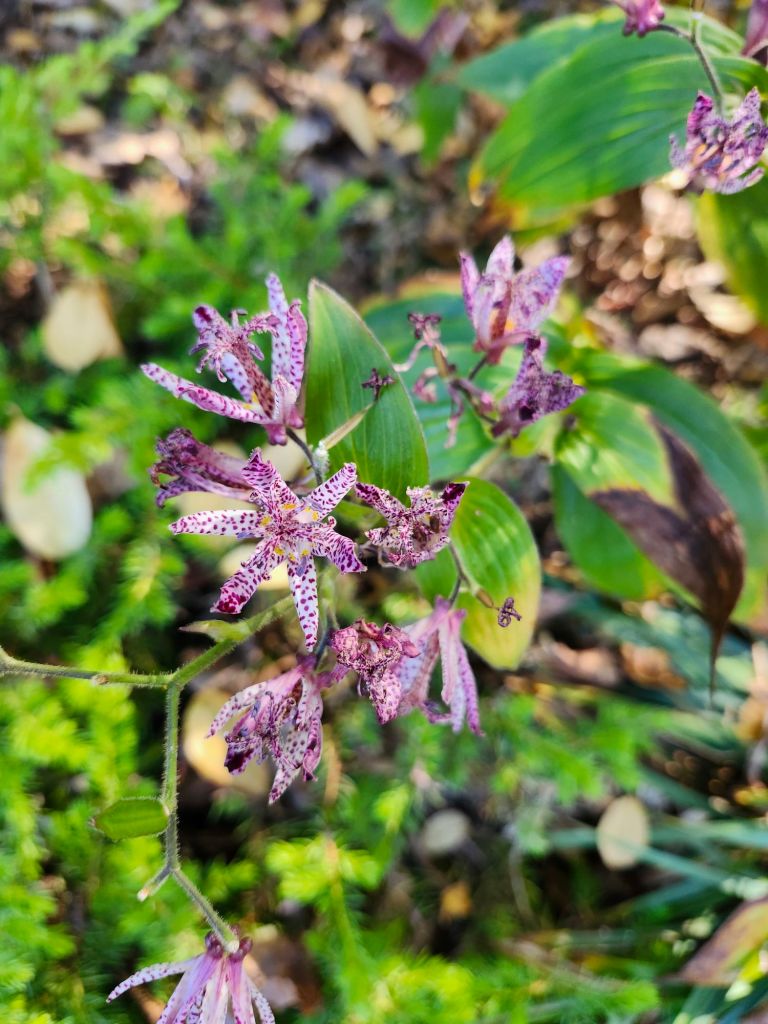
Flowers of several toad lilies (Tricyrtis, below) have persisted through the cold, but the flowering cycle that began in August will end soon.
The native witch hazels (Hamamelis virginiana, below) in the garden have started to flower a few weeks after the first blooms were seen on higher elevation hikes. I suppose that flowering is triggered by cold rather than hours of sunlight, and of course, earlier autumn flowering in the mountains is the reverse of what we see in the spring.
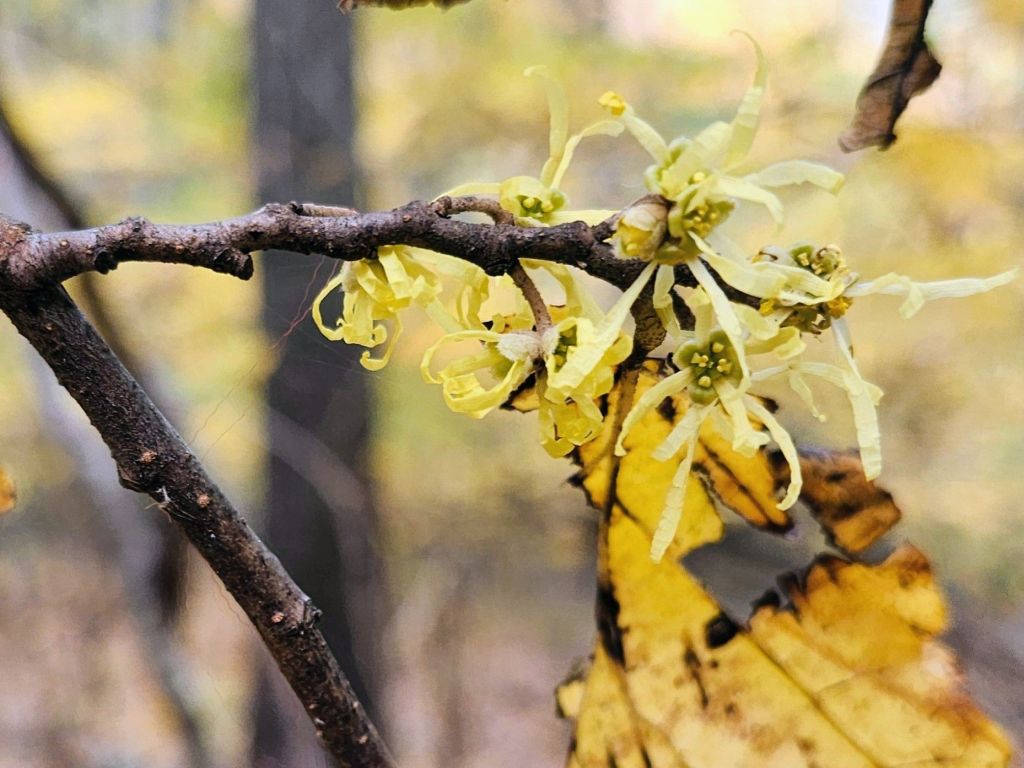
While our native witch hazels flower with leaves partially hiding the blooms, January flowering Vernal witch hazels and February flowering Asian hybrids bloom on bare branches. I’ve planted some of all to enjoy uninterrupted flowers through the winter months, but I’ve planted more natives in recent years since they are more dependable to flower in this increasingly shaded garden.
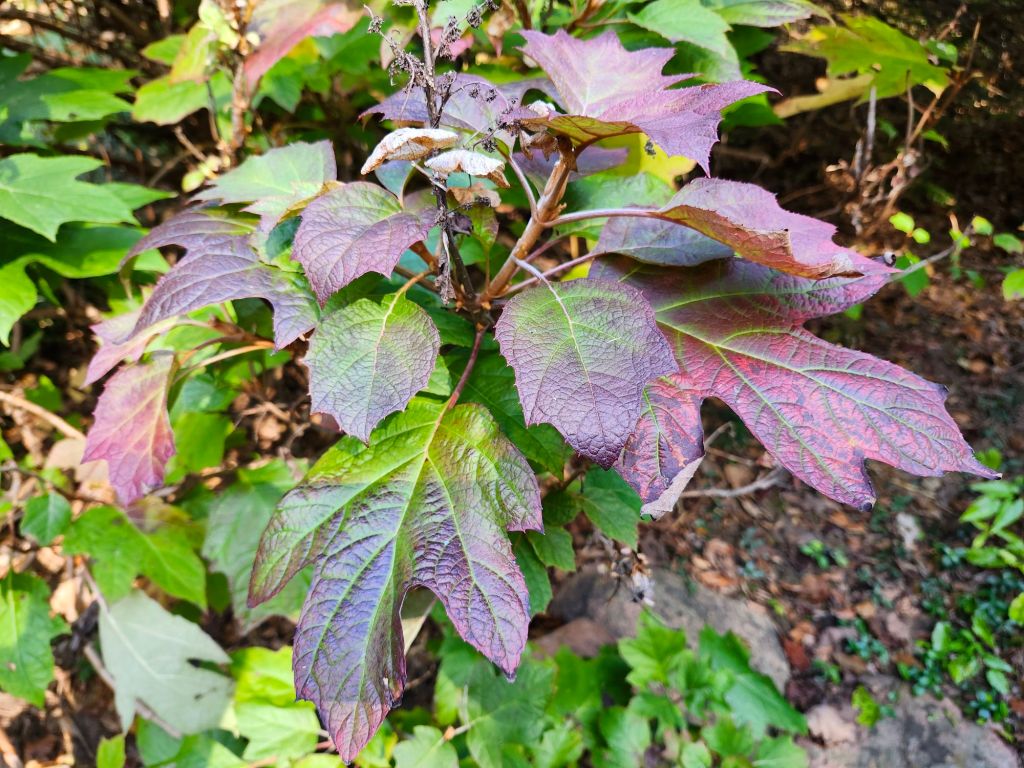
Two Oakleaf hydrangeas (Hydrangea quercifolia, above) that were shaded in the side garden by the Bigleaf magnolia (Magnolia macrophylla) that fell in a late June storm are beginning to change to autumn colored foliage. In deep shade the leaves remained green, but there are now a few hours of sun.
 Ramblin' through Dave's Garden