Yellow leaves from maples (Acer rubrum) and tulip poplars (Liriodendron tulipifera) in the neighboring forest drift on the breeze to cover the side and rear gardens. In time for Thanksgiving guests, the paths will be cleared (for a day) but leaves will blanket the garden to decay over months.
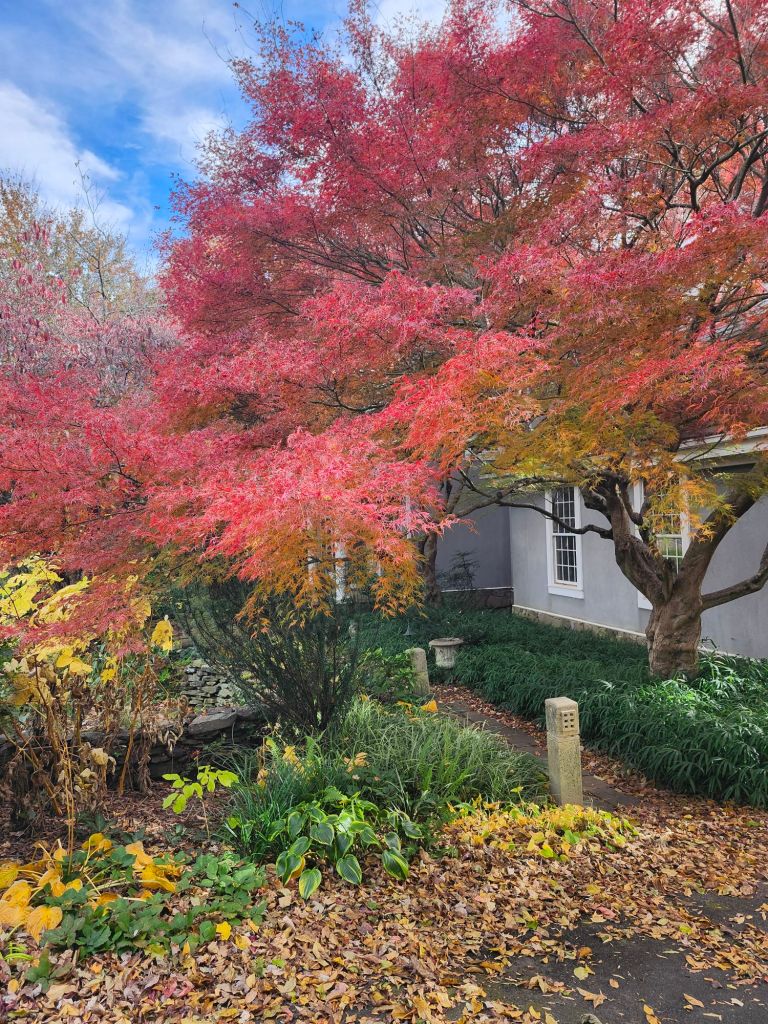
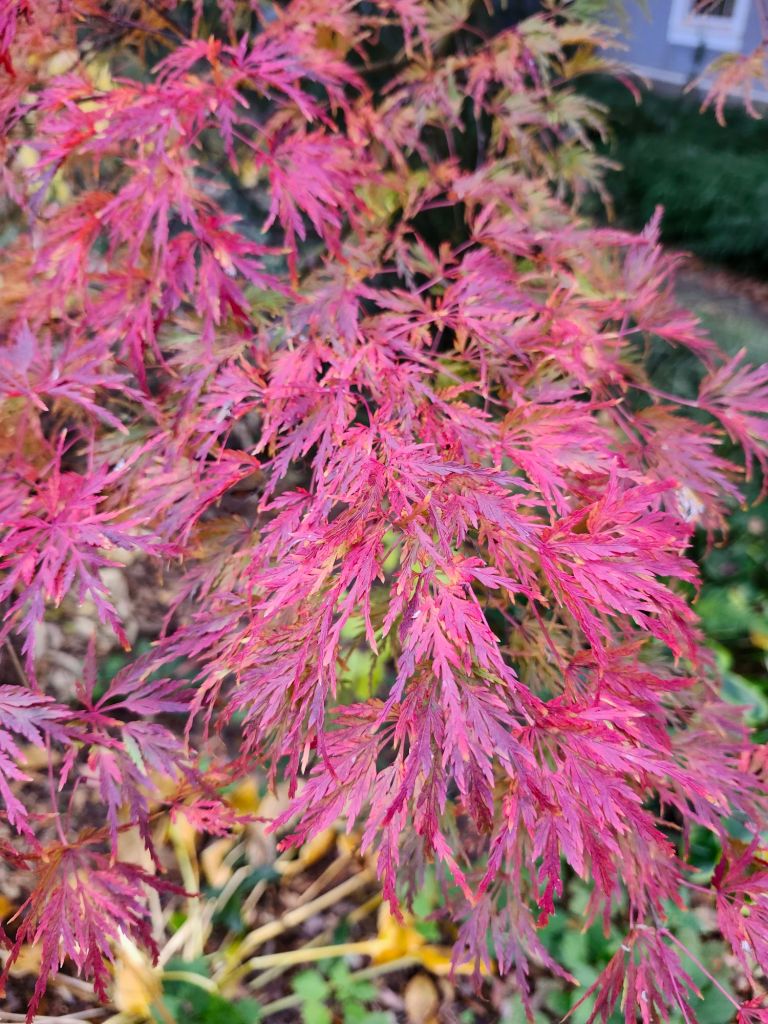
The deluges of June washed away much of the garden’s cover of decaying leaves, so the dry conditions of the second half of summer until this week were worsened by the bare soil. I look forward to falling leaves covering the ground, though I’m never thrilled by the garden’s long winter dormancy.
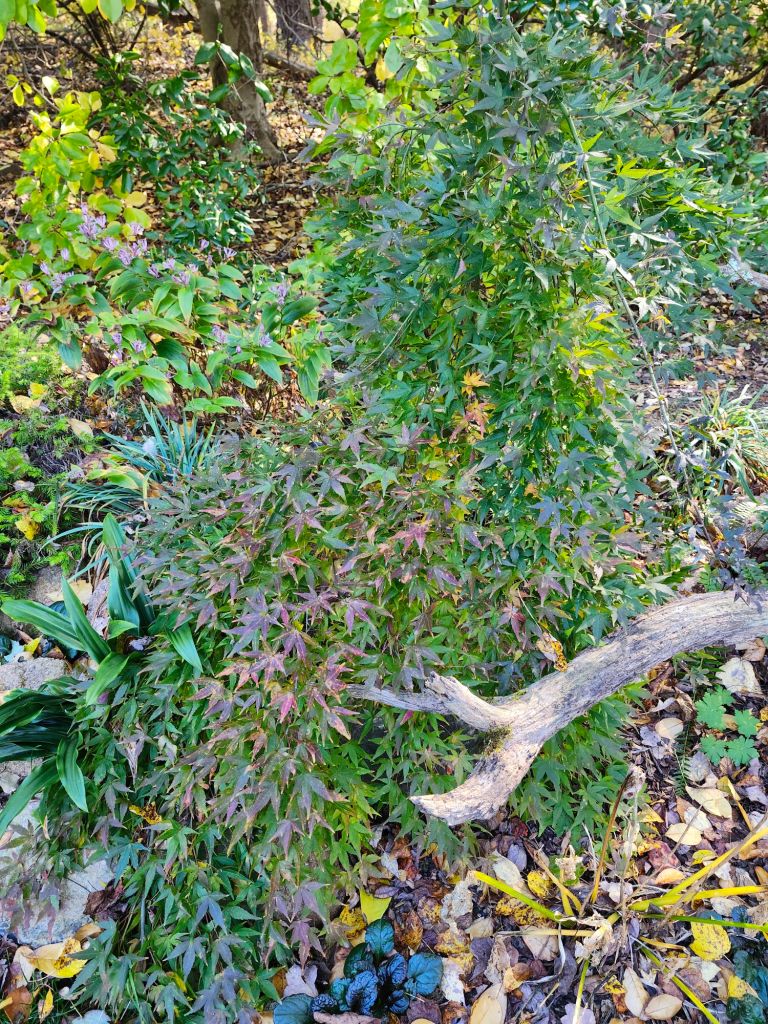
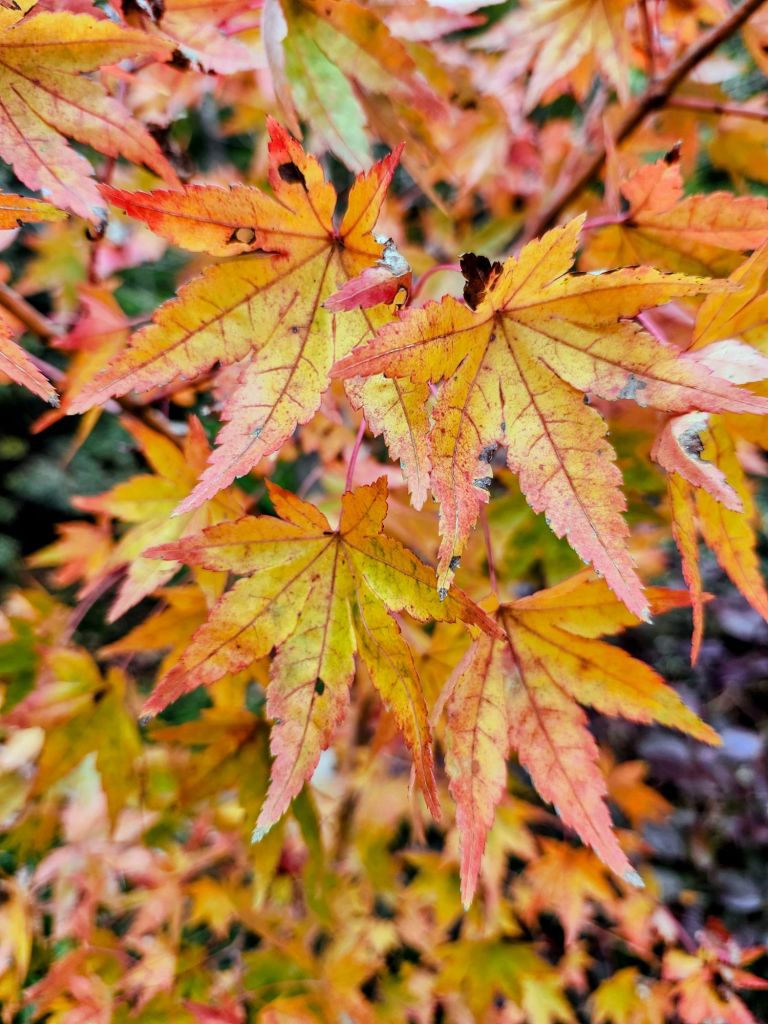
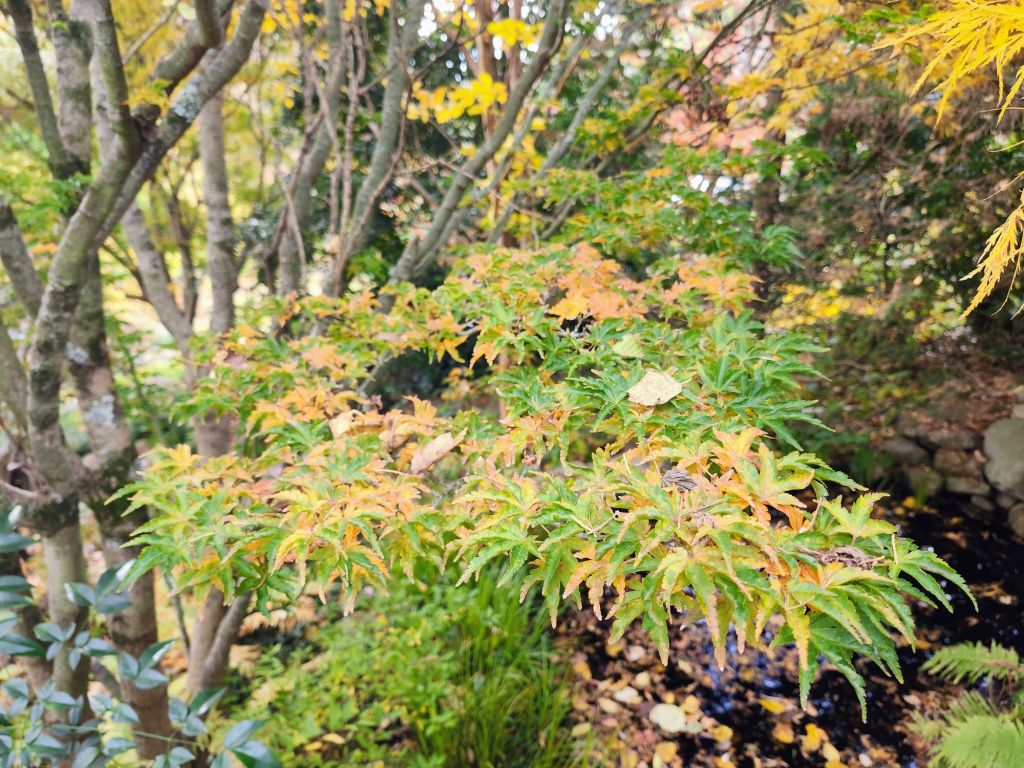
Beneath the tall forest canopy, Japanese maples provide a variety of foliage colors (above). A few maples are nearly bare in early November, some are at peak color, and others are just beginning their autumnal display.
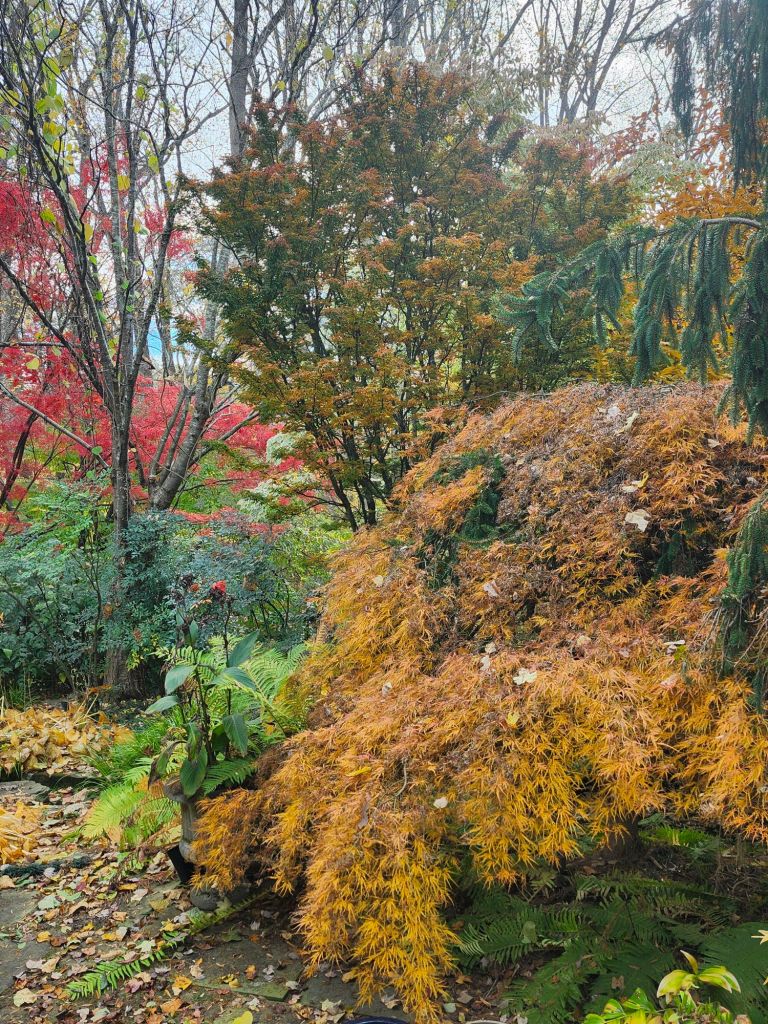
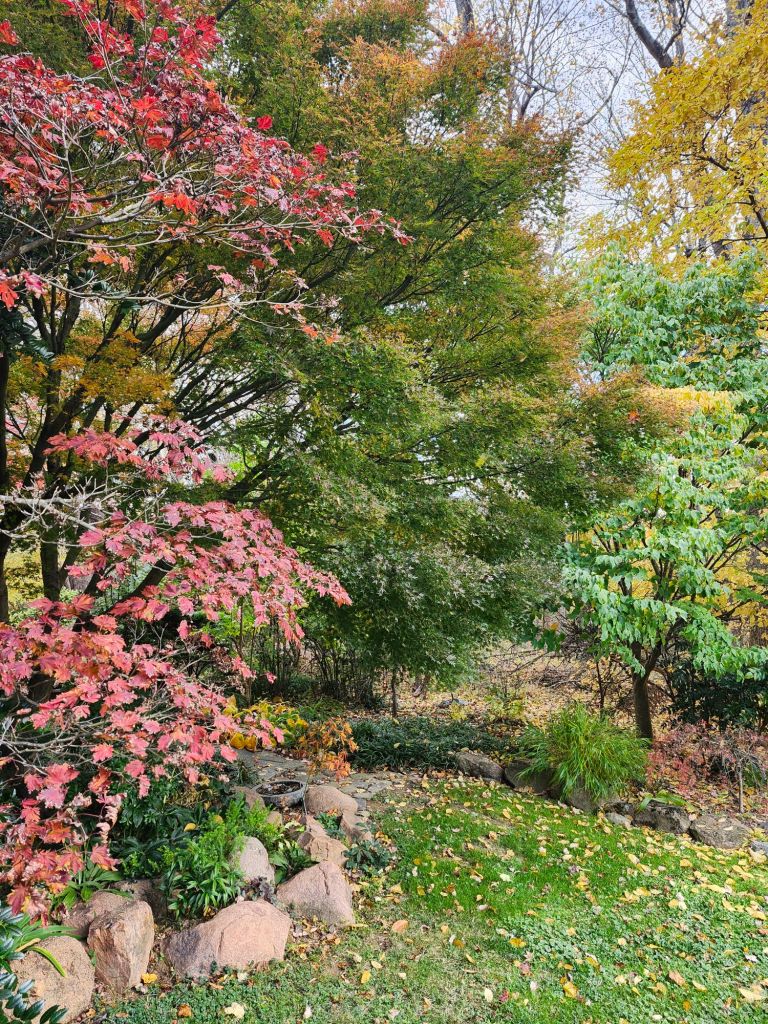
The view from the sunroom is its most colorful, though not the best as I know that next up is the bareness of winter. The densely branched Lion’s Head Japanese maple (Acer palmatum ‘Shishigashira’, above) shows only the slightest change for another few weeks while three red leafed maples have darkened considerably from their faded late summer coloring.
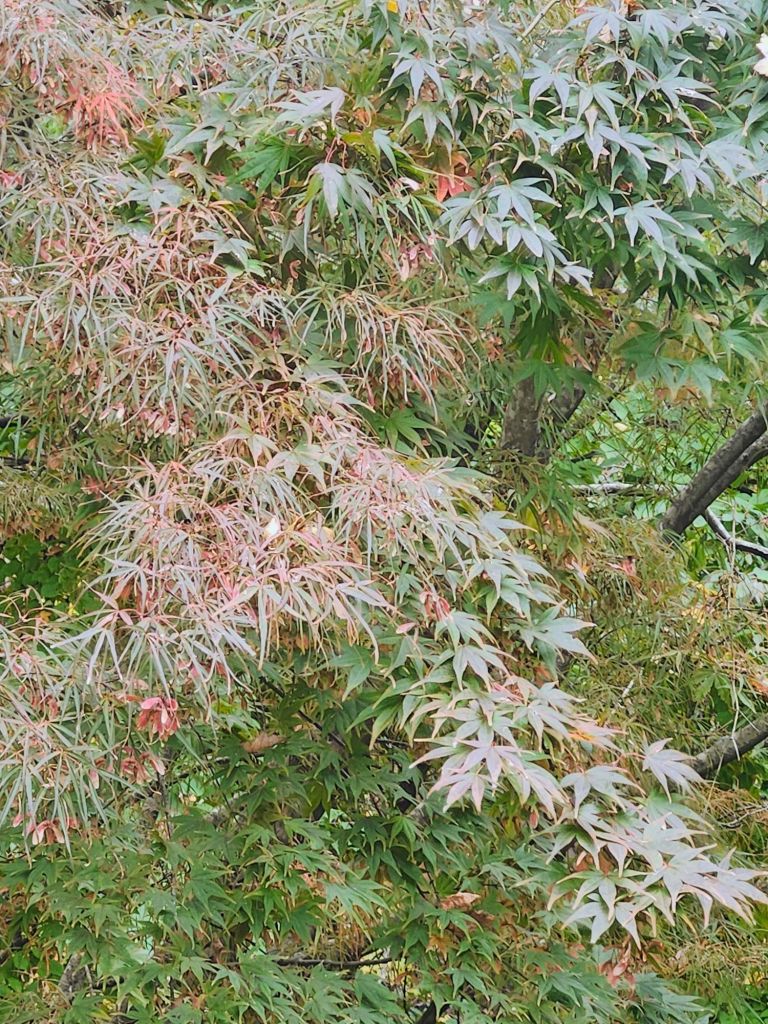
The deeply lobed, narrow leafed ‘Atrolineare’ (above) occupies center stage in the rear garden with branches arching across the small pond just outside the sunroom. In recent years, I’ve noticed several branches of the thirty-year old maple have reverted to the wider, more typical leaf of ‘Bloodgood’. On a young tree, I would prune reversions that could overwhelm the linearilobum foliage, but I see no harm on this mature maple.
 Ramblin' through Dave's Garden
When I owned a home in southern NH, I had two sourwood trees that had beautiful deep red coloring in the fall. Do you have any sourwood trees, and what’s their fall color like?
There is a sourwood planted long ago, but unfortunately too close to other trees in its old age so the superb autumn foliage is so far up nobody knows it’s there.
And, to answer your question, the color is a dark red (if you can trust my color blindness).