The garden is entering the period when falling leaves and declining perennials open visual gaps that can deceive the foolish gardener into purchasing many more plants than can be fit into tiny gaps that will quickly fill with spring’s growth. I am that fool.
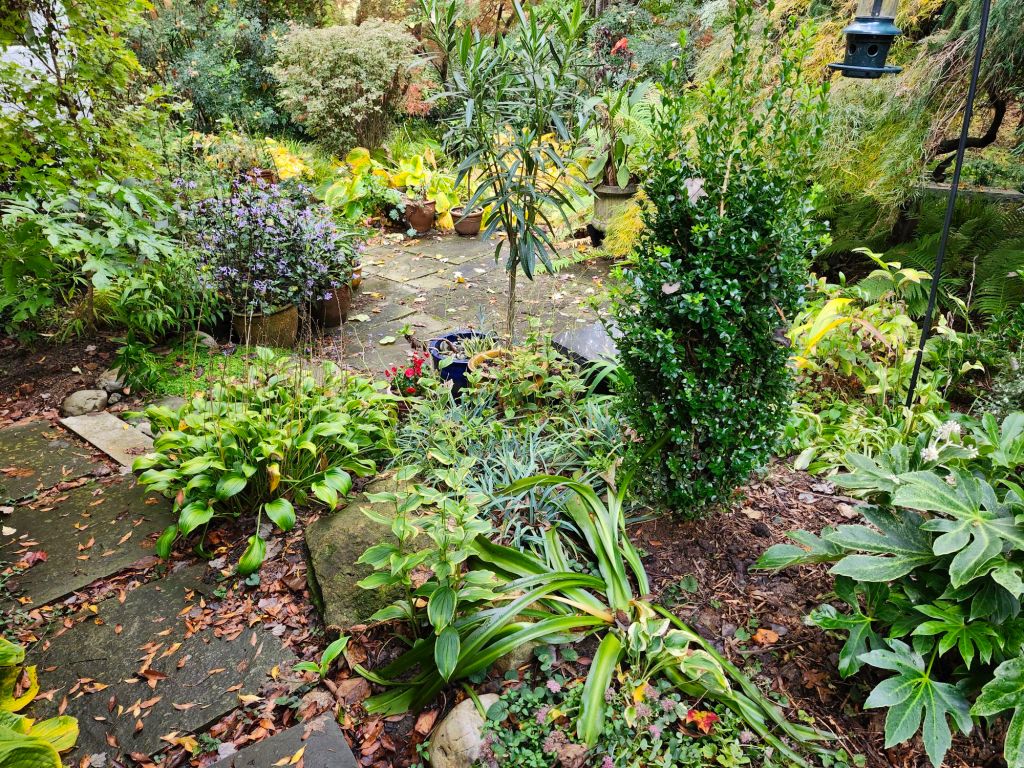
The sparseness will continue through the winter months, and even into mid-spring before plants reach their maximum fullness. I will always err on too many rather than too few, so despite filling any narrow sliver of space until recent weeks, I am certain to imagine the need for many more plants in the months ahead.
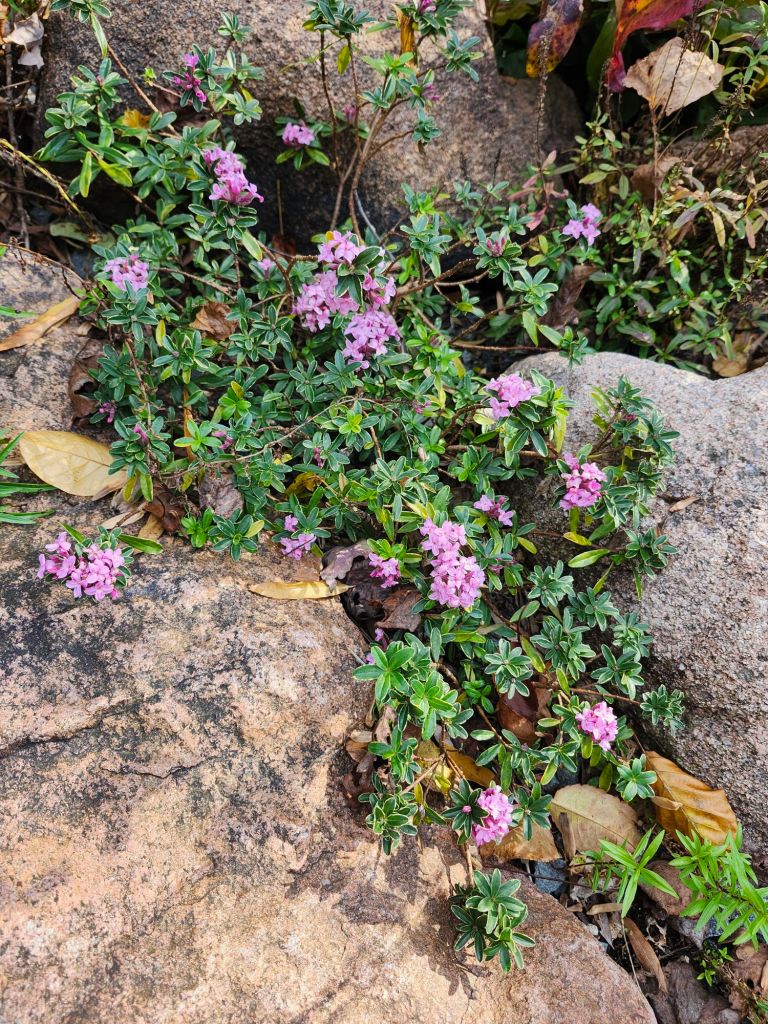
I’ve trimmed a vigorous pennstemon in the rock garden to allow a variegated, dwarf daphne (above and below) to be seen and to open it to a sufficient exposure to sunlight. It has thrived, at least as hoped, as it has slowly spread and continually flowered in the gravelly soil.
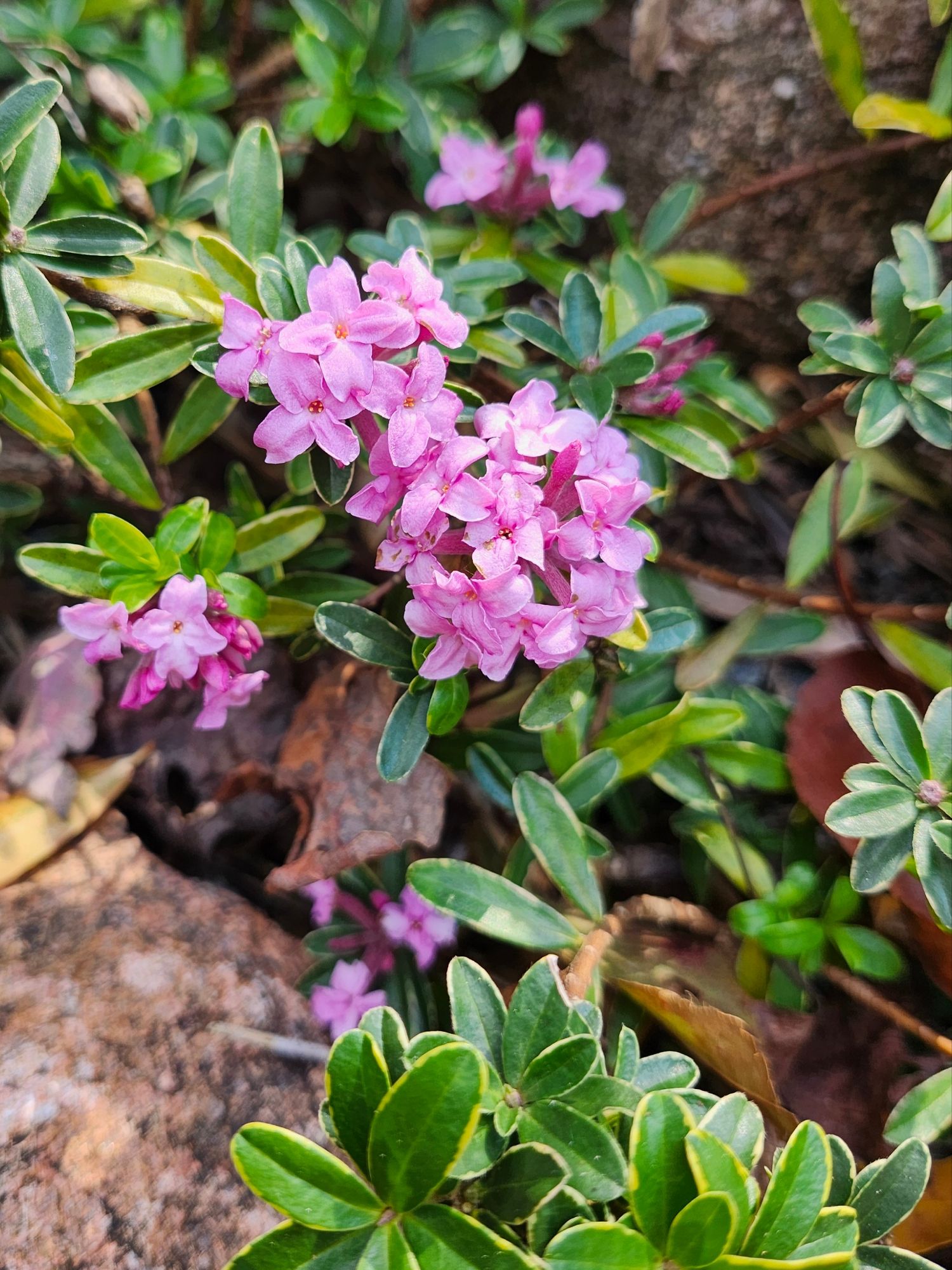
I have high hopes that this daphne will live a long life. While two others flower dependably in the front garden, several seemingly thrived until perishing in a huff despite years of coddling. I expect the perils of clay soil eventually spelled their doom, and perhaps the rock garden will suit their finicky demands.
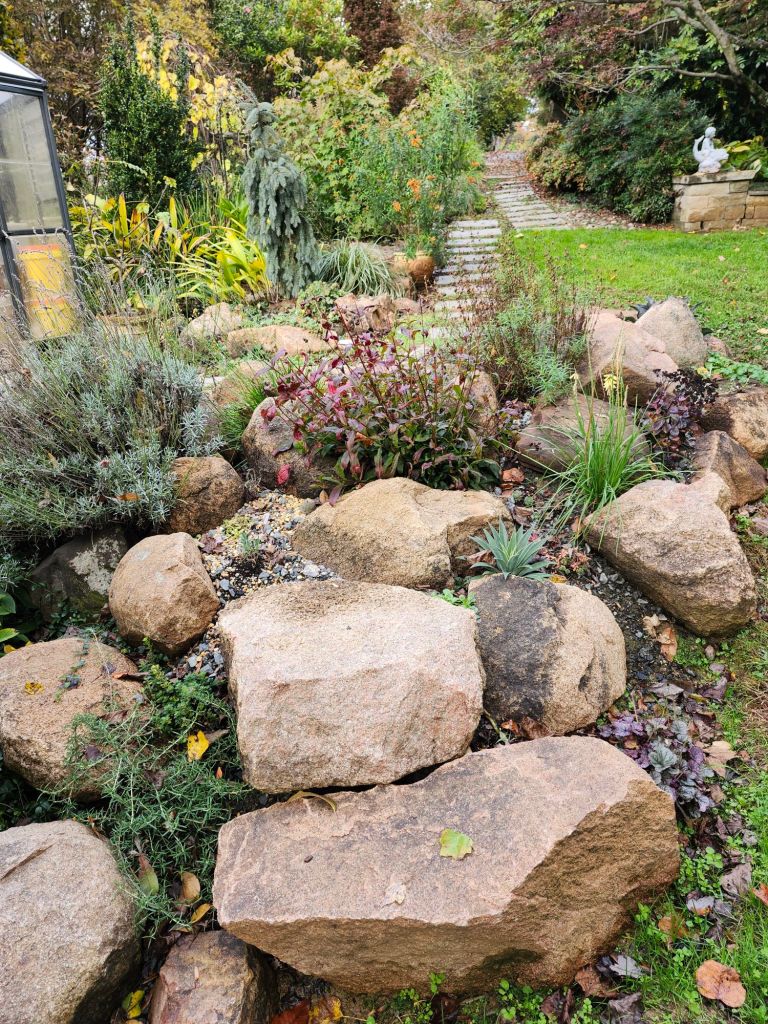
I am slowly learning to be patient in the rock garden (above), a relatively new experience that has a steep learning curve for me. The daphne and pennstemon are barely compatible neighbors, and there are other small gaps I’ve filled only to quickly see my error. Still, better too much than too little, and at this moment I’m determined not to add a single plant for spring.
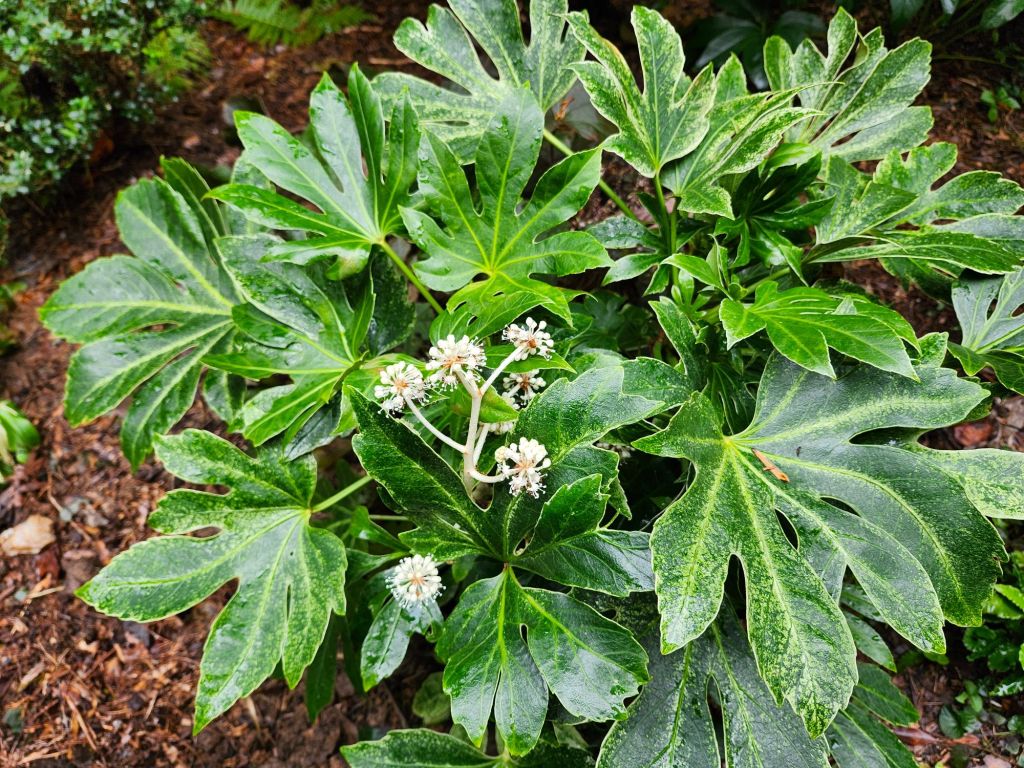
A few days ago I moved a Spider’s Web fatsia (Fatsia japonica ‘Spider’s Web’, above) hardly more than a foot, to a better vantage point along the path from the driveway to the sunroom. This is also the entry to the upper circle patio and a number of new plantings since the old garden here was torn out for construction of the sunroom.
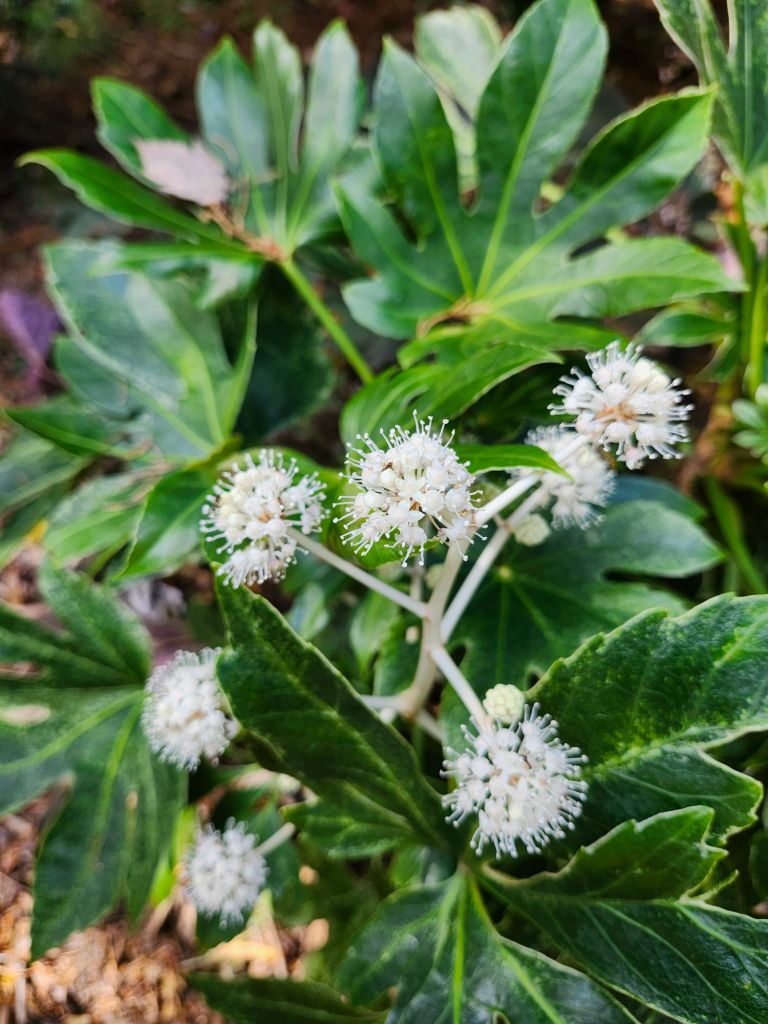
The fatsia has thrived in this half sunny location, much better than an older one that is more shaded. Two deeply lobed ‘Green Fingers’ fatsia (Fatsia polycarpa ‘Green Fingers’) were delivered a few days ago. I potted them up to small one gallon containers that will remain protected indoors for the winter. In the months ahead I’ll consider the best spots for them. While their growth can be stunted by our winter temperatures, in an ideal location fatsias can take up considerable space. Today, and for the winter months, there will seem to be plenty of places best suited for them.
 Ramblin' through Dave's Garden