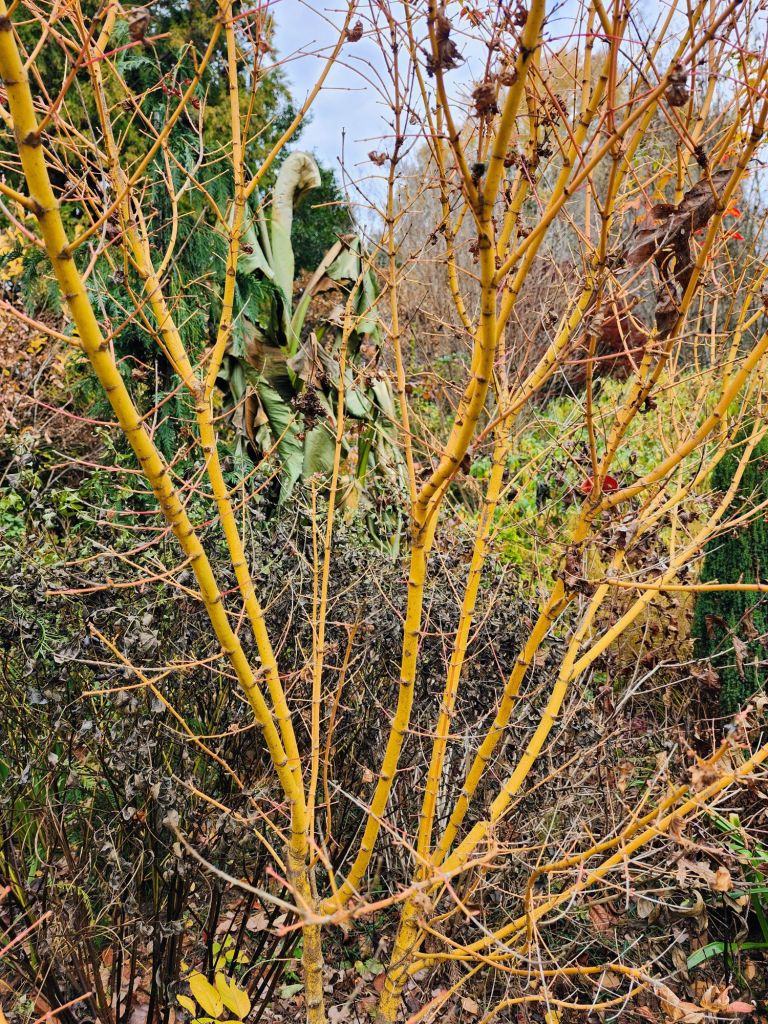
Autumn foliage color is far down the list of criteria that I evaluate in a plant for inclusion in the garden. Often, my selections are driven by emotion upon seeing a tree while visiting a garden, though a bit of research is certain to follow. A time or two I’ve been tempted by foliage color or brightly colored winter stems (Acer palmatum ‘Bihou’ with bright yellow stems, below), but the colors and forms of spring and summer influence most decisions.
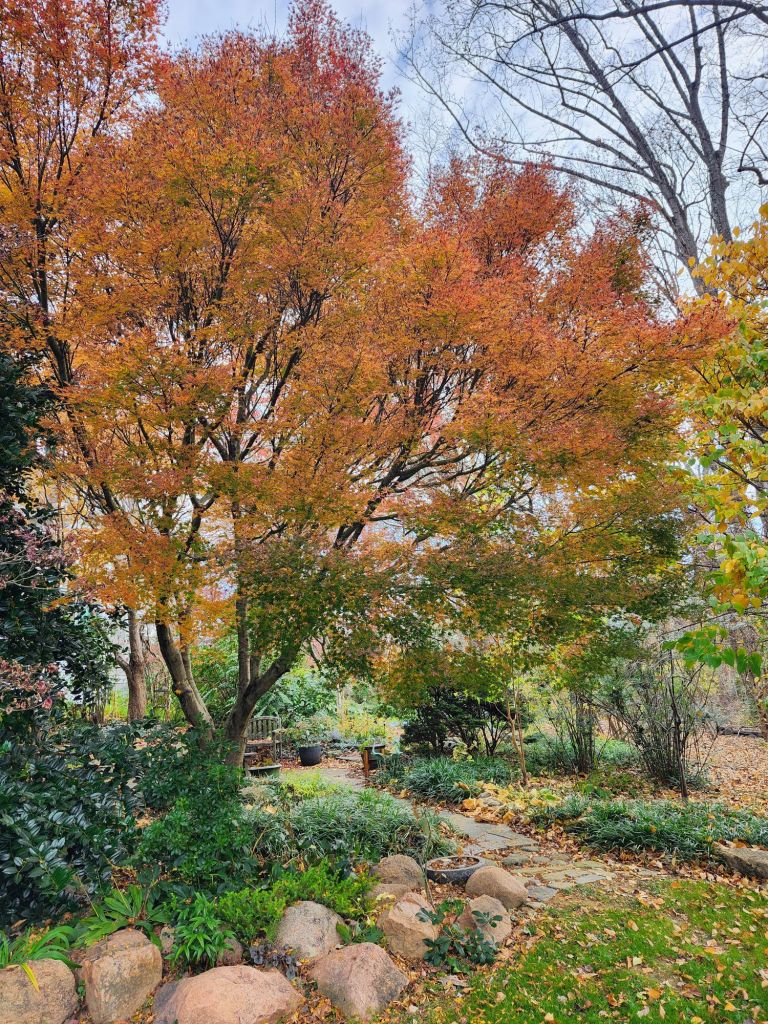
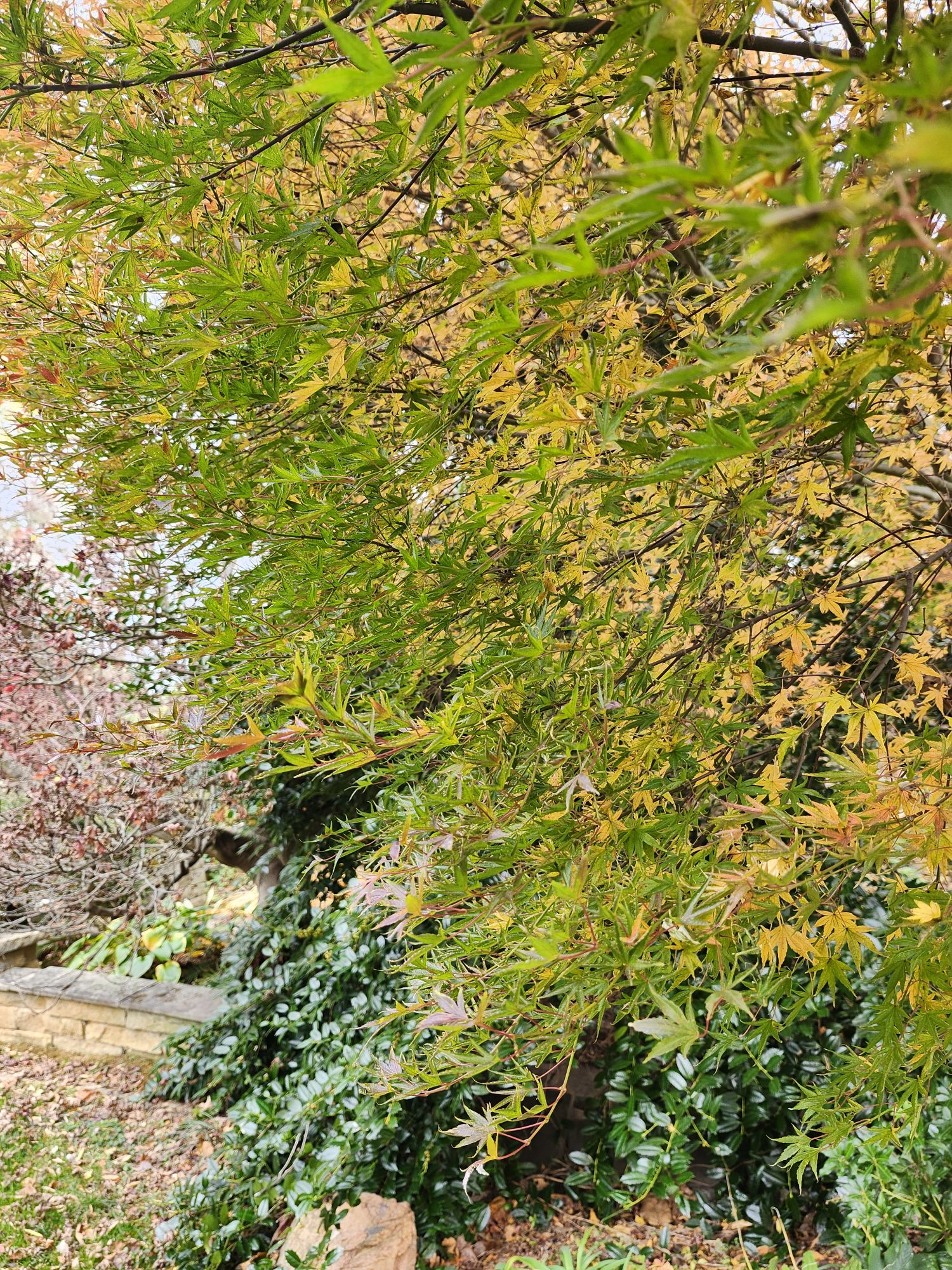
In mid-November leaves remain only on a few trees in the garden. Two Japanese maples are notable exceptions to the bareness. Today, both display their splendid autumn coloring. It’s likely that the curled green leaves of ‘Okushimo’ (above) and ‘Shishigashira’ (below) do not stand out through the year to most visitors, but now, their color is conspicuous.
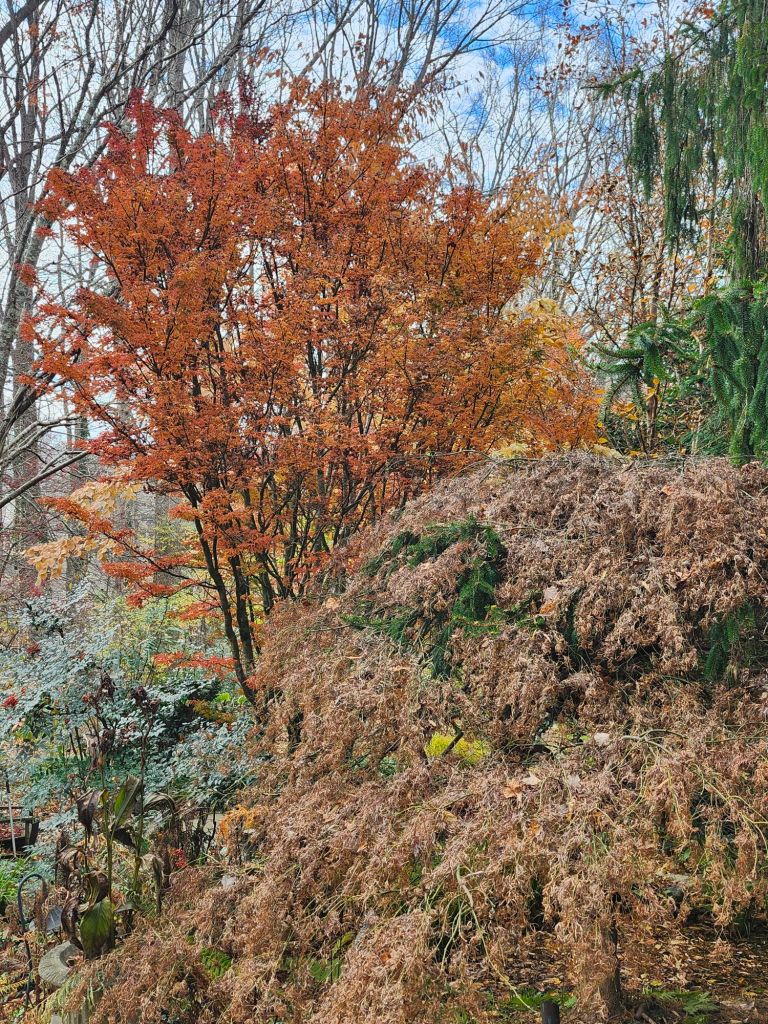
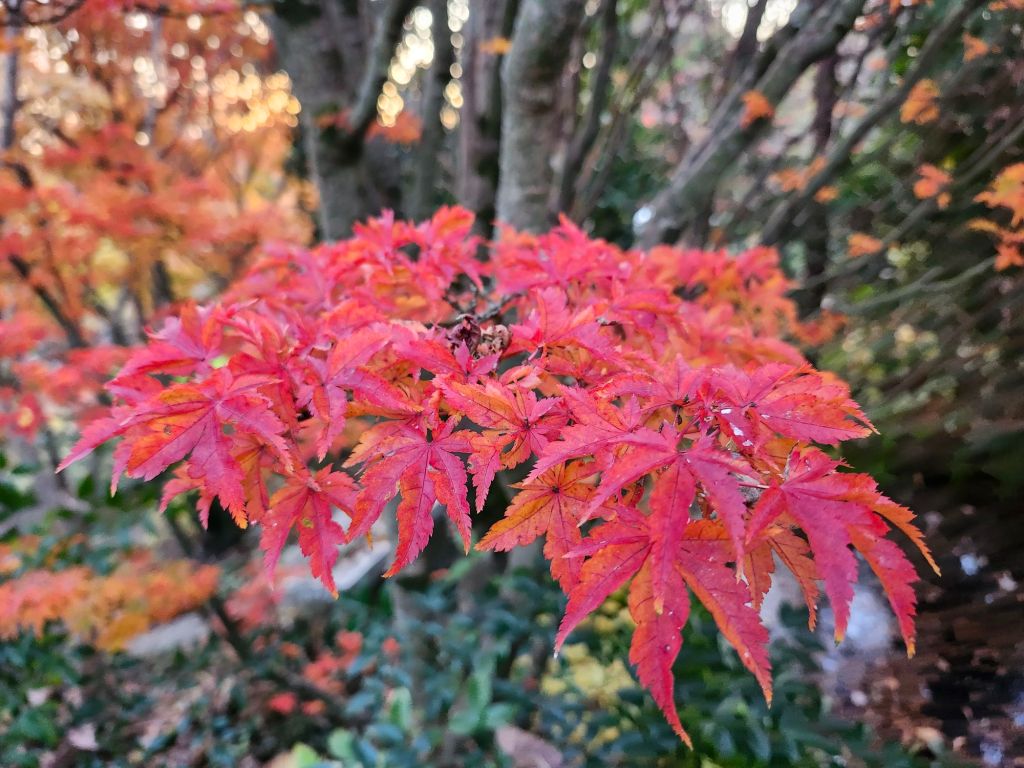
While ‘Okushimo’ grows to an upright, spreading tree similar to many other maples, ‘Shishigashira’ is very upright with tiered branches and clusters of foliage. Both Japanese maples are late to change to autumn coloring and both hold their leaves weeks later than other maples.
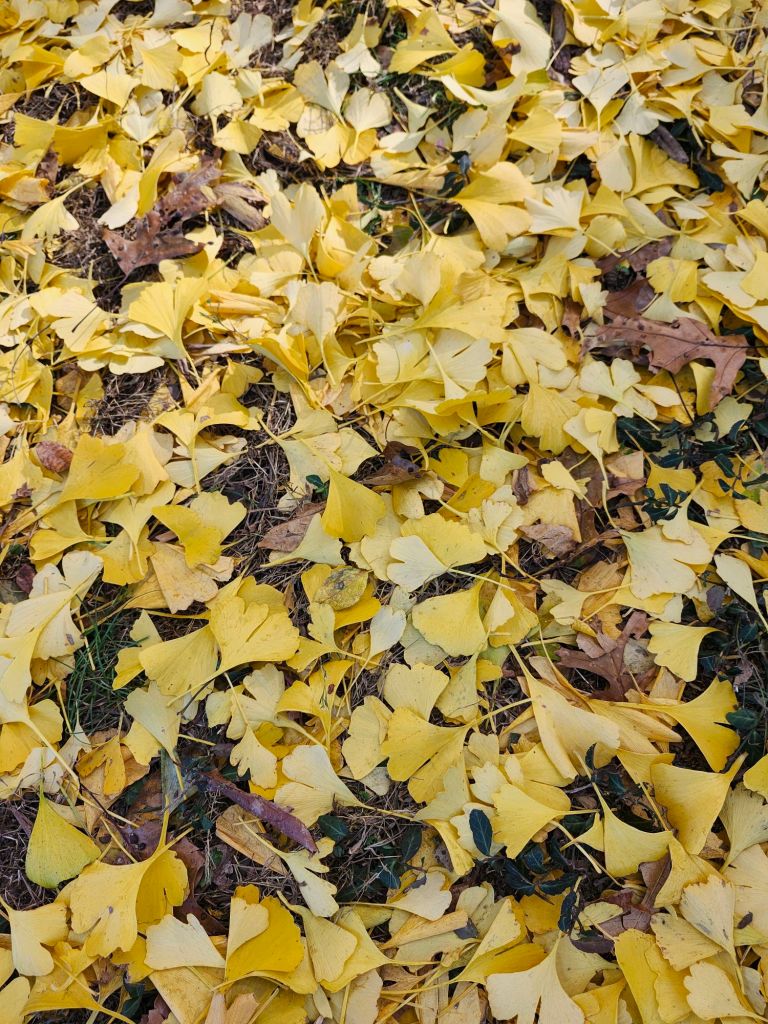
The leaves of the garden’s ginkgos (Ginkgo biloba) have fallen, for several days to become a glorious yellow carpet in the rear garden (below). I fear that the largest ginkgo will one day be overwhelmed by a more vigorous blackgum (Nyssa sylvatica), but it steps to the forefront in early autumn.
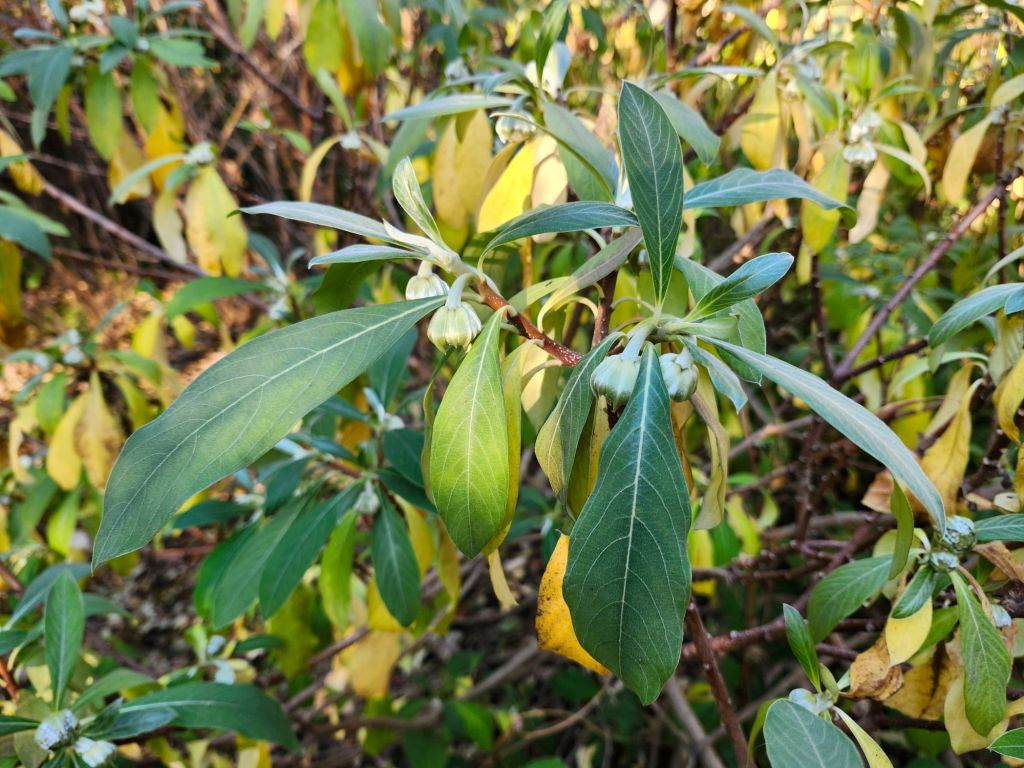
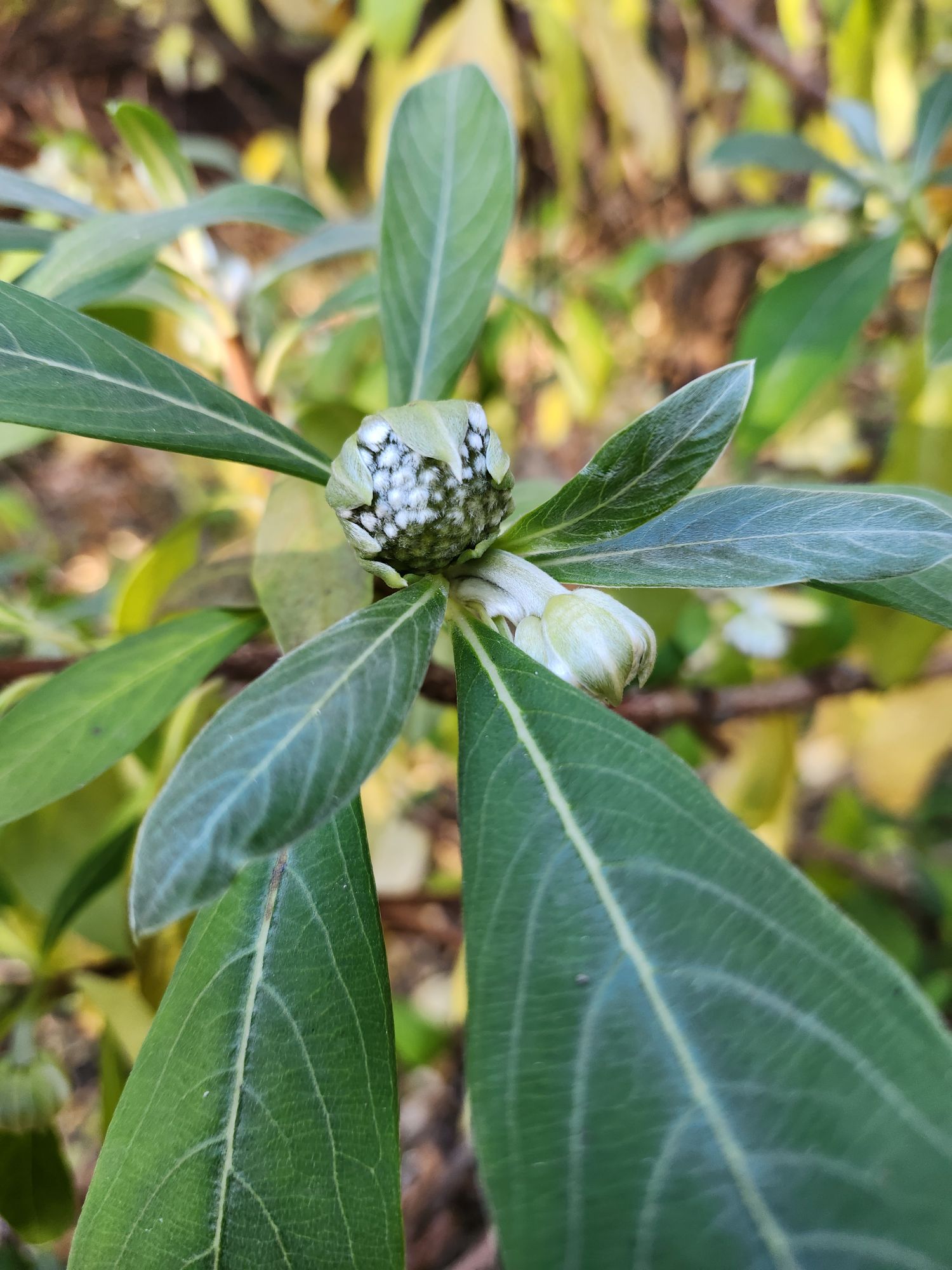
While the ginkgos’ brilliant yellow stands out, other yellowing leaves appear as if the life is draining away before winter dormancy. The fading yellow foliage of the paperbushes (Edgeworthia chrysantha, below) draws the eye only because of the shrubs’ huge size. Soon, the domed canopy of bare stems will stand out with silvery flower buds that will slowly swell until flowering in February.
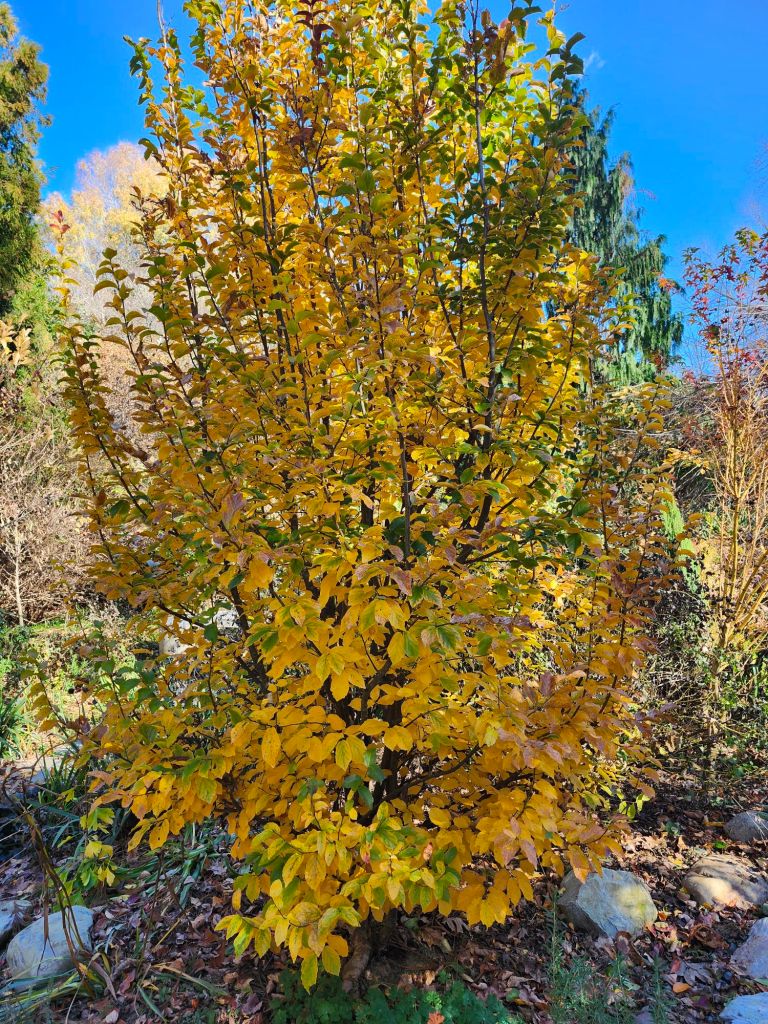
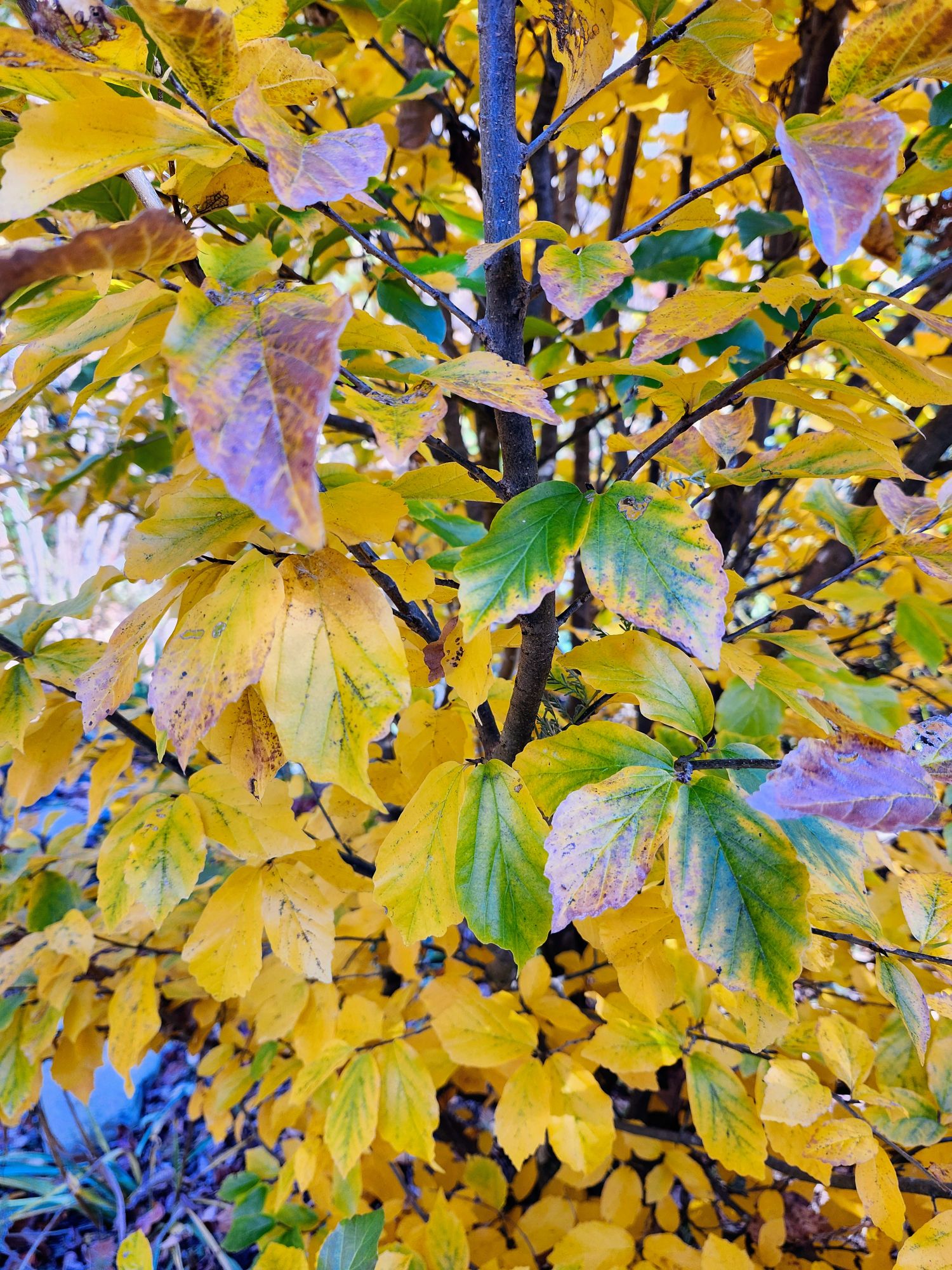
Nearby, upright branches of the Parrotia (Parrotia persica ‘Persian Spire’, below) are cloaked by colorful leaves while neighboring deciduous trees are bare. Tall Japanese cedars (Cryptomeria japonica) and a variety of arborvitae (Thuja) enclose the lower rear garden, and here the beautifully colored parrotia stands out. At least, for a few days more.
 Ramblin' through Dave's Garden