Contrary to online fakery that purports to sell seeds of vibrant purple-leafed hostas and stunning roses without a single faded bloom through a snowy winter, there are real, honest to goodness flowers in the garden this last week of November. I expect several to ornament the garden through the winter months, though some will soon fade and there may be a period when hellebores and late winter flowering bulbs are buried beneath a blanket of snow.
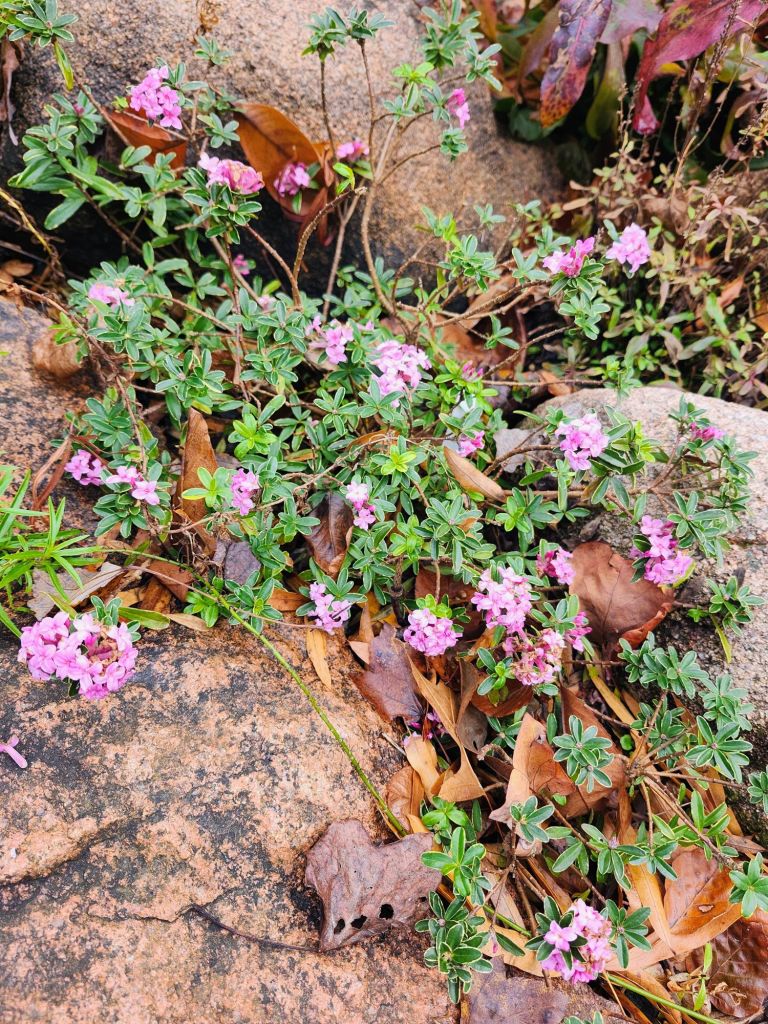
In the few days before Thanksgiving, I’m thankful that a low, sprawling Daphne (above) in the rock garden has increased its blooms in autumn. I neglected for too long to clear a space from a wide spreading, neighboring Pennstemon that limited its sunlight, but once it was cleared a few flowers became many. I suspect that this will end soon. Other flowers in the garden are just beginning.
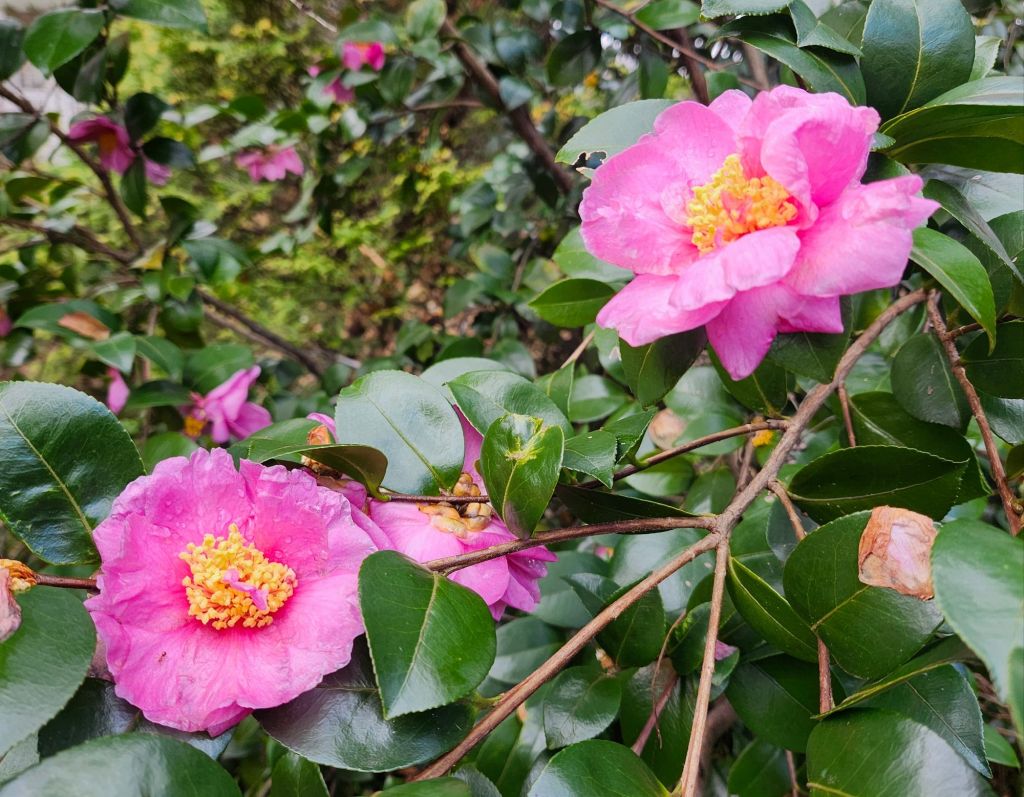
I expect flowering of camellias will soon be interrupted by low twenty degree nighttime temperatures though many more buds should follow to extend scattered blooms into mid-December. Two camellias along the driveway rarely begin flowering before mid-month. In periods of mild temperatures these will flower off and on (mostly off) into late winter with flowers occasionally crossing paths with late winter blooms of Camellia japonica.
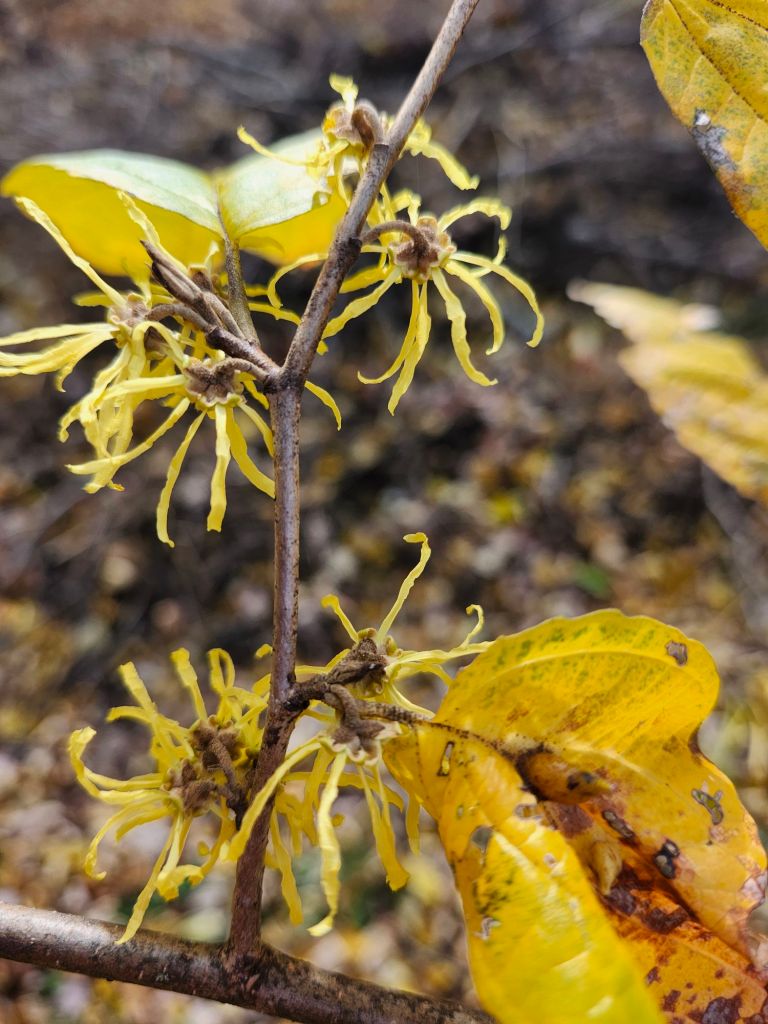
The common witch hazels (Hamamelis virginiana, above) are beginning to fade. I noticed two weeks ago that there was no sign of flowers of local mountaintop witch hazels that began flowering weeks before mine at lower elevation. While the common witch hazels are wonderful as the garden moves into dormancy, the January flowering Vernal witch hazel (H. vernalis) and February flowering Asian hybrids (H. x intermedia) are highlights of the winter garden.
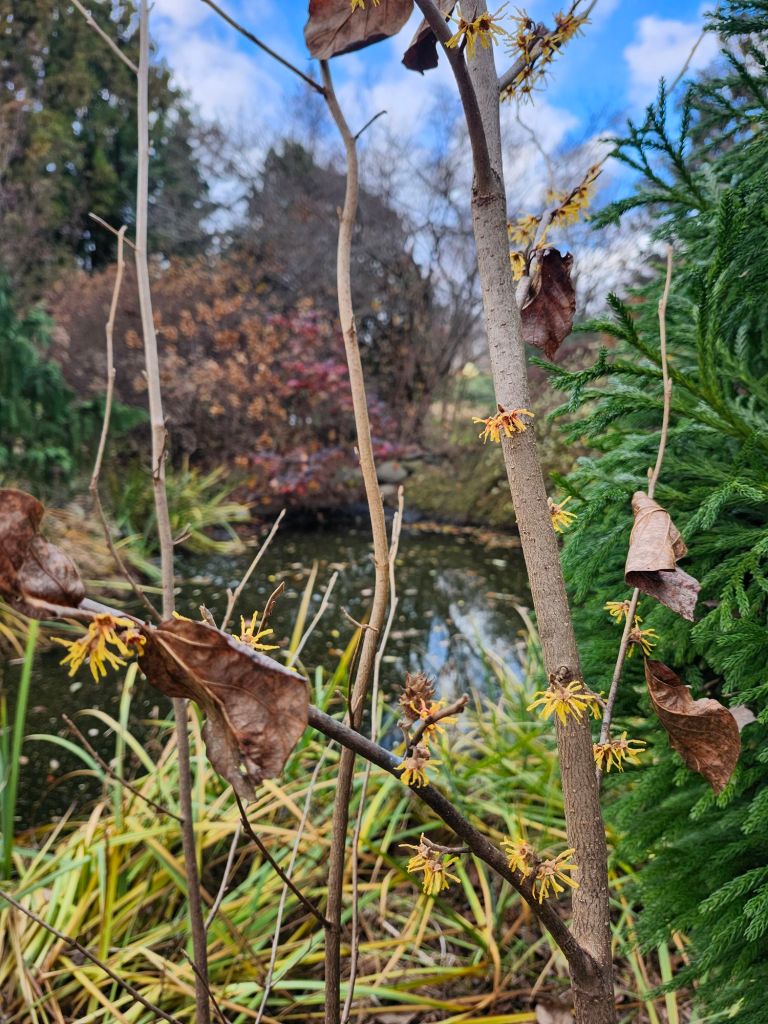
One common witch hazel in the garden is a late flowering selection, but its peak flowering is now hidden behind too many other shrubs beside the koi pond (above). The fish could enjoy the flowers if they were not huddling in the warmth of the pond’s lower depths.
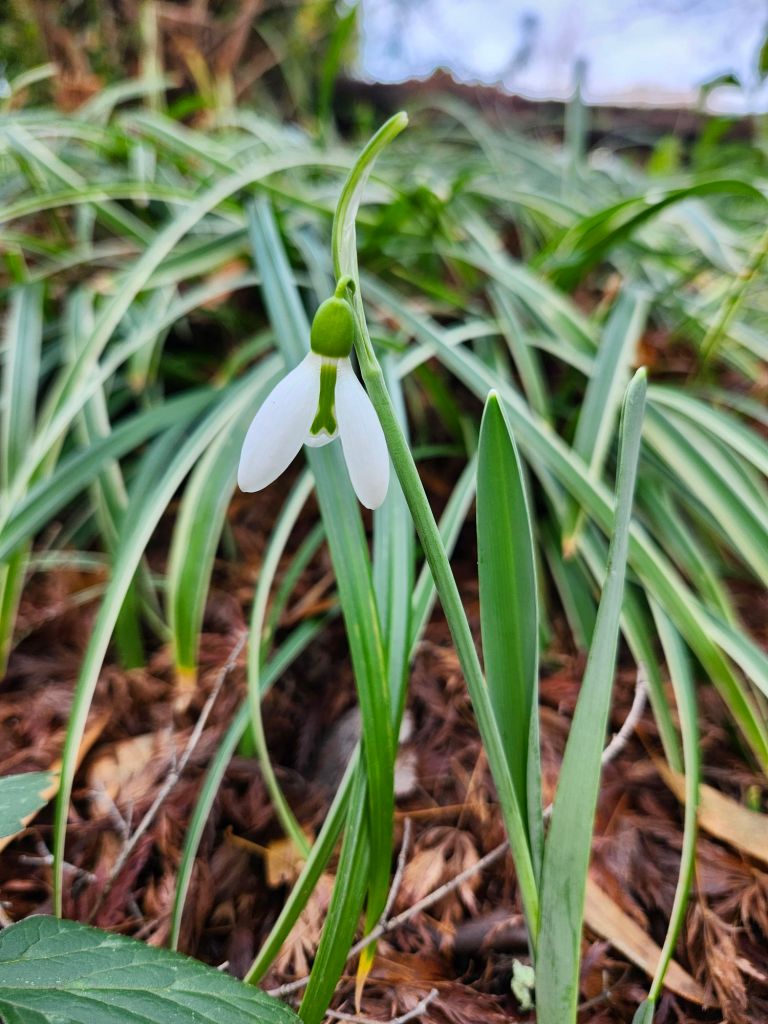
A detriment of allowing deep piles of leaves to accumulate is that some must be cleared, or flowering of hellebores, snowdrops, and other bulbs will be delayed by the lack of sunlight. I have long forgotten all the areas where snowdrops and Eranthis are planted, and where squirrels have not made off with crocus bulbs.
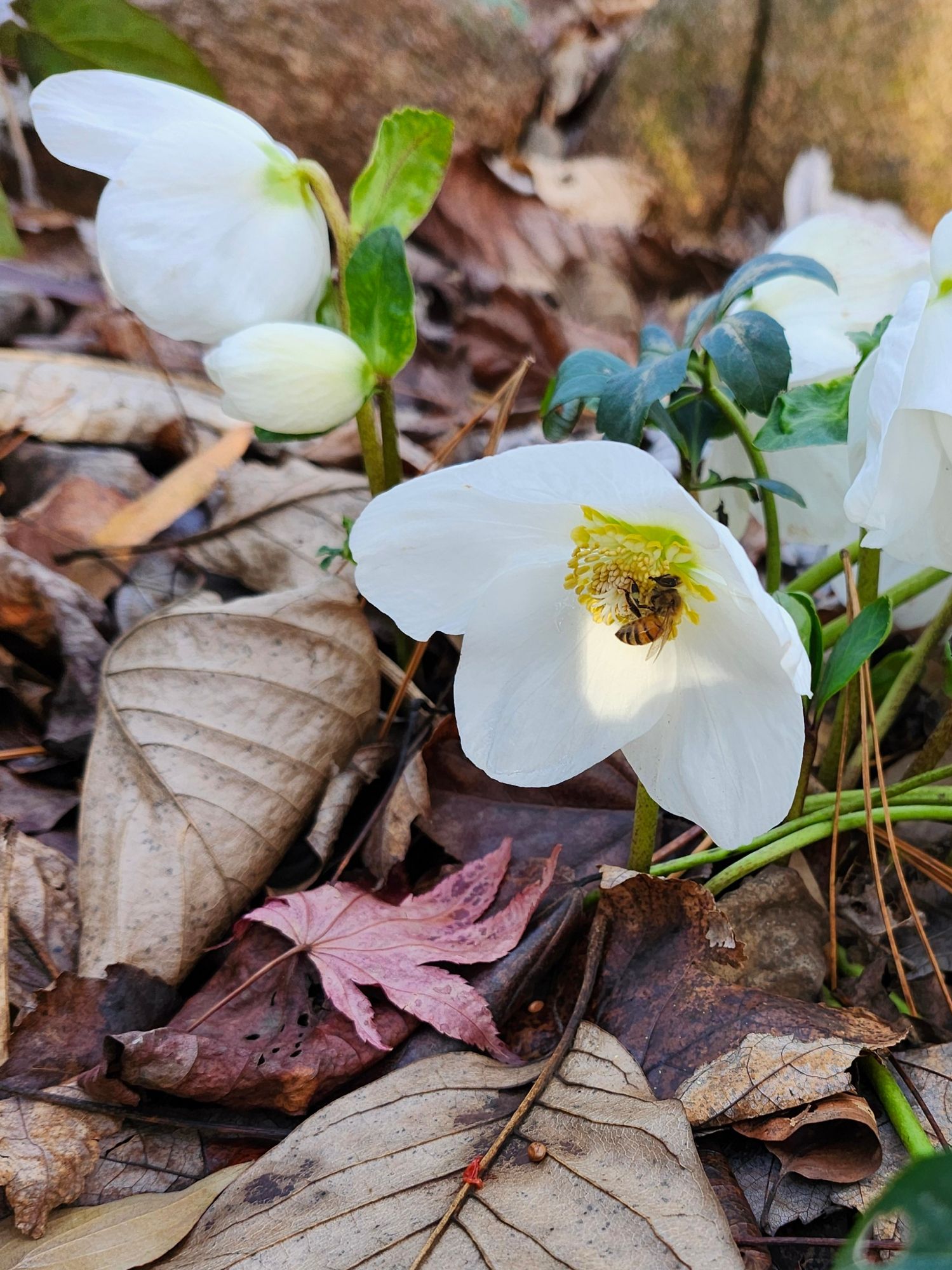
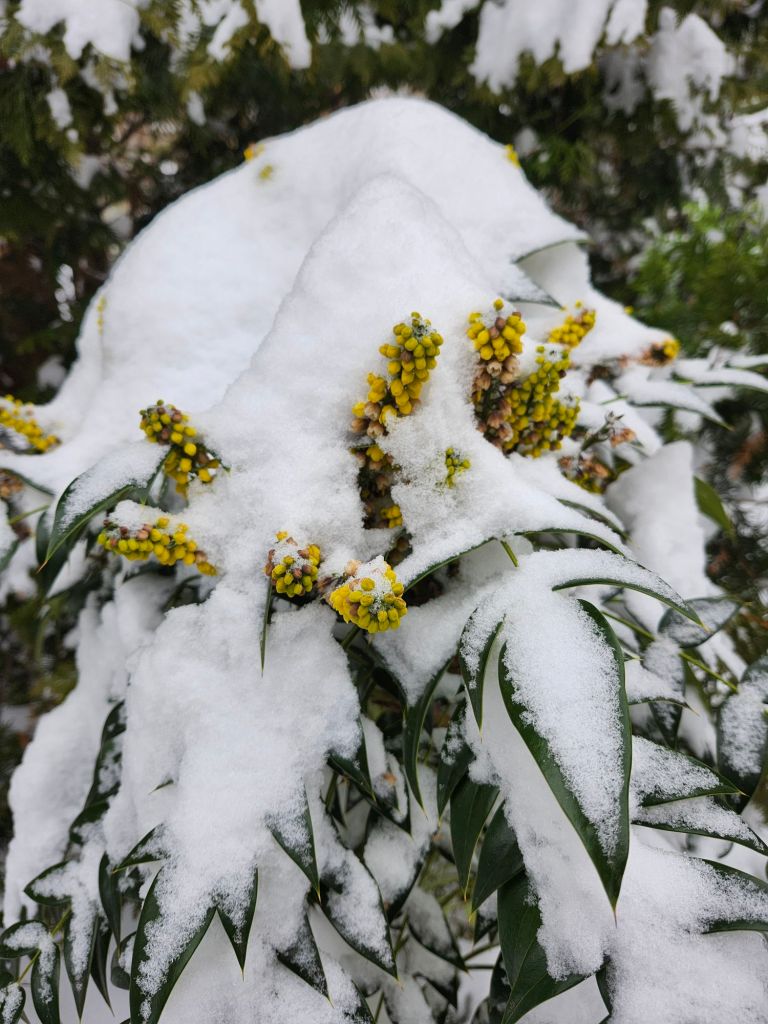
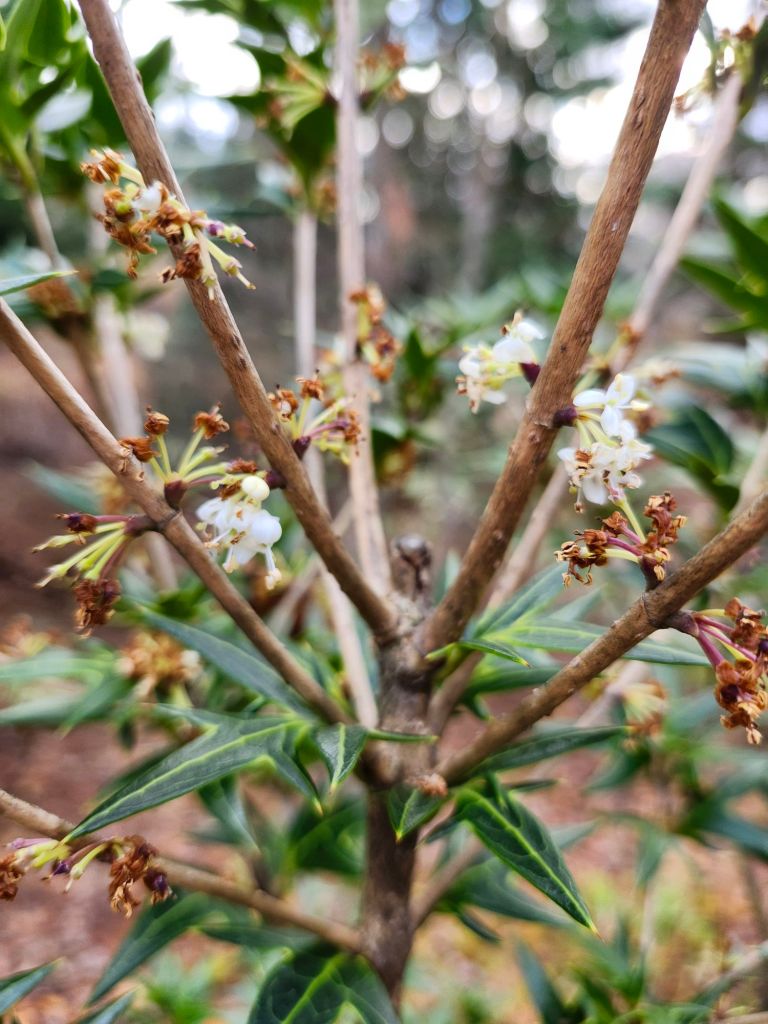
In the weeks ahead I’ll brush aside leaves that obscure fattening buds of hellebores. The first flowers should be seen by mid-December and without extended periods of severe cold there could be many blooms throughout the winter. Typically, there is a short gap in January when the Christmas roses (Helleborus niger, above) fade until the Lenten roses begin to flower, but witch hazels and mahonias (below) will bloom to brighten winter’s darkest (or snowiest) days.
 Ramblin' through Dave's Garden