The days are long over when I collected plants for evaluation. For several decades I was able to offer first hand knowledge so others could make informed choices. Of course, I reveled with each acquisition for the garden, just as I do today. But now, the collections have grown into a mature garden where the attributes of one might be partially obscured by another.
While several treasures are lost in the jumble, I have few regrets. Yes, the majestic beech (Fagus sylvatica ‘Pendula’) with pendulous branching that borders the garden deserves front row placement, but I know its ideal viewpoint even if visitors miss it entirely.
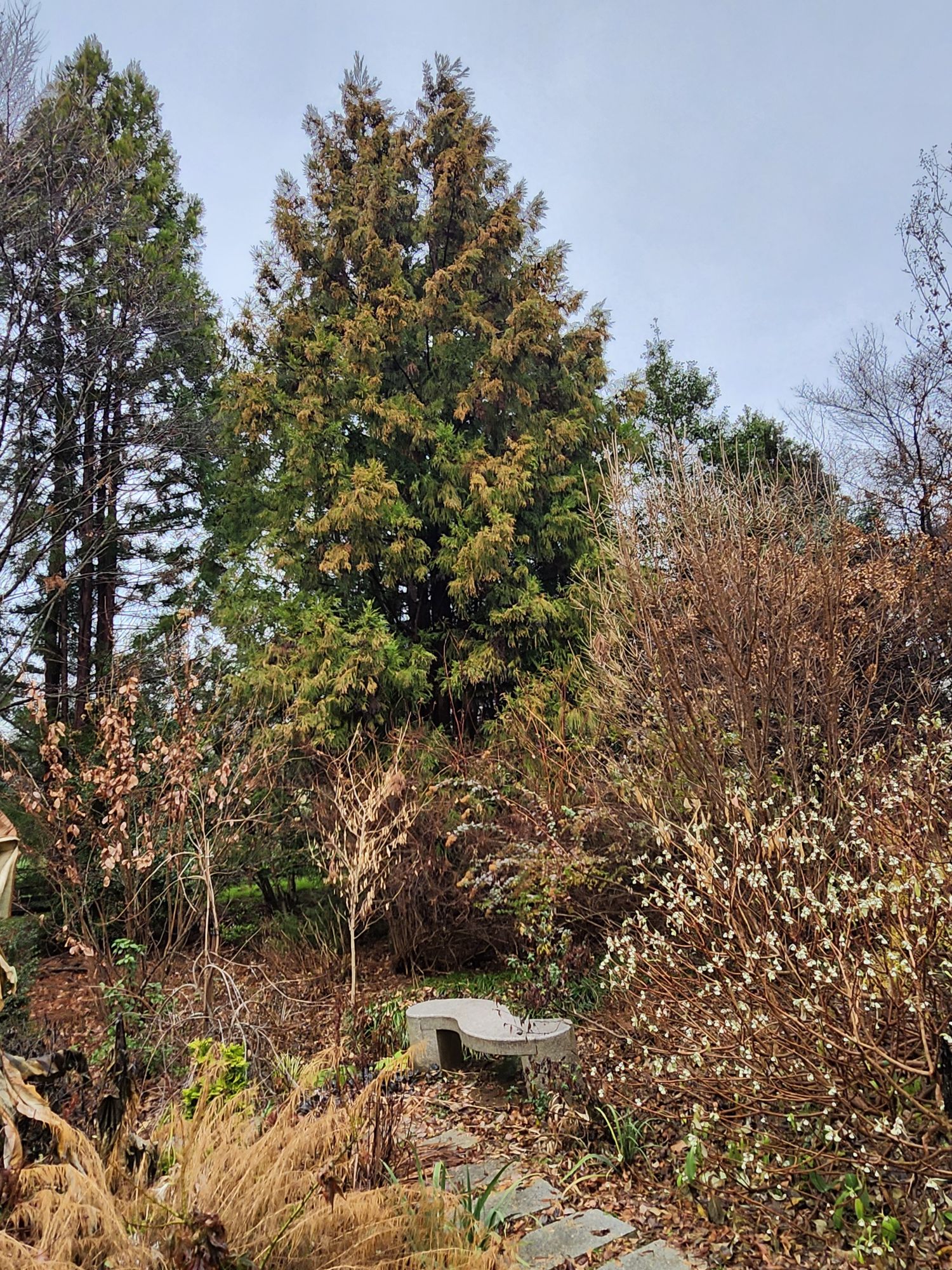
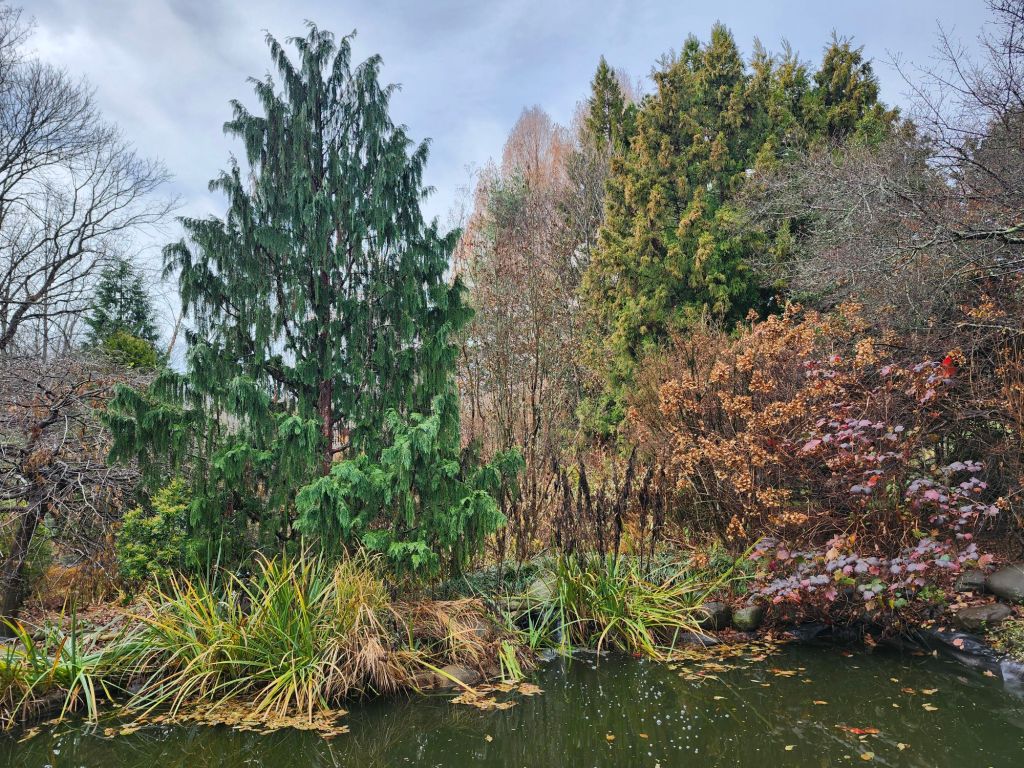
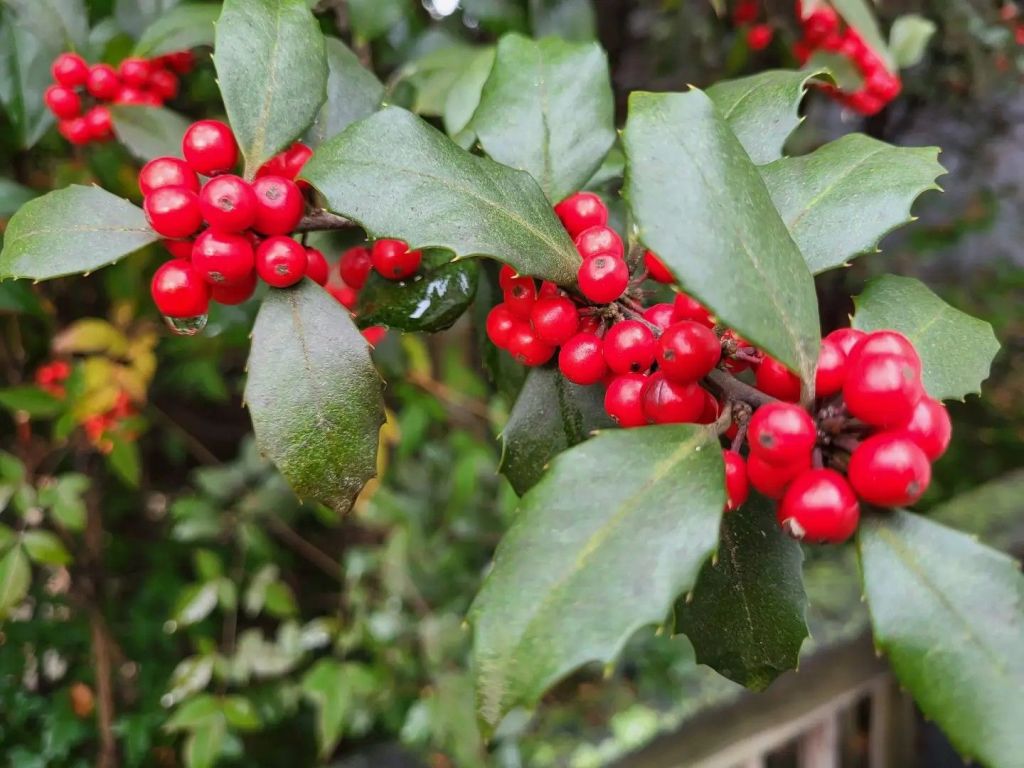
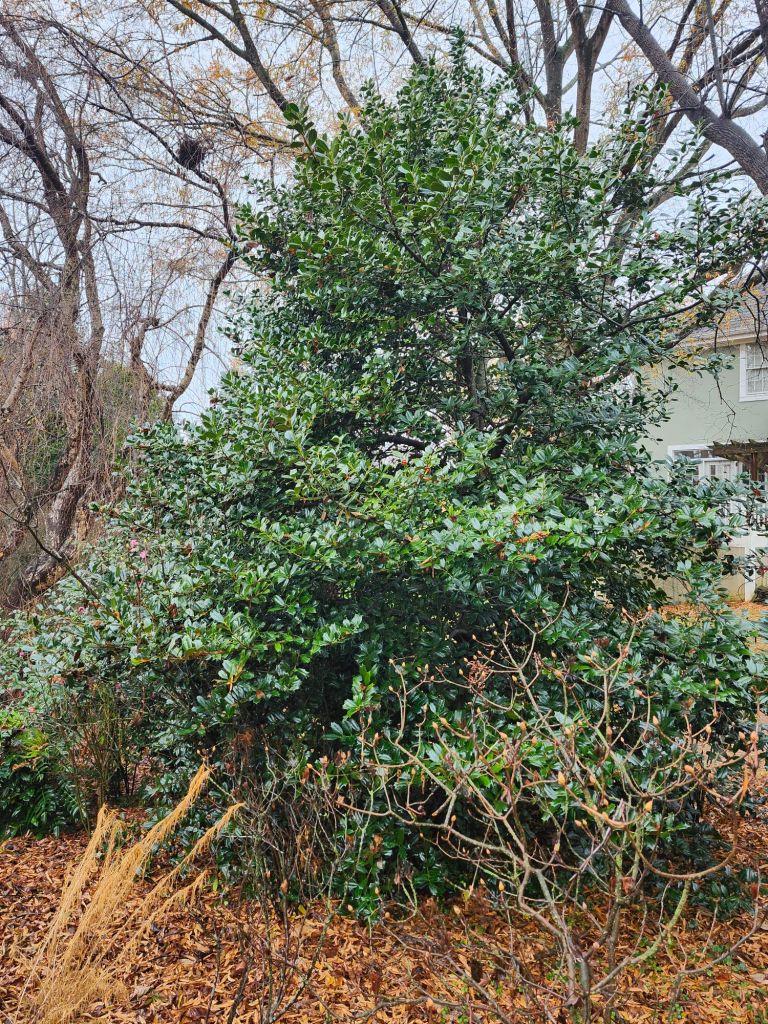
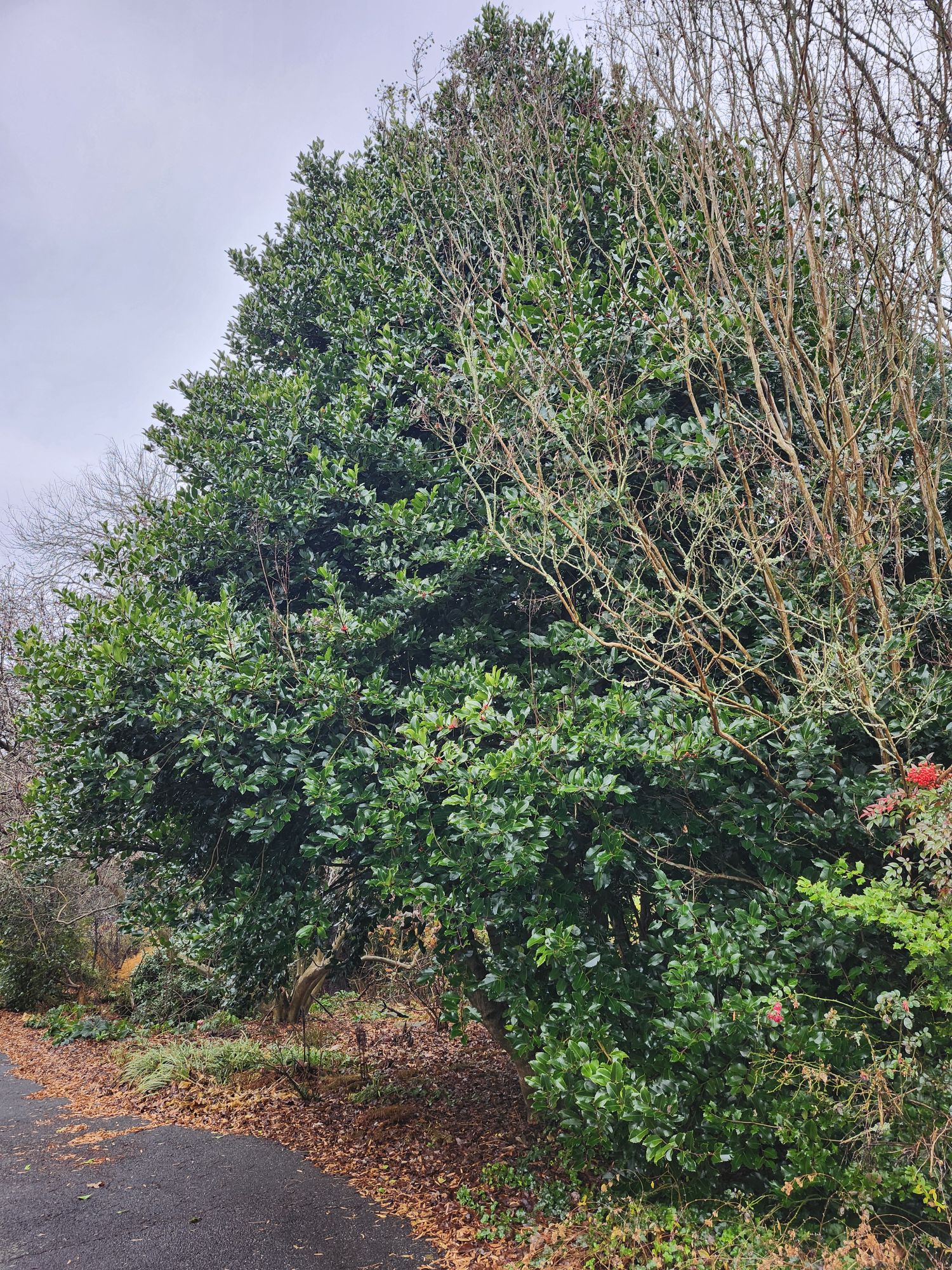
The evergreen collections of large hollies, cypresses, and Japanese cedars are evident through the year but seen at their best after foliage of the garden’s many deciduous trees has fallen. Undoubtedly, hollies lack the seasonal thrill of large blooms, and clusters of red berries are joyful only in the winter months when there are fewer ornaments. The berries are scarcely noticed by resident birds until over ripe in late winter when they are scavenged by hungry robins.
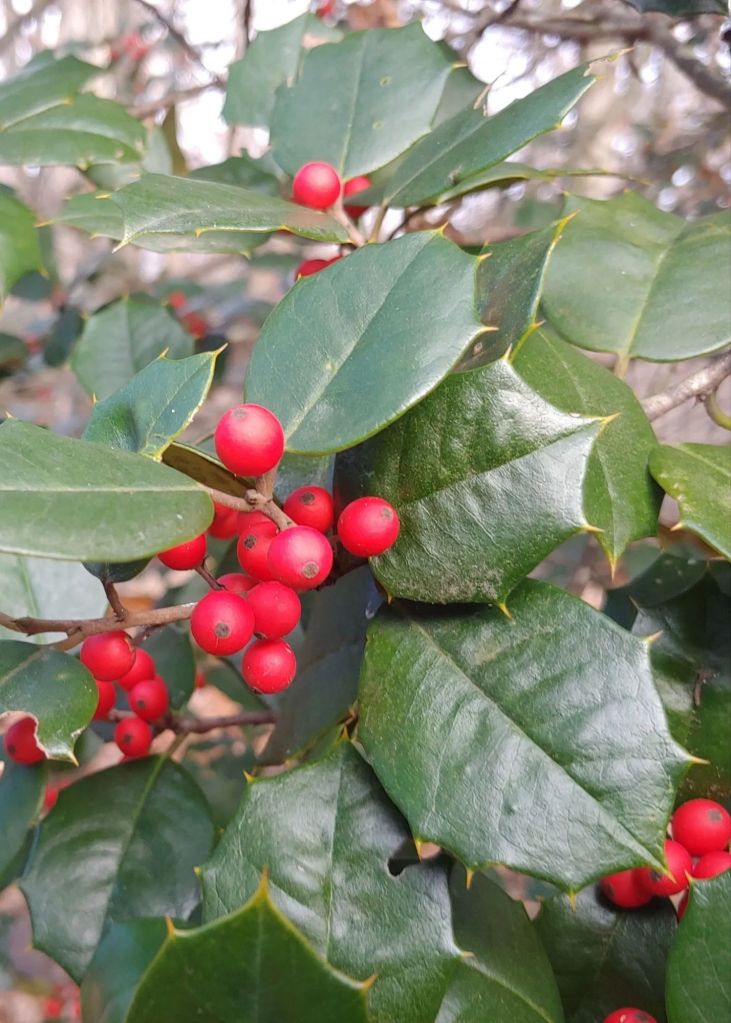
The hollies’ dark foliage stands out against the gray winter sky while it shields the garden from neighboring properties. The variations between hollies are minor, hardly evident to most. The largest of the native American hollies (Ilex opaca) has been swallowed by Japanese cedars along the northern border, but several transplanted, slow growing seedlings are gaining size at the forest’s edge on the opposite border. All are too young to offer berries to assist in determining if they are male or female.

Several smaller varieties of Japanese cedars (Cryptomeria japonica) prized for their textural evergreen needles are dotted through the garden, but six towering cryptomerias edge the rear corner. The tallest have thinned with age as a pair of the neighbor’s even taller Dawn redwoods (Metasequoia glyptostroboides) limits their sun exposure. Three slightly smaller ‘Sekkan-sugi’ (Cryptomeria japonica ‘Sekkan-sugi’) hardly show signs of the yellow tips that attracted me on visits to the Pacific Northwest. As always, the heat and humidity of East Coast summers is blamed for the muted coloring.
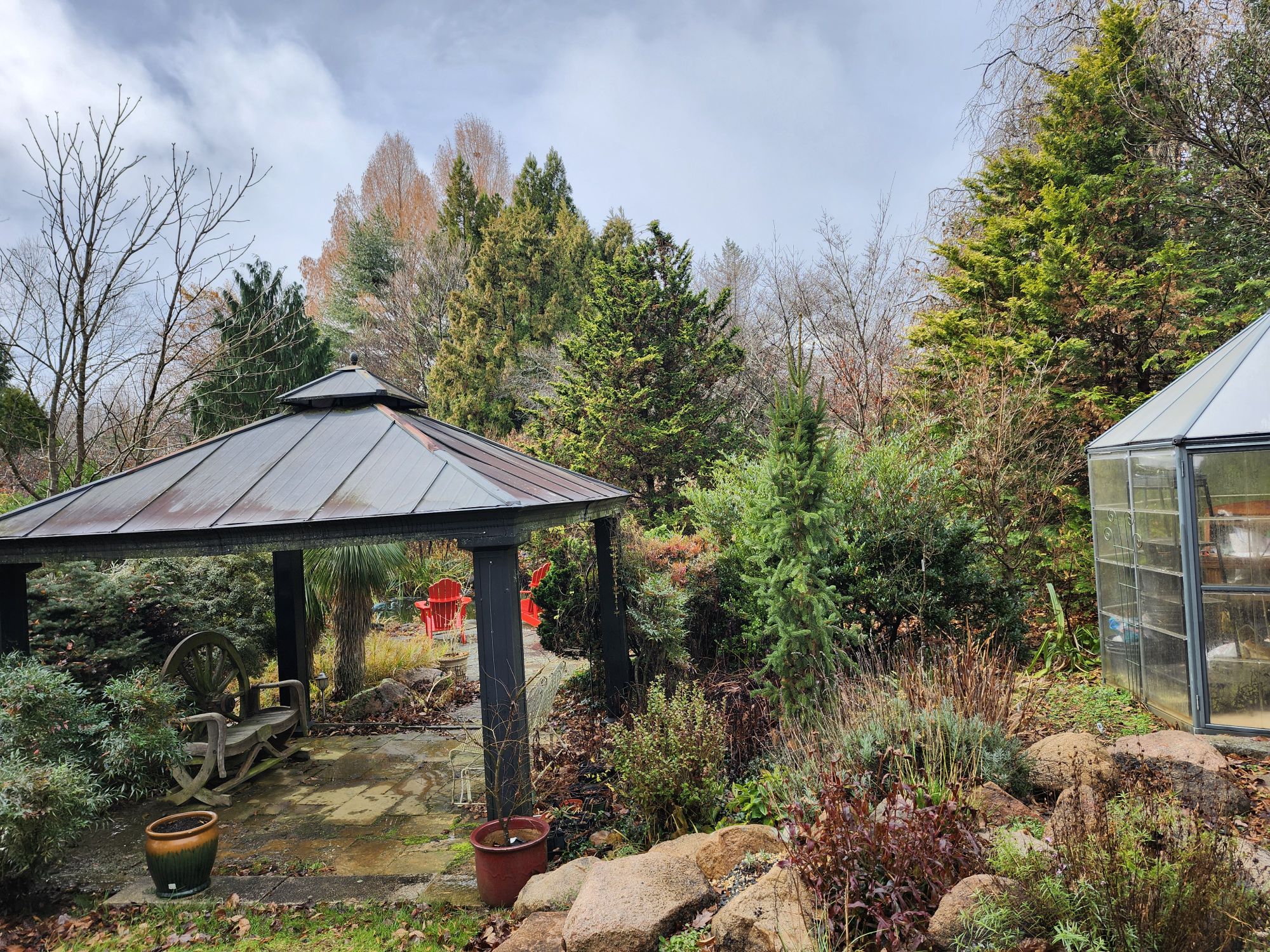
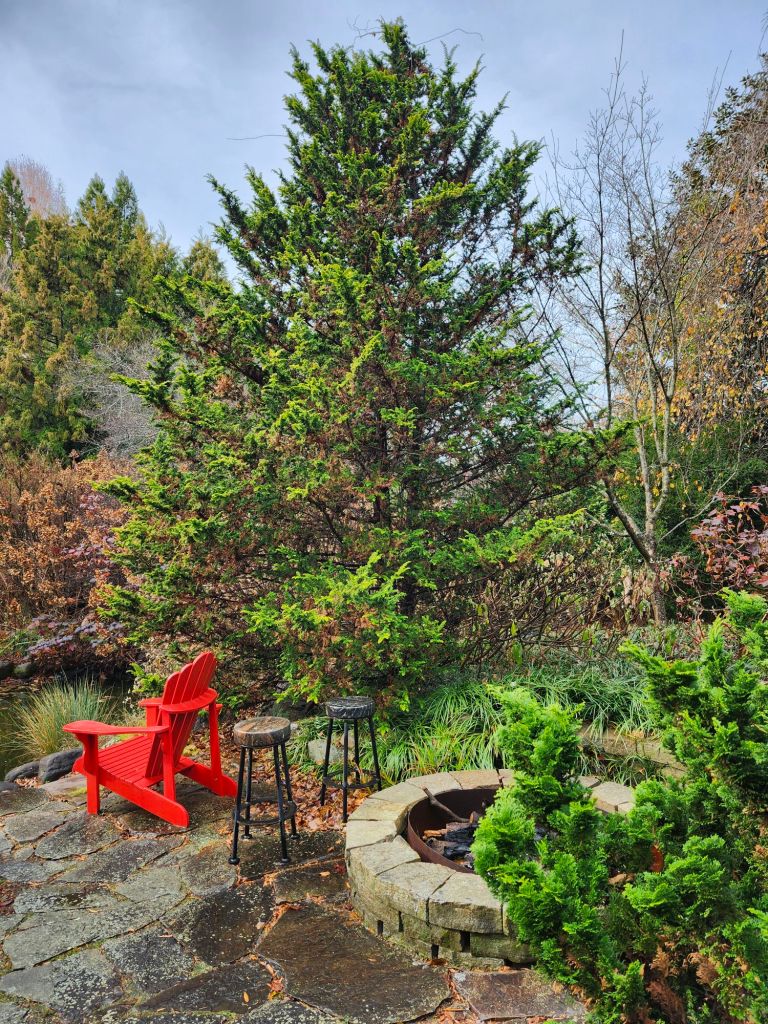
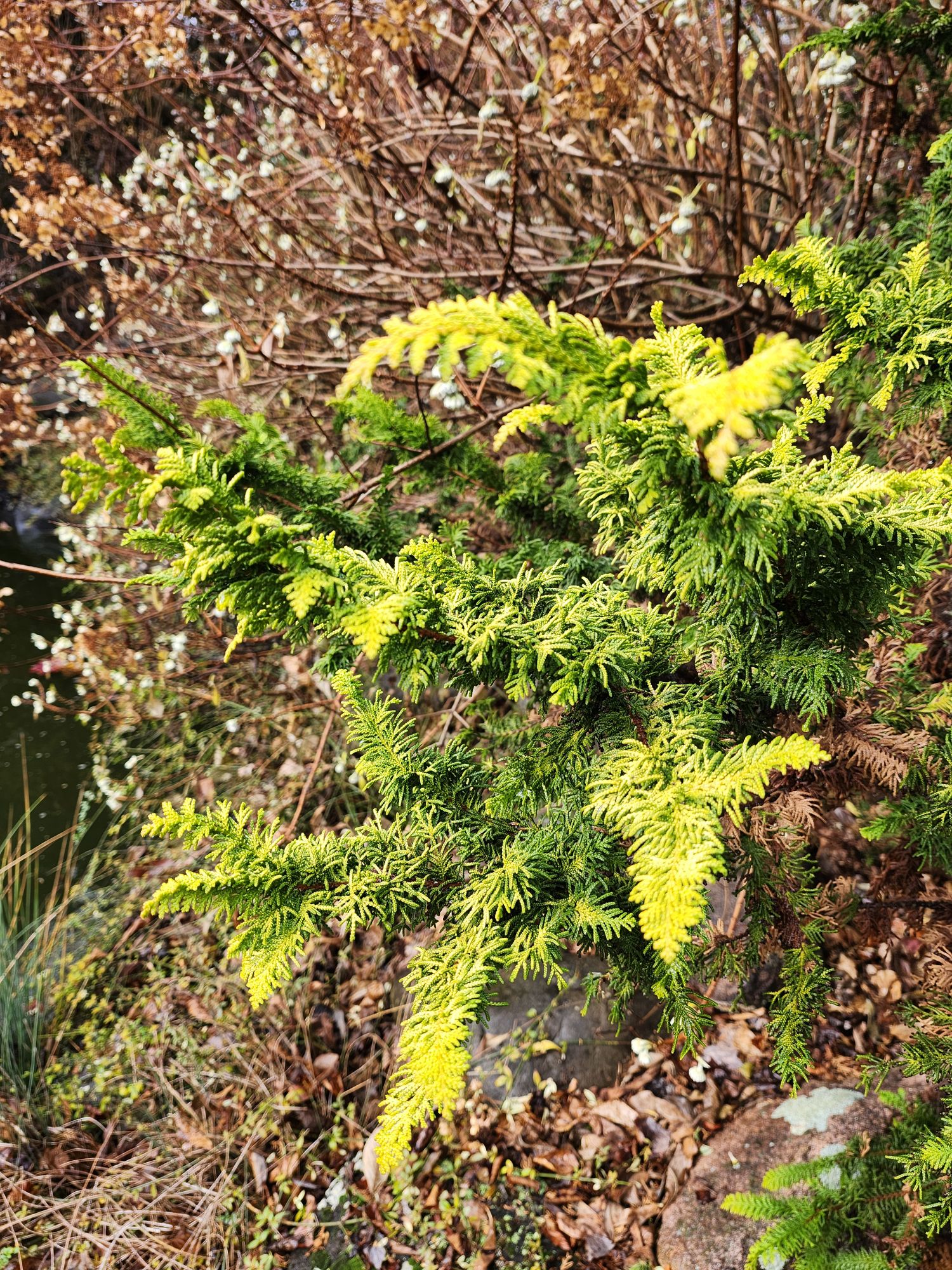
I once saw a display at an Oregon nursery showing the diversity of growth in Hinoki cypresses (Chamaecyparis obtusa) grown from seed. I was inspired to plant ones that have grown to thirty feet and to only four feet, and several green and yellow needled Fernspray cypress (Chamaecyparis obtusa ‘Filicoides’ and ‘Fernspray Gold’). Several are prominently placed while others fade into the background once Japanese maples come into leaf. In the winter months all come to the forefront.
 Ramblin' through Dave's Garden