With apologies to Minnesota and North Dakota and other parts that are truly cold, I often must consider the varied conditions for planting within this zone 7 garden in dealing with winter temperatures. Degrees of sun and shade are easy enough, but I am often mystified when considering microclimates that can protect plants that are marginally cold hardy.
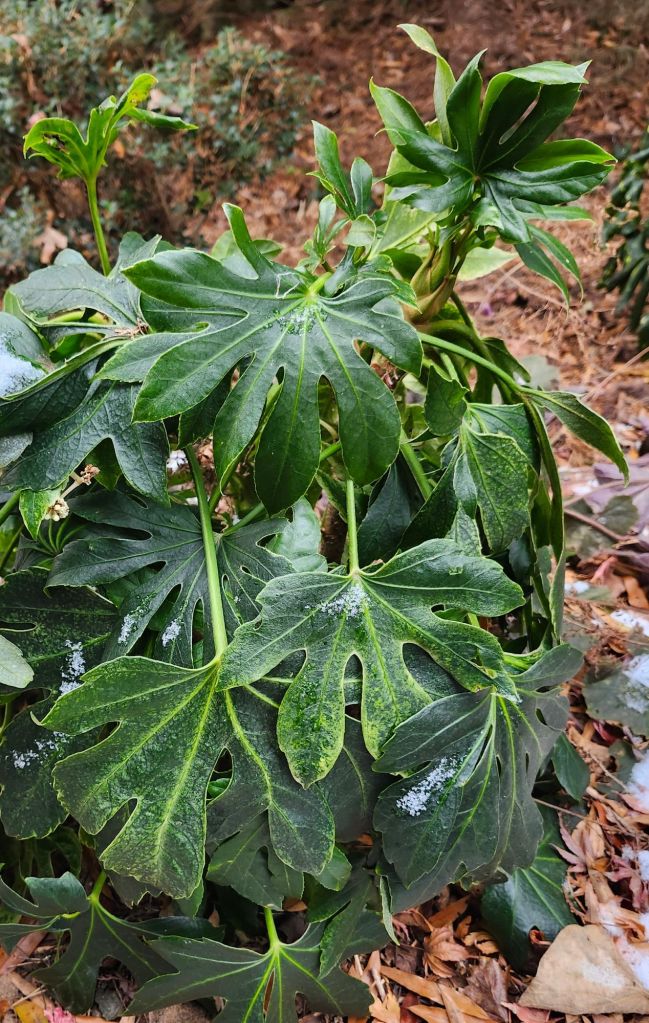
There are multiple considerations and there’s a probability that I’ve misjudged many. I’m quite certain that proximity to the house provides a measure of protection, but otherwise I’m often guessing. I’ve planted Fatsias (Fatsia japonica ‘Spider’sWeb’, above) and Schefflera (Schefflera taiwaniana and S. delavayi) close to the house and in spots where I hope for the best. Sometimes it works out, but rather than an educated guess it’s more often a matter of trial and error.
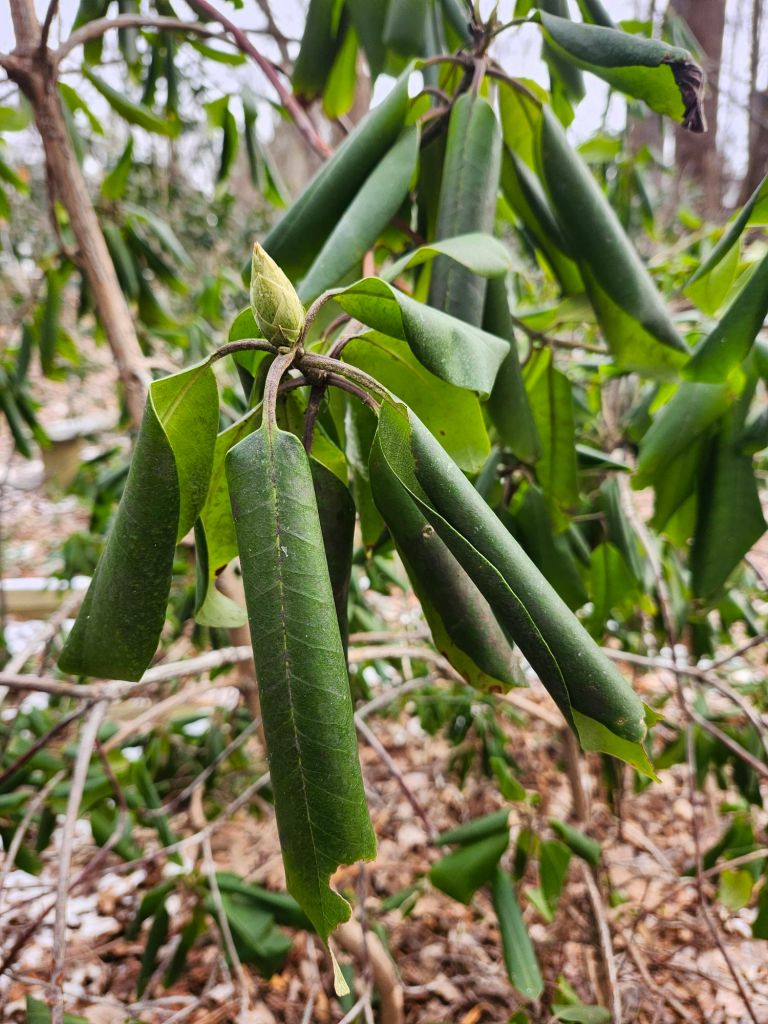
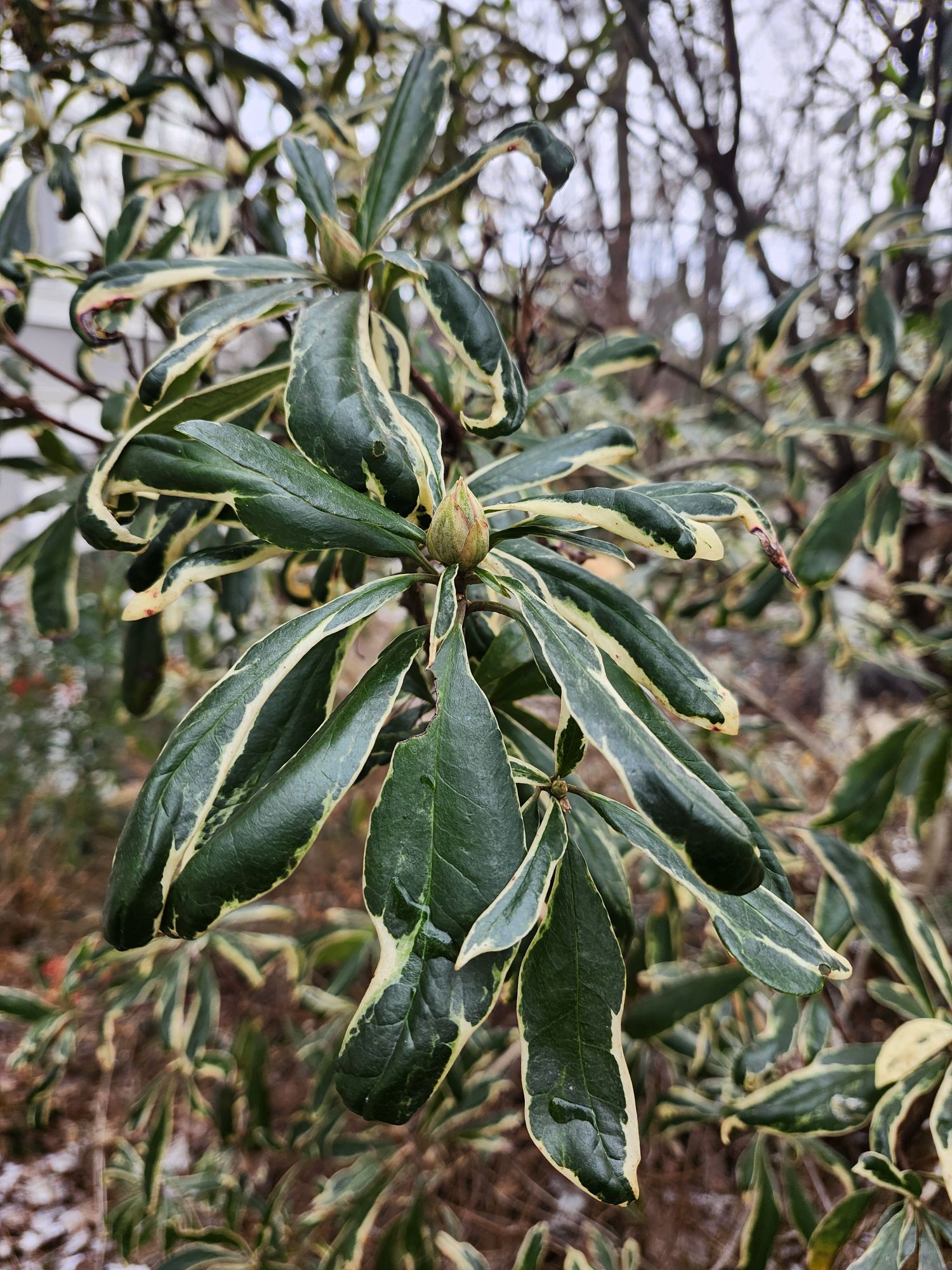
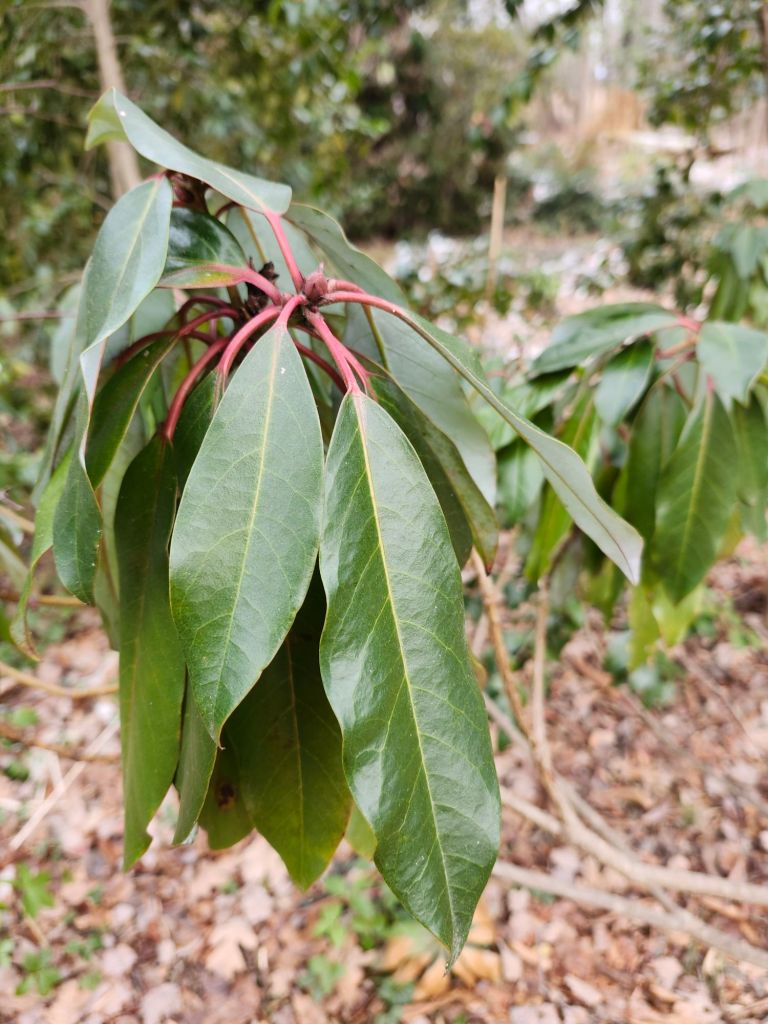
I watch as snow melts more quickly in one area than another. Rhododendrons, Aucubas (Aucuba japonica), and Illicium (Illicium floridanum) are indicator plants with leaves that curl and droop for protection in freezing temperatures. If leaves of one rhododendron unfurl before another, the spot must be warmer, I figure, though there must be variations due to leaf thickness and possibly even leaf color.
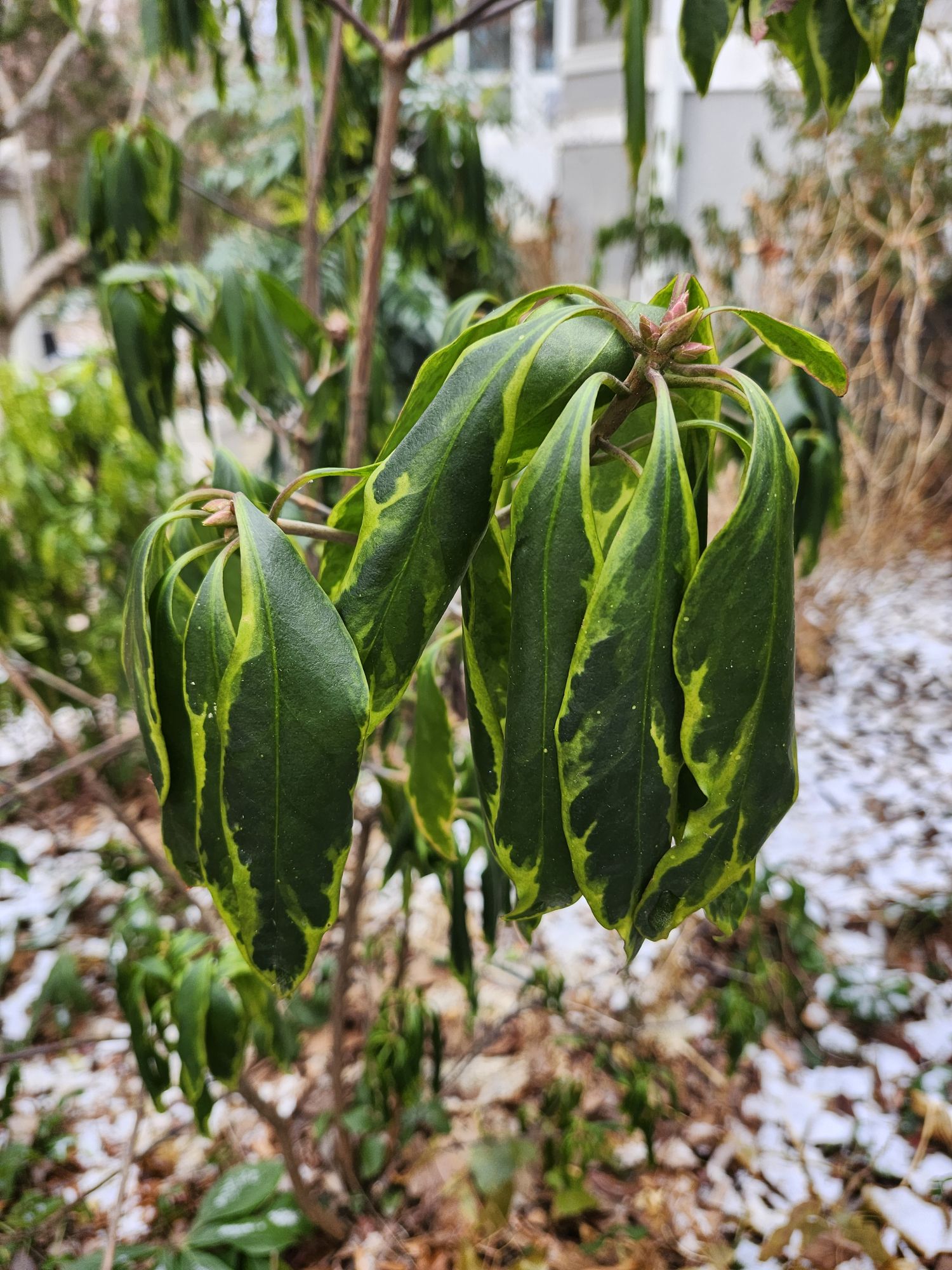

The end result is that I have little information to share except that leaves of some broadleaf evergreens curl for cold protection and then return to form as temperatures rise. A few fatsias (Fatsia polycarpa ‘Green Fingers’) delivered in autumn remain indoors, to be planted in the spring. Hopefully, in a microclimate that allows their long term survival.
 Ramblin' through Dave's Garden