I often overlook magnolias when listing the various collections of trees in the garden. No doubt, Japanese maples, redbuds, and dogwoods are favored but I suspect the number of magnolias, both deciduous and evergreen, are in the range most folks would consider fanatical. I’m certain I could not resist purchasing a six foot Siebold’s magnolia (Magnolia sieboldii) if one could be located, though where could it fit? Many more magnolias would be included in the dreamed about five acres instead of our current, crowded acre and a quarter. And also, more maples, dogwoods, and redbuds.
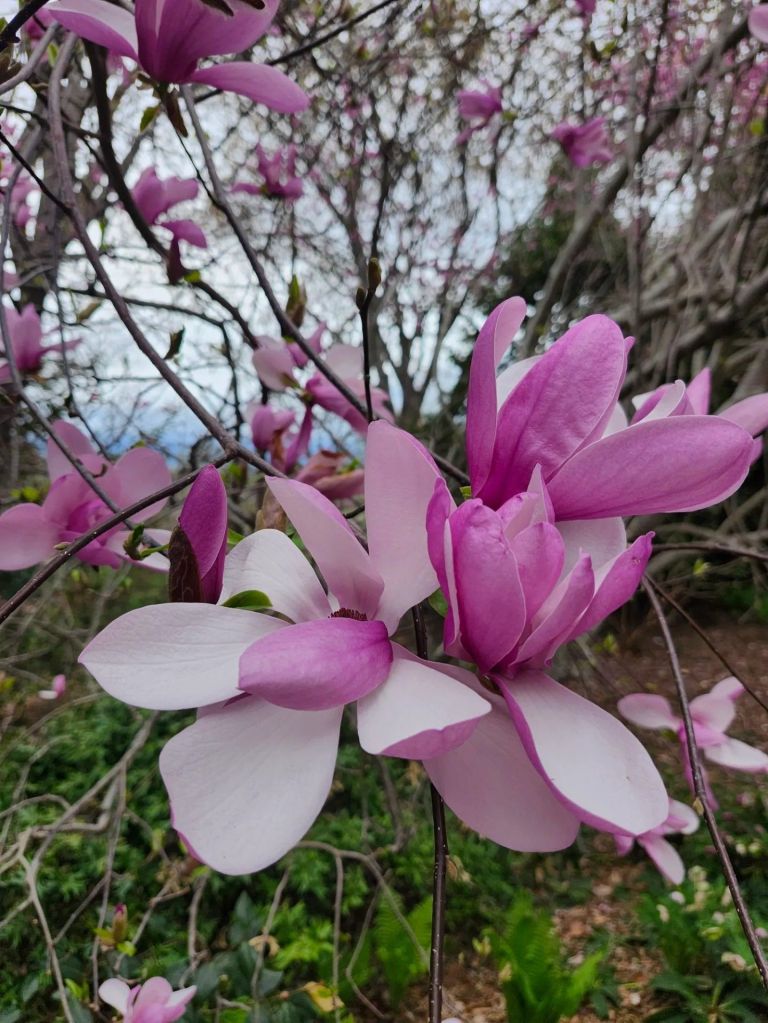
With the favorite Bigleaf magnolia (Magnolia macrophylla) lost in a June storm, I was encouraged to find two large-leafed magnolia seedlings just outside the garden. With only a few leaves it is impossible to verify that they are seedlings of Bigleaf, but no other magnolia in the garden has comparable leaves. Of course, it is possible that the seedlings could be crosses with another of the garden’s magnolias, though I don’t believe any flower at the same time to enable cross pollination.
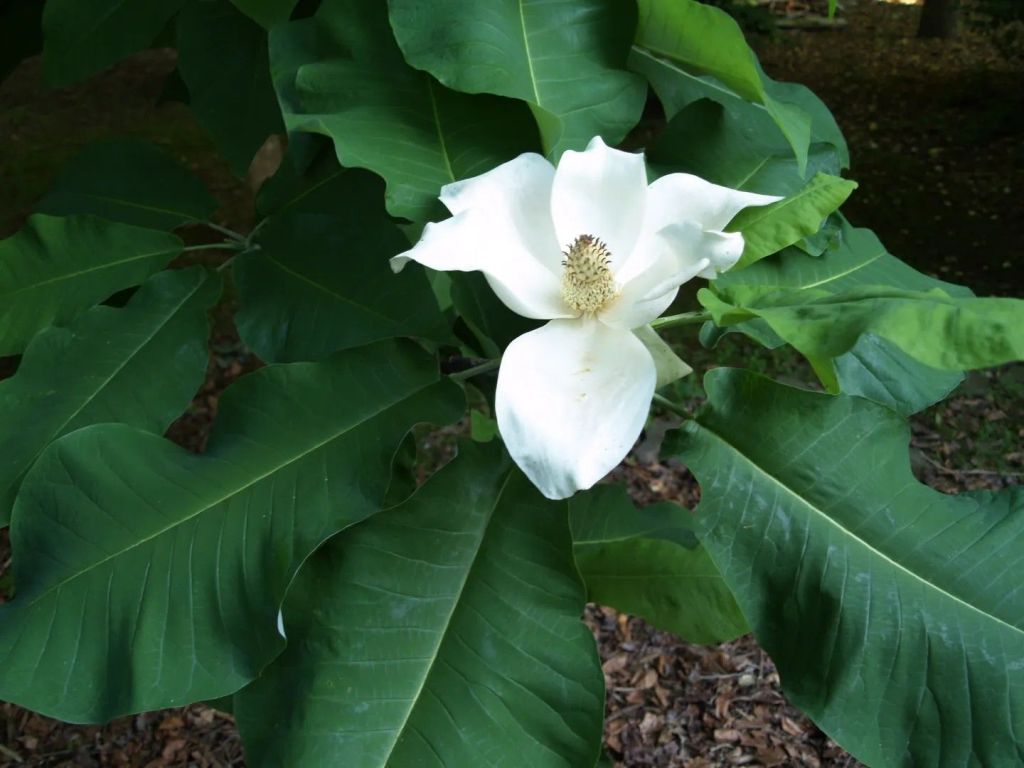
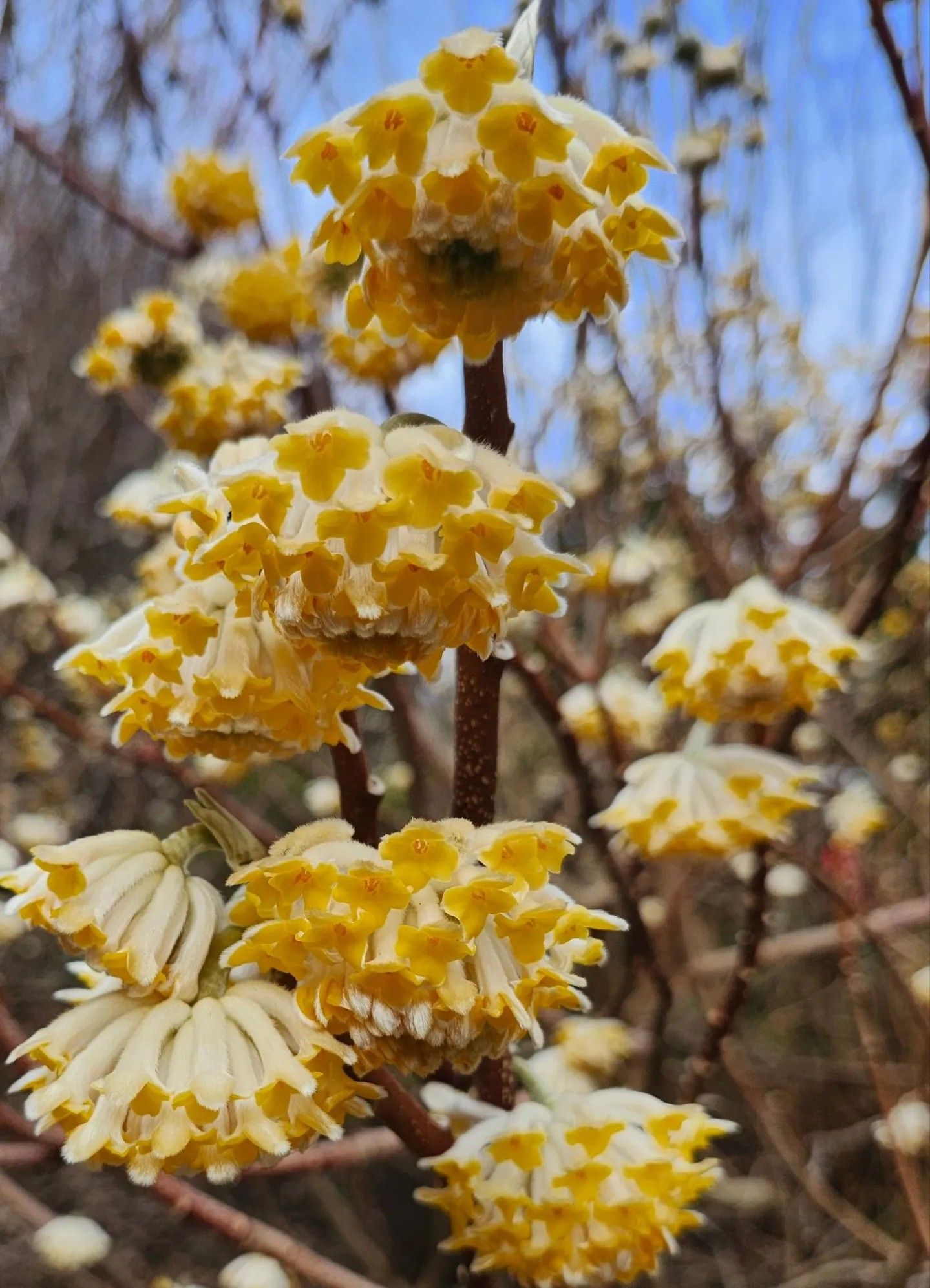
While I accept flowering of paperbushes (Edgeworthia chrysantha, above) as the indicator of spring’s arrival, in an inordinately mild winter they might flower early in February though most often the first color is seen late in the month. Far too early to be spring. More accurate harbingers are two magnolias, ‘Merrill’ (Magnolia x loebneri) and ‘Royal Star’ (M. stellata ‘Royal Star’, below) with flowers that rarely slip into the last days of February but more often open in the first ten days of March.
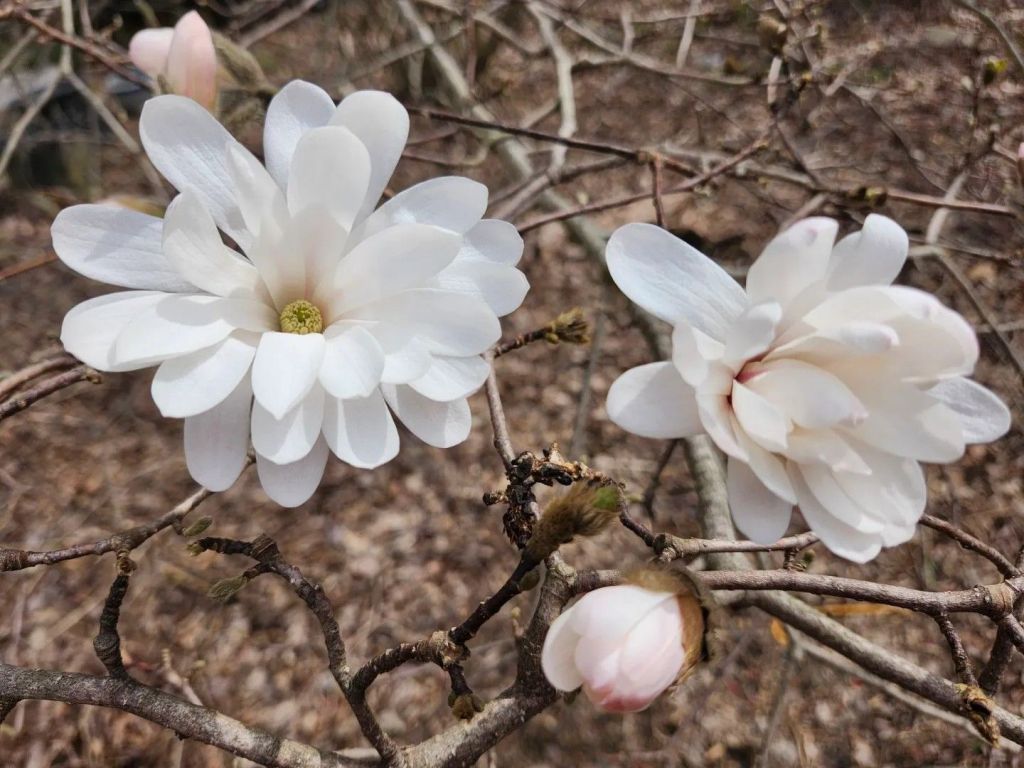
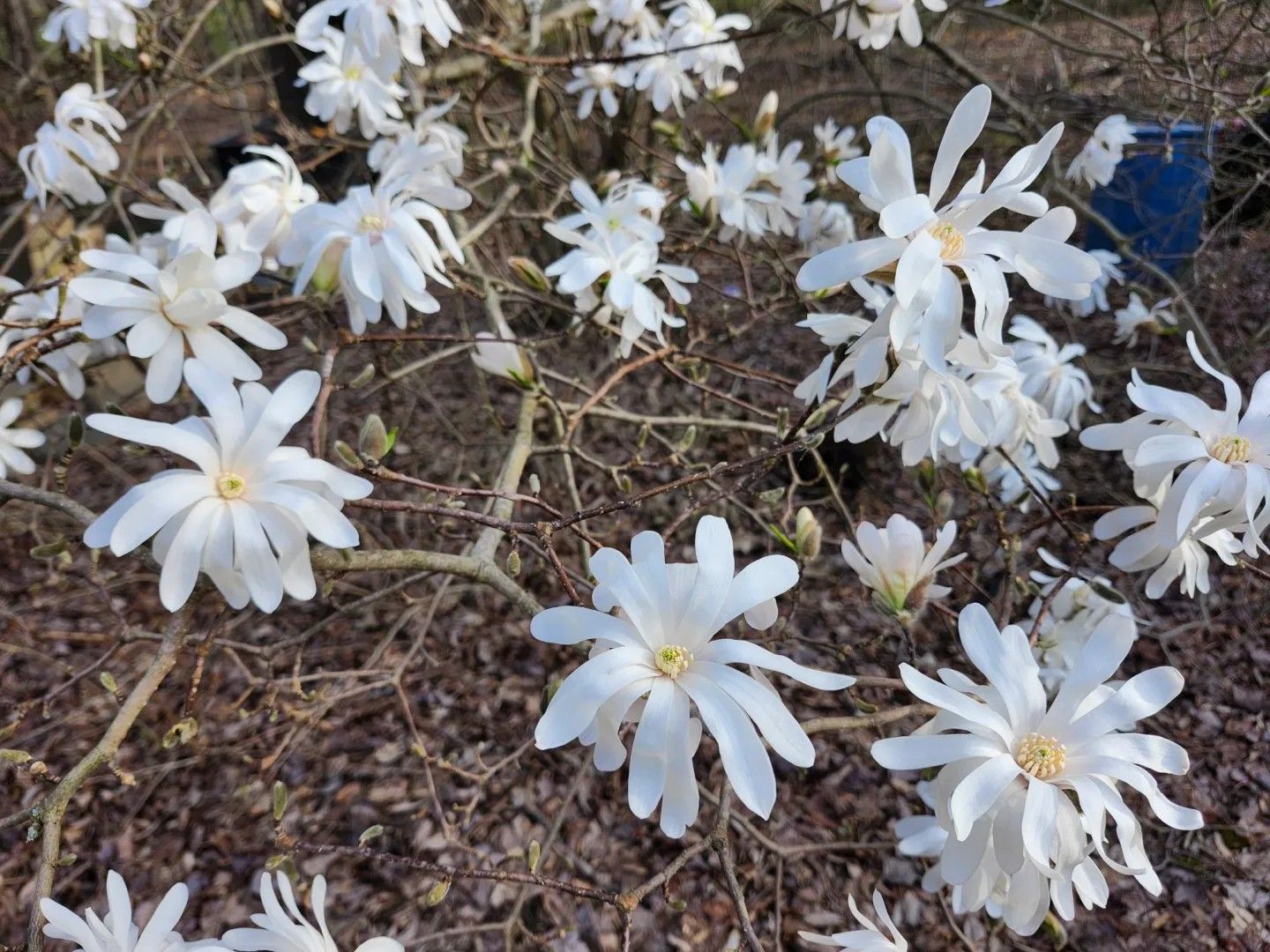
The large flowers are susceptible to damage from freezes that are routine in the early weeks of March, with blooms often turned to brown mush over their two week period. No matter, even a few days of bloom are enough for the spring kickoff. A year ago, flowers were ruined just as they were fading. Perfect timing.
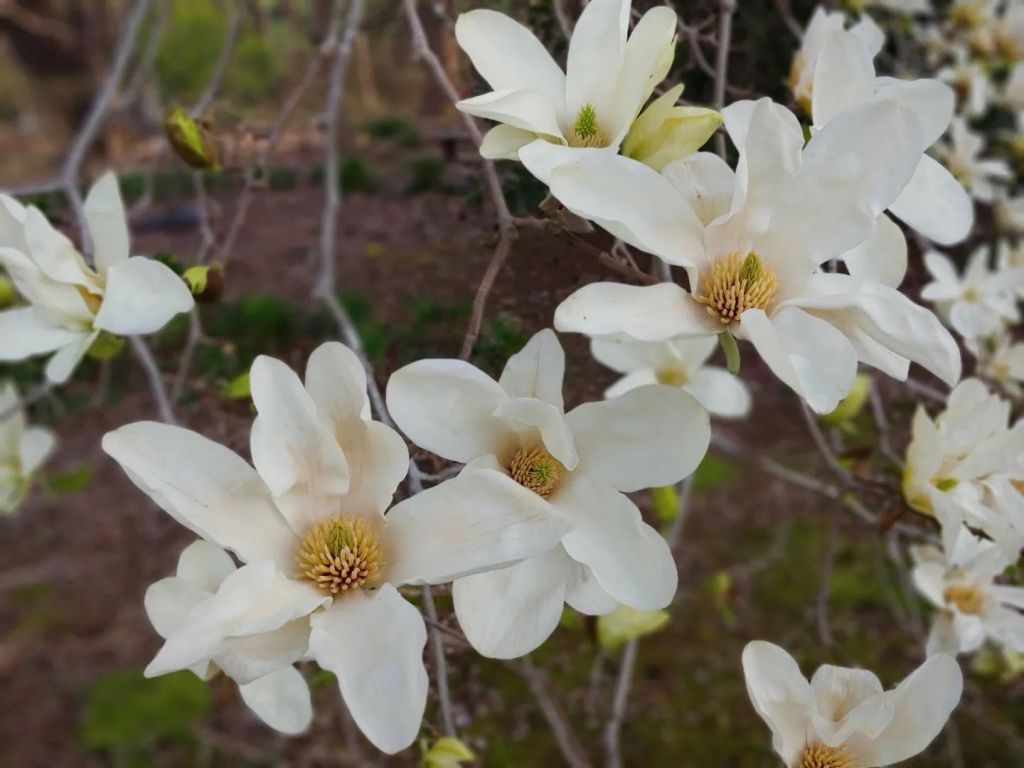
Several magnolias flowering two weeks later are less likely to be damaged though chilly temperatures are not unusual into April. The tall, pale yellow flowered ‘Elizabeth’ (M. ‘Elizabeth’, above) in the front garden is glorious in bloom, but unsightly when the flowers are damaged. It is appropriately ignored on those occasions.
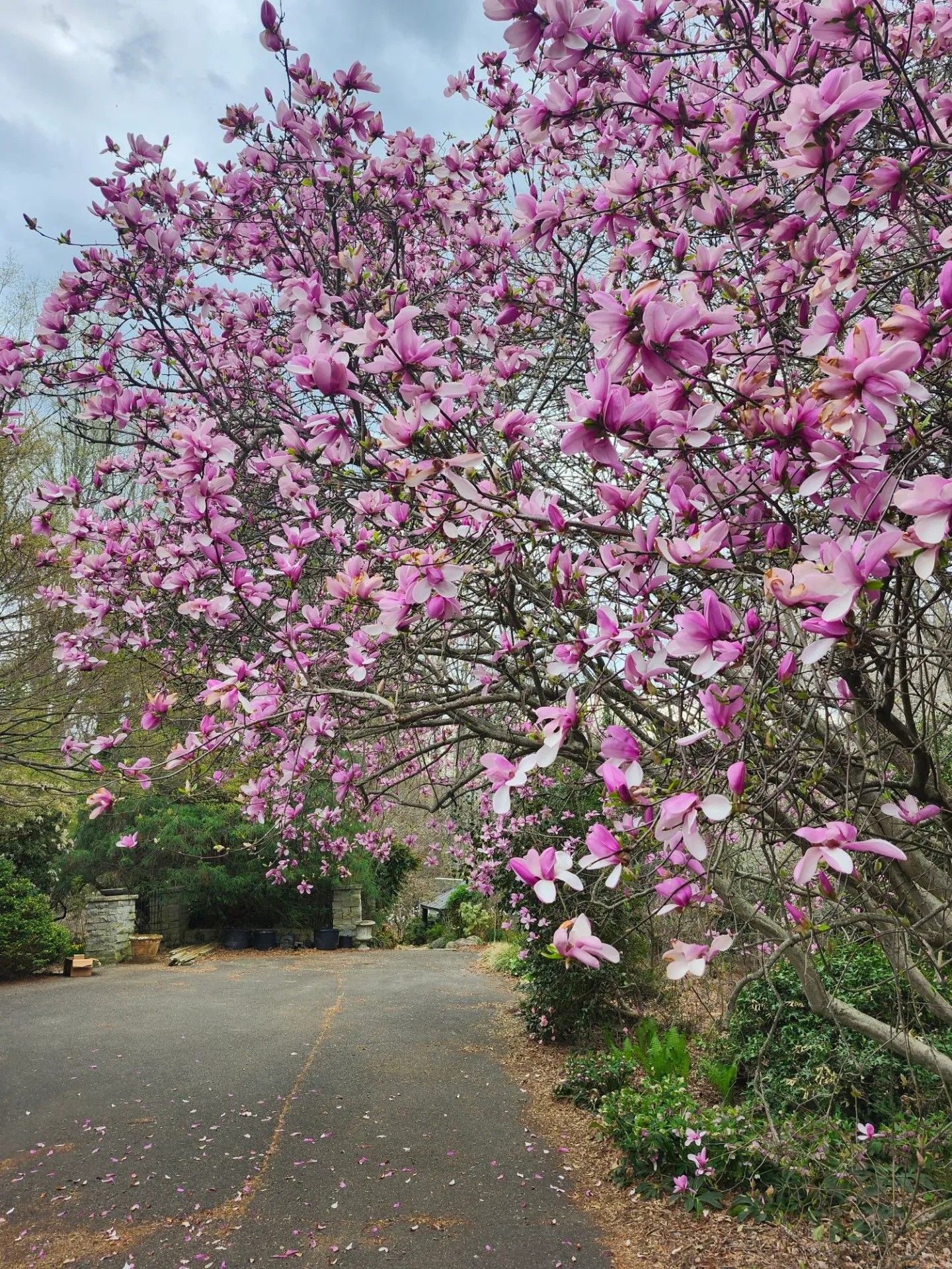
While ‘Elizabeth’ is upright in form, the purple flowered ‘Jane’ (M. ‘Jane’, above) arches spreading branches over the driveway. Lower branches have been pruned (or broken by trucks backing down the drive). I was overjoyed several years ago when ‘Jane’ and a ‘Seriyu ‘ Japanese maple (Acer palmatum ‘Seriyu’) crossed branches over a wide area of the driveway.
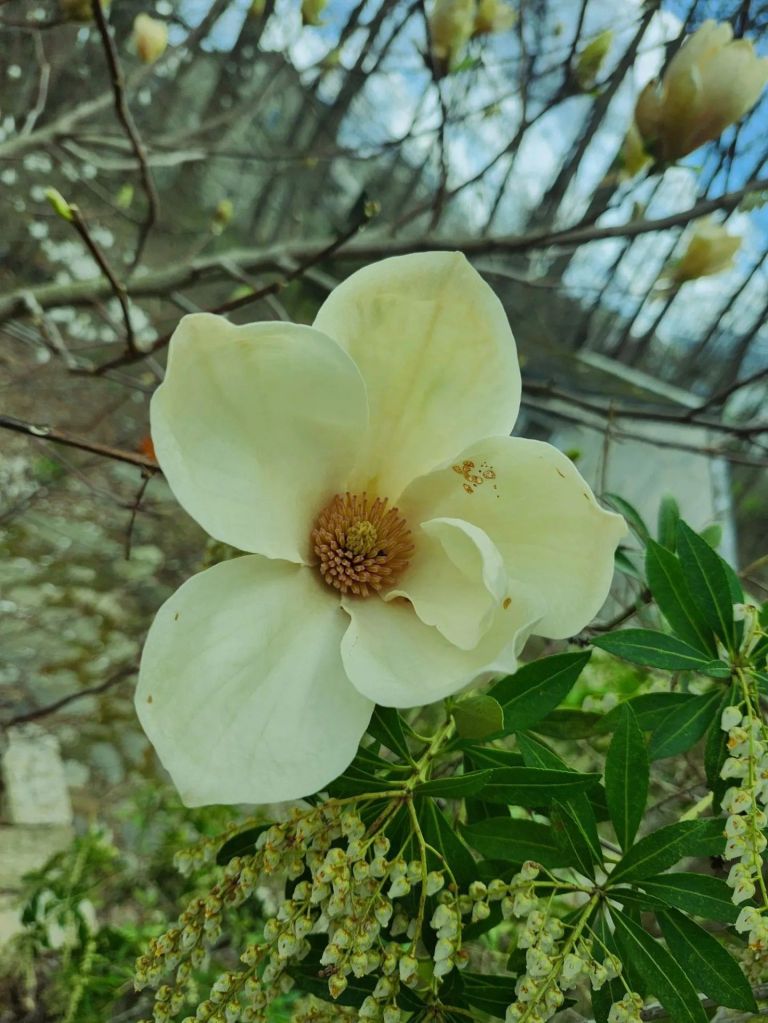
While ‘Elizabeth’ is a very pale yellow (with brighter yellow buds), I planted ‘Yellow Bird’ (Magnolia x brooklynensis ‘Yellow Bird’, above) hoping for a brighter yellow. And it is, though not quite the brightness I hoped for. ‘Yellow Bird’ has grown quickly in a similar form to ‘Elizabeth’ with one in the front and the other in the rear garden. A year ago ‘Yellow Bird’ appeared set for a glorious bloom only to lose its flowers to a late freeze.
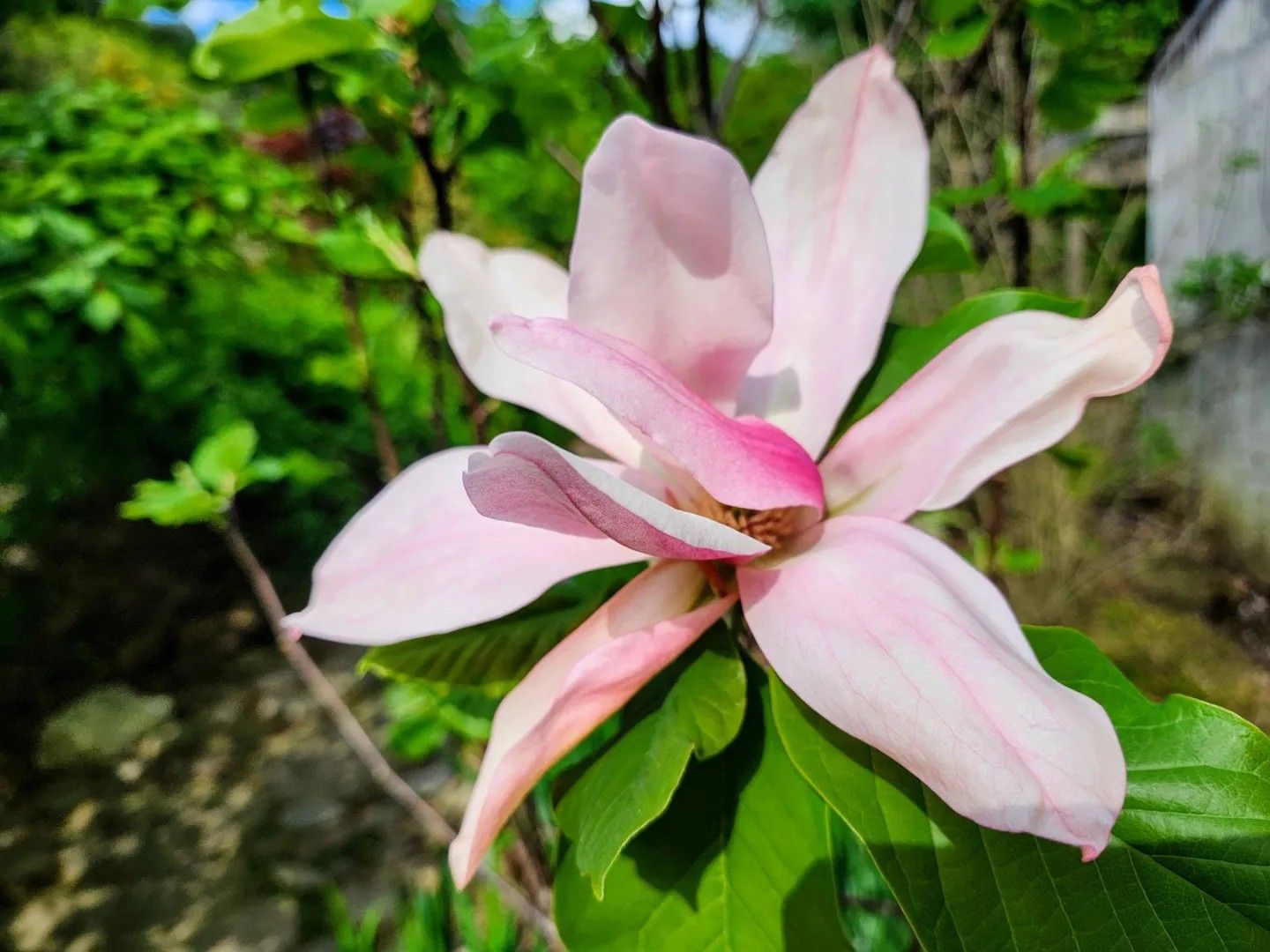
No doubt, one of the early flowering magnolias or another will be hit by a damaging freeze. I look forward to it.
Note: Several Sweetbay magnolias (M. virginiana) and evergreens (M. grandiflora) flower much later so freezes are not a threat.
 Ramblin' through Dave's Garden