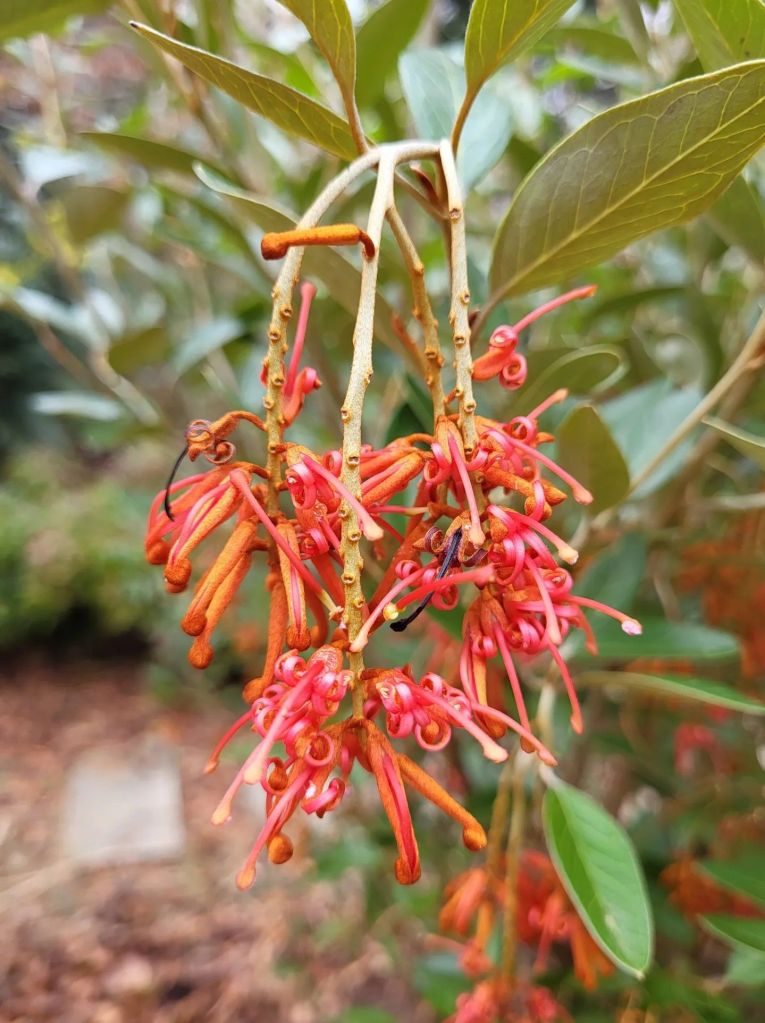
I have confidence, and perhaps, foolish expectations that plants in this garden will endure climatic extremes. My primary nemesis is drought. In recent years I’ve lost a prized schefflera, grevillea, platycrater (a hydrangea relative), and a variegated cleyera during prolonged periods without rainfall, though I argue the grevillea also suffered from a root disturbance as the top heavy shrub began to lean severely. I attribute the schefflera’s loss to a combination of drought and sunlight exposure, but in all cases I presume (usually correctly) that plants will survive without my irrigation when they are challenged by nature.
As winter temperatures have become milder in recent years, I rarely fret the few and brief spells of cold that were once typical. I recall winters when subzero temperatures (Fahrenheit) were not unusual. How could I forget my early years working outdoors, no matter the conditions? A winter when I continued to plant through month long temperatures below freezing spelled the doom of too many broadleaf evergreens.
The recent weeks have brought back these unpleasant memories, but this stretch of subfreezing days will extend to only nine days. As I slip-slide daily through the snow and ice covered garden, I see reminders of the cold nearly five decades earlier though this week’s low temperatures are not nearly as cold.
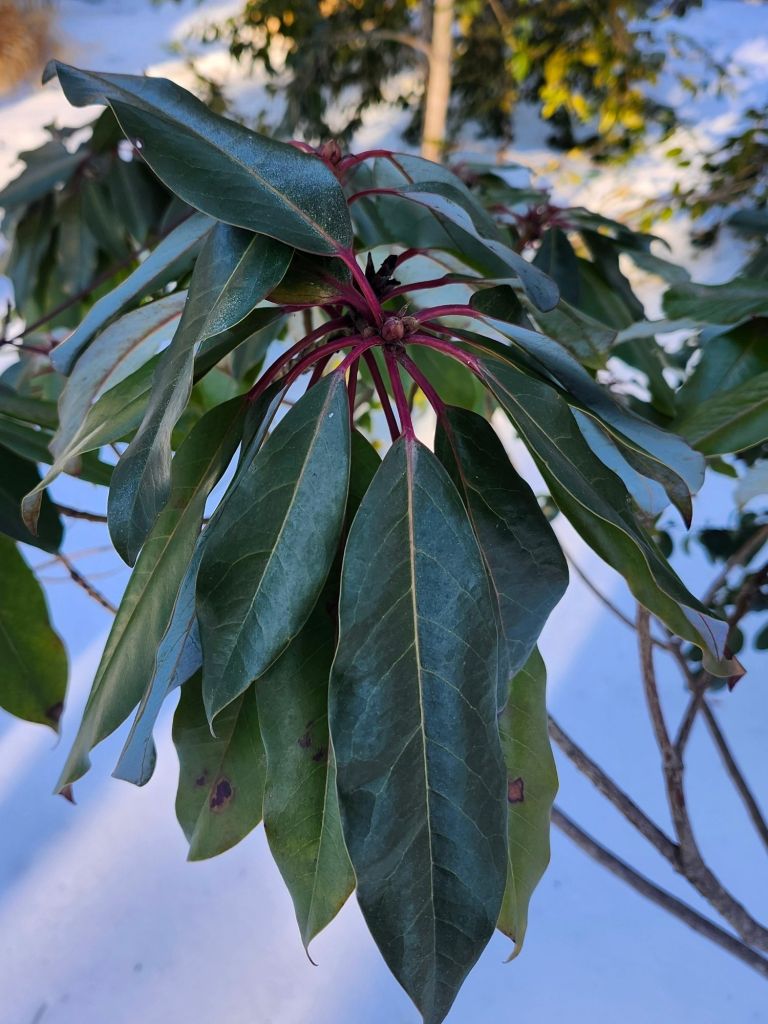
As winters have moderated, I’ve stretched limits of cold hardiness in many plants I’ve selected for the garden, with confidence that chances for prolonged cold were slim. No doubt, I’ve forgotten several that could be revealed if they perish in this winter’s cold. Fatsia and schefflera have been covered to provide several degrees of protection, where they will remain for another week or longer until I’m able to get an early indication of their survival, or not.
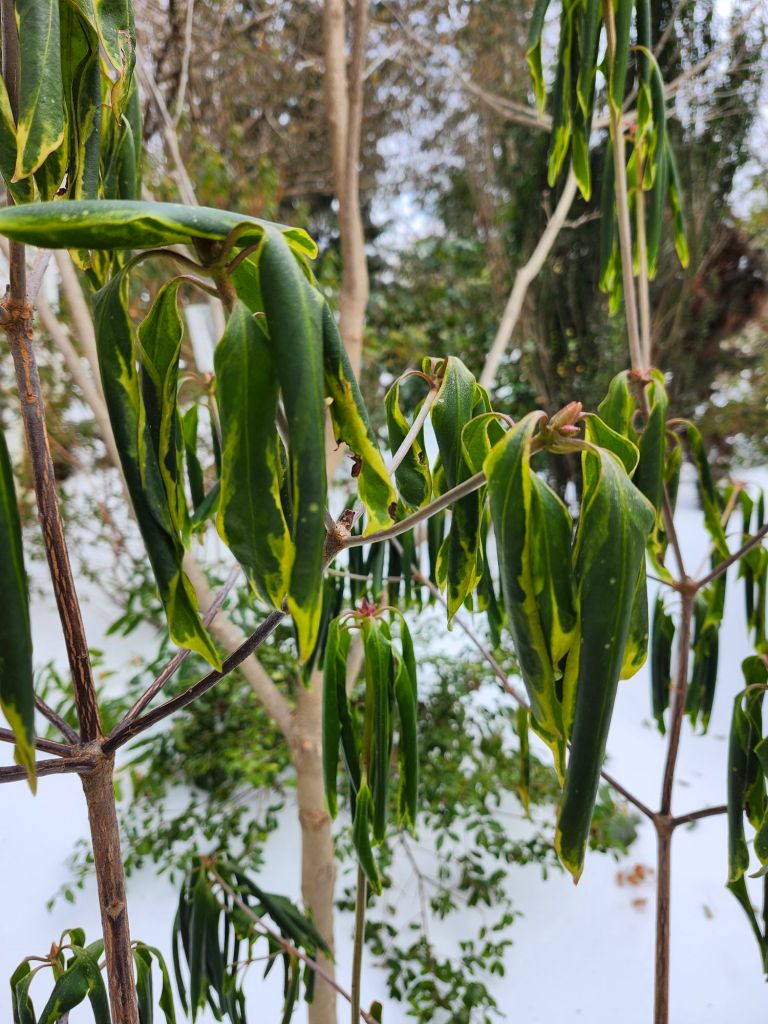
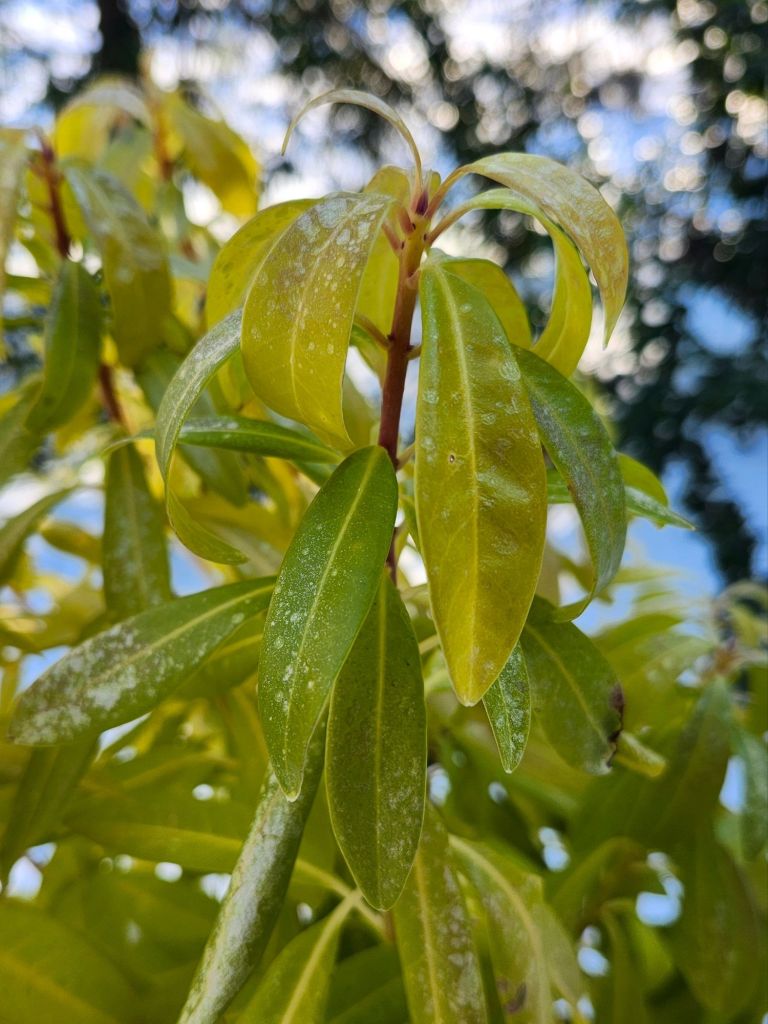
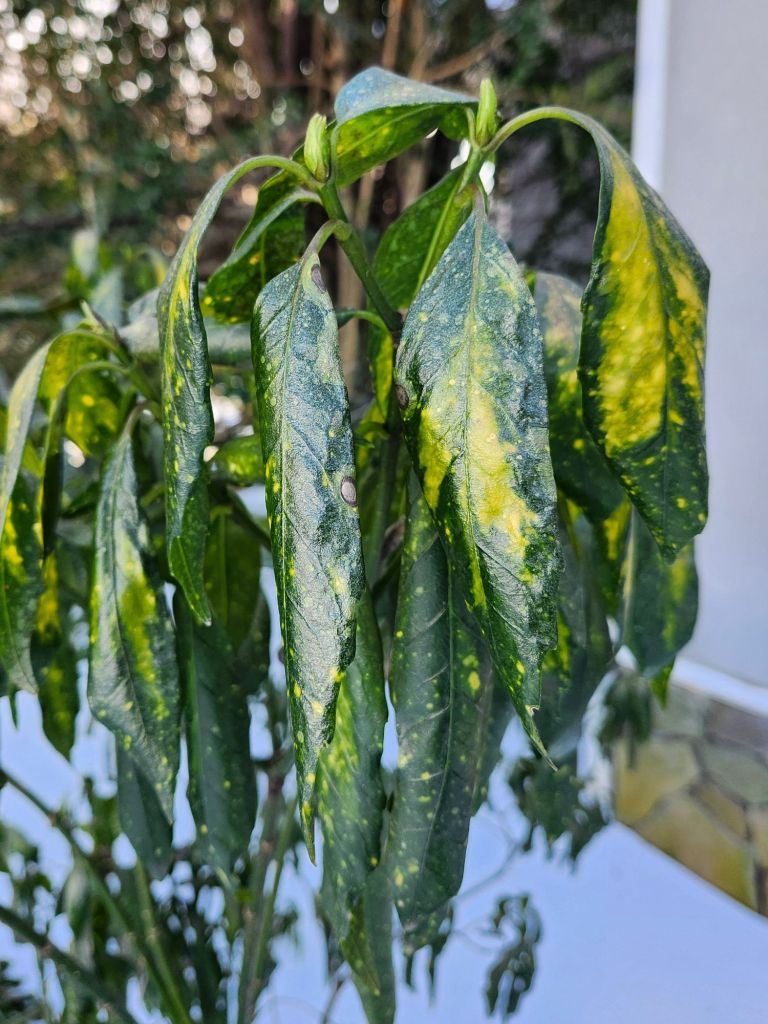
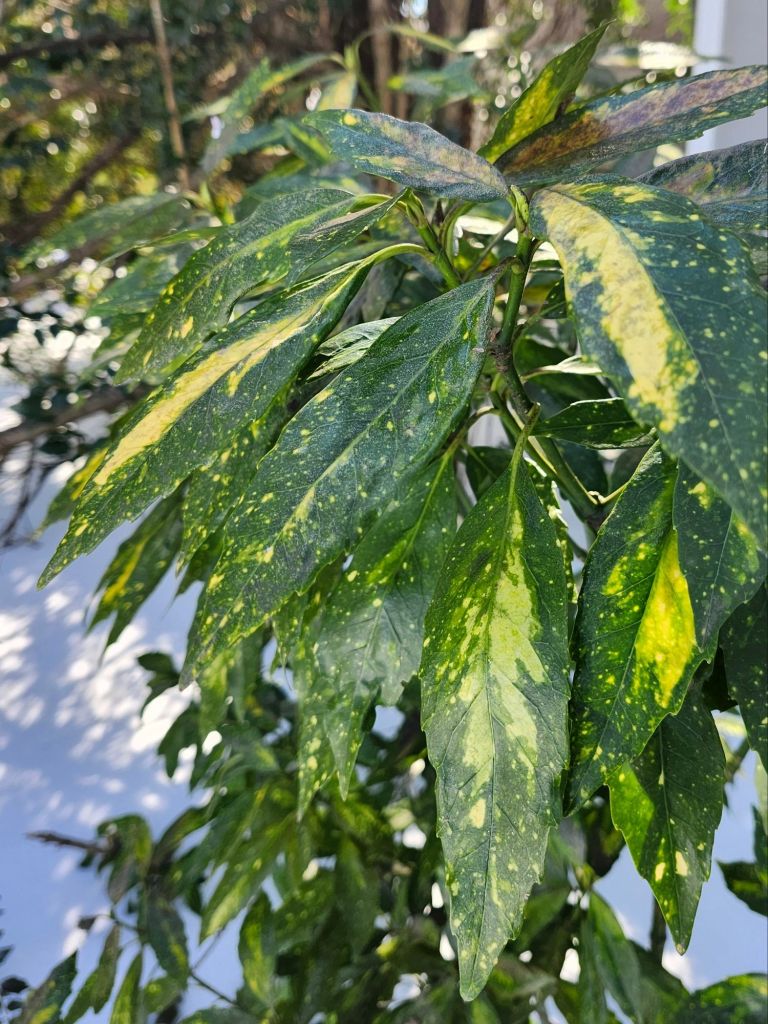
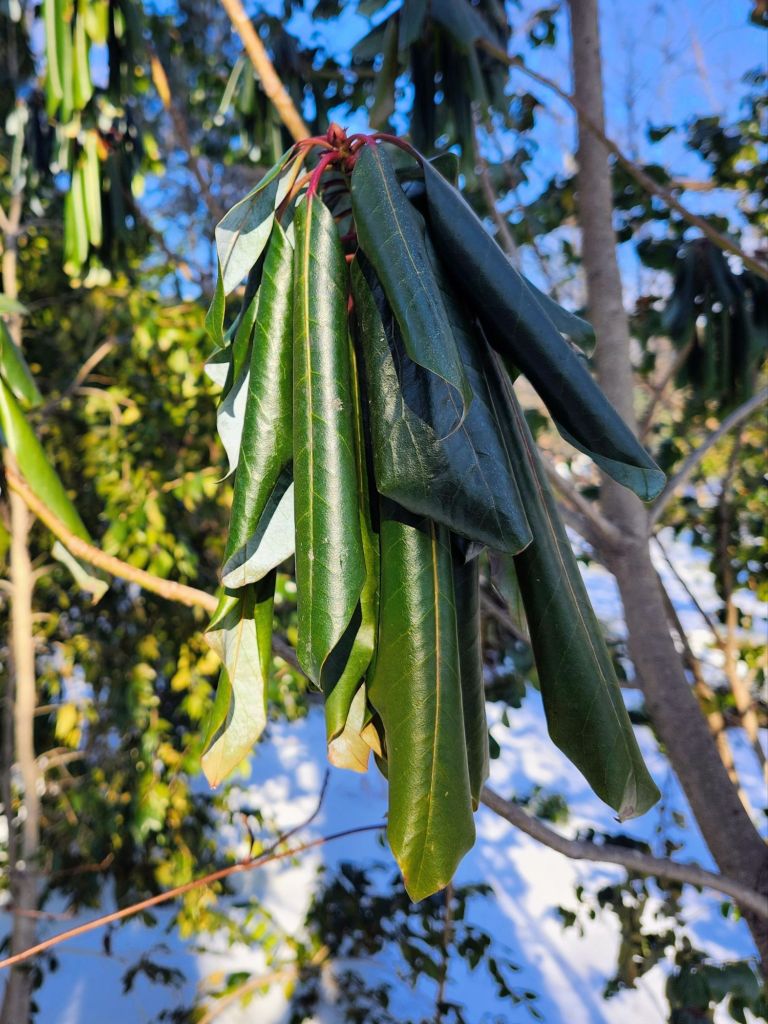
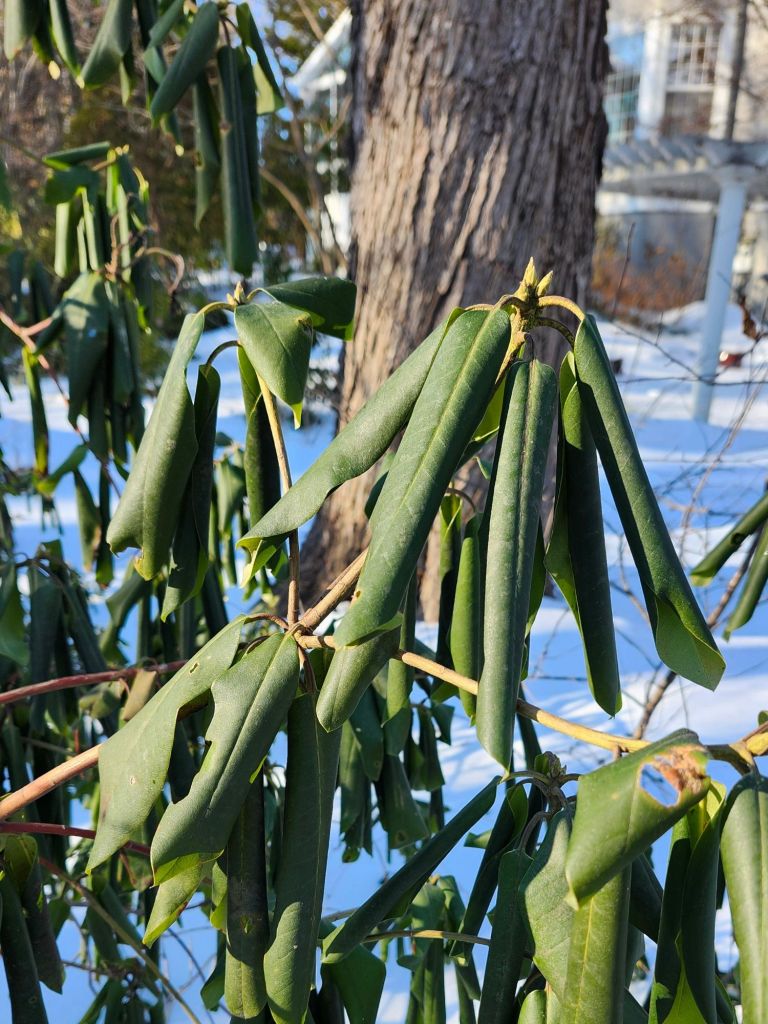
I am currently intrigued by the sad state of curled and drooping foliage of a variety of Japanese aucubas, native and imported illiciums, and a daphniphyllum. I suspect all will quickly revive with milder temperatures, but I’ll watch closely as temperatures rise late in February. Leaves of rhododendrons (below) have contorted similarly, but their tolerance for cold is well established. At the least, my confidence in the cold tolerance of a number of plants in the garden is questioned.
 Ramblin' through Dave's Garden