Several years ago, I greviously erred in planting a long searched for treasure, an uncommon red-flowered ‘Akebono’ paperbush (Edgeworthia papyrifera ‘Akebono’), in the worst possible circumstance. With no ideal location readily apparent, I planted the young shrub in the shade and root zone of a large ‘Mary Nell’ holly, but also with periodic flooding from the overflow of a small pond just above. Of course, I whined and begged forgiveness as it declined and perished, and until this afternoon I have been unsuccessful in finding a replacement.
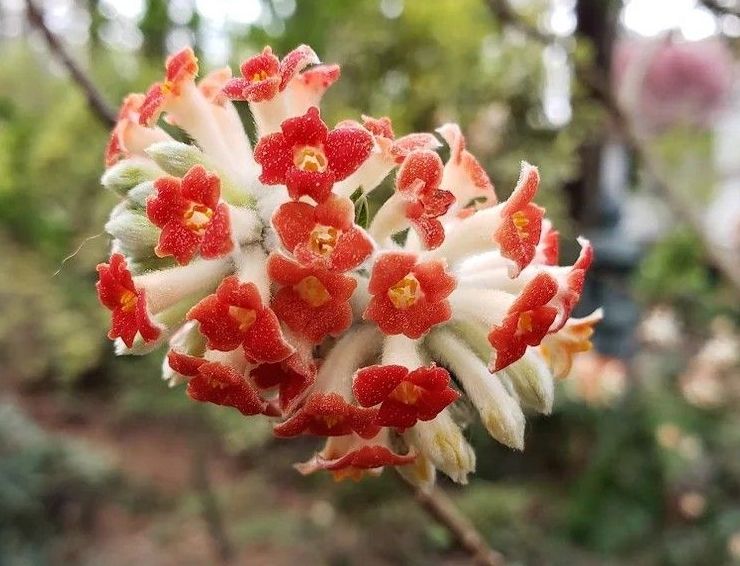
I pledge to find a more ideal location for the costly new paperbush that is deemed to be less cold hardy than its vigorous, yet still somewhat cold tender cousin, the yellow, late winter flowering Edgeworthia chrysantha. I expect the red-flowered paperbush will be planted in the half-sunny area opened by last summer’s lost Bigleaf magnolia (Magnolia macrophylla). This will involve transplanting several nearby shrubs, but that effort will be worthwhile to correct my previous error.
Two long established yellow-flowered paperbushes nearby have become more shaded than ideal as neighboring magnolias have increased in size. Both survive, but growth and flowering are sparse. With more open branching, one of the two has become the target for harvesting to pot up low hanging branches that have rooted. I have no space for more, but I’m certain acquaintances will be thrilled with the gift.
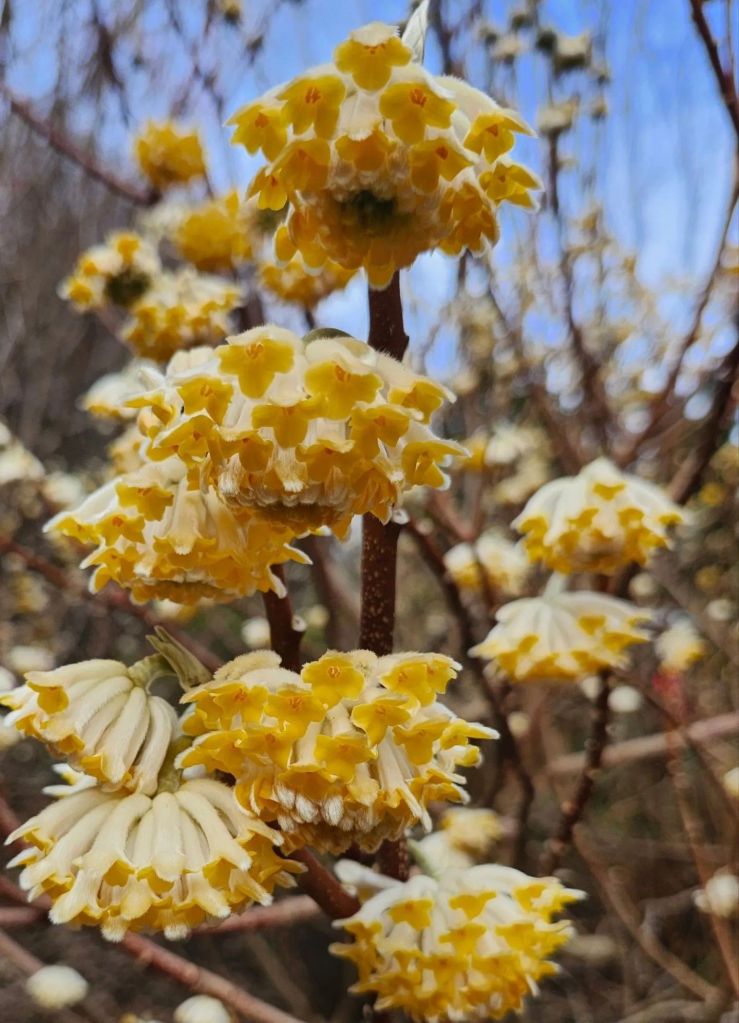
Four large paperbushes inhabit the lower half of the rear garden. It is clear that one in damper ground lags behind the others. It has grown only to ten feet across while the three in slightly drier ground spread to twenty feet or more. References state its mature size as six by six feet, and certainly I’ve done nothing to encourage the extraordinary growth.
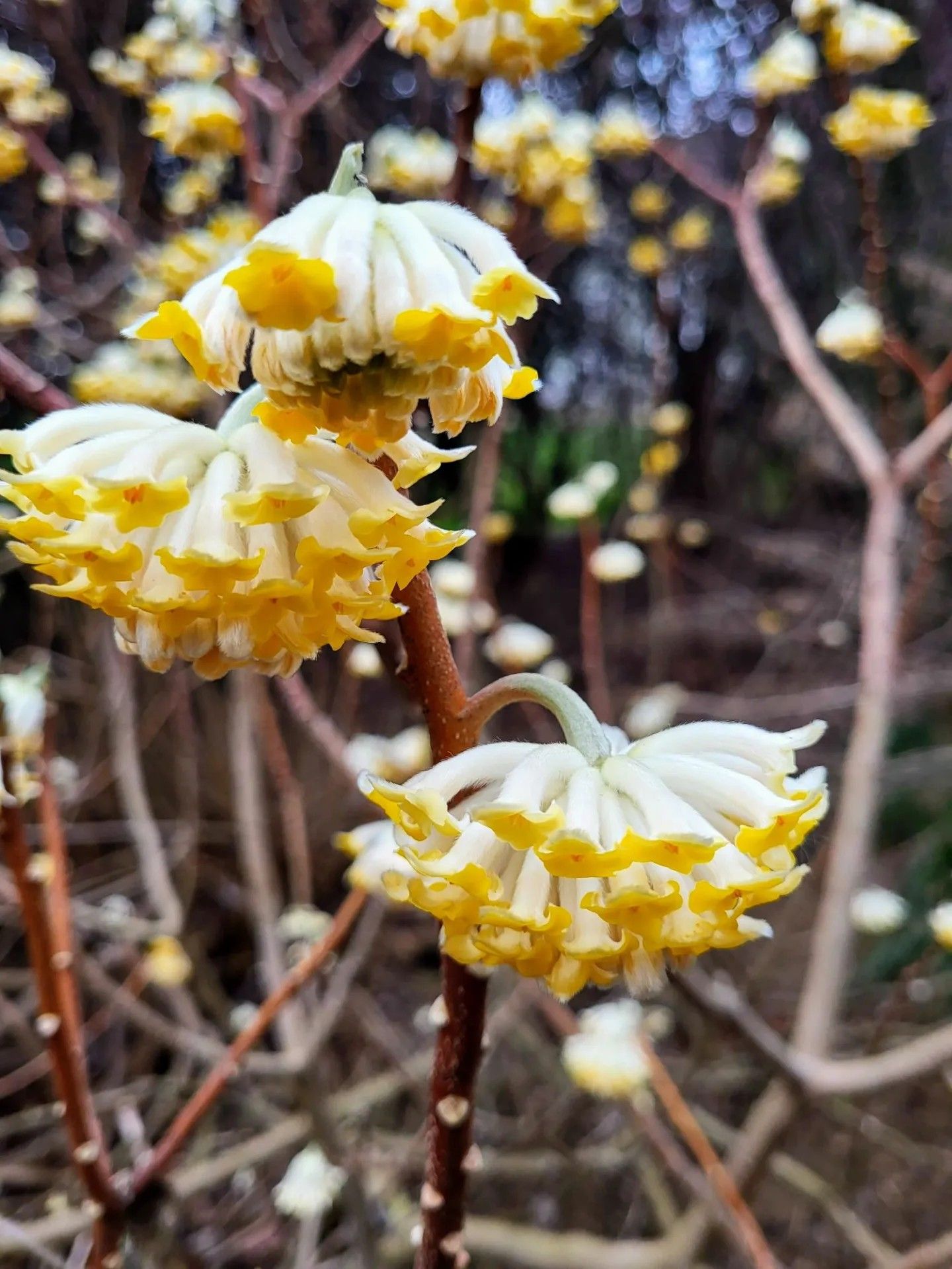
The spread of the three paperbushes is particularly relevant today. Years ago, when the four in the rear garden quickly spread to six feet, a prolonged winter period with nightime temperatures falling below zero (Fahrenheit) resulted in substantial dieback of branches that were pruned by half once the verdict was clearcut in early spring. After pruning, growth quickly disguised the horror, and by the next spring the lost size was recovered.
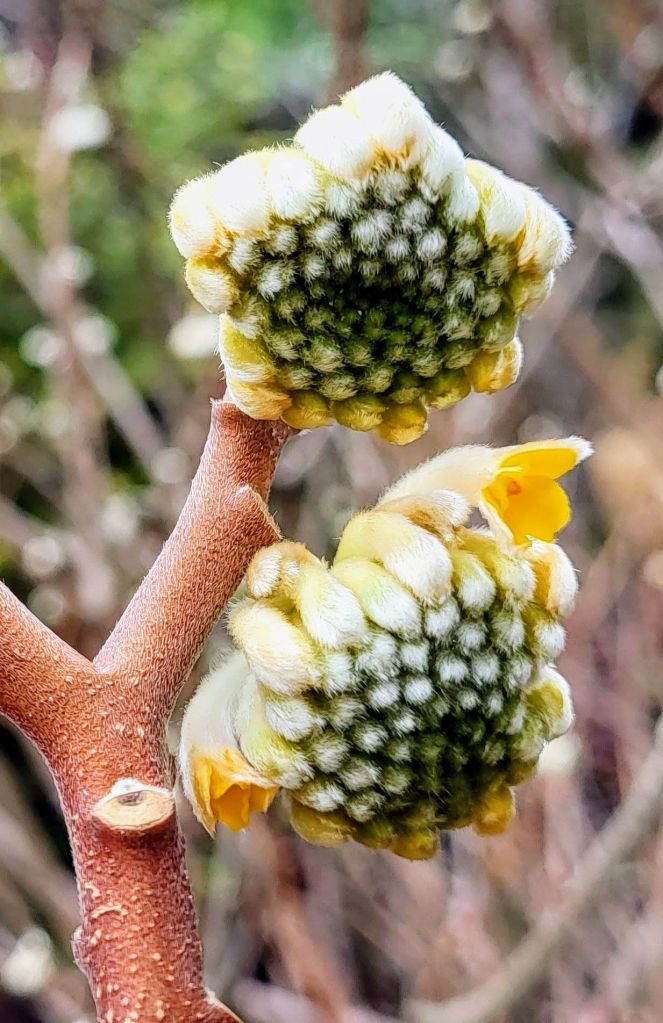
In subsequent years, flower buds have been damaged twice, once with all flowers ruined by temperatures near and slightly below zero. Today, I see damage to the largest and most prominent paperbush, but the extent of the injury is unlikely to be seen for another week or two. Then, it will be time for their glorious late winter bloom. I will be distressed if flowers are lost and if branches must be pruned, but this afternoon I am thrilled that their red-flowered cousin will soon join them.
 Ramblin' through Dave's Garden