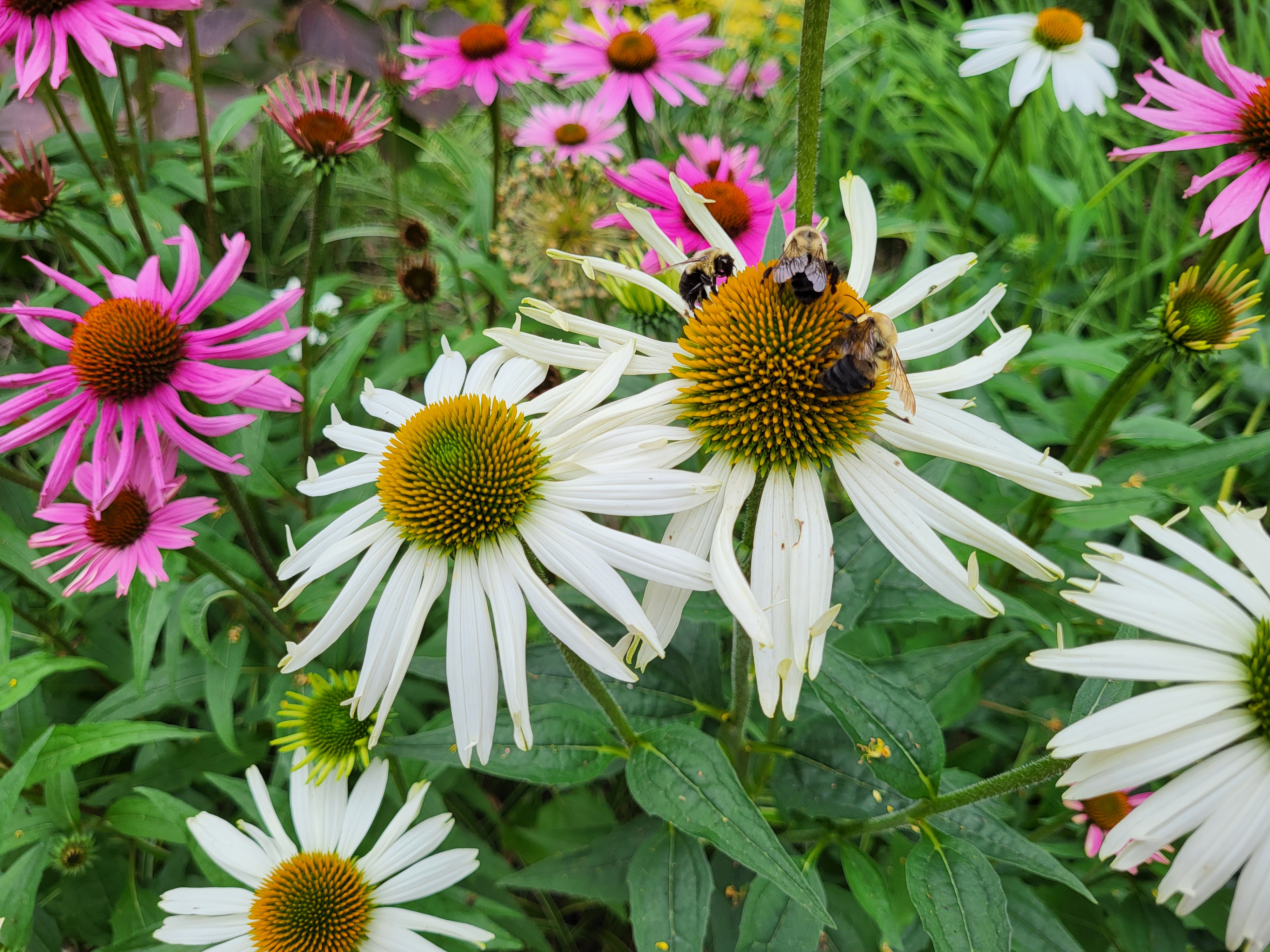
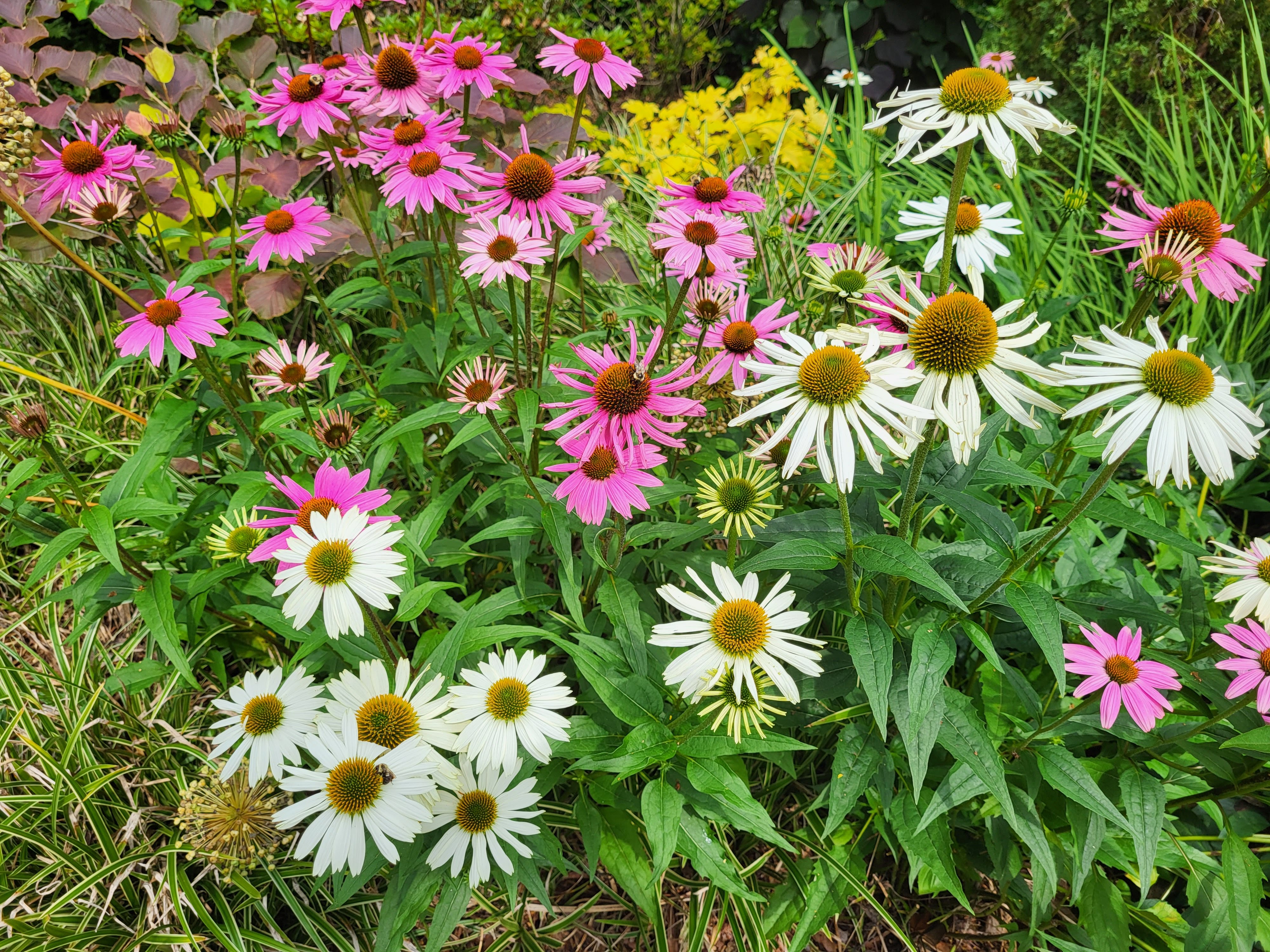
The mix of purple and white coneflowers (Echinacea purpurea, below) along the driveway is a colorful introduction to the garden, but also a long flowering favorite of pollinators. This started as a few ‘White Swan’, but seedlings have gradually turned to a greater population of purples.
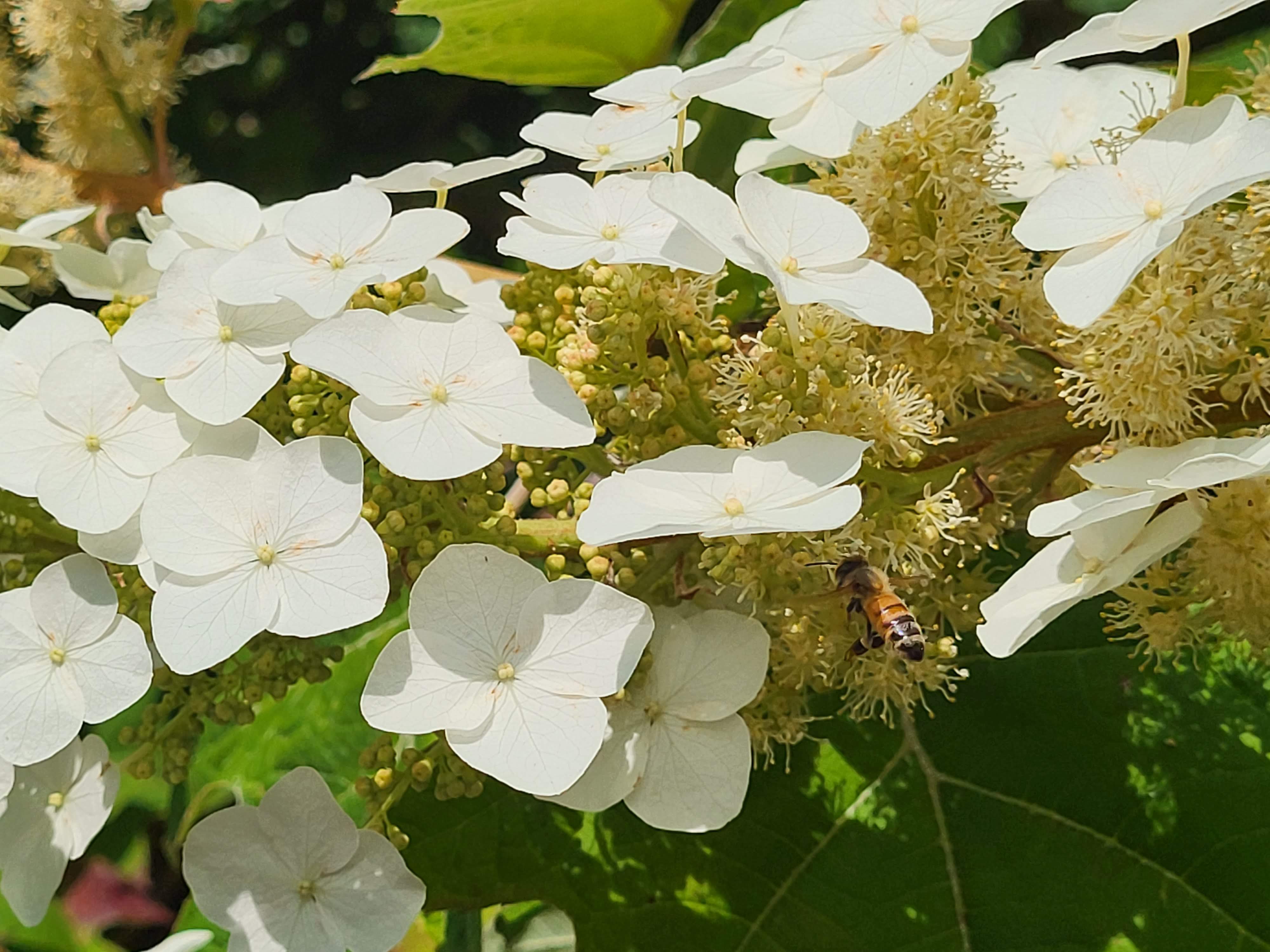
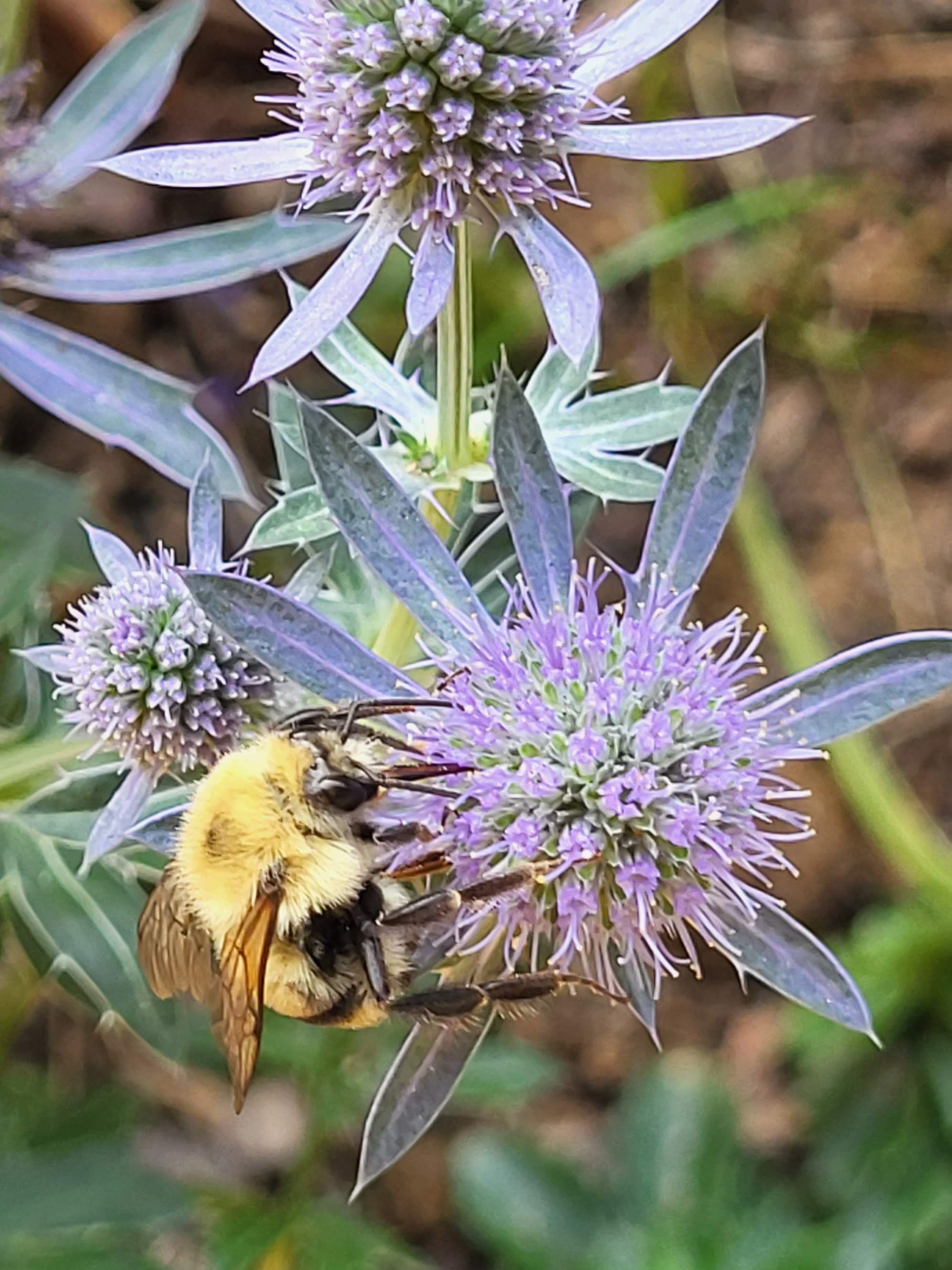
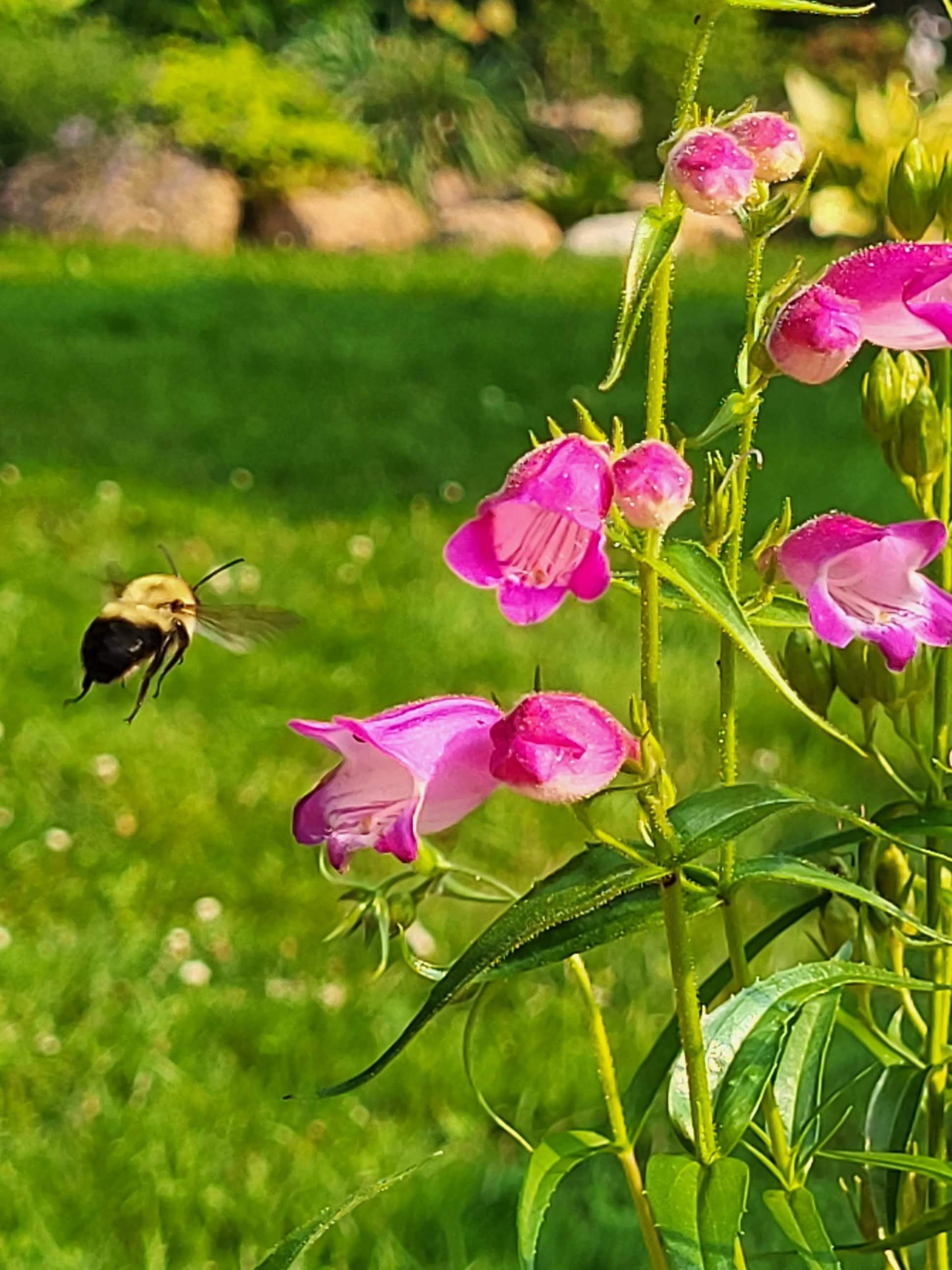
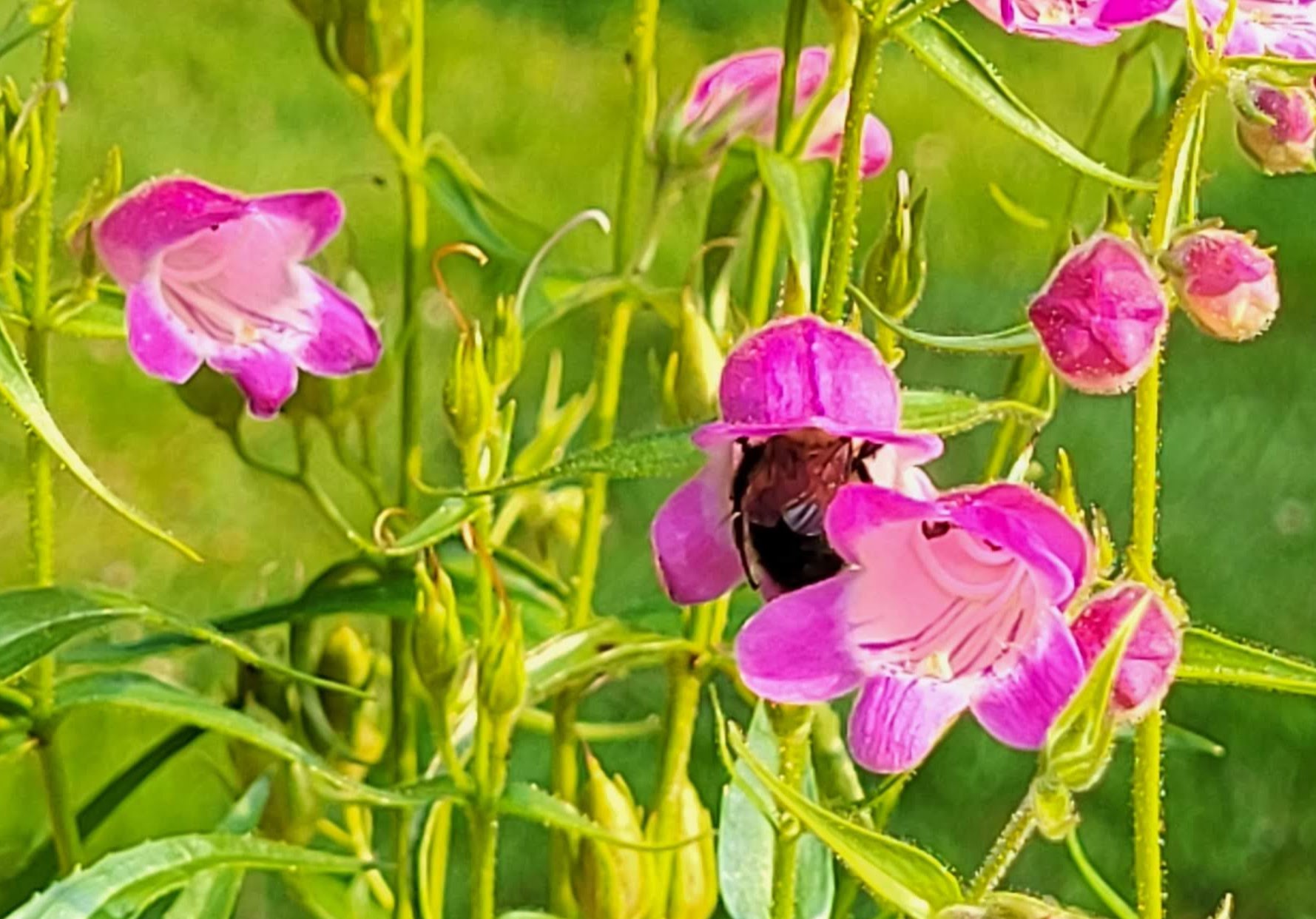
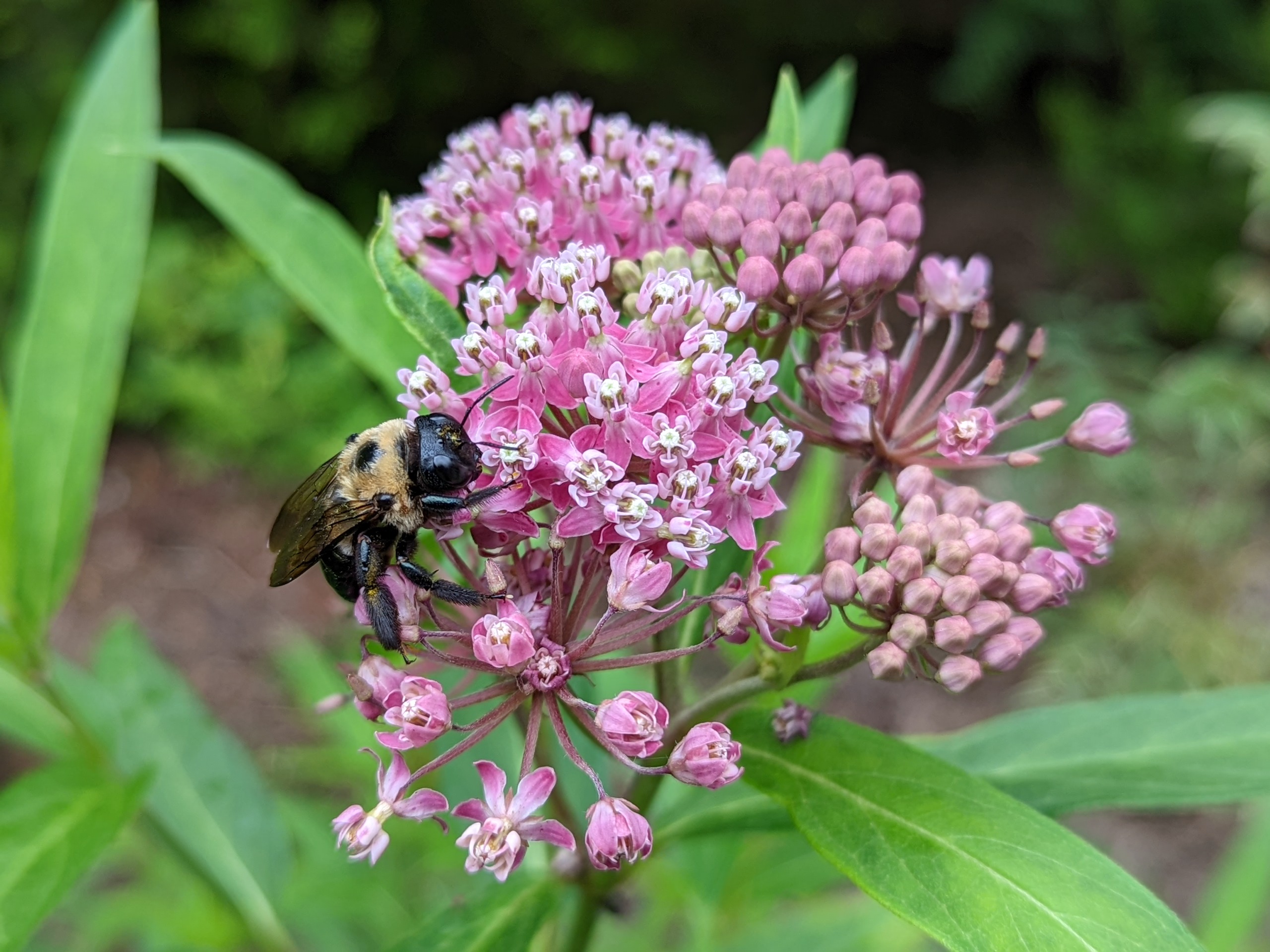
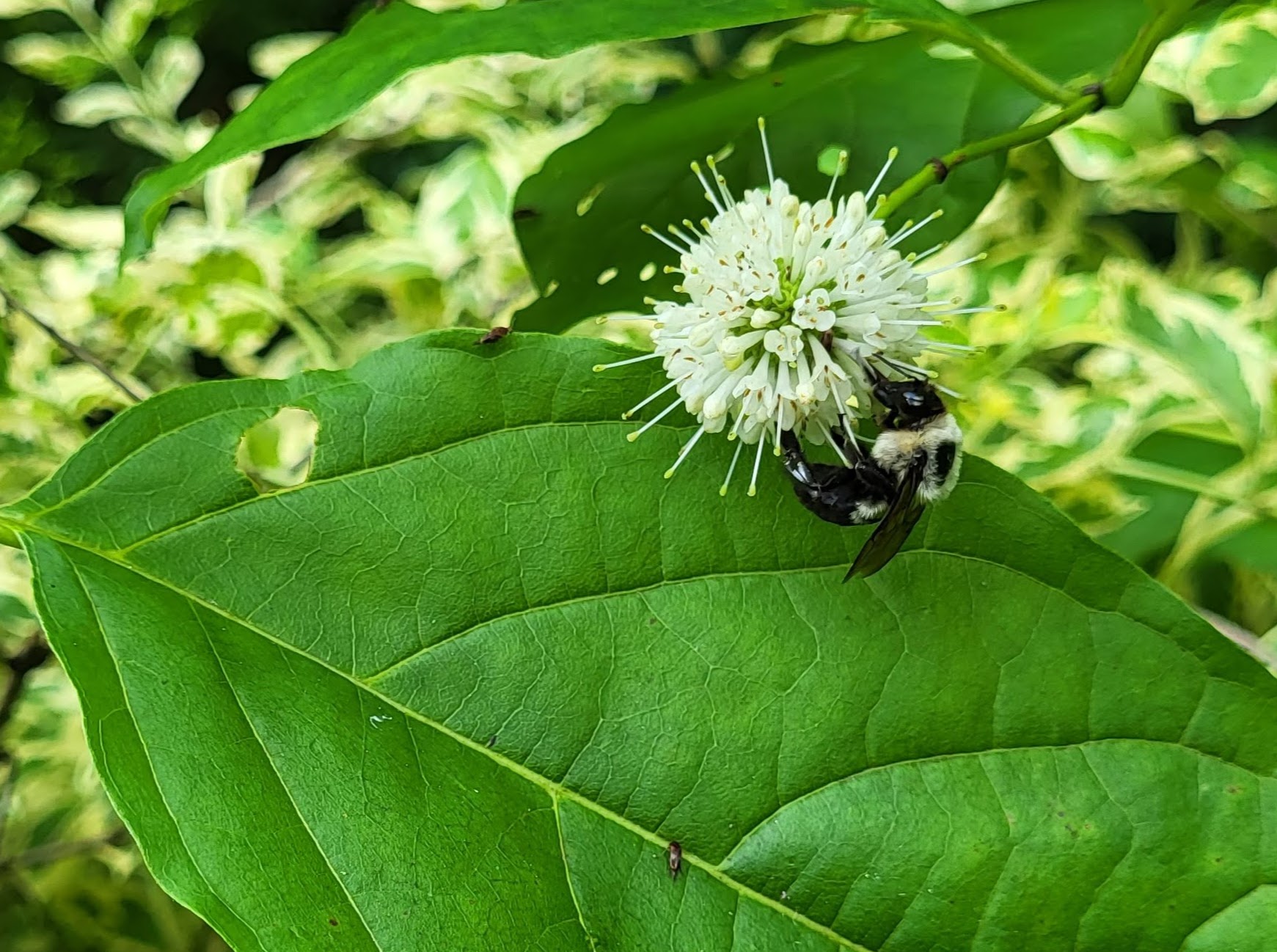
I recently noted the increased numbers of honeybees in the garden. There are always abundant carpenter and bumble bees along with smaller ones I can’t identify, but any sunny afternoon you’ll see more honeybees than you can count visiting the fertile flowers of the Oakleaf hydrangeas (Hydrangea quercifolia, below). In a week or so the large patch of Mountain mint (Pycnanthemum muticum) will begin flowering, so as the hydrangeas fade I expect they’ll move a few feet to the back of the garden.
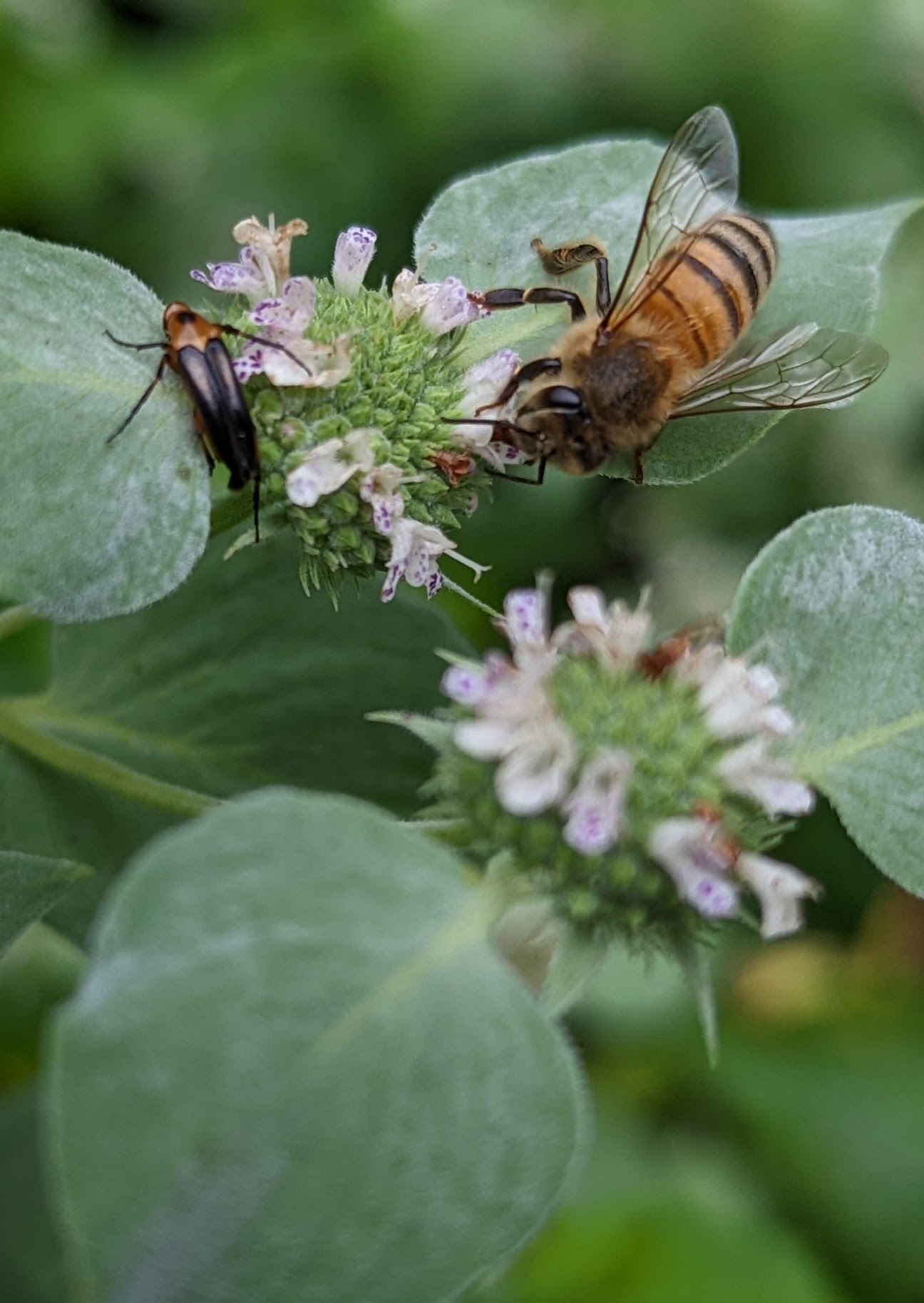
Mountain mint (below) is the favorite of pollinators of all kinds, I think. When the sun’s out and it’s flowering there is an audible buzz heard as soon as I enter the lower, rear garden. And while early season bees are defensive against intruders threatening their nectar sources, bees and wasps pay no attention to me as I get close as they move from one flower of Mountain mint to the next.
I’ve made only a half conscious effort to add pollinator favorites to the garden, though more in recent years as I noticed the combined elements of shelter, water, and food were attracting a wide range of wildlife. Today, I’m disappointed on a cloudy day when there are few bees buzzing around the garden.
 Ramblin' through Dave's Garden
Hurray for pollinators and the plants they depend on! Gre
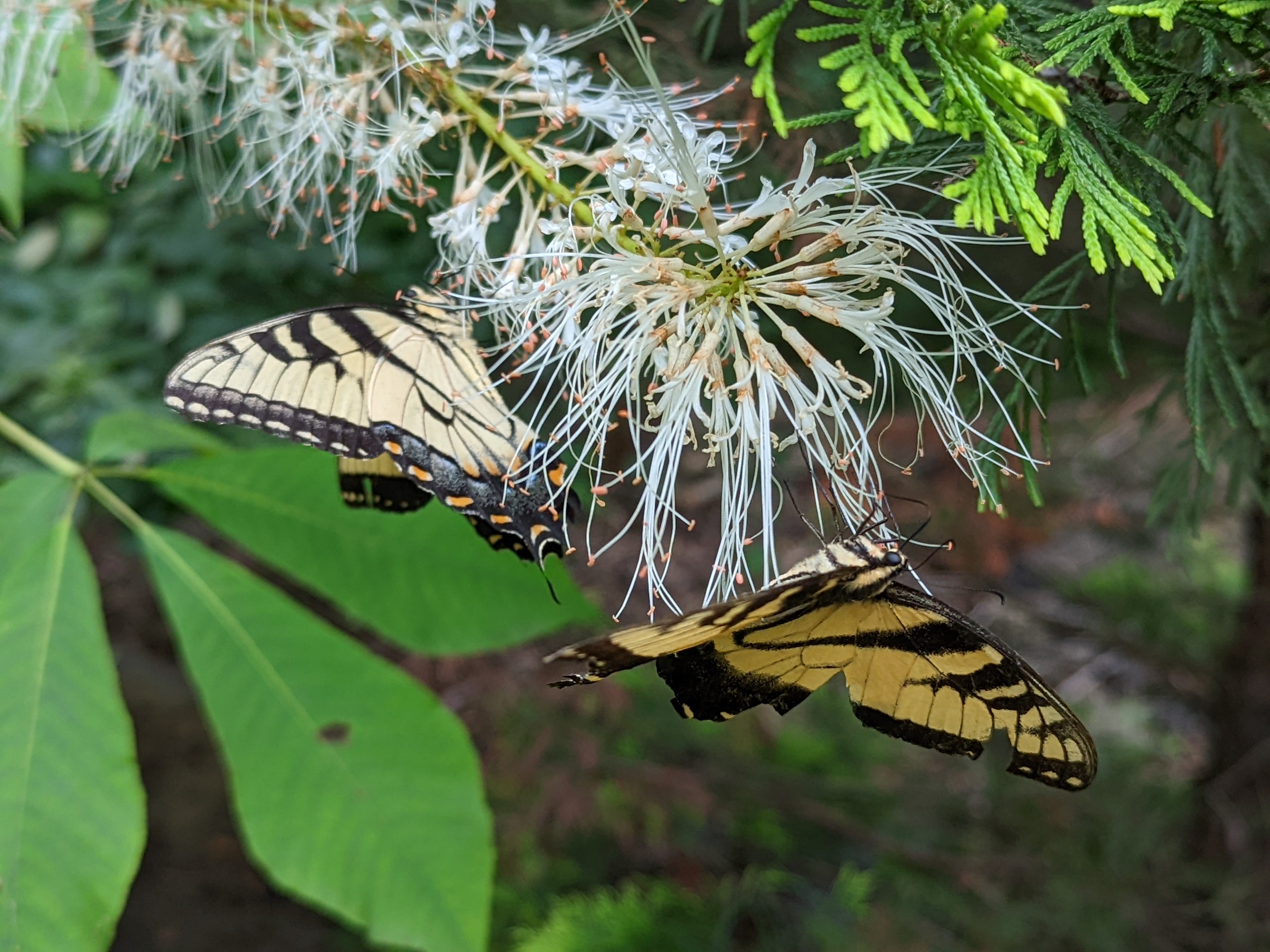
My butterfly numbers seem to be down a bit this year, but they typically ramp up as Joe Pye comes into flower. Bee numbers are up, so I’m happy.
Thank you soooo much Dave. I read each of your emails, though only share my appreciation occasionally … about as often as I get out and weed when it roasting hot! Thank you Dave for all of your sharing and inspiration!
I’m happy to share the garden with readers and visitors, but writing is the only record of what I’ve planted, so I don’t forget.
We were inspired by the amazing pollinator boulevards (“hell strips”) that we saw last year in Buffalo, at their annual Garden Walk. This year we converted a small section of ours to a pollinator garden (approx 6′ x 4′), with plans to carry it over to the larger section (approx 6′ x 20′) next summer. Thanks for the inspo.
I am fascinated comparing the quantity of pollinators and the types that visit each plant variety. While benefiting wildlife is essential, the life that pollinators bring to the garden is an added benefit