A number of swamp maples (Acer rubrum), oaks (Quercus), and tulip poplars (Liriodendron tulipifera) reside in the forest that borders the garden. Thus, none were included in the small quantity of large trees planted over the decades.
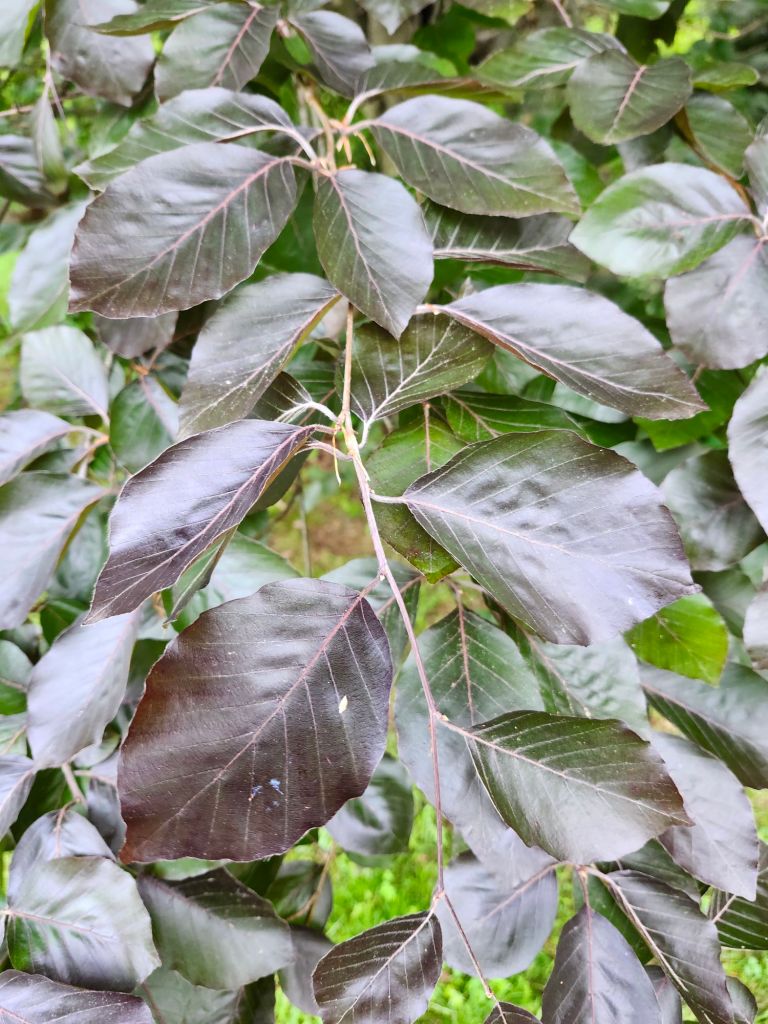
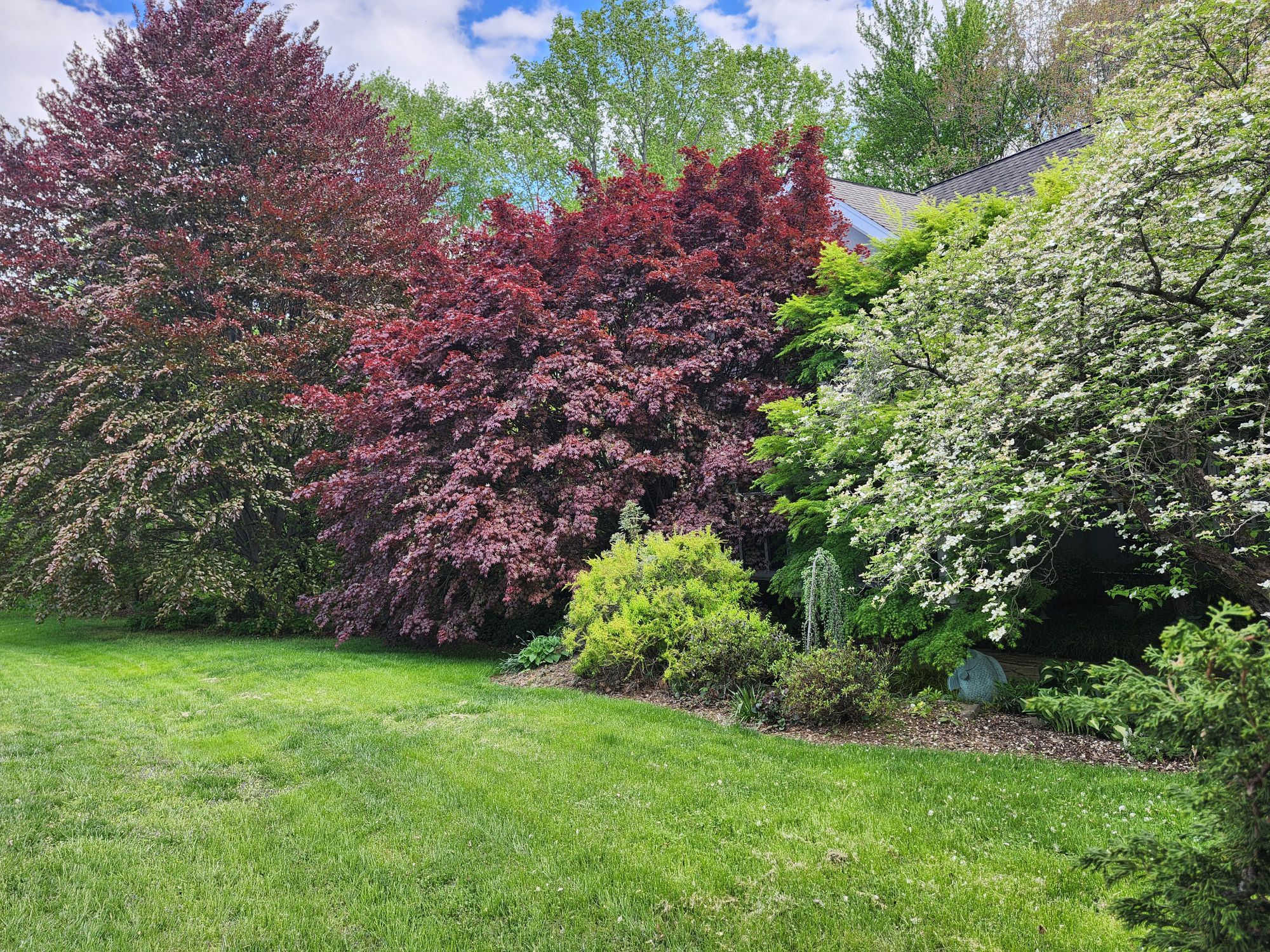
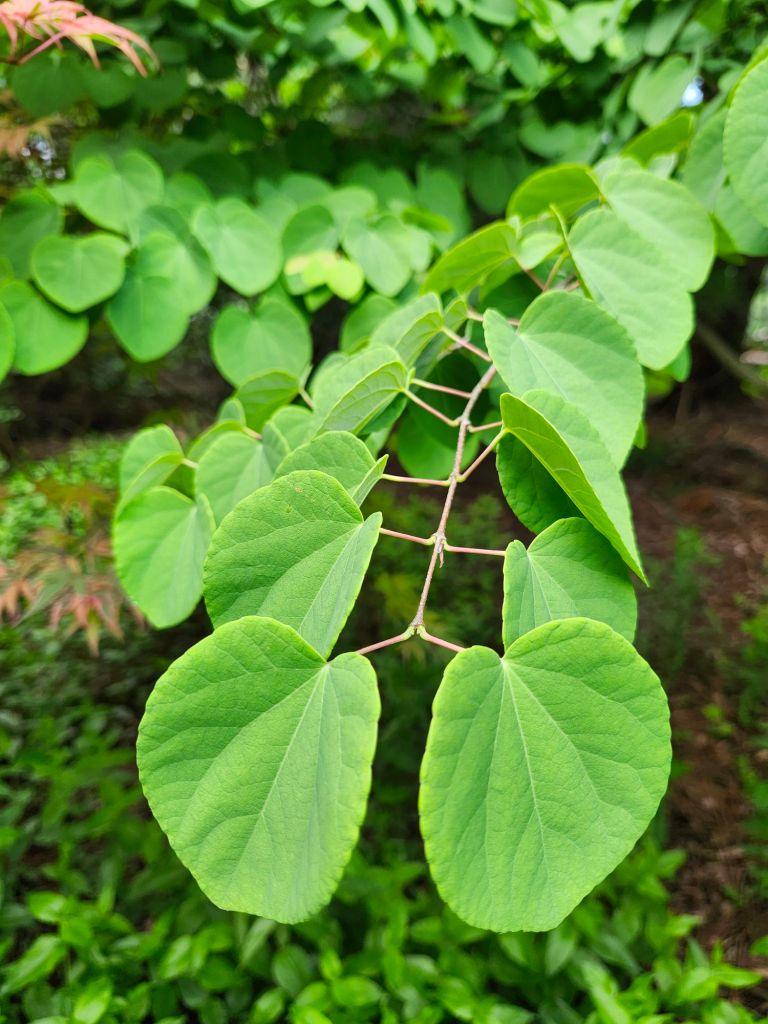
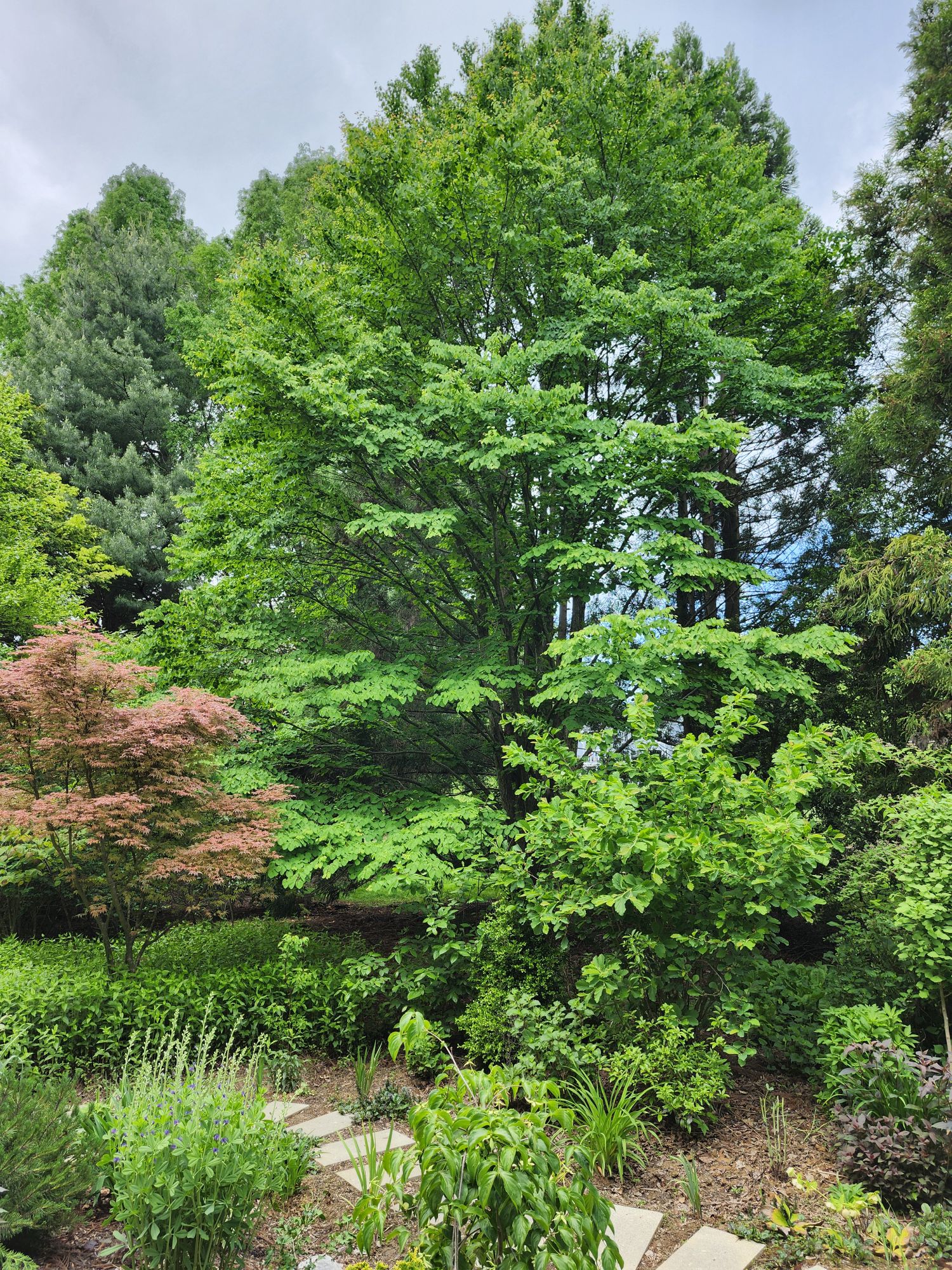
The garden is overfilled with Japanese maples, dogwoods (Cornus), redbuds (Cercis canadensis), magnolias, and other small and medium-sized trees, and by several larger European beech (Fagus sylvatica, above) and katsura (Cercidiphyllum japonicum, (below).
By complete accident, a storm damaged tree was replaced with a red horse chestnut (Aesculus x carnea, below) when no better tree of substantial size could be found as a replacement. How fortunate.
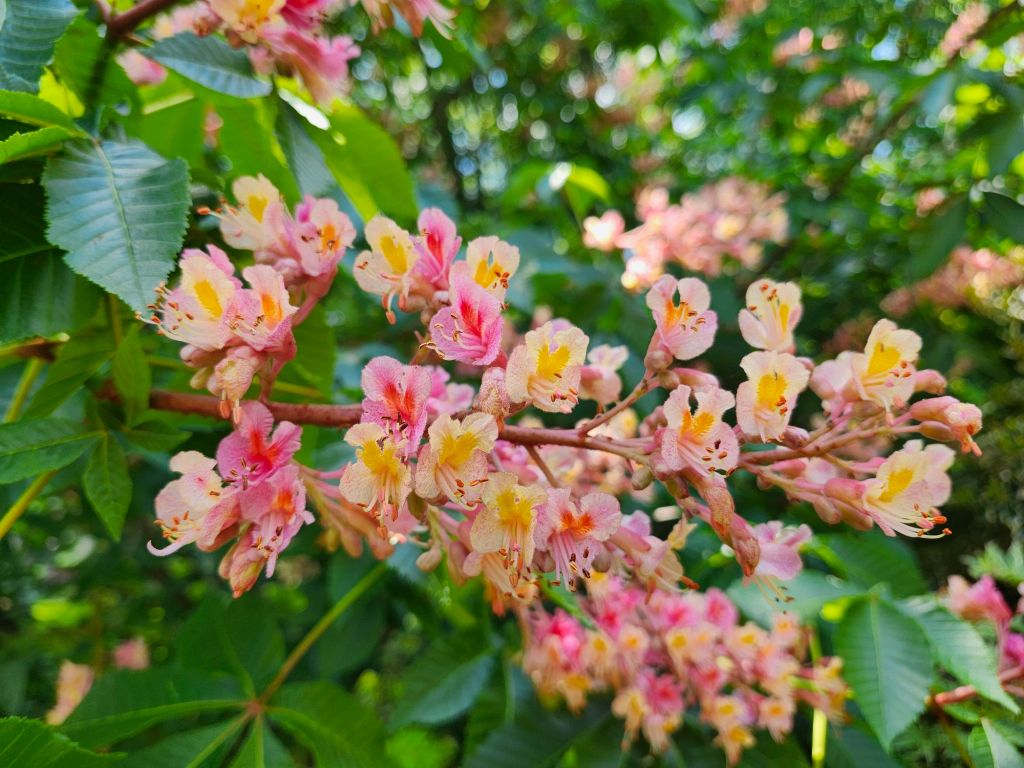
The horse chestnut has become a favorite, and not only for the month-long mid-spring period while it flowers. Its foliage is quite attractive, though it suffers from unfortunate black spotting by late summer.
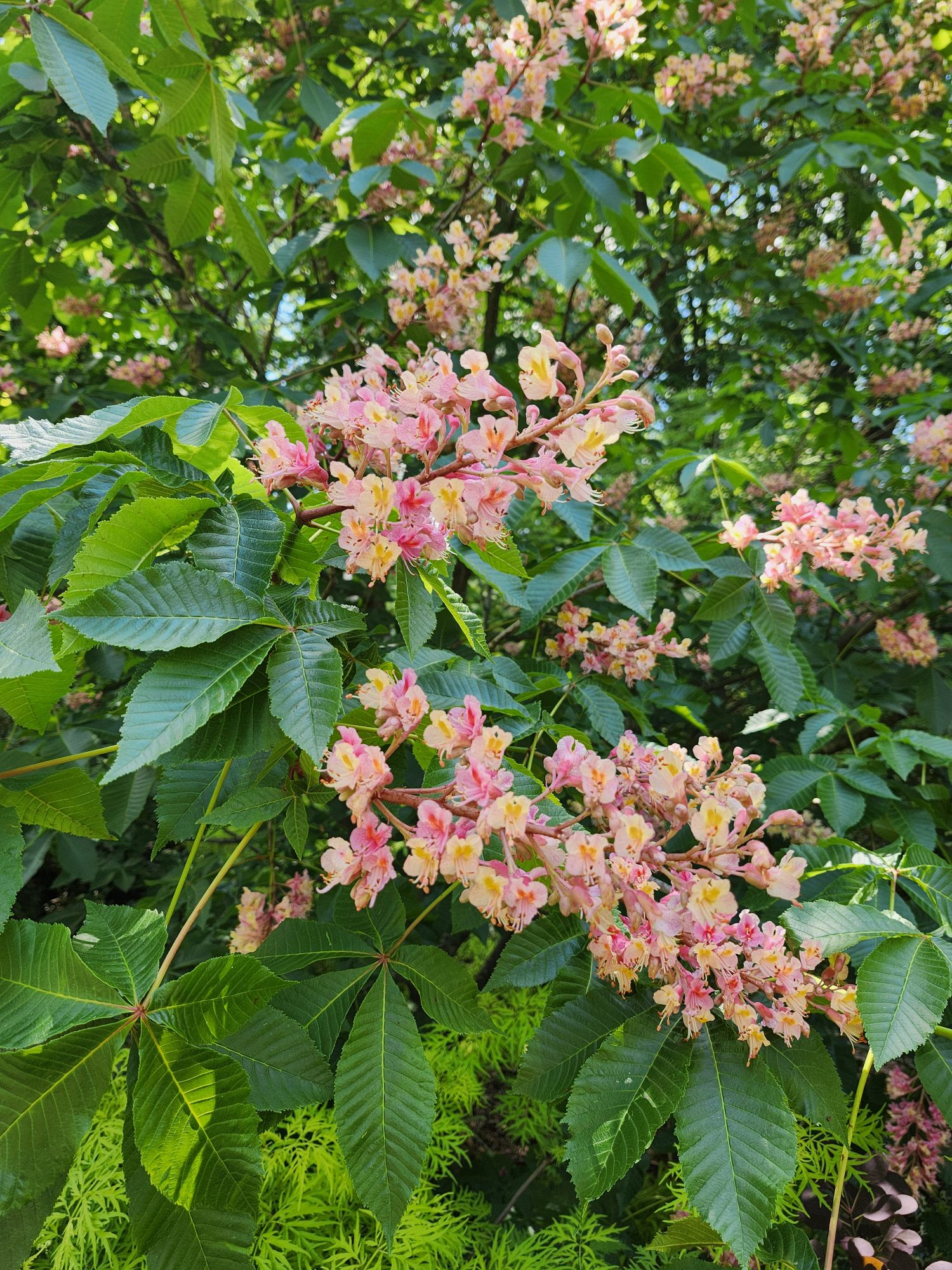
In my haste to fill the storm caused gap, I gave scant consideration to the horse chestnut’s mature size. I’ve erred many times in developing this garden, and while a large tree is probably inappropriate for this spot, after close to a decade, I’m convinced it’s perfect.
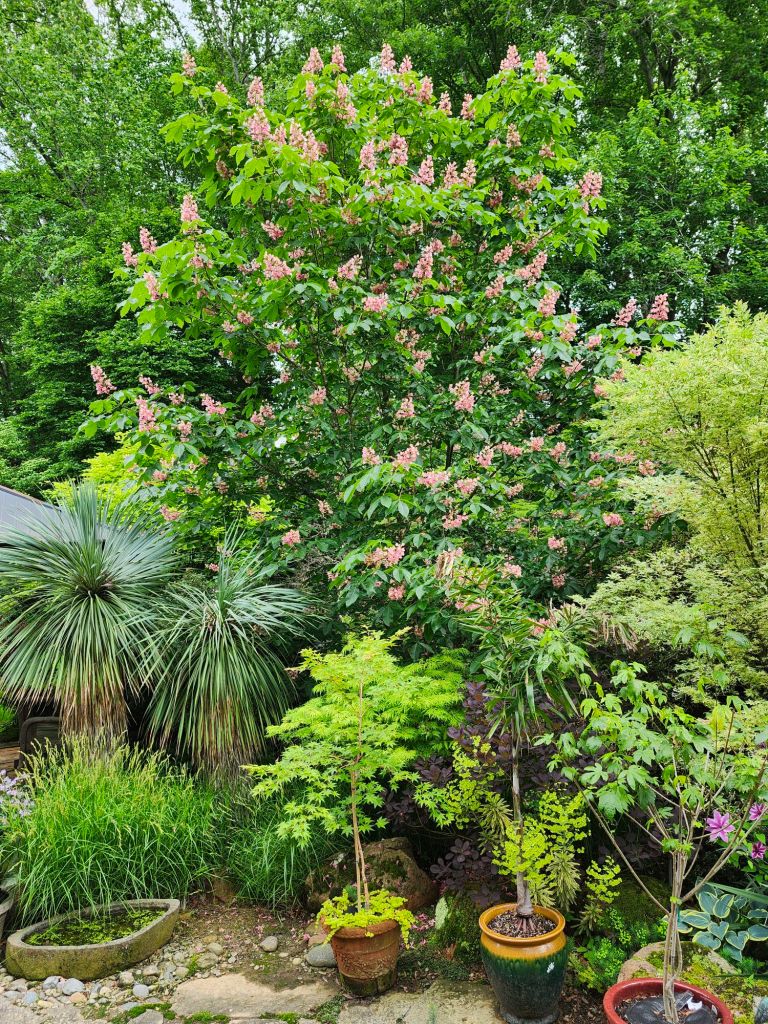
And I wonder, why is the red horse chestnut not planted more commonly? I hear that there are cultivars more black spot resistant, but why is this beauty not planted more often? As if another attribute is necessary, horse chestnut does not grow as large as other shade trees, so it is more appropriate where maples and oaks are out of scale to smaller properties.
 Ramblin' through Dave's Garden
I also had a red horse chestnut in my yard, and like you, loved it. I agree, more people should plant it. Unfortunately, it did suffer from a canker disease and didn’t do well the past 5 years or so. And the chestnuts it produced didn’t last long, since the squirrels gobbled them up as soon as they were edible!
Happily, the black spot does not decrease the horse chestnut’s vigor. The garden has become a squirrel refuge, so it’s doubtful we’ll ever see a chestnut.
The red horse chestnut is very worthy of its place. Fantastic photos of it too.