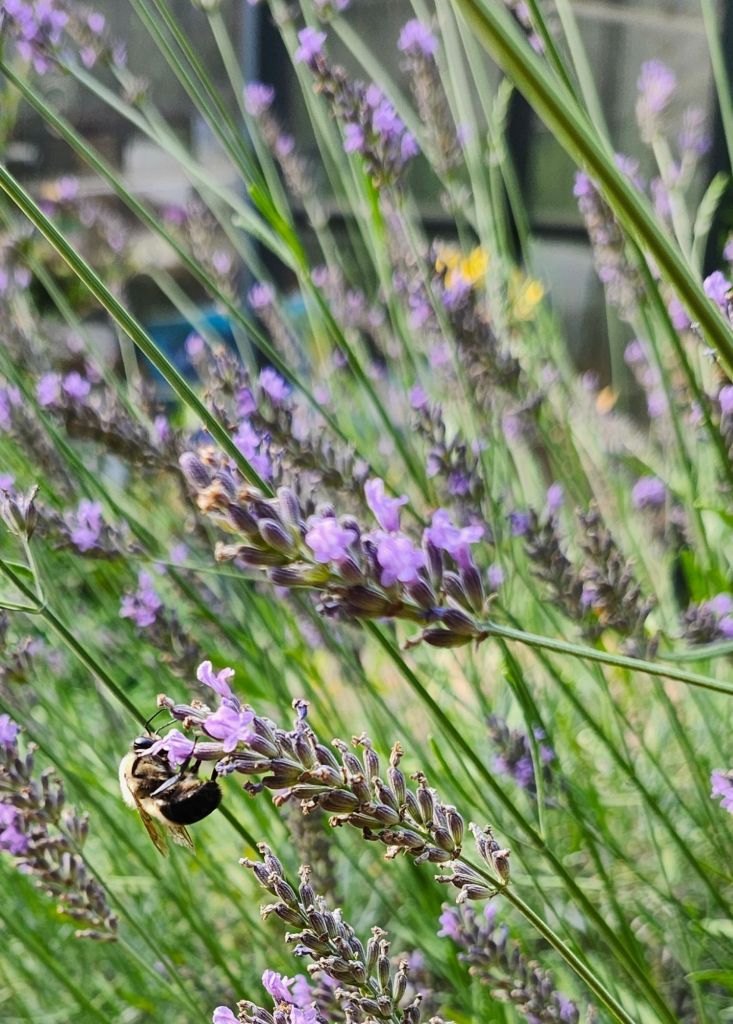
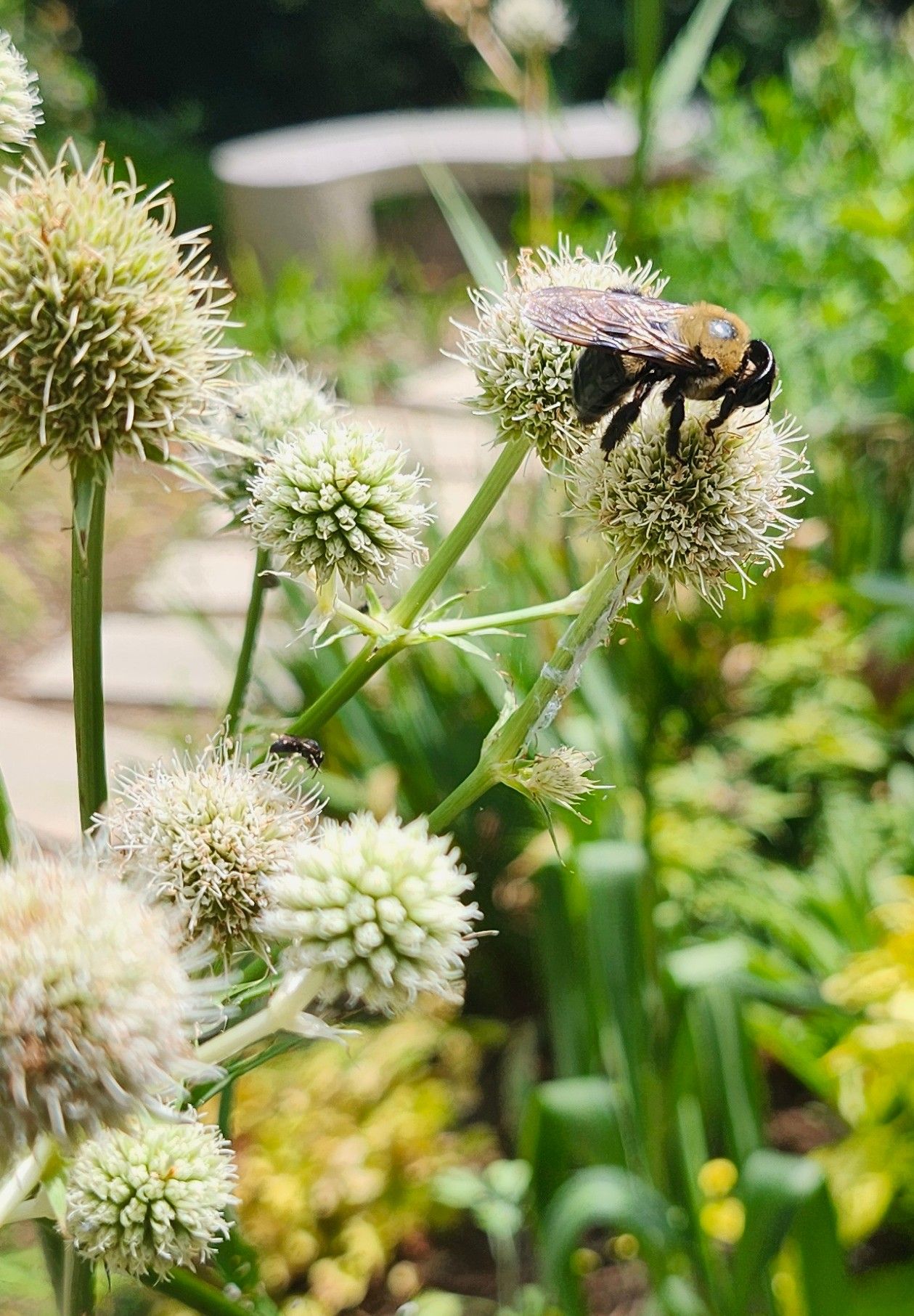
In early July, long, flowering stems of lavenders sway, not in the gentle summer breeze but under the weight of bumblebees and carpenter bees moving from one flower to the next. Following construction of two small rockeries, the concern is not if lavenders will survive (in the native clay soil) but that they will become too massive in size, obscuring other beauties. Bees have no such concerns, requiring only more blooms over a longer period.
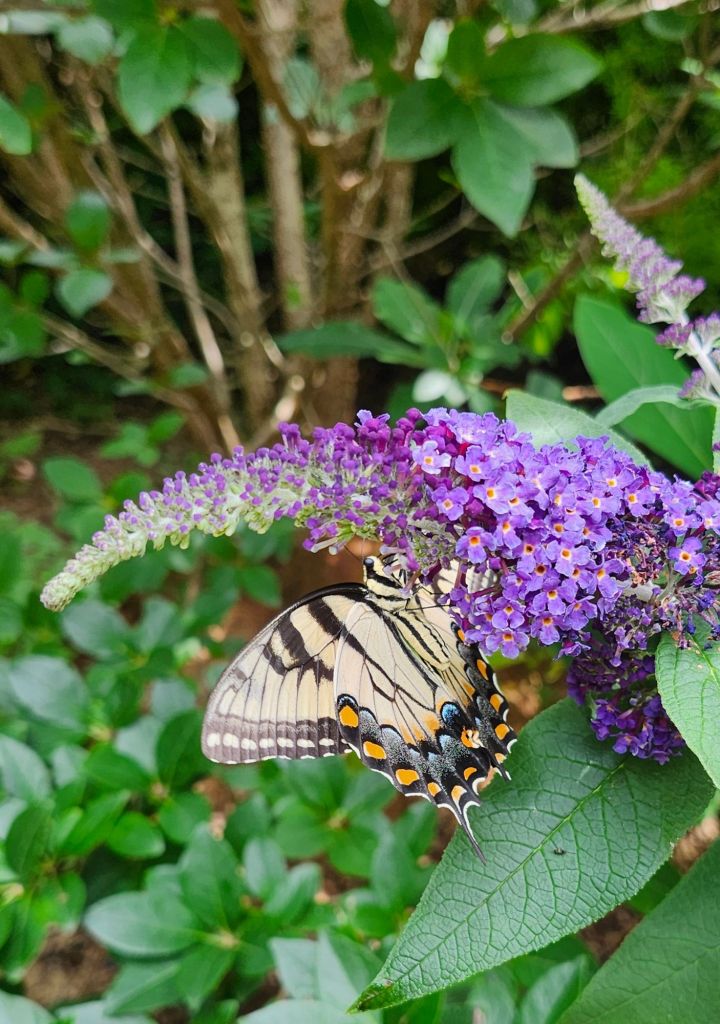
The garden attracts abundant numbers of pollinators from spring into early summer, but none to compare with midsummer once mountain mint (Pycnanthemum muticum) and Joe Pye weed (Eutrochium purpureum) come into bloom. Questions about diminished numbers of swallowtails are quickly answered as scattered clumps of Joe Pye begins to flower, and attempts to catalog the types of bees, wasps, and hoverflies are abandoned in the chaos of pollinators moving between flowers of the large clump of mountain mint.
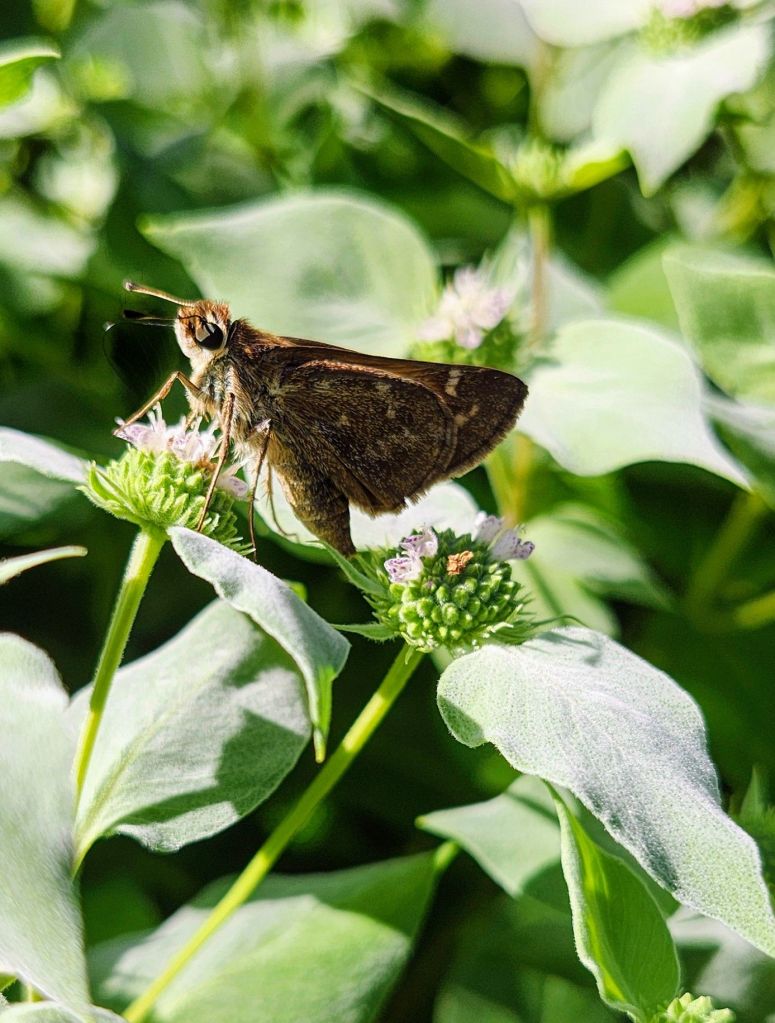
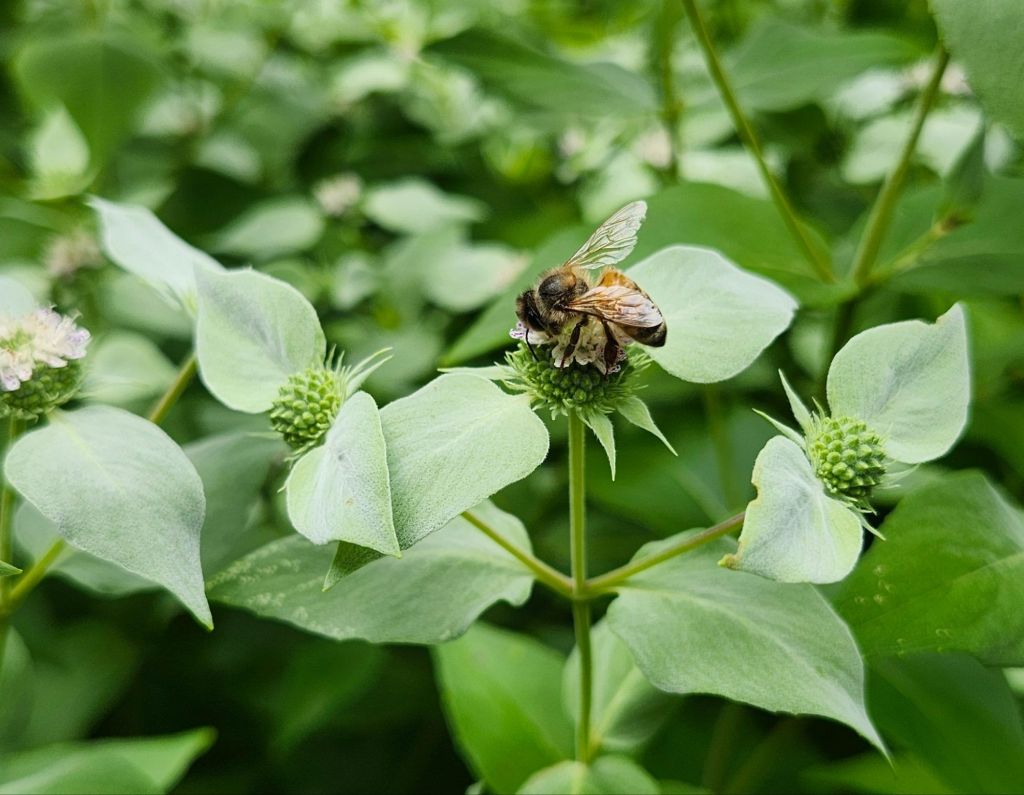
As the first scattered flowers of mountain mint open, a few small butterflies take advantage while bees are occupied elsewhere. A week later, frantic bees arrive, so butterflies retreat to safer flowers.
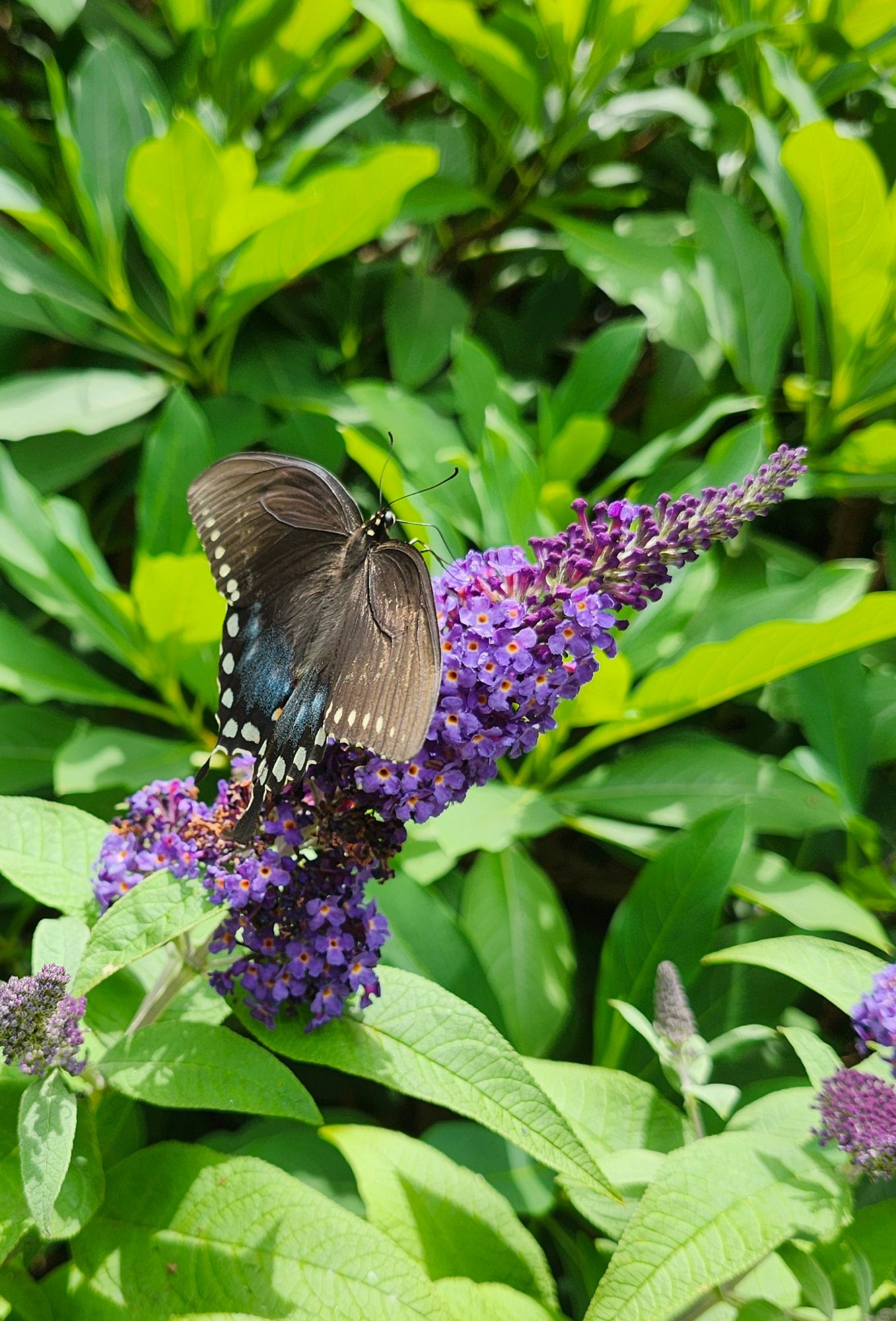
While the garden was not intended as a wildlife refuge from its start, later this became one of its many delights. Trees and shrubs were not planted to provide shelter. Five ponds were constructed for my entertainment, not as a water source. And, numerous plants providing nectar and berries were not intended to provide food, at least until recent decades when these benefits became more clear.
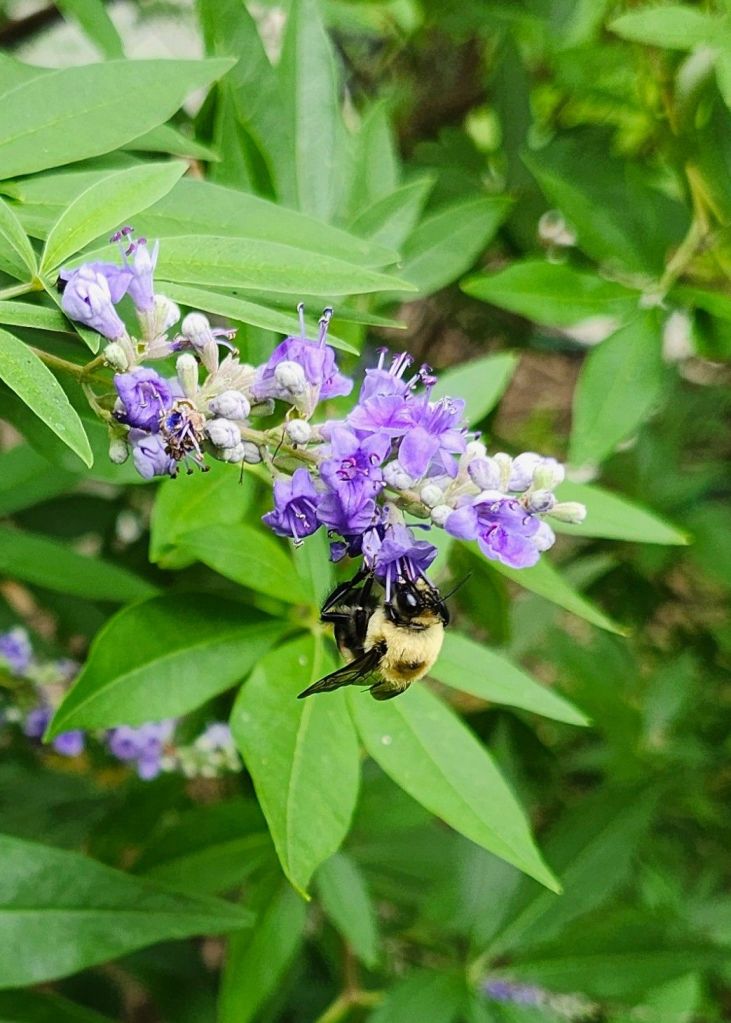
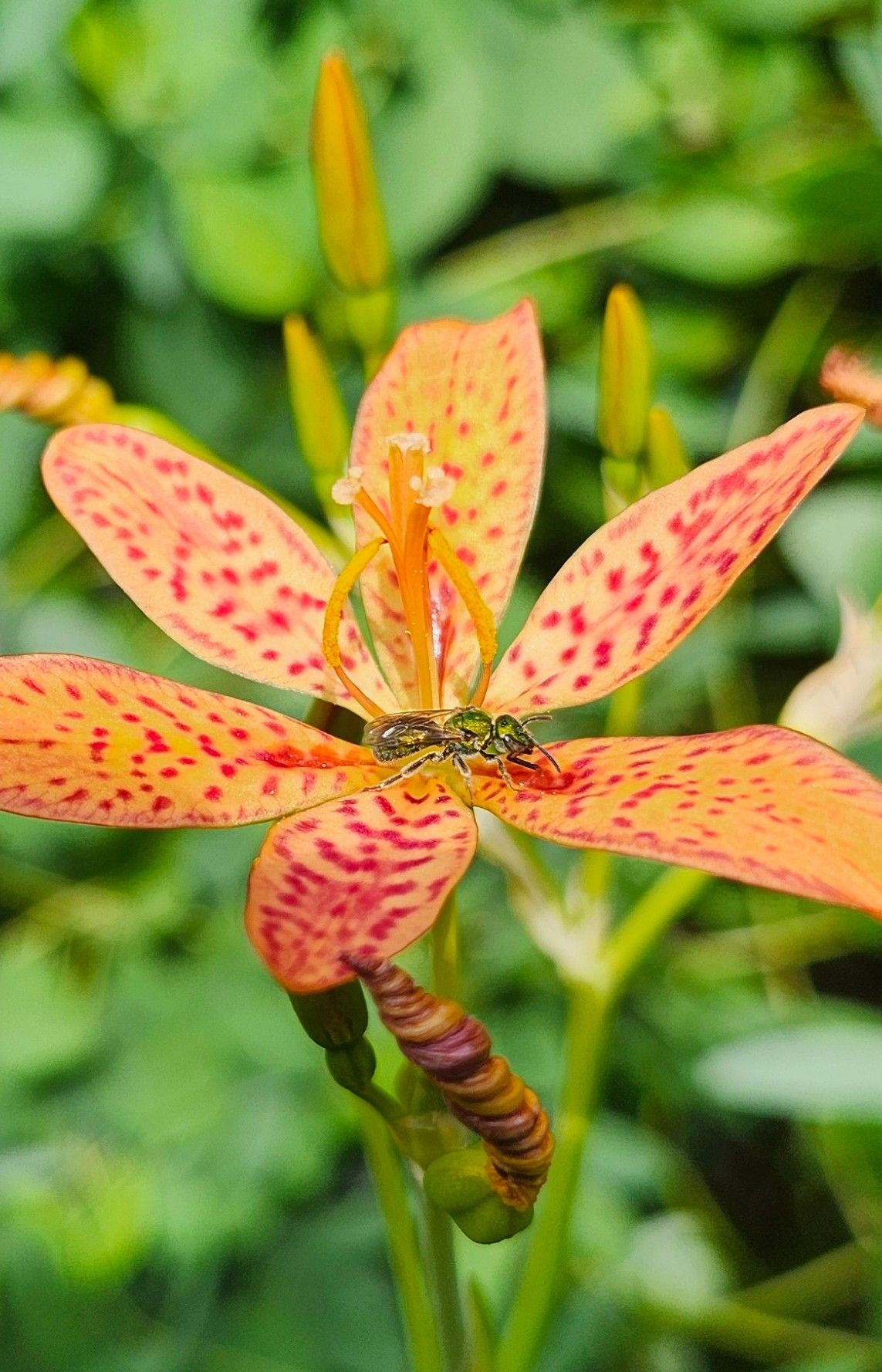
The constant chirping of birds and croaking of frogs and toads has become the garden’s background music. Dragonflies dart across the large koi pond, doing their best to keep the adjoining patio free of mosquitoes. Squirrels acrobatically leap from branch to branch, only occasionally tumbling to the ground, while birds dash about beneath the canopy of trees.
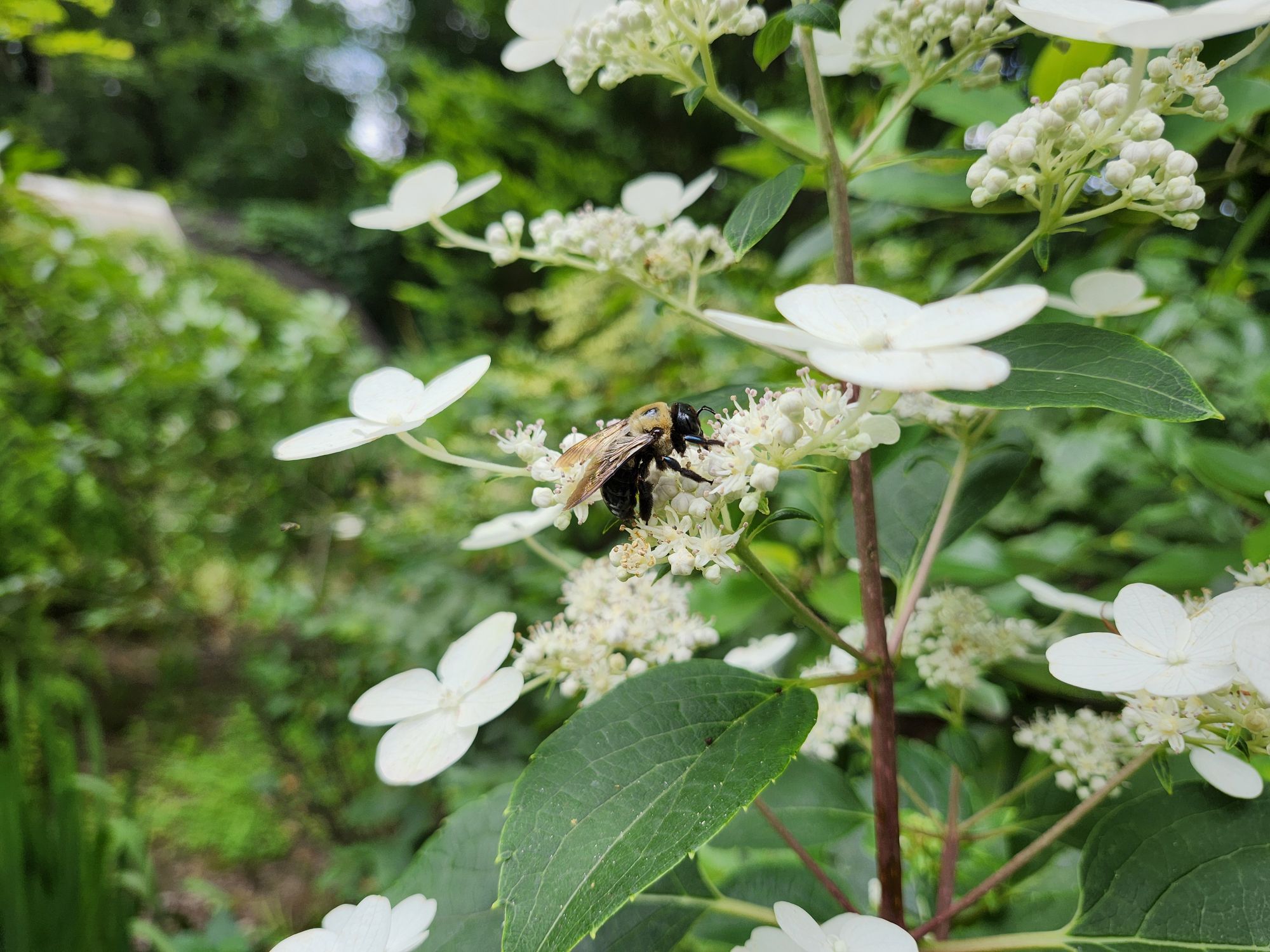
Here, I sit in the dappled shade of high noon on the circle patio (aka, the writing patio, all in lowercase since there is nothing formal in this garden), tidying up today’s journal entry. There is no better place to relax or to be inspired by the garden.
 Ramblin' through Dave's Garden
I had to remove all of my Joe Pyeweed, as it rapidly expanded over two years, taking over my whole garden. Sadly, I haven’t seen any Monarchs or Swallowtails this year, as a result, but I am relieved not see all of the Pyeweed everywhere.
Love Joe P. Milkweed, now that is invasive for sure in Epping, but some is needed for them to feed on.
No doubt, Joe Pye is a fertile seeder. I keep as many as possible, probably too many. Ones I’ve planted are compact growers, but seedlings are full sized.