I am thrilled with the recently delivered variegated Dove tree (Davidia involucrata ‘Aya nishiki’). In fact, the initial unboxing of the tree was slightly concerning, first seeing browned and wilted leaves, then the slender trunk bent severely to fit into its shipping container. But a moment later, I realized the treasure I’d been sent.
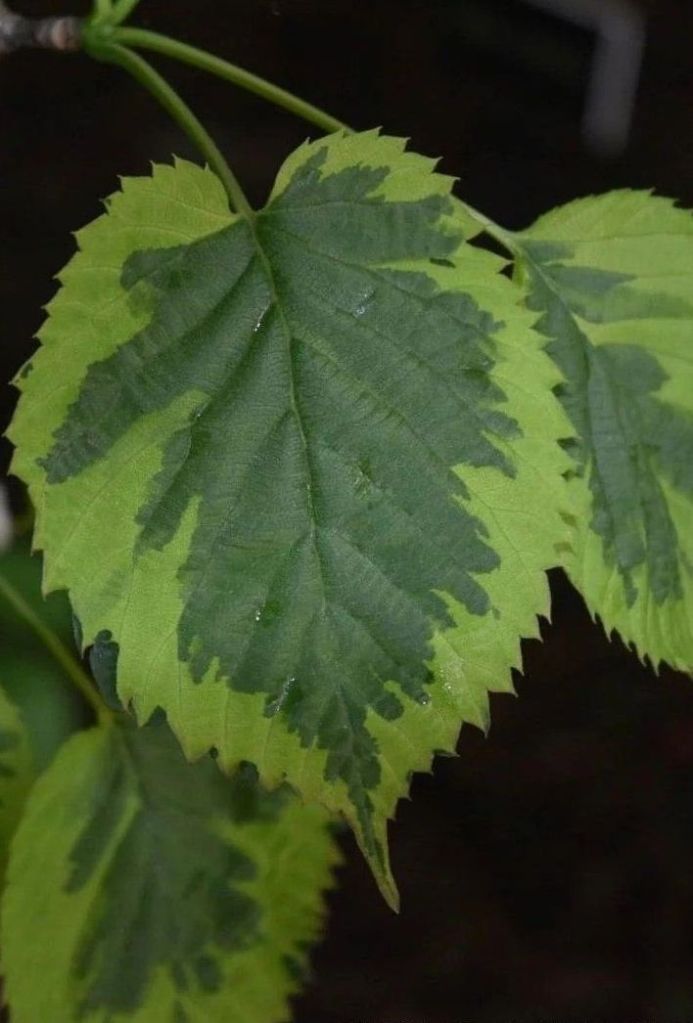
Years ago, I planted another variegated Dove tree after seeing a mature tree at the Oregon Garden on a side trip while on one of my annual Northwest plant buying excursions. Of course, I had to have one, and knowing that larger sizes were not available, I potted a scrawny one footer that did not survive long with my inattentive care. I had no clue at the time what I would do with the tree if it survived and grew to substantial size, but that was years away and a concern for another day.
After carefully straightening the trunk of my newly delivered ‘Aya nishiki’, I realized that the undamaged tree stuffed into a three foot box was four and a half feet tall with no branches, five withered leaves, and numerous fat leaf buds along the trunk. Immediately, I was overjoyed and quickly realized that figuring a home might be necessary sooner rather than later.
With so many buds, the lack of leaves was a minor concern. The bonus was the height of the tree and its straight trunk. Many times, I’ve received small trees that have been pruned to encourage branching that must be removed in a few years as the tree grows. My new Dove tree will require little grooming, and I envision that within a few years, it could be plugged into a gap in the garden. Unfortunately, a favored fernleaf Japanese maple (Acer japonicum ‘Aconitifolium’) is steadily declining with many large branches already pruned out. The Dove tree will be a perfect replacement if the maple can’t be saved.
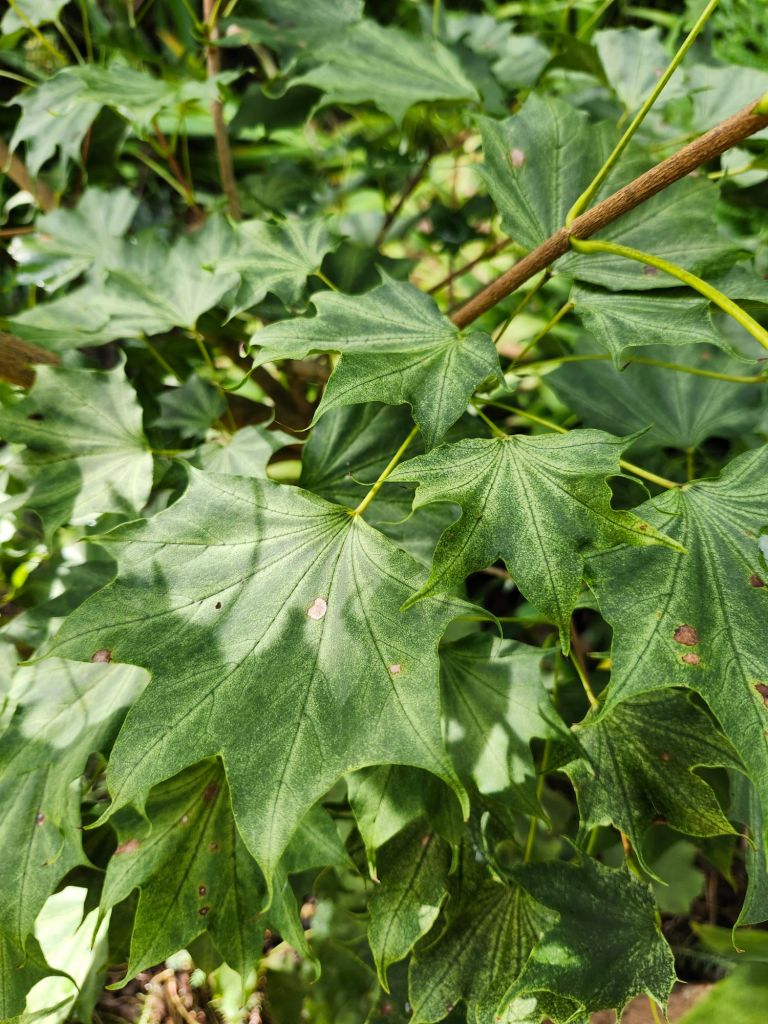
Across the path from the fernleaf maple is the second half of the backup plan started two years ago. The Batwing Japanese maple (Acer pictum ‘Usugumo’, above) was at first far too small for this prominent spot, but it was shaded by the fernleaf maple so that it blended into tall terrestrial orchids and perennials. That is, until this summer. While other Japanese maples grow predominantly with a single spring flush, the Batwing continues growing. A twenty-four inch tree is now tipping five feet. Soon, it will make a good show, possibly alongside the variegated Dove tree.
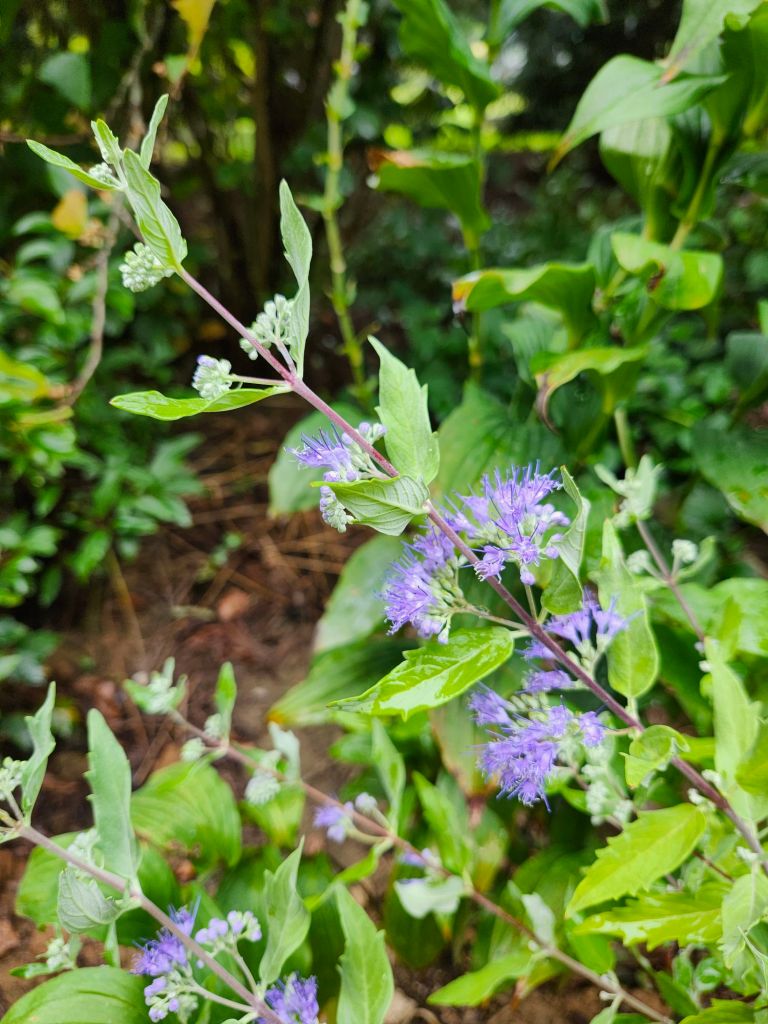
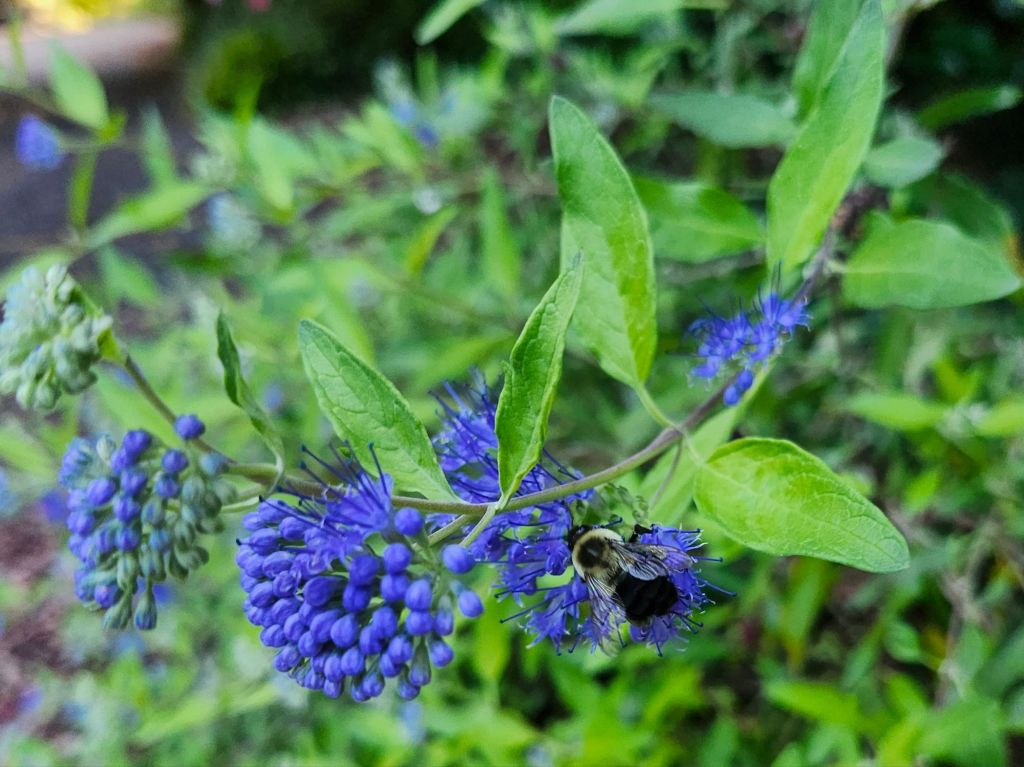
There are several varieties of Blue Mist shrubs (Caryopteris cladonensis) in the garden, but as I filled gaps in the lower rear garden, I realized this could be a perfect fit. A ‘Dark Knight’ along the path from the driveway has been hidden by several vigorous neighbors, so I was happy to add a second.
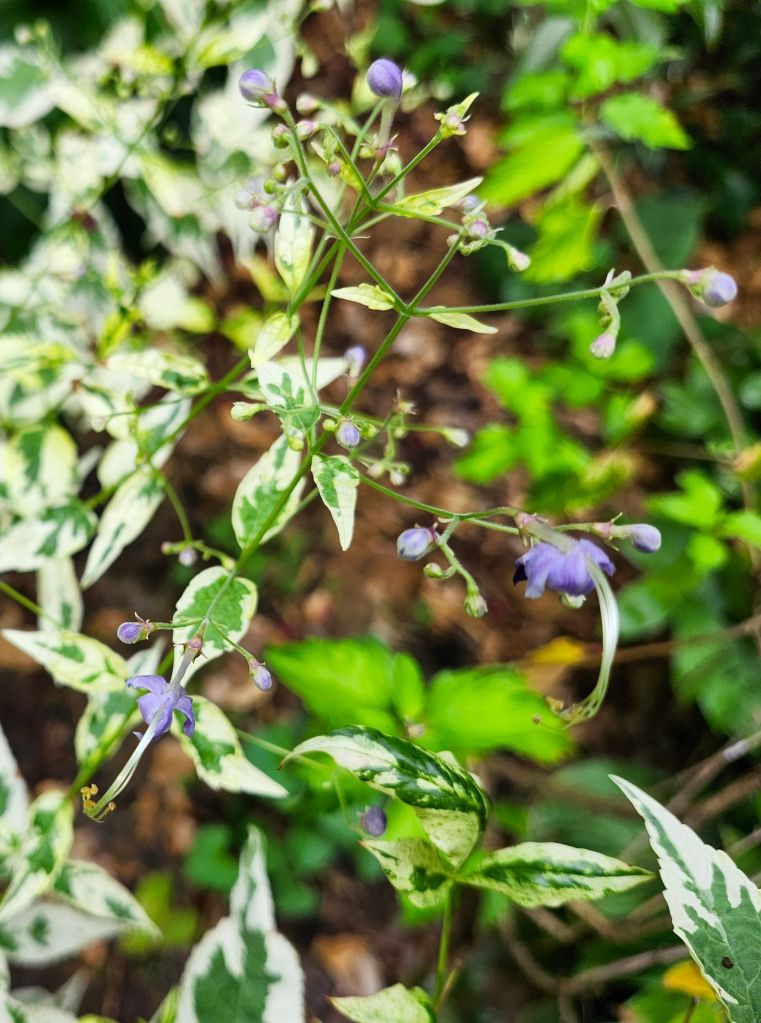
Across the path from the mostly obscured ‘Dark Knight’ is a variegated ‘Snow Fairy’ (Caryopteris divaricata ‘Snow Fairy’, above) that was rescued earlier in the spring from an overgrown area where it could not be seen at all. I had doubts that the soft wooded Blue Mist shrub would survive, but it has grown without a hitch. While flowers of others are quite showy, blooms of ‘Snow Fairy’ are more scattered with its variegated foliage the main attraction. Still, I’m happy to have it.
 Ramblin' through Dave's Garden
so far “Aya nishiki” has done well for me. I haven’t had the same success with lady sunshine.
The Dove tree I killed from neglect was Lady Sunshine, but it was a tiny fragile tree. I have high hopes for this one.
Are Dove trees native to Virginia? If not, is that a problem if I were to plant one?
Davidia is of Chinese origin. A tree grown from seed might not flower for ten years, which is why I selected a variegated leaf form to show color from the start. Dove trees have not shown to be invasive.
Would you be able either indicate the origin of plants or notate those that are native to Virginia, Maryland, and D.C.? Can you indicate when invasives such as liriope or English ivy are mentioned? Thank you for considering this request
I often note natives, but I do not agree with much of the designation of plants as native since they are truly native to habitats that are far different than mine, even if they are from a short distance away. I also have a different view of plants called invasive since many are designated as such with no evidence in most areas. I hope to celebrate the joy of responsible gardening.
Thank you for the reply and insight