Again, I’m clueless, and while I sometimes try to figure why something has gone awry, today I’m quite pleased. The Australian native grevillea (Grevillea victoriae ‘Murray Valley Queen ‘, below) is flowering this third week of October, at least a month earlier than in past years. Nothing has changed that I can see to cause this, but flowers are limited by cold in its typical December bloom, so there’s reason to expect this early flowering will extend weeks longer.
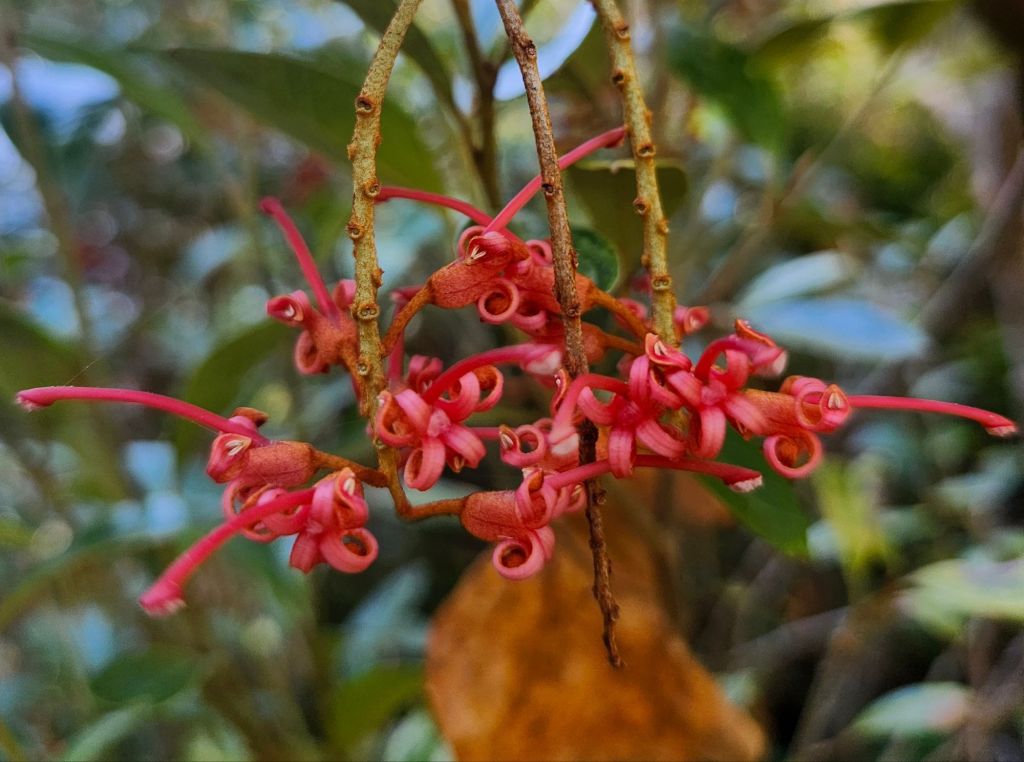
The grevillea has been in the ground for several years, so I’ve become more confident in its winter cold hardiness. While its flowers are exceptional, with the short period of bloom, I questioned its continued inclusion in the garden. But flowering in October earns its keep.
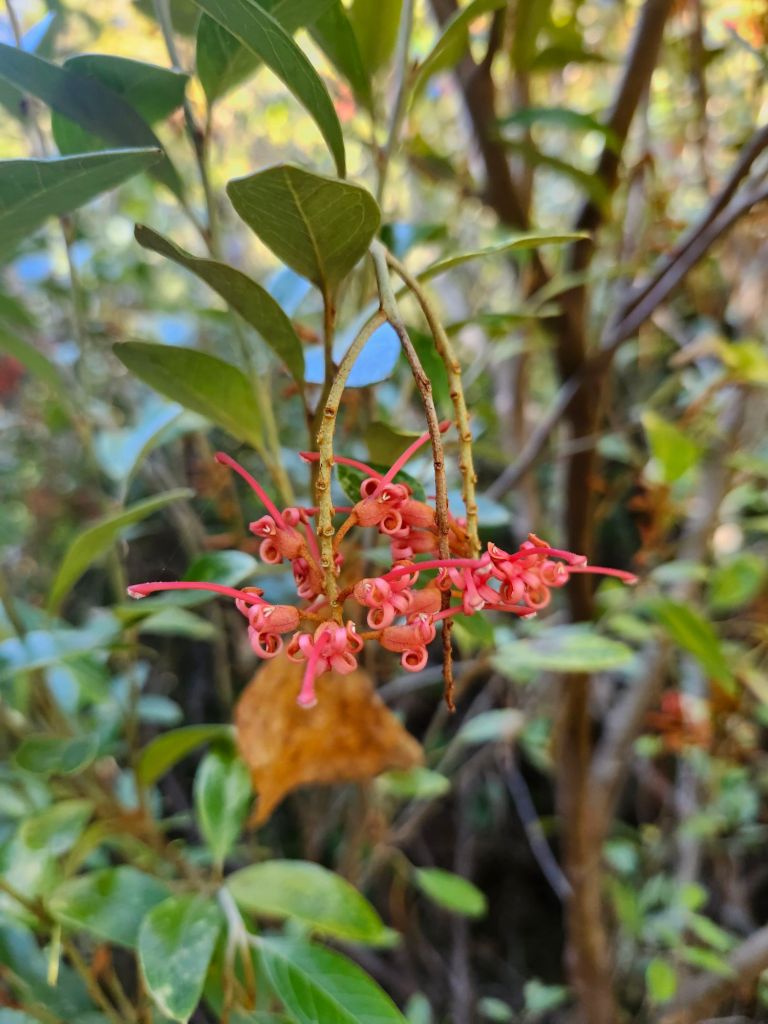
The top heavy grevillea flopped into a neighboring deutzia in wet snow last winter. I staked the multiple stems to bring it upright, unsuccessfully, so the alternative is to cut it back in the spring, hoping it gains some stability.
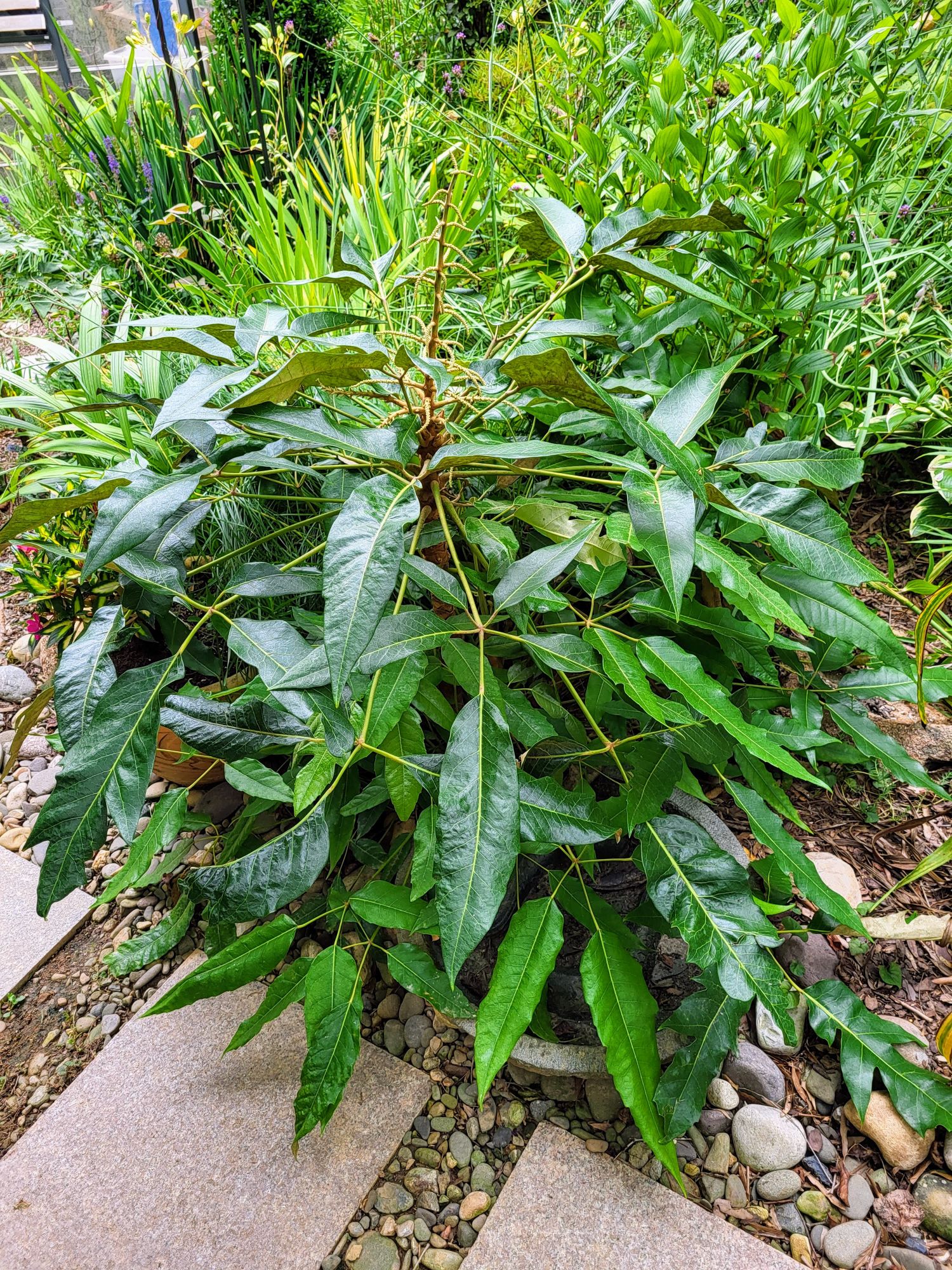
Schefflera delavayi (above) is also marginally cold hardy for the garden, but it has survived three winters without a hint of damage. Much like rhododendron, its evergreen leaves curl downward for protection on the coldest days, but often spring back in the afternoon sun.
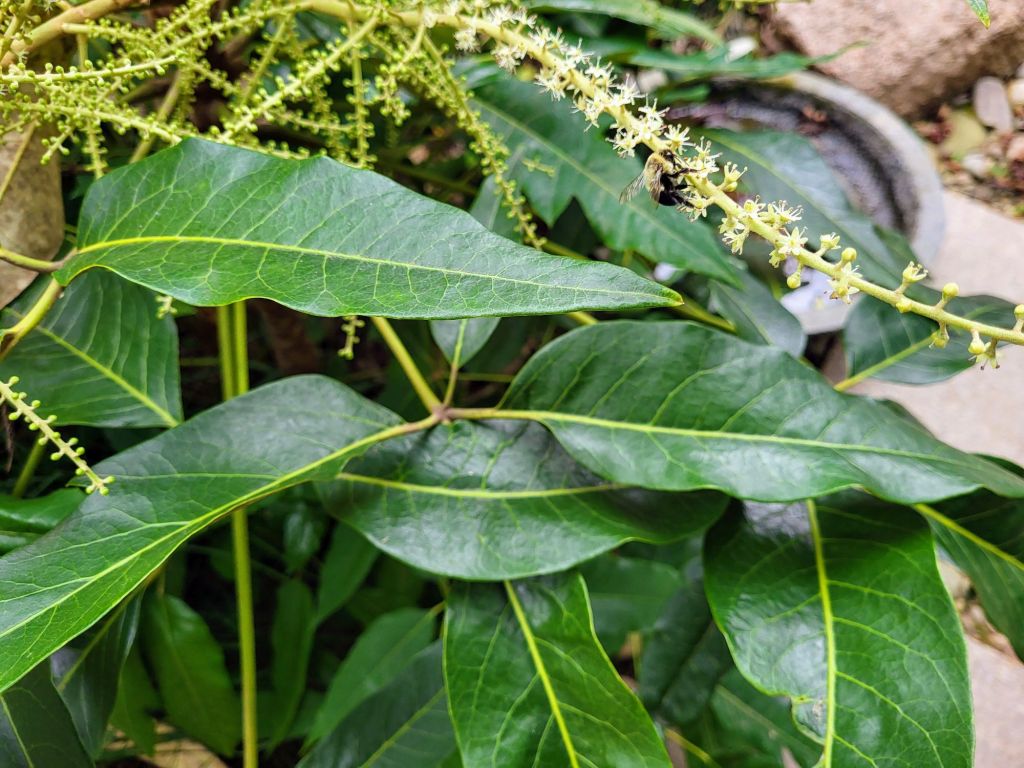
There were no flowers its first two years, but bees have enjoyed the long flowering panicles the past two. Already, it’s encroaching on the path, but I’m not likely to move it.
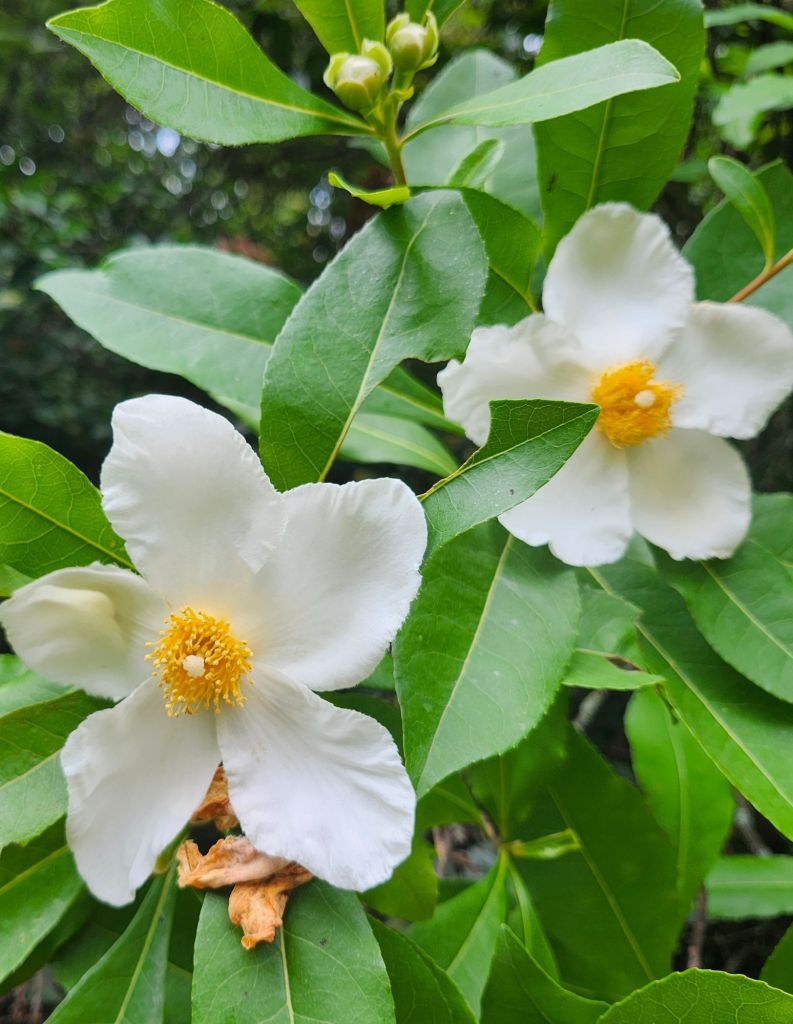
To the rear of the grevillea and schefflera, gordlinia (x Gordlinia grandiflora, above) begins flowering in July with stragglers into September. So, two flowers late into October were a surprise. I was occasionally delighted when a flower of the related Franklinia (sadly, lost several years ago) would persist until its foliage began to turn in autumn, and while leaves of gordlinia do not turn until later in autumn, the late flowers recalled this favorite tree.
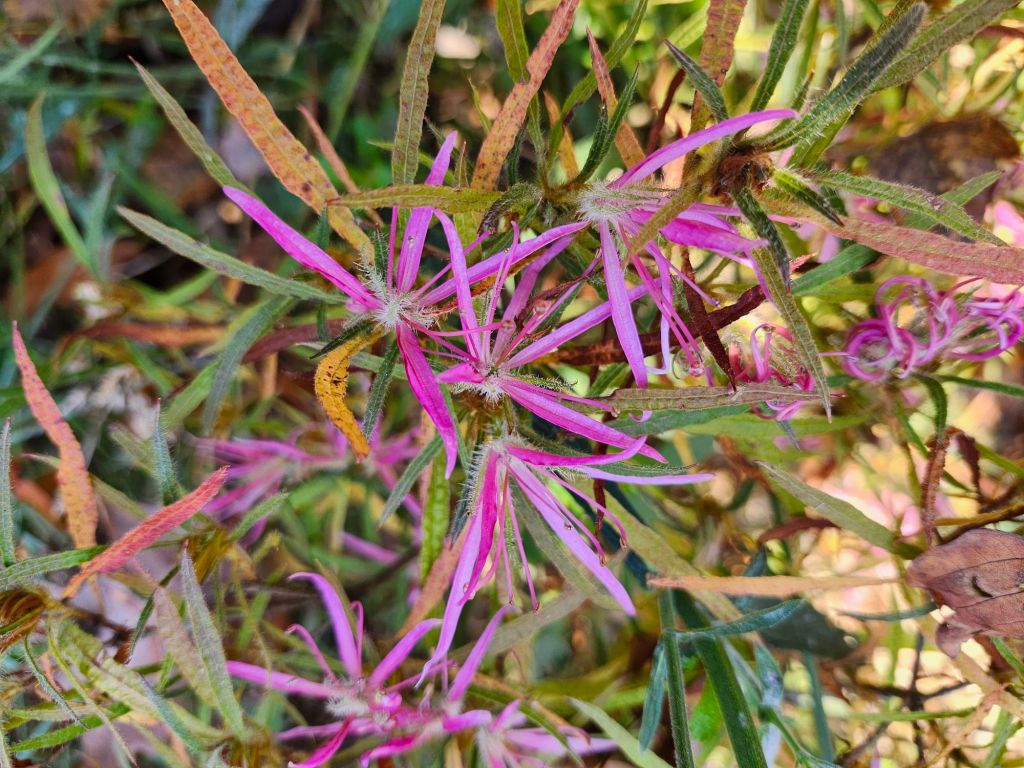
Another oddly timed flower was noticed this morning, the seventh of November. The spider azalea (Rhododendron stenpetalum, above) is in full flower. I’m surprised it hasn’t dropped its leaves, but doubly that it’s in full flower. Since flower buds are developed in late summer, I suppose this will be all the flowering until the following spring.
 Ramblin' through Dave's Garden
If I remember correctly, the rhododendron is semi-evergreen. I don’t think it drops leaves until below 10 degrees F.
I’m sure you’re correct. This azalea is still young, so it barely rises above the surrounding mishmash of perennials. I rarely see it, for now, unless I’m stomping through to remove excess Vernbena bonariensis.