While the garden continues its fade into dormancy, splashes of color remain, with a surprise or two. After recent nighttime temperatures dipping into the upper twenties (Fahrenheit), hostas are limp and colorless. Except one.
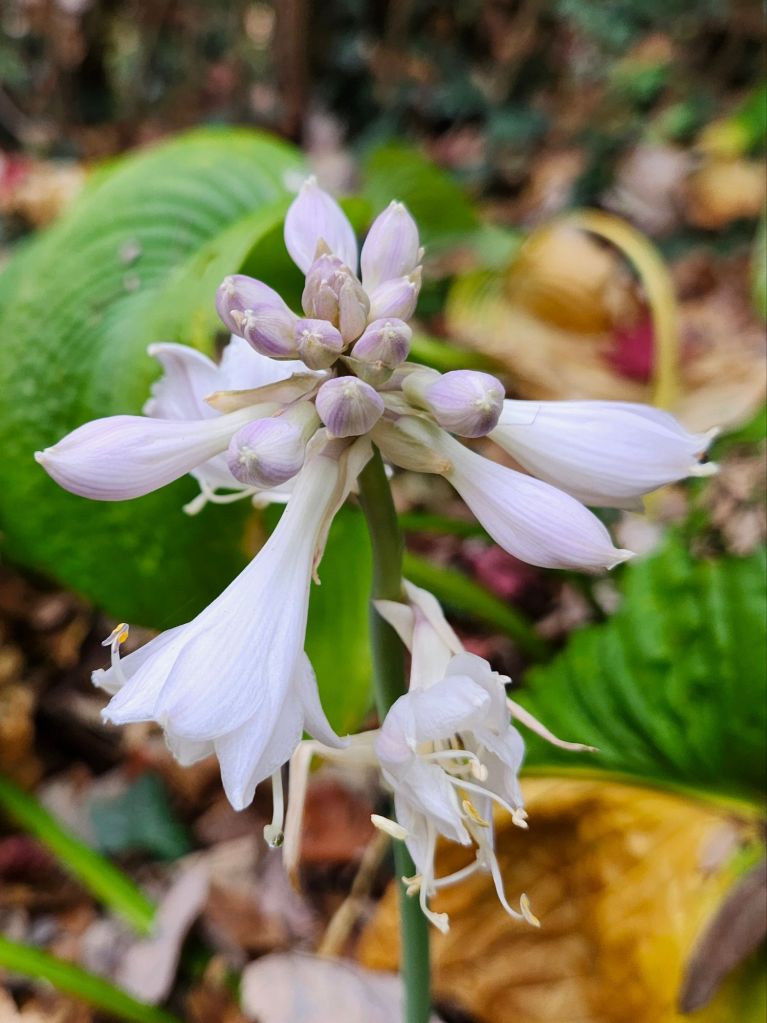
Several green leaves remain on a single hosta, but surprisingly, it also has a long overdue flower. With quirky swings in rainfall (or lack of) and temperature, this autumn has offered one surprise after another. But, I knew I must be mistaken when I first saw the bloom.
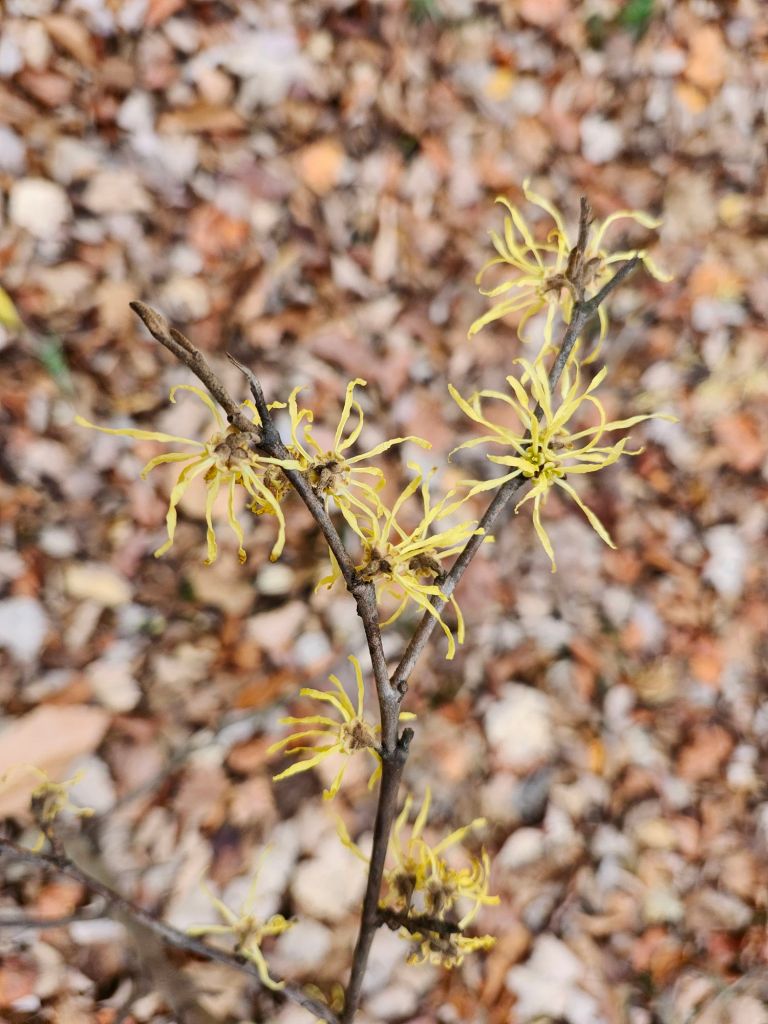
I have incorrectly stated, more than a few times, that our native witch hazel (Hamamelis virginiana, above) begins flowering in October. Indeed, several have flowered and faded in the garden, but after traveling for several days, I see two flowering today. I recall purchasing several witch hazels that were said to flower November into December. Unfortunately, and unsurprisingly, I’ve forgotten the cultivar names, and I really didn’t believe they would flower so late in autumn. How little I know.
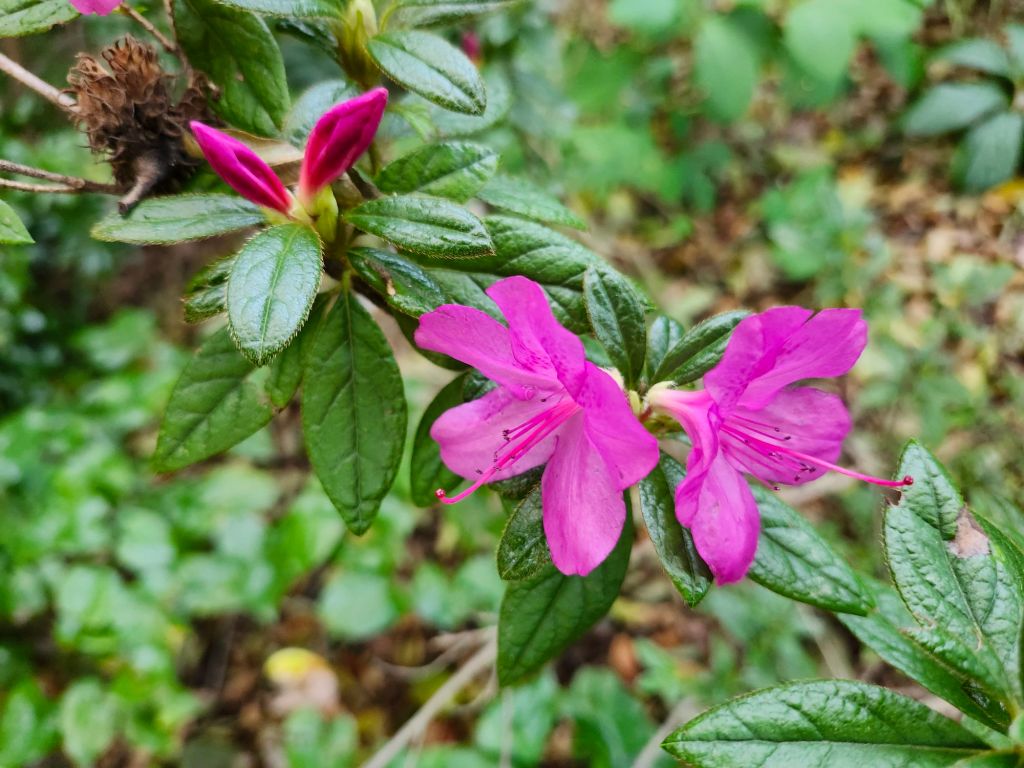
The repeat blooming Encore azaleas have been hard hit by the cold. Only one, Autumn Amethyst (above), seems to tolerate freezes, and often, several flowers will linger into early December.
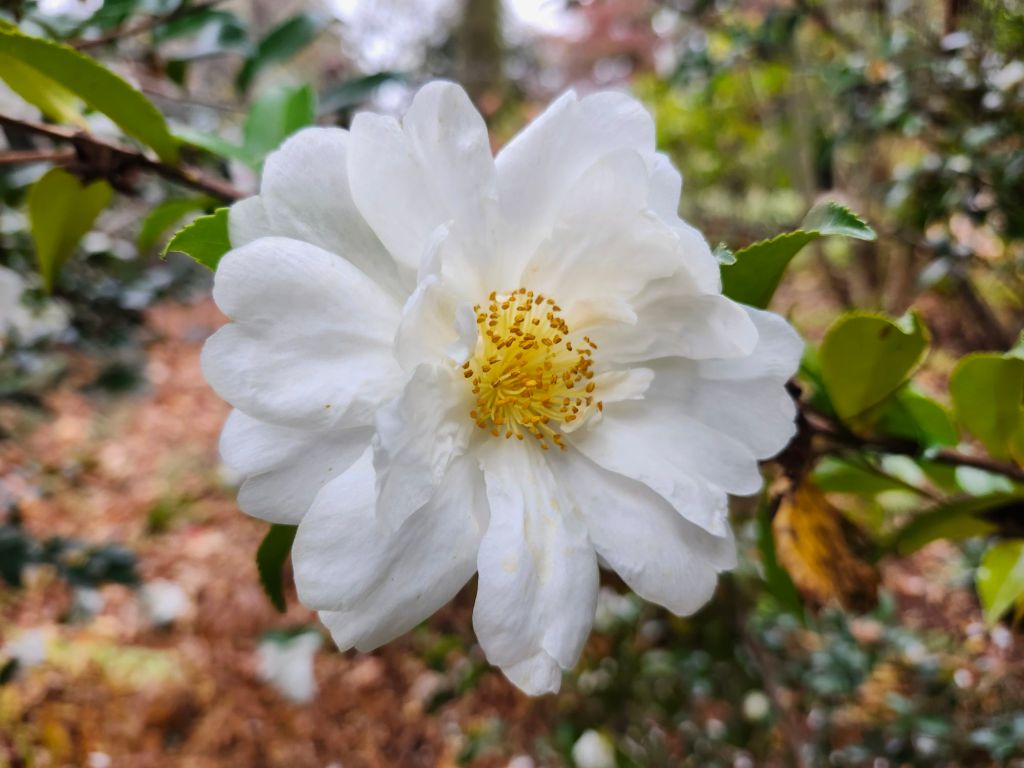
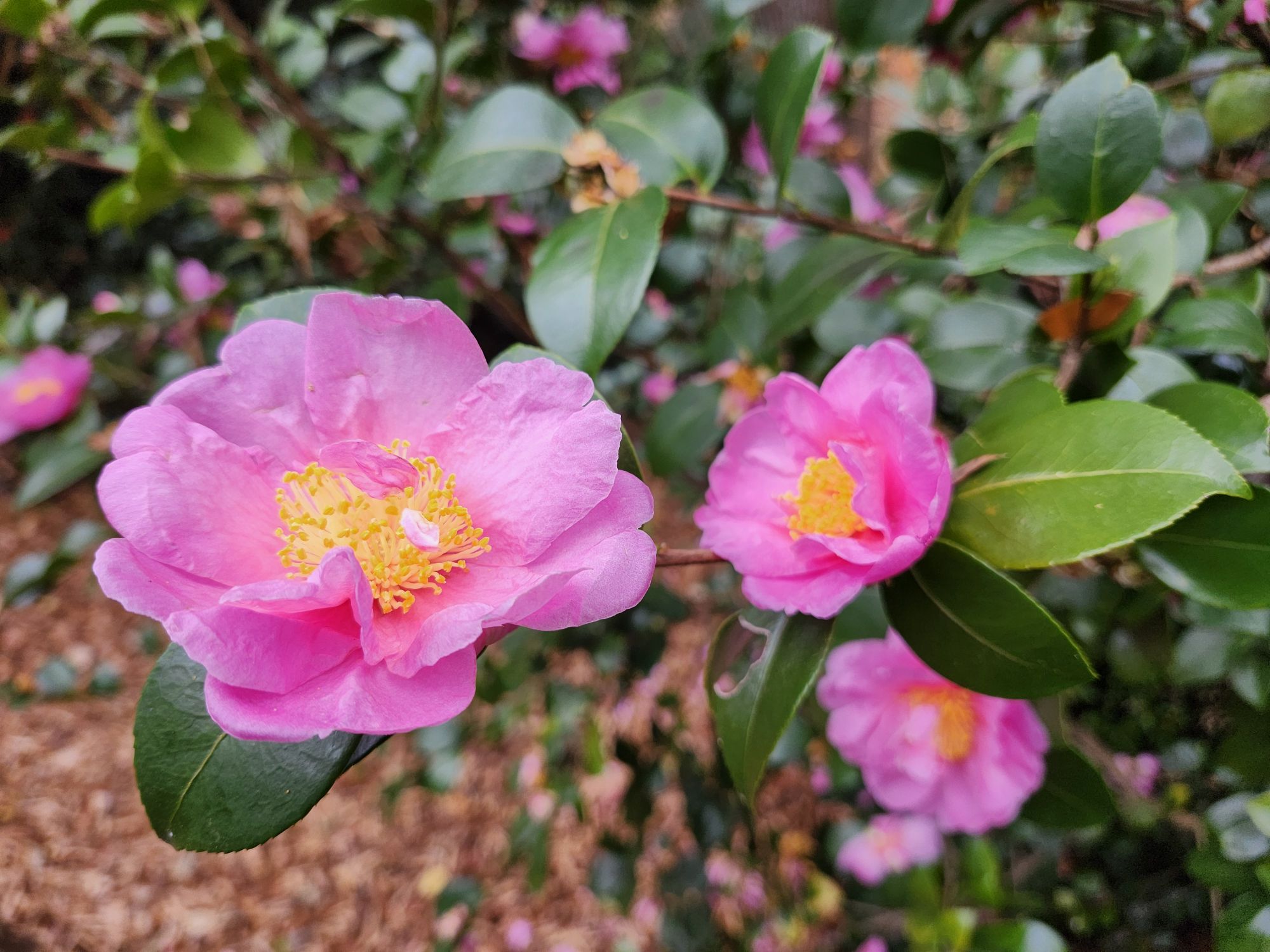
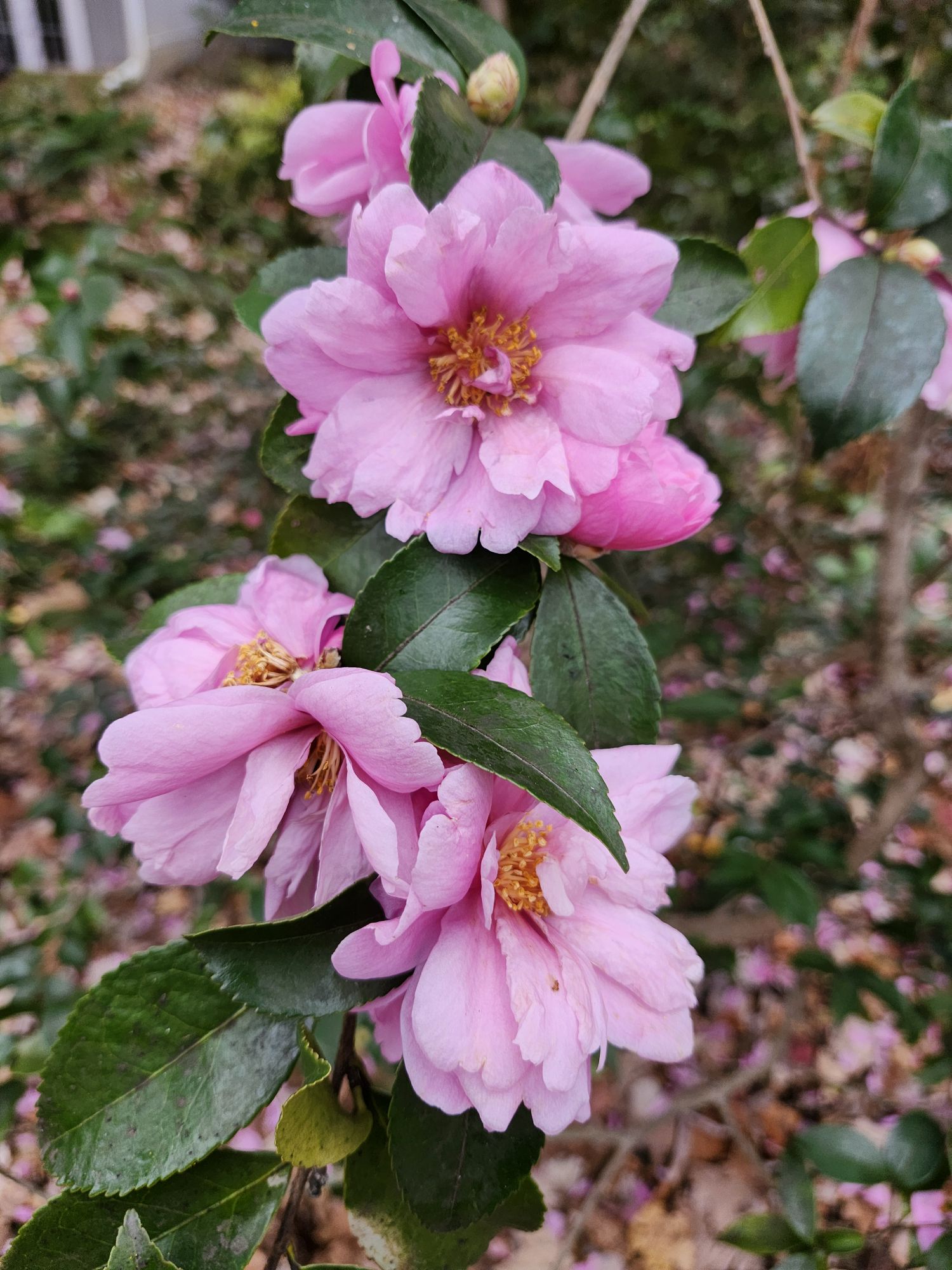
Flowers of the sasanqua and hybrid camellias (above and below) continue their autumn cycle through the cold with flowers damaged by temperatures in the low twenties. Flowering should continue for several weeks, and there are occasionally a few stray blooms in spells of mild temperatures into January.
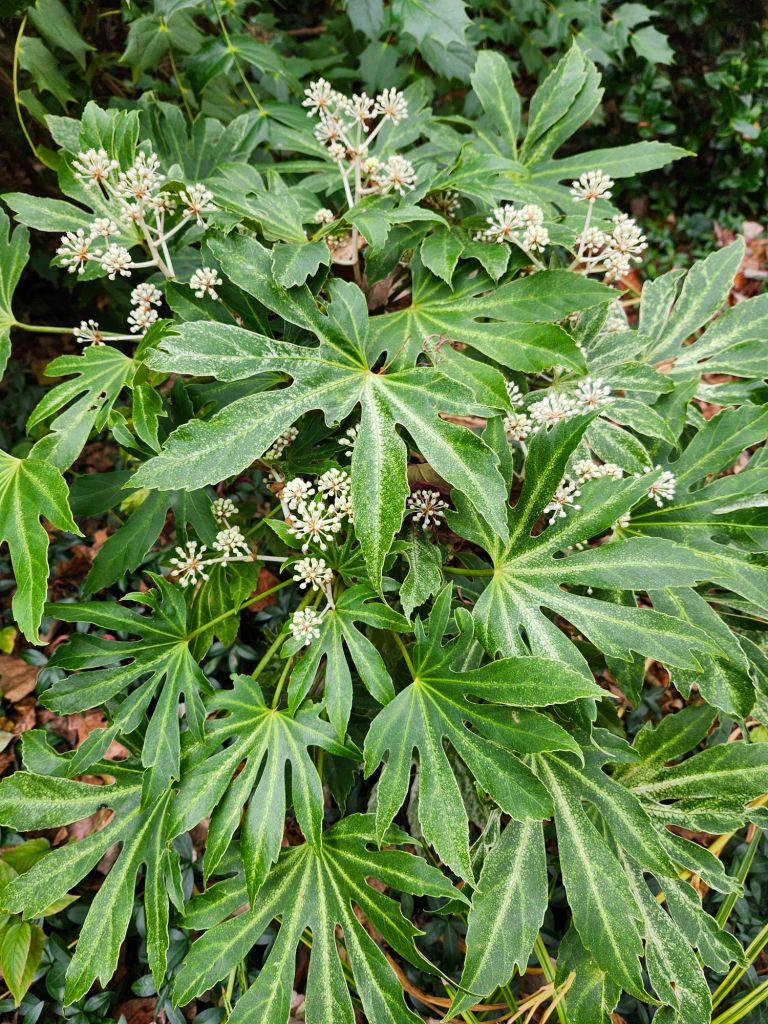
While flowers of ‘Spider’s Web’ fatsia (Fatsia japonica ‘Spider’s Web’, below) are past their peak, the pollinated blooms continue to stand out. It is unlikely that fruit and seed will develop in our cold temperatures, but I could be surprised.
 Ramblin' through Dave's Garden
I walked out to look at my camellia the other day & was surprised to see it in bloom all down one side. There are some buds on the other side so maybe it will bloom.
I have two large autumn flowering camellias that are fully budded, but they are shaded from direct sun through their typical flowering season. So, both begin flowering in January, but only during prolonged spells of mild temperatures.