Happily, I no longer wake before 5 AM when I would check the overnight low temperature as I dressed for the workday. This morning, I woke to a toasty nineteen degrees (Fahrenheit) and bright sunshine, but afternoon temperatures are expected to rise to a mild forty degrees. Colder weather will soon return, but I have few concerns about the garden, in particular since much of the past week’s snow remains as insulation.
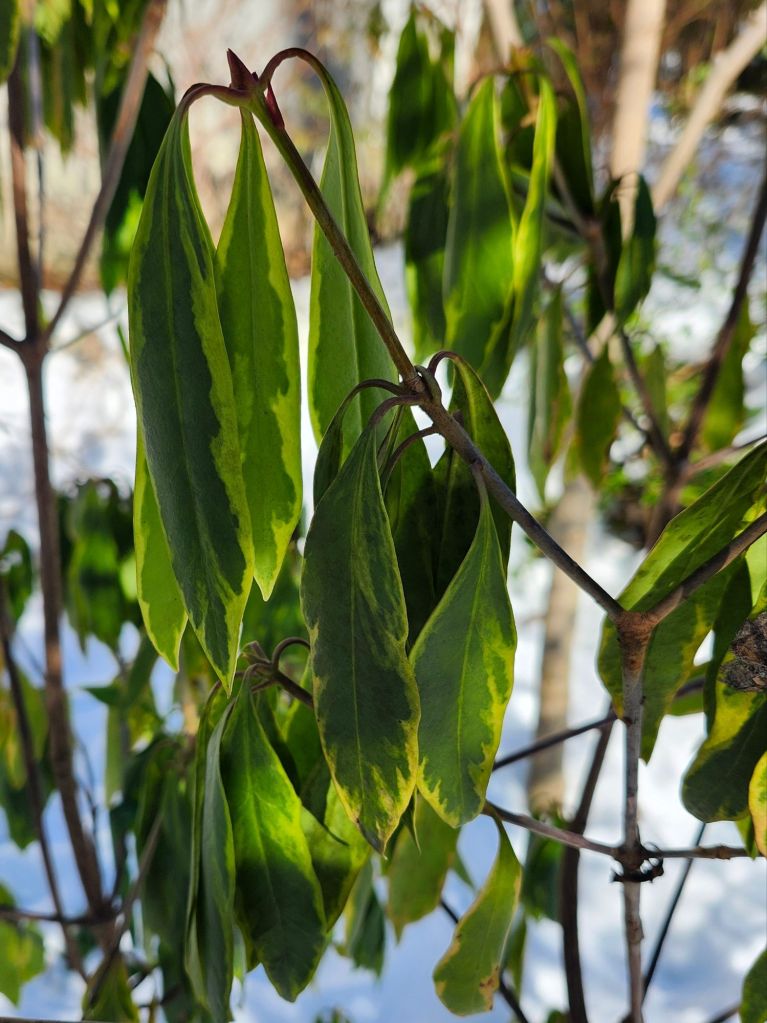
At first glance, and certainly for newer gardeners, the drooping leaves of rhododendrons, aucubas, and anise shrubs (above, but also fatsia, daphniphyllum, and schefflera in this garden) are a concern. But no, they’re not dying.
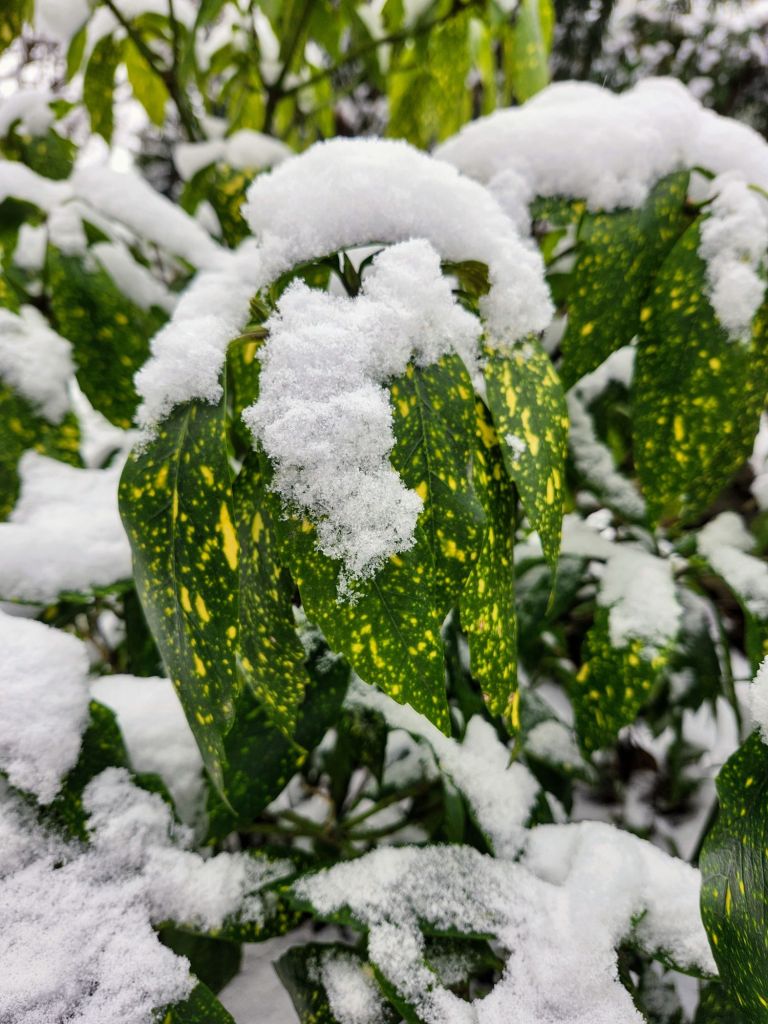
When temperatures fall to the upper twenties and lower (Fahrenheit), leaves of many of the garden’s broadleaf evergreens droop and curl for protection. The term for this is thermonasty, and as temperatures rise in the afternoon, the leaves return to normal without injury.
As I stomp through the mounds of snow in the rear garden, I’m surprised by the number of deer tracks. Fortunately, I don’t see new damage. I sprayed the deer repellent a few days ago after discovering that protection from spraying in November had waned. I’m still uncertain that the repellent will stick when sprayed on a freezing day, but so far, so good.
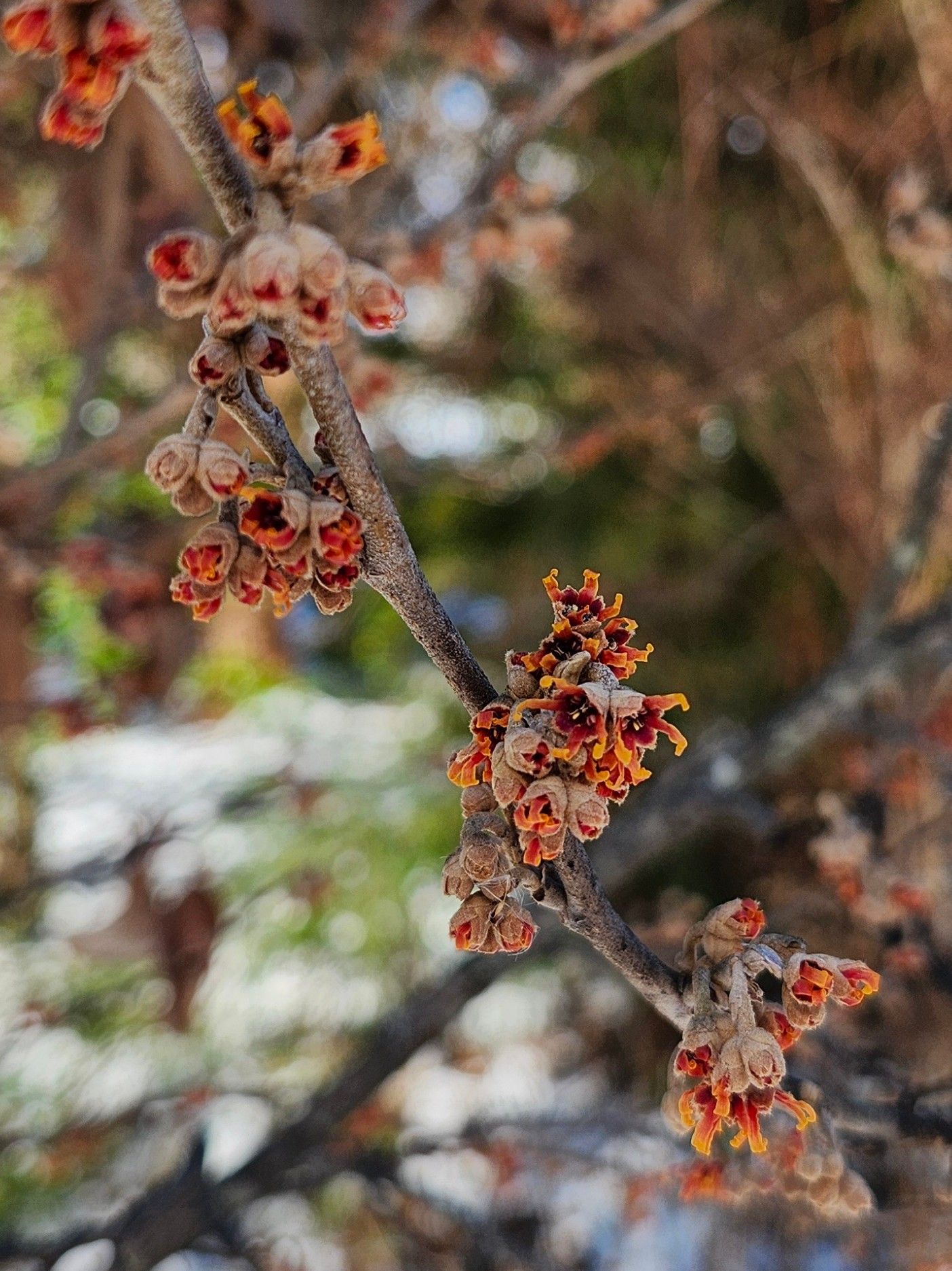
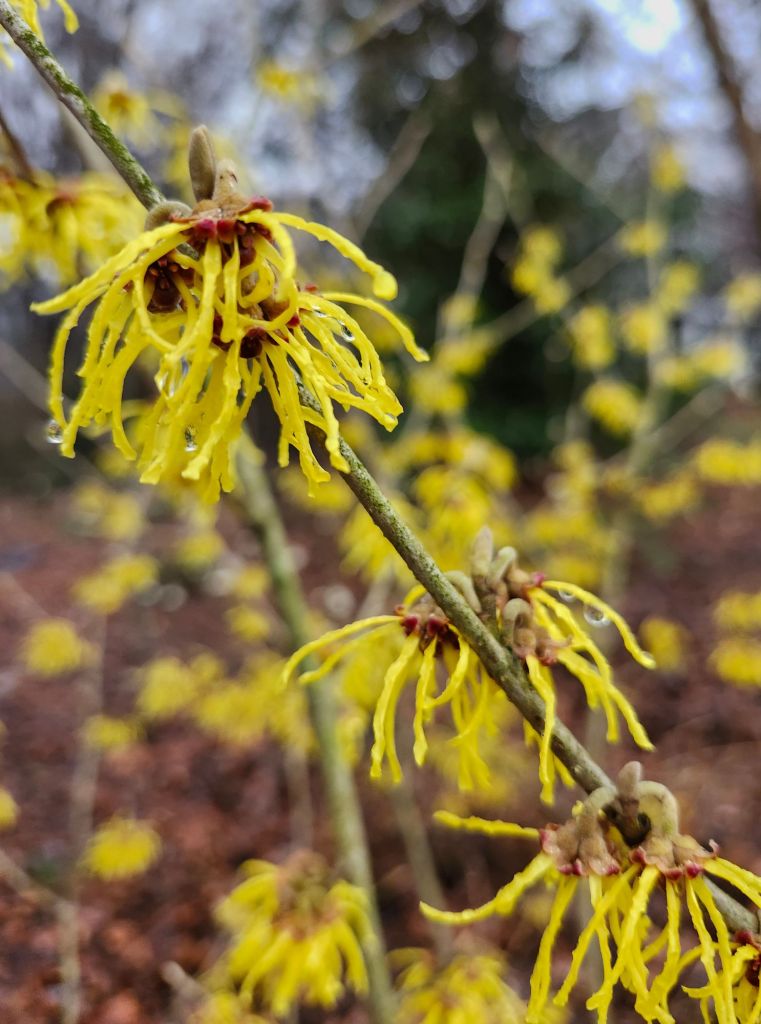
I see that the spidery flowers of Ozark witch hazels (Hamamelis vernalis) are curled for protection (above). I have no concerns about their cold hardiness, and flowers will not be harmed as temperatures fall below ten degrees later this week.
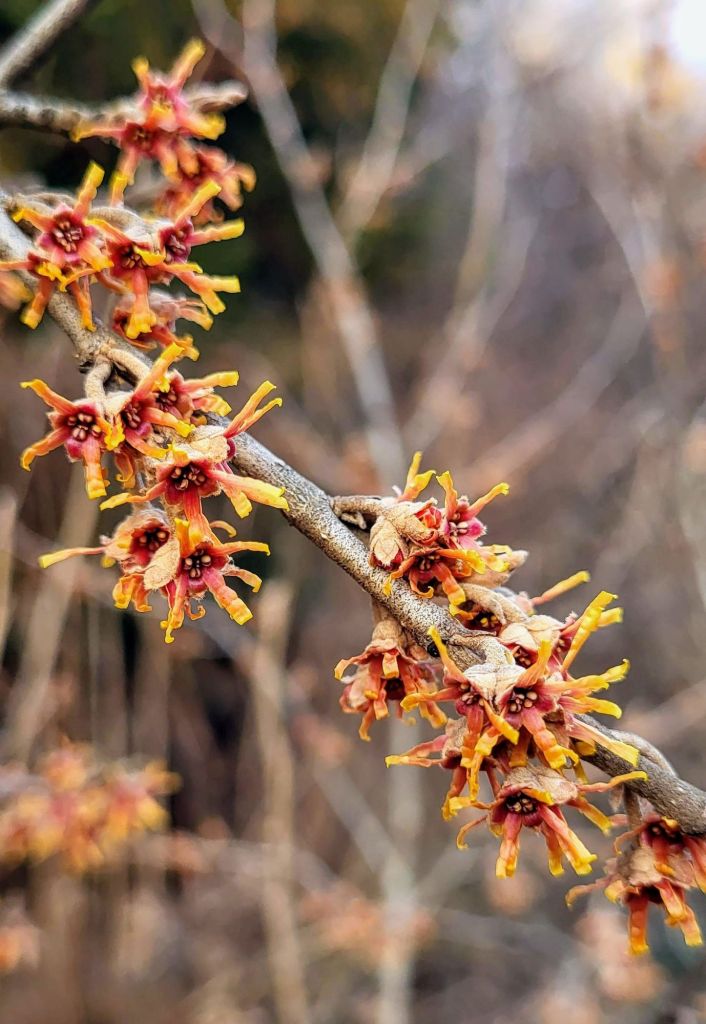
Gardeners looking to add winter color should not be fooled by social media posts showing large, bright yellow flowers of native witch hazels. Common witch hazel (Hamamelis virginiana) flowers in late autumn, while the Ozark witch hazels flower in January in my Virginia garden. Flowers of both are much smaller and colors more muted than Asian hybrids that bloom a few weeks later. I’ve planted some of all, but I often see photos of ‘Arnold Promise’ (below, or similar hybrids) incorrectly identified as one of the natives.
 Ramblin' through Dave's Garden
Your witch hazel pics are lovely.
I can’t wait for the bright yellow of Arnold Promise that is cracking open, but also for the snow to melt enough to see hellebores again.