The worst of this winter is over, I presume. I recall more prolonged stretches of cold, including a full month, decades earlier when temperatures did not rise above freezing in my first year working outdoors (nearly fifty years ago). Of course, that included multiple days falling below zero (Fahrenheit), while happily, our overnight low recently fell only to three degrees (above zero).
On this afternoon, with temperatures rising to nearly forty degrees, I’ve toured the garden at a slower pace than the brisk walks on days that topped only into the mid-teens. Inches of snow remain, along with evidence of continued traffic through the garden by deer. I see that another Japanese aucuba close to the house was missed when I recently sprayed the repellent. While this and several others have few remaining leaves, I expect all will recover with spring’s growth, though a second year might be required for full recovery.
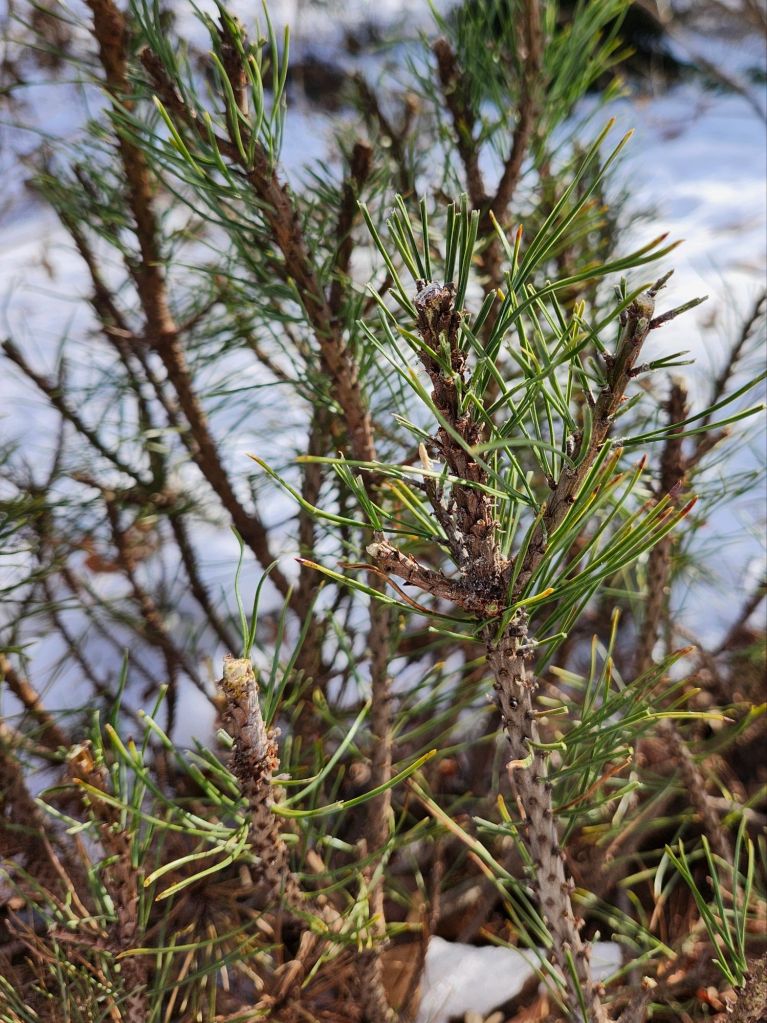
I was quite surprised to see damage to a mugo pine (Pinus mugo, above). I hadn’t considered that a needled evergreen could be eaten by deer, but it suffered considerable injury. I suppose it will recover, so I’ll protect it in the future, though another winter of this severity is unlikely in the near future.
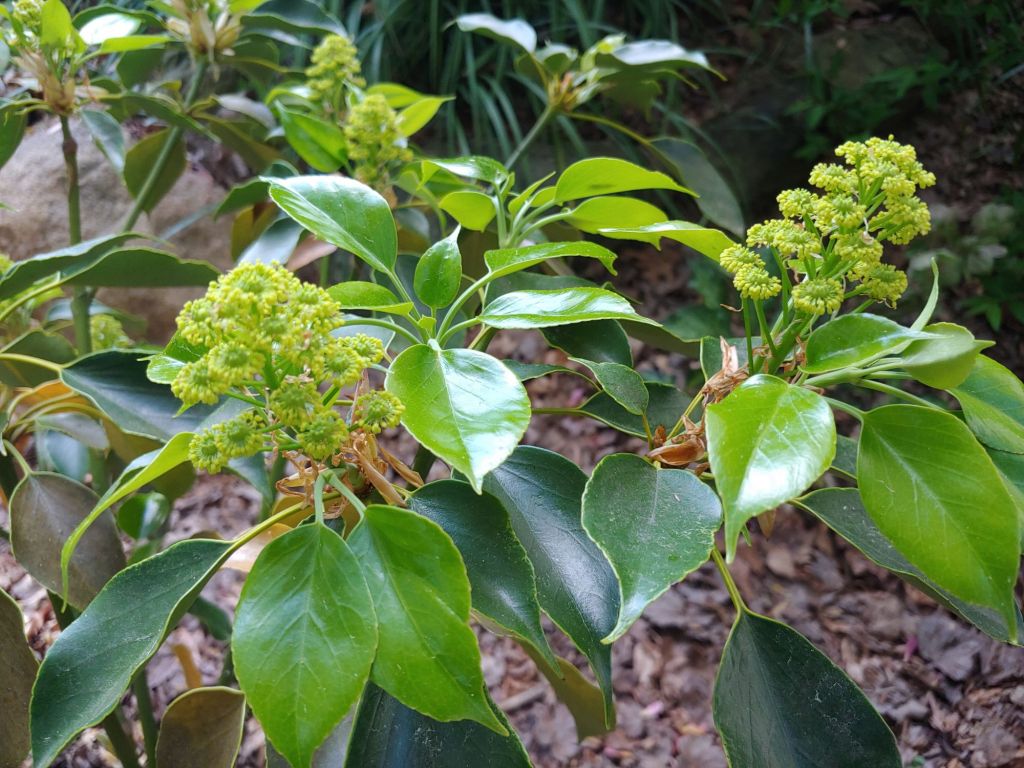
I am pleased that the wheel tree (Trochodendron arailiodes, above) that was nibbled a year ago has escaped damage since I sprayed the repellent a few weeks ago. The evergreen is slow in growth, and still a year or two from making much of a show, so I’m happy that the repellent sprayed on a subfreezing day seems to be effective.
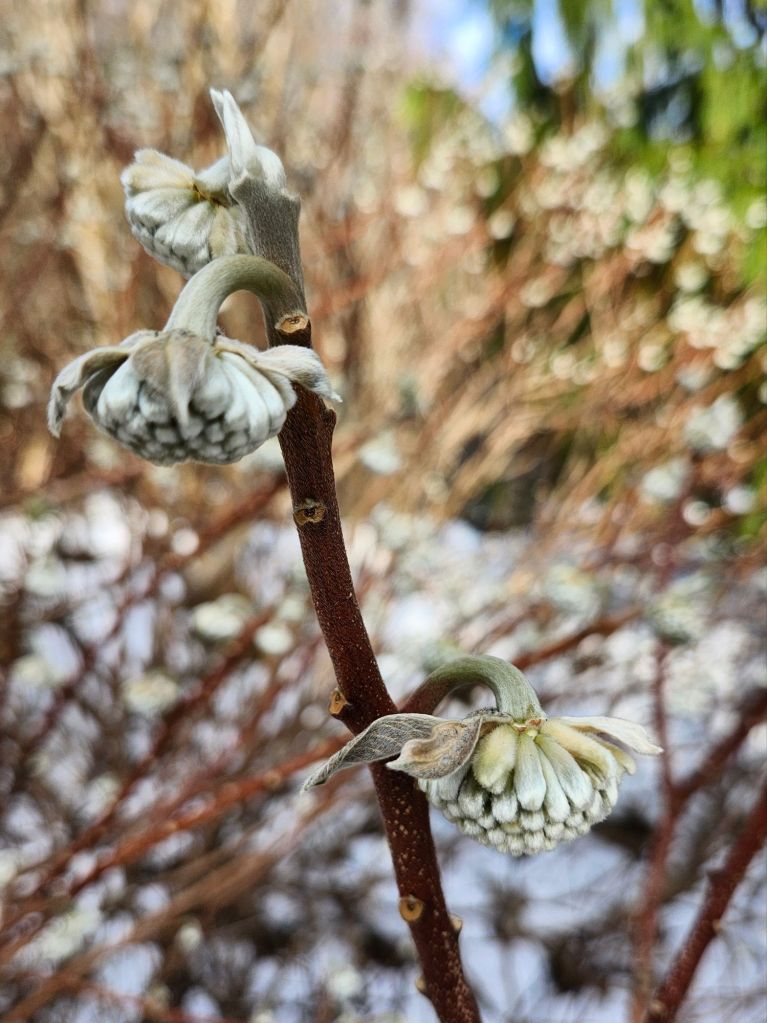
My next concern was the possibility of damage to flowers of paperbushes (Edgeworthia chrysantha, above) with the drop to three degrees. In the past, buds have been ruined at similar temperatures, so I’m overjoyed that no flowers appear to be damaged. While injury to shrubs often can not be seen for weeks, I’ve seen damage to paperbushes’ flower buds appearing immediately.
Slightly tender fatsias and schefflera, with leaves that droop and curl in the cold, look much better than expected, so despite minor nibbling by deer, all should be fine. Of course, I have no concerns over the hollies, rhododendrons, and other plants common to Virginia gardens. These will tolerate temperatures falling several degrees colder.
 Ramblin' through Dave's Garden
Again thanks for all you do. I moved from Charlottesville, Va. to Sedona, Az. and in missing the east coast I am grateful to have your messages. Please keep them coming. Nancy Hartman
Finally, lawns are reappearing in the neighborhood, though my shaded garden is still covered. This winter’s snow was a welcome diversion, but it has overstayed. Thanks for reading.